
Hang tight! “Picture Perfect” has moved from its former Friday time slot to Saturdays at 6 pm EDT! If that time’s not the most convenient for you, don’t forget, you can always catch it later as a webcast at WWFM – The Classical Network and wwfm.org. Select the show, and click “listen.”
Tag: Picture Perfect
-

Bernstein’s Waterfront: A Lost Score Found
I coulda had class. I coulda been a contender. I coulda been somebody – instead of a bum, which is what I am. “Picture Perfect” has been moved to a new time, SATURDAY AT 6 PM.
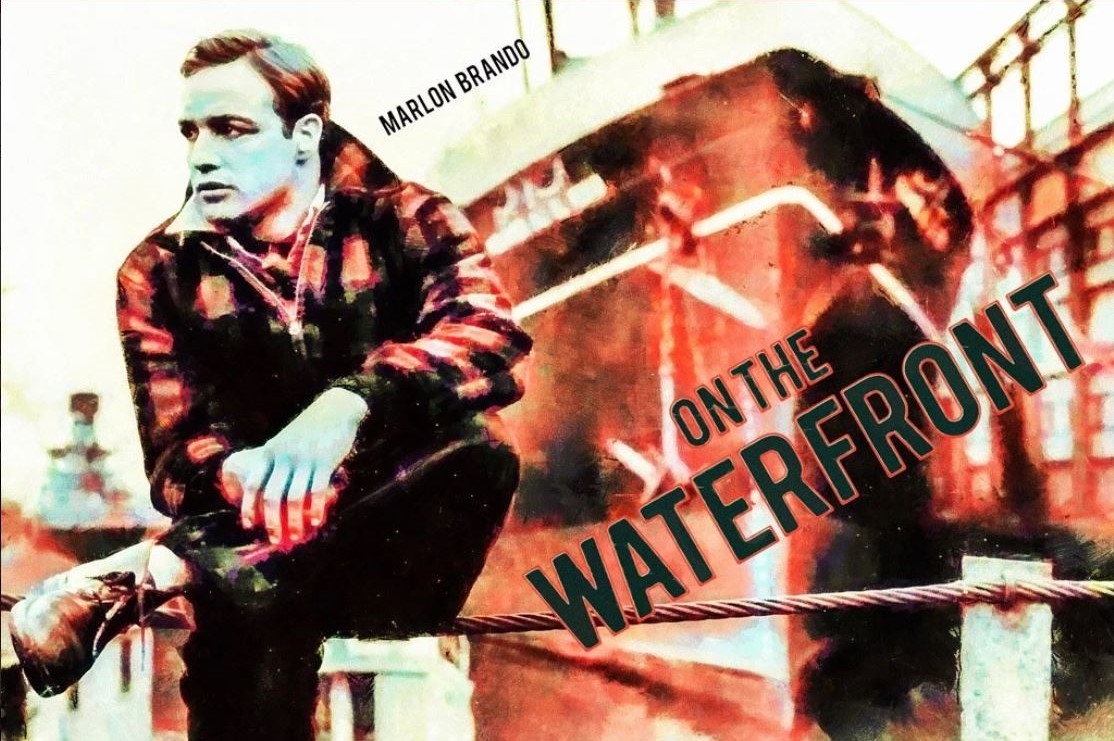
This Labor Day weekend, hear original cues for “On the Waterfront” (1954). “On the Waterfront” was the only original film score by Leonard Bernstein. (The screen adaptations of his stage musicals were done by other hands.) Narrative film, of course, is a collaborative effort, in which music is usually the last to the table and the first to go. Bernstein’s score was edited and dialed down to suit the overall needs of the film.
Unused to such rough treatment, Bernstein found his brush with Hollywood to be dispiriting, to say the least. He arranged his music into a concert suite, over which he had complete control, and the work has gone on to become one of his better-known pieces. That said, what can be heard in the film remains a powerful statement, and one of the great film scores.
The original recordings, as they appear in the film, were long believed to have been lost. However, in the course of restoration of “On the Waterfront” for its release on BluRay, it was discovered that audio had been preserved on acetate discs used for playback during the original recording sessions. Material from these were issued for the first time in 2014, on the Intrada label.
Bernstein’s music would be nominated for an Academy Award, one of “On the Waterfront”s twelve total nominations. The film would be recognized with wins in eight categories, including Best Picture, Best Actor (Marlon Brando), and Best Director (Elia Kazan). Bernstein may have lost out to Dimitri Tiomkin for his work on “The High and the Mighty.” However, like Brando’s Terry Malloy, his score to “On the Waterfront” proves itself a champion.
We’ll hear selections, alongside Aaron Copland’s original recordings for “The Red Pony” (1949), some dances from Virgil Thomson’s “Louisiana Story” (1948) – so far, the only film score to be awarded the Pulitzer Prize for Music – and Elie Siegmeister’s “They Came to Cordura” (1959), which provides the now-familiar “Picture Perfect” signature tune.
You may want to swear like a longshoreman, but do consider joining me at my new time – New York composers go to Hollywood on “Picture Perfect,” music for the movies – this SATURDAY EVENING AT 6:00 EDT, on WWFM – The Classical Network and wwfm.org.
REMEMBER, if this time doesn’t work for you, shows are archived at the station website shortly after broadcast. Select a show, click on “listen,” and enjoy!
-
Picture Perfect Moves to Saturday Nights
“Picture Perfect” is moving.
I received word last week that something else will be taking over my regular Friday time slot. Therefore, beginning next week, and going forward, the show will air on SATURDAY AT 6 PM EDT.
Tune in for a program of music by New York composers in Hollywood, including Leonard Bernstein’s “On the Waterfront” (perfect for Labor Day weekend), Aaron Copland’s “The Red Pony” (after Steinbeck), Virgil Thomson’s “Louisiana Story” (the only film score ever to be awarded the Pulitzer Prize), and Elie Siegmeister’s “They Came to Cordura” (the source of “Picture Perfect”s signature music).
The Bernstein and Copland are NOT the popular concert suites, but rather special, vintage recordings, struck from the films’ original elements.
No use swearing like a longshoreman. Saturday night is now movie night. “Picture Perfect” moves to Saturday, starting next week at 6:00 EDT, on WWFM – The Classical Network and wwfm.org.
-
Ennio Morricone Western Scores on WWFM Tonight
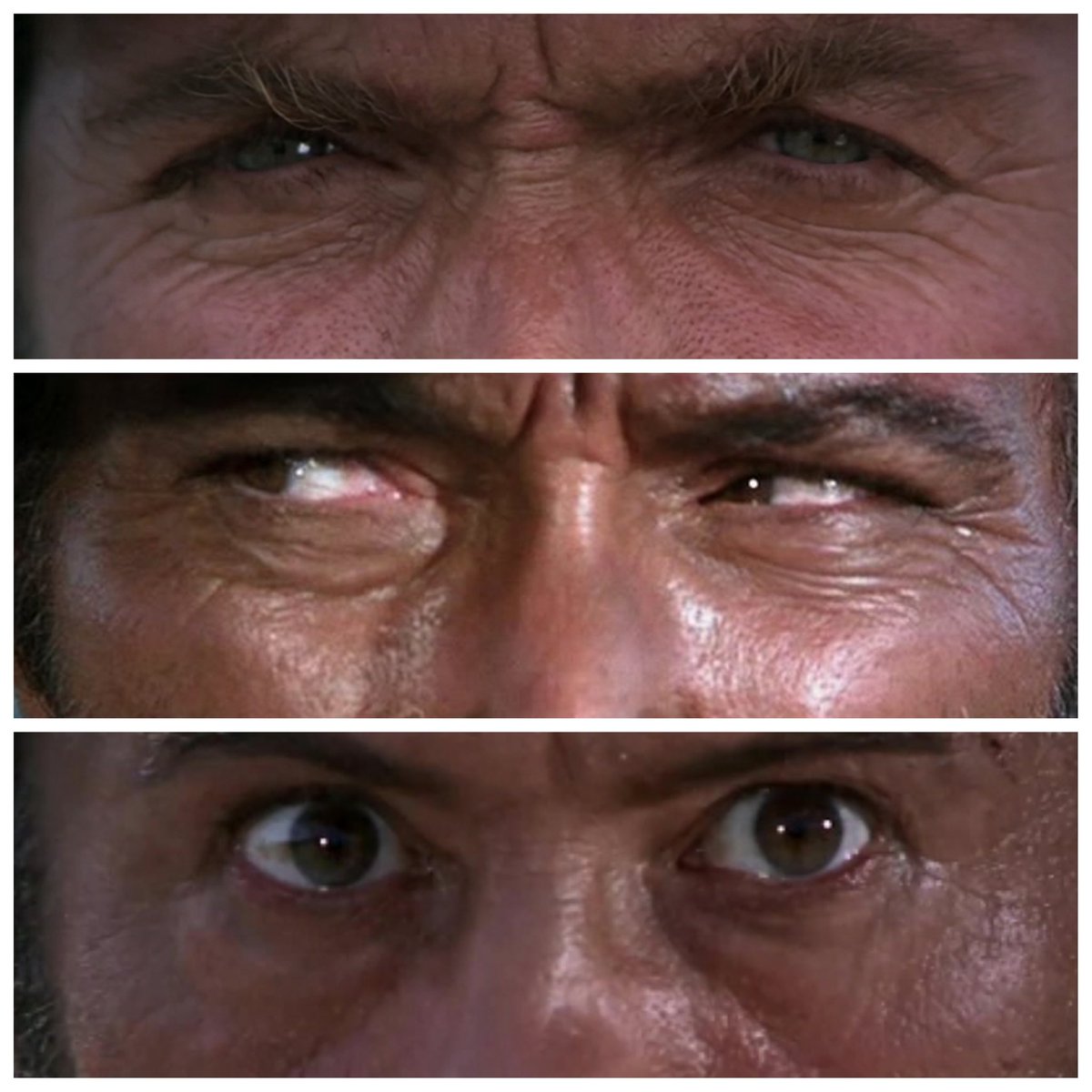
Well… it appears that signals were crossed. It’s now WESTERN SCORES BY ENNIO MORRICONE, UNTIL 7:00 EDT, ON “PICTURE PERFECT,” music for the movies, on WWFM – The Classical Network and wwfm.org.
If you miss it, I’m sure it will be posted as a webcast soon. Sorry for the confusion. I would have liked to have promoted the show with a nice write-up on Morricone, who died last month at the age of 91, with an ample side dish on the art of the spaghetti western, but, alas, now there’s no time.
Tune in for Latin swords, including “The Adventures of Don Juan,” next week!
-
Lost Worlds in Film Music on WWFM
It’s the second day of WWFM’s end-of-the-fiscal-year membership campaign, and we’re hoping you don’t get lost! We’ll be looking for your pledges of support from noon to 6 p.m., at 1-888-232-1212. Or join us anytime at wwfm.org.
At 6:00, reward yourself with a trip into the unknown. This week on “Picture Perfect,” it’s music from movies about lost worlds and forgotten civilizations.
While the concept of the “Lost World” dates at least as far back as Plato’s Atlantis, it wasn’t until the Victorian Era that the idea really blossomed in the public consciousness. At the time, of course, lost civilizations were genuinely being discovered – which might help explain, in part, the incredible success of “King Solomon’s Mines.” The author, H. Rider Haggard, wrote the book on a bet that he could churn out an adventure story half as good as Robert Louis Stevenson’s “Treasure Island,” which had been published two years earlier.
“King Solomon’s Mines” became the literary sensation of 1885. Its protagonist, Allen Quatermain, is a direct ancestor of Indiana Jones. The book inspired reams of sequels and at least five film adaptations.
The two best known starred Stewart Granger, in 1950, and Paul Robeson, in 1937. Robeson, who played Umbopa, a king in disguise, received top billing. Mischa Spoliansky wrote the music
.Haggard achieved another “Lost World” hit with “She,” first issued in book form in 1887 – another adventure about Europeans in Africa, who meet a seemingly immortal white queen known as the all-powerful “She,” or “She-Who-Must-Be-Obeyed.”
“She” has been adapted to film six times. The 1965 version starred Ursula Andress, Peter Cushing and Christopher Lee. The music was by Hammer Studios house composer, James Bernard. It’s nice to hear Bernard, who mostly wrote horror scores for the likes of Dracula and Frankenstein, provide something a little more nuanced for a change.
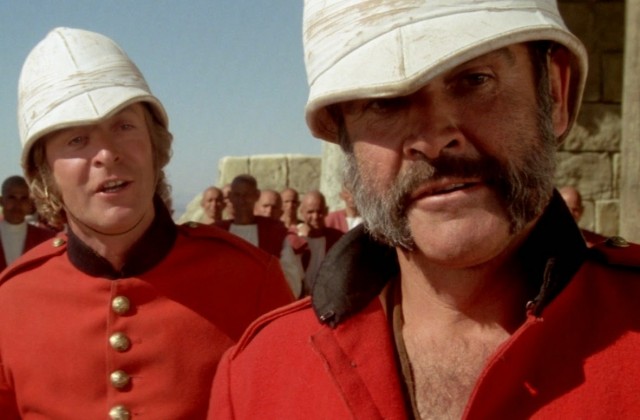
Rudyard Kipling’s “The Man Who Would Be King,” published in 1888, was clearly influenced by the writings of Haggard. In this case, two British adventurers in India strike out for a remote corner of Afghanistan to set themselves up as kings. The story was made into one of the great adventure films of the 1970s, directed by John Huston, and starring Sean Connery and Michael Caine. That Christopher Plummer appears as Kipling himself is only icing on the cake. Maurice Jarre wrote the rousing score.
Finally, James Hilton’s “Lost Horizon,” published in 1933, imagines Shangri-La, a Utopian society nestled in a sheltered valley somewhere in the mountains of Tibet. A British diplomat is one of a handful of passengers who survives a plane crash to be taken into the lamasery.
“Lost Horizon” was made into a film twice. The less said about the 1973 version, a musical with songs by Burt Bacharach, the better. Frank Capra directed the classic 1937 version, which starred Ronald Colman, Jane Wyatt, and outstanding character actors of the day, people like Edward Everett Horton, Thomas Mitchell, Sam Jaffe, and H.B. Warner.
The score, Dimitri Tiomkin’s first major contribution, was also one of his most ambitious. Seldom was it so obvious that he had studied at the St. Petersburg Conservatory under Alexander Glazunov.
Let music be your map, this week. The journey is the destination, on “Picture Perfect,” music for the movies, this Friday evening at 6:00 EDT.
Remember, this program is made possible in part through YOUR support of WWFM – The Classical Network and wwfm.org. Thank you for your contribution by June 30th!
PHOTO: Connery (right) with the man who would be Caine
Tag Cloud
Aaron Copland (94) Beethoven (95) Composer (114) Film Music (149) Film Score (143) Film Scores (255) Halloween (98) John Williams (197) KWAX (232) Leonard Bernstein (105) Marlboro Music Festival (125) Movie Music (164) Mozart (91) Opera (215) Philadelphia Orchestra (90) Picture Perfect (174) Princeton Symphony Orchestra (110) Radio (90) Ross Amico (244) Roy's Tie-Dye Sci-Fi Corner (290) The Classical Network (101) The Lost Chord (269) Vaughan Williams (107) WPRB (397) WWFM (881)