Tag: Princeton Festival

  • Two Butterflies for the Price of One at the Princeton Festival

    Two Butterflies for the Price of One at the Princeton Festival

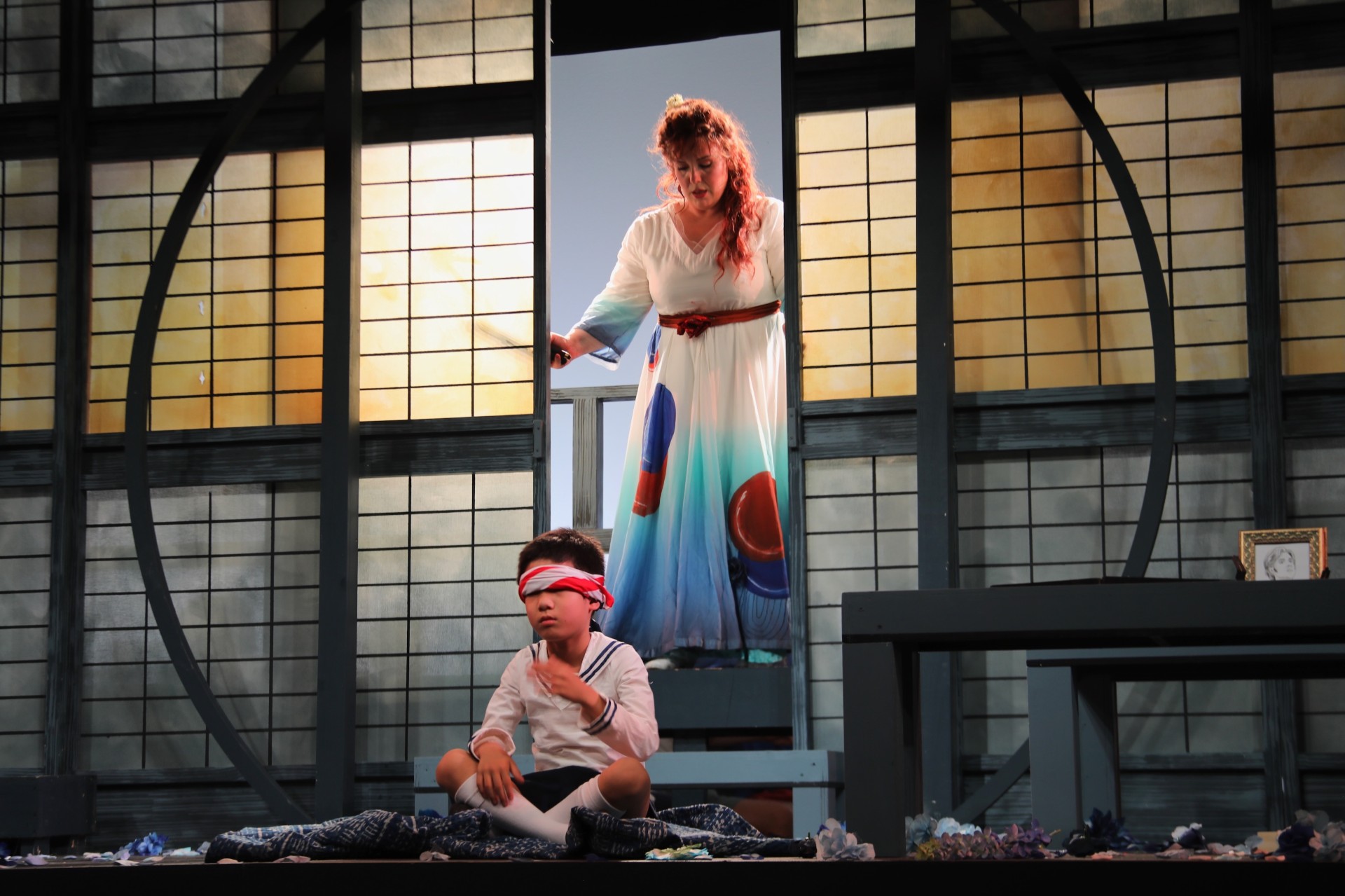
    Not all the drama at Friday night’s performance of “Madama Butterfly” at the Princeton Festival was on stage. Friday afternoon, it was learned that soprano Toni Marie Palmertree, who performed the title role at the Met this season, and floored the audience with her big voice and passionate commitment in last year’s festival production of “Tosca,” would not be able to sing. So Brenna Markey, who had been cast as Kate Pinkerton – a much more modest role, with the character appearing only in the final act – stepped up to assume the vocal part while standing with the orchestra, somewhere behind the shoji that serves as the backdrop for much of the action, as Palmertree seamlessly lip synched and embodied the character physically.

    Believe it or not, this is not an unknown occurrence in opera. It’s not an everyday experience, by any means, but it happens with more frequency than, say, a shark attack.

    Even so, this proved to be an especially harmonious piece of collaboration and improvisation. Palmertree performed her part, as Markey did her thing, with as much conviction as she would have, had the entire portrayal rested with her. Consider the challenges, the innumerable interpretive choices that a singer makes, practically intuitively. Any number of these would necessarily have been different from what Palmertree herself might have chosen. They had to be fielded – absorbed, assimilated, and responded to – instantaneously.

    Also of concern, naturally, was how a pantomimed Butterfly would meld with the rest of the ensemble, as the other singers would also have to react and blend their voices to match a backstage performer totally invisible to them. Yet to a person, they all supported the illusion, while expressively meeting the demands of their individual roles, which could not have been easy. We’re talking about some serious “Roger Rabbit” interaction here.

    Kudos to the sound crew, which must have really had to ride Markey’s microphone to keep the blend realistic (the rest of the cast was unamplified) and at a level that, for anyone in the audience who happened to walk in late and miss the announcement, unobtrusive, in purely musical terms. I doubt, if one were to close his or her eyes that, on a superficial level, he or she would have noticed the difference – except perhaps for one element. More about that in a bit.

    In particular, tenor Victor Starsky, who made such a strong impression last year as Cavaradossi (and held his own opposite internationally renowned soprano Sondra Radvanovsky at the festival last week), impressed with more than just his voice. It can’t be easy to exchange those ardent phrases believably with a vocal partner who isn’t actually standing in front of you.

    I was also blindsided by mezzo-soprano Kayla Nanto, whose Suzuki really snuck up on me. Her characterization broke my heart well before the final curtain’s coup de grâce. Of course, a lot of that is already baked into the work’s construction. But it sure does help to have performers of this caliber!
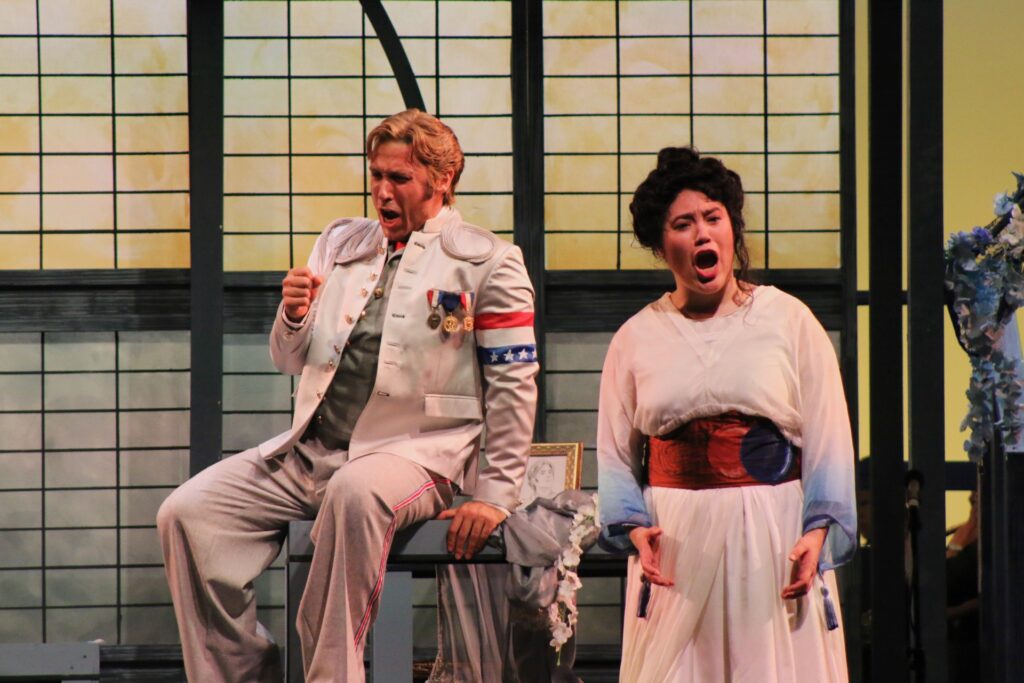

    In fact, I am hard pressed to think of anyone in a major role, or even in a walk-on, who didn’t please.  Bass-baritone Nan Wang brought the necessary authority to Bonze.  He has one scene, but his shunning of Ciao-Ciao-San continues to resonate in her poverty and isolation.

    Tenor Nicholas Nestorak – who sang Spoletta, Scarpia’s right-hand man, in last year’s “Tosca,” and was one of the vocal soloists in Stravinsky’s “Pulcinella” when the Princeton Symphony Orchestra performed it at Richardson Auditorium this past season – played the opportunistic marriage broker Goro, who seemed more genial and less conniving than usual.  But maybe I was just distracted by his fun-and-flirty costume.  (More on that coming also.)  He was in good voice, though.

    Baritone Joel Balzun was solid as Pinkerton’s friend, the American consul Sharpless, who repeatedly cautions against his cavalier manner and the perils of fishing in forbidden waters.  “This might be a joke to you,” he warns, “but she believes it.”

    “A vagabond Yankee enjoys himself and does business without concern for risk,” Pinkerton sings.
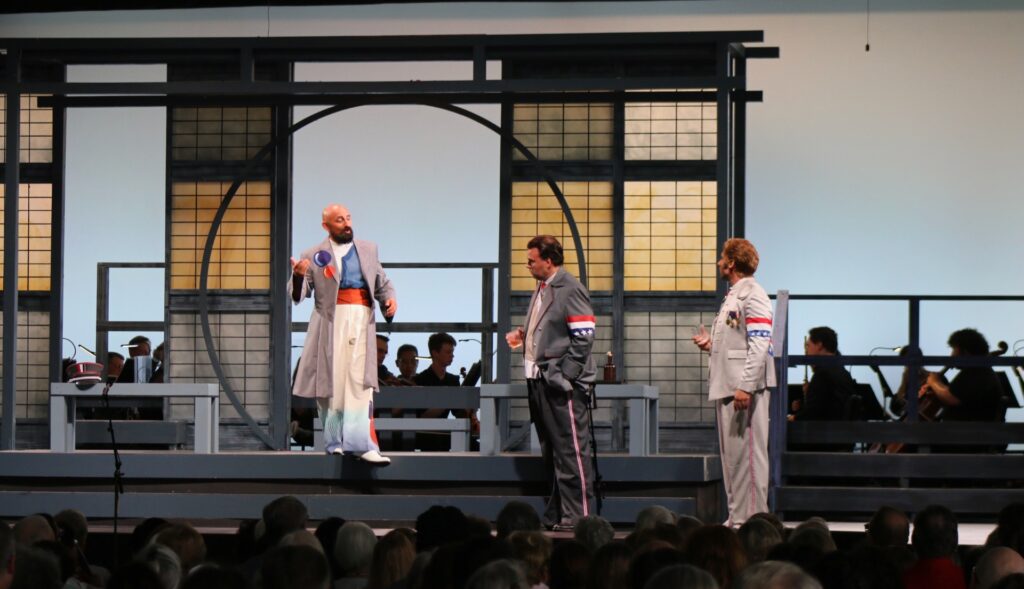
    Of course, this statement has increased resonance in 2026, and revisiting the opera the other night, it seemed astonishingly contemporary in other unanticipated ways.  I mean, Butterfly was always 15 at the start, but now with the Epstein files being so much in the news, it’s hard not to have current events unwittingly color one’s reactions.

    Clearly, the production could have gone at it with a heavy hand, but the details are still left to speak for themselves.  It’s the audience’s perception of the material that’s shifted to a perhaps unexpected degree, with what Pinkerton represents bringing a stronger kick (and ick) than might have been the case in the past.

    That’s no reflection on Victor Starsky’s characterization.  The tenor also sings it straight.  Pinkerton’s a young man, footloose and fancy free in what was then referred to as the Orient.  Life’s a lark and he indulges his passions in what he perceives as a kind of fairy tale pleasure garden.  So intoxicated is he, he confides, he’s not even sure if it’s a whim or if he really is in love. 

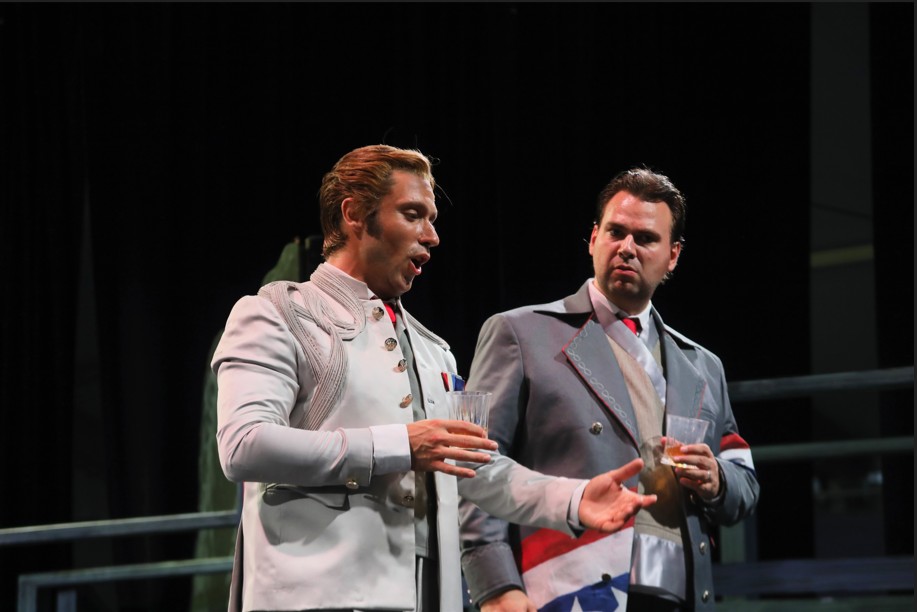
    In his meeting with Sharpless, he raises his glass to toast, “America forever!”  He also has his friend drink to the day he “marries for real to a true American wife.”  It’s hard to feel any sympathy for this character – he’s frustrating as hell and his actions are despicable – but he shouldn’t be played as a villain.  He’s just clueless, self-centered, and oblivious to consequences.  Even at the end, although he is devastated by the results of his actions, his capacity for empathy proves limited.  Everything is always all about him.

    I have to say, this production makes some very peculiar aesthetic choices in the costume department (the costume designs are by Neil Fortun), and many of them come across as misguidedly whimsical.

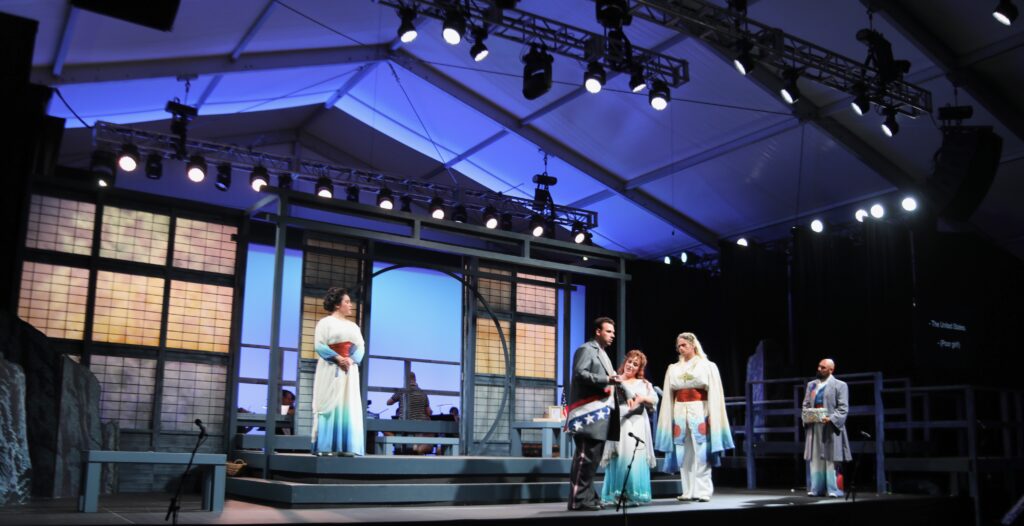
    Pinkerton makes his entrance in a white jacket emblazoned with a stylized American flag and red, white, and blue arm band, for me conjuring associations with an Evel Knievel stunt suit. 

    Sharpless’ attire bears a similar design, but on a gray frock coat, suggesting his diplomatic position.

    Perhaps most amusing of all is Butterfly’s would-be suitor, Yamadori (baritone Jacob Hanes), who shows up looking like glam elf Legolas. Don’t get me wrong, I would have loved to have worn that get-up, if I could have pulled it off. But I will never be blond enough or have so much hair again. Not a criticism of Hanes, but the costume made him memorable for all the wrong reasons. But I could tell he was digging it at the curtain call (as I would have too!).
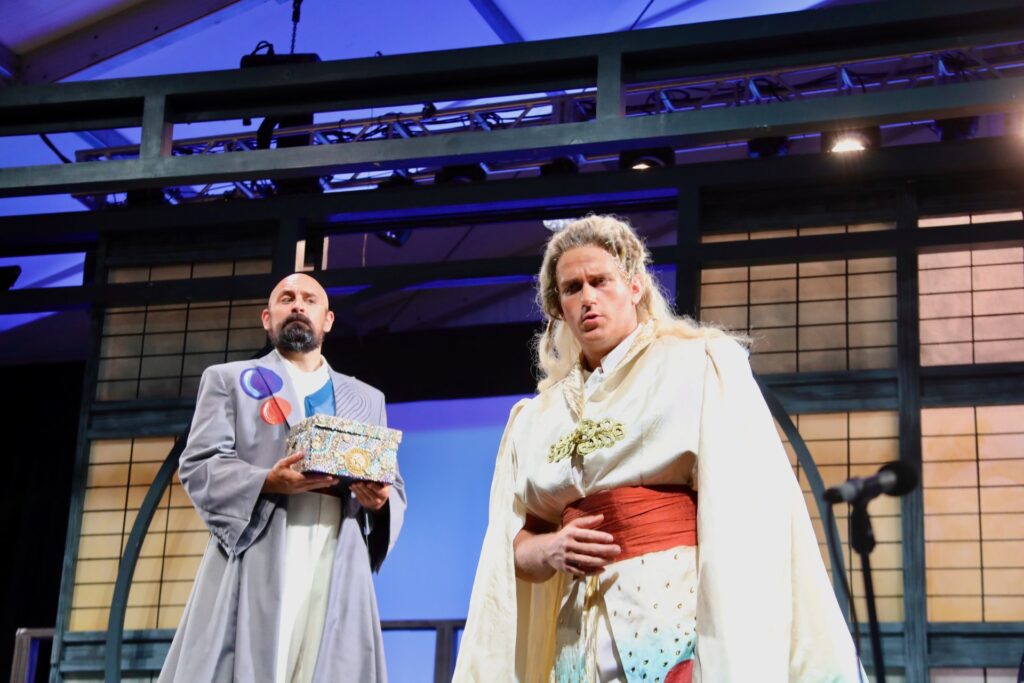

    The broader sartorial vibe suggests a utopian science fiction movie, an indeterminate land, though the shoji, paper lanterns, and some of the hair styles anchor it in Japan.

    Conditions are very different now than they were at the time of the opera’s first performance, more than 125 years ago. We’re living in a more reflective, internationally-conscious age. Or some of us are. “Butterfly” is an opera that, more than most, draws criticism for, among other things, a tendency for Westerners to play the East Asian parts. And while I am sensitive to that concern, I’m not sure handing out Pagliacci party pajamas, raided from Ringling Brothers clown college, is the solution.

    This production has no “yellow face” or uncomfortably-pronounced attempts at “Asian” make-up. (Butterfly has wavy auburn hair.) But with the quasi-kimonos and would-be nihongami hairstyles, it is unquestionably set in Japan. So what’s the point of the costumes? Are we supposed to be in Oz? Hanging with Willy Wonka? At a Lord of the Rings birthday party? (There are balloon-like patterns on everything.) If they wanted to go full-on Jedi “sweet 16” sleepover, they should have just done it.

    By contrast, the scenic designer Blair Mielnik came up with a fairly traditional, functional set, with aforementioned shoji, complete with sliding door, a porch, and a kind of rustic boardwalk at stage left, which allowed not only for character entrances and exits, but also created another tier for the singers.

    Despite the use of the aisles for some character entrances and exits and processionals to and from the stage, nothing really exploited the unique dimensions of the performance pavilion to the degree of last year’s spinetingling moment when the audience suddenly found itself surrounded by a choral procession at the Basilica di Sant’Andrea della Valle. But “Butterfly” is a different opera, lacking the political machinations and ecclesiastical grandeur that heighten the human drama at the heart of “Tosca.”

    Silhouettes against rice paper are nothing new, but the punctuation mark of a cascade of cherry blossoms at the end was a nice touch (Eve Summer is the stage director), a visual expression of the emotional final blow.

    Puccini really twists the knife in this one (literally and figuratively). Butterfly sings of her namesake, “They say overseas if it falls into someone’s hands it is pierced with a pin.” Her excruciating downfall is almost too much to bear. Why do we continue to do this to ourselves? Why do audiences voluntarily, eagerly subject themselves to these sado-masochistic, verismo tragedies? Because Puccini is seldom less than swooningly beautiful. The music at times would be downright saccharine if it wasn’t composed with such sincerity, and if every note didn’t convey such authentic (albeit heightened) human emotion.

    But even under the best of circumstances, “Butterfly” is rough: three acts of relentlessly heartbreaking degradation. Yet here I was, still haunted by the “Humming Chorus” the next morning. It’s an undeniably powerful piece of theater, and a beautiful one, but it is hard.

    It’s also a peculiar choice for this summer of America’s Sesquicentennial. Of all the operas, they had to choose one in which the United States is shown at its selfish, imperialist, consequences-be-damned worst. Lieutenant Benjamin Franklin Pinkerton, who serves on the gunboat USS Abraham Lincoln, is supported by grotesque distortions of the “Star-Spangled Banner.”

    I understand American operas aren’t likely to pack the house, but if they were going to do Puccini, couldn’t they have gone with “La fanciulla del West” (“The Girl of the Golden West”) – perhaps the world’s first spaghetti western – set in a California mining town? The music is equally beautiful, local color is emphasized over politics (foreigners resent U.S. imperialism, but they sure are fascinated by cowboys), and it has a happy ending. Also it’s set in the mountains in winter, allowing everyone to think cool thoughts.

    Be that as it may, the orchestra played “Madama Butterfly” with emotion, momentum, and striking unanimity for its 3-hour-plus running time, under Rossen Milanov’s assured direction, which surely demonstrated their extraordinary commitment to the score – which was all the more remarkable, as they were essentially hot-boxed between shoji and large screen, on which were projected colors and shades according to the dramatic demands of the moment, at the back of the tent. On Friday, the heat index by late afternoon had hit 100.

    Soprano Aubry Ballarò covered for the unexpectedly promoted Markey. Ballarò, as I noted following her appearance with the PSO earlier this past season (when she appeared with Nestorak in “Pulcinella”), has a smaller voice. The character of Kate Pinkerton doesn’t have a lot to do, which is unfortunate, because Ballarò proved that she has more to offer when she is given other singers to work against. She has a beautiful voice, but on Friday, I could barely hear her.

    Unquestionably, it was a great night for Markey, but Starsky reminded me of what was missing from an otherwise admirable performance, and that was the visceral power of the human voice emanating from a singer on stage, projecting into the audience. Friday, it couldn’t be helped. The show went on, the drama was intact, and Markey really did save the day.

    There’s one more performance of “Madama Butterfly” at the Princeton Festival, Sunday, June 14, at 4 p.m. Whether or not Palmertree will recover her voice, Markey will sing from the wings, or if she can be costumed and drilled sufficiently in the blocking so that she herself can appear onstage, remains to be seen. But no matter who assays the title role, you can be guaranteed to experience the opera with really first-rate singers and an orchestra that does them – and Puccini – proud.

    The Princeton Festival runs through June 21 at Morven Museum & Garden, 55 Mercer Street (Route 206), in Princeton. For tickets and information, visit princetonsymphony.org/festival.
  • Stunning Radvanovsky Worth the Wait, After Rain Delay at the Princeton Festival

    Stunning Radvanovsky Worth the Wait, After Rain Delay at the Princeton Festival

    Because of safety concerns regarding the ill-timed thunderstorms that battered the region last night not long before curtain, it was nearly 9:00 before soprano Sondra Radvanovsky took the stage of the performance pavilion at Morven Museum & Garden for the second night of The Princeton Festival. But boy, when she did, did she deliver.

    The program was perfectly tailored to suit her voice, with selections by Verdi (“La forza del destino”), Giordano (“André Chénier”), and Puccini (“Tosca” – which she’ll be singing at the Met next season – and an imperious Turandot). Her control was riveting, her dramatic presence hypnotic, and when she was under full sail, she flooded the tent with a magisterial voice that stirred overwhelming emotion.

    She was joined by rising tenor Victor Starsky, a Princeton Festival veteran, who sang Cavaradossi in last year’s production of “Tosca” and will return next week as Pinkerton in “Madama Butterfly.” Starsky had his time in the spotlight with “Celeste Aida” and that old standby, “Nessun Dorma.” Nothing sets a crowd wild like a tenor in full voice.

    But even more compelling, for me, personally, were his duets with Radvanovsky (from “Un Ballo in maschera” and “Manon Lescaut”), which allowed his passion to bubble over. I was left shaken by their concluding “Vicino a te s’acqueta,” from “André Chénier,” in which the couple anticipates fulfillment of their love in their impending death at the guillotine (“Viva la morte insiem!”) – so much so that, as I was chatting with some people behind me afterward, I nearly broke down.

    No doubt there would have been encores, but it was already pushing 11:00. I’m sure a lot of contracted employees are going to be getting overtime.

    Rossen Milanov conducted The Princeton Symphony Orchestra, in support of the singers, but also supplied the overtures and interludes by Verdi, Mascagni, and Leoncavallo. It was a late night, so I was thankful for having imbibed a strong cold brew beforehand. Even so, I think it would have been impossible to nod. It was definitely worth sweating it out in the car for an hour, waiting for the thunder and lightning to subside.

    Today is the festival’s Community Day, with Yoga in the Garden (to live musical accompaniment) already underway. That will be followed this afternoon by family friendly activities, including an instrument “petting zoo,” a musical story time, a quilting exhibition, “Harriet Powers: American Icon,” with the Princeton Sankofa Stitchers Modern Quilt Guild, and American Repertory Ballet‘s 30-minute “Swan Lake Experience,” an accelerated story of the ballet with audience participation, from 12-3 p.m.

    This evening, Milanov and the PSO will return to join the dancers for a program that will feature pas de deux from Tchaikovsky’s “Swan Lake” and “The Sleeping Beauty,” Samuel Barber’s “Adagio for Strings,” and a world premiere choreographed to music by Pulitzer Prize winner Caroline Shaw. But especially interesting to me will be a ballet set to Jean Françaix’s Piano Concerto, with Steven Beck the soloist. The event will commence in the performance pavilion on the Morven grounds at 7 p.m.

    Morven Museum & Garden is located at 55 Stockton Street (Route 206) in Princeton, NJ.

    The Princeton Festival runs through July 21. For tickets and information, visit princetonsymphony.org/festival.
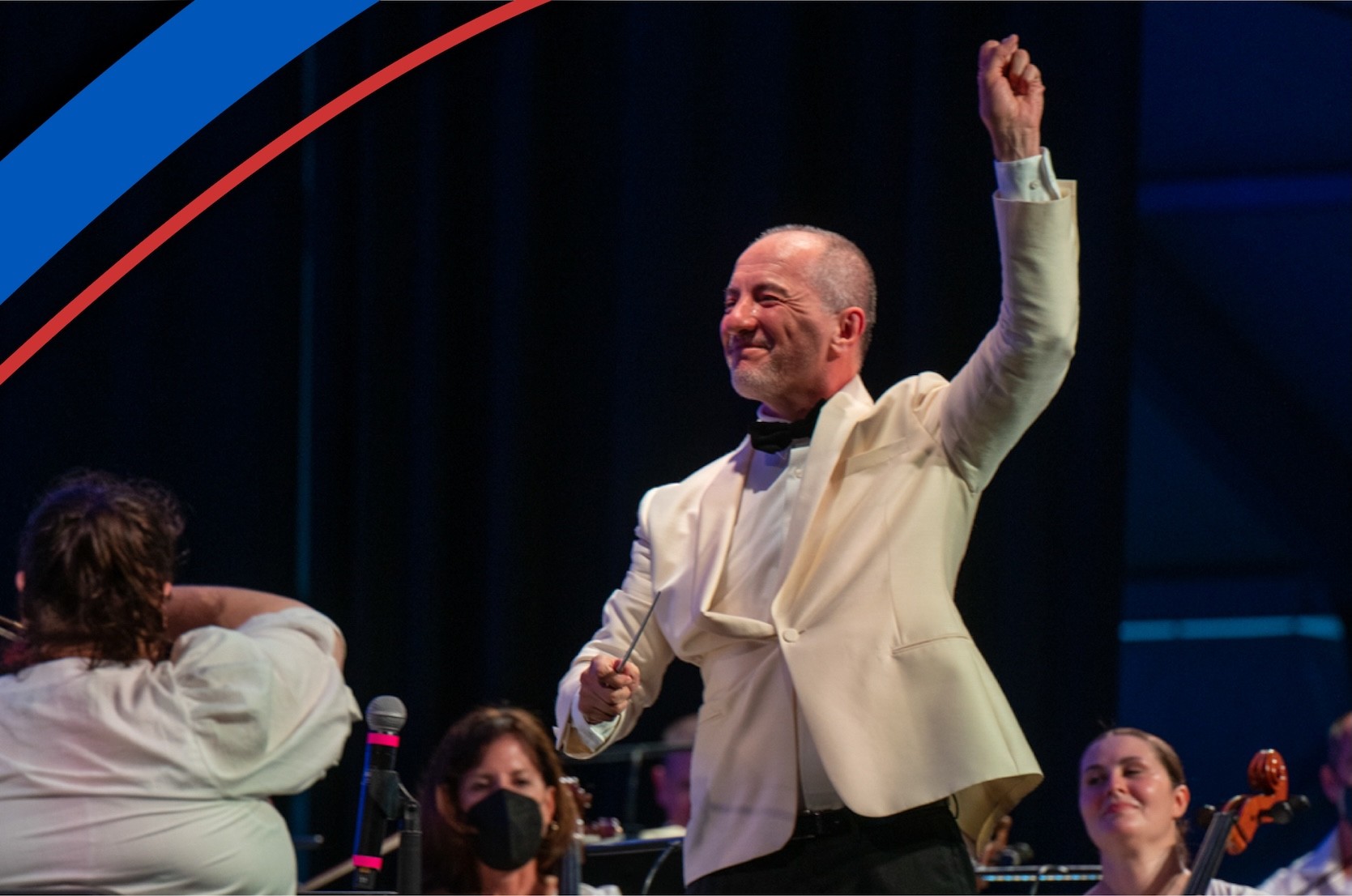
    ——–

    I didn’t take any pictures last night. I’ll add a more pertinent photo once the Princeton Festival makes one available!

  • June Is Bustin’ Out at the Princeton Festival

    June Is Bustin’ Out at the Princeton Festival

    It’s June, and the performance pavilion is up at Morven Museum & Garden! Who’s ready to hear some music? Opera, cabaret, Baroque, dance, Great Ladies of Jazz, Time for Three, the Bacon Brothers, Queen Nation, and a pops concert in celebration of America’s 250th birthday – the Princeton Festival will begin on Friday and run through June 21.

    Main stage events will be held on the grounds of Morven, at 55 Stockton Street (Route 206), with Baroque concerts held across the way, at Princeton’s Trinity Church (33 Mercer Street).

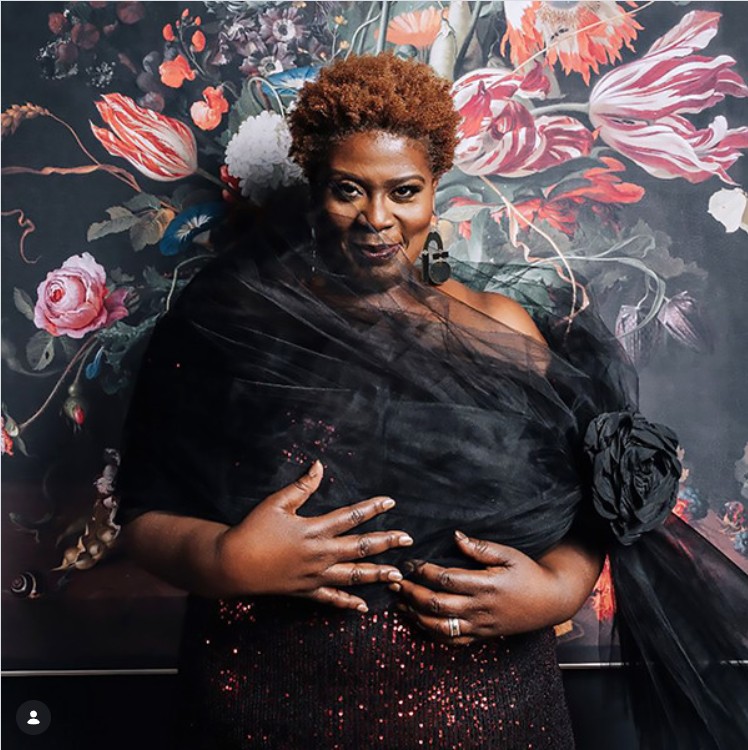
    On opening night, Broadway superstar Sierra Boggess (“The Little Mermaid,” “The Phantom of the Opera”) will perform cabaret-style, with piano, sharing showtunes, songs, and personal anecdotes (Morven, Friday at 7 p.m.).


    Then will be a big treat for opera lovers, as world-renowned soprano and Metropolitan Opera star Sondra Radvanovsky will headline a program of moving arias, duets, and orchestral interludes from the Italian repertoire, including works by Puccini, Verdi, Mascagni, and Giordano. For the duets, she’ll be joined by Festival veteran Victor Starsky, who will also perform the showstopper “Nessun Dorma.” The Princeton Symphony Orchestra will be conducted by Rossen Milanov (Morven, Saturday at 8 p.m.).


    Sunday will be the Festival’s Community Day, which will include free morning Yoga in the Garden (9 a.m.) and, in the afternoon, family friendly activities, such as an Instrument Petting Zoo, a Musical Story Time, a Quilting Exhibition “Harriet Powers: American Icon,” with the Princeton Sankofa Stitchers Modern Quilt Guild, and American Repertory Ballet‘s 30-minute “Swan Lake Experience,” an accelerated story of the ballet with audience participation (12-3 p.m.).

    In the evening, Milanov and the PSO will return in support of the dancers for a program including celebrated pas de deux from Tchaikovsky masterworks (including “Swan Lake”), a ballet set to a neglected gem by Jean Françaix – his Piano Concerto, with Steven Beck the soloist – and a world premiere choreographed to music by Pulitzer Prize winner Caroline Shaw (Morven, Sunday at 7 p.m.).


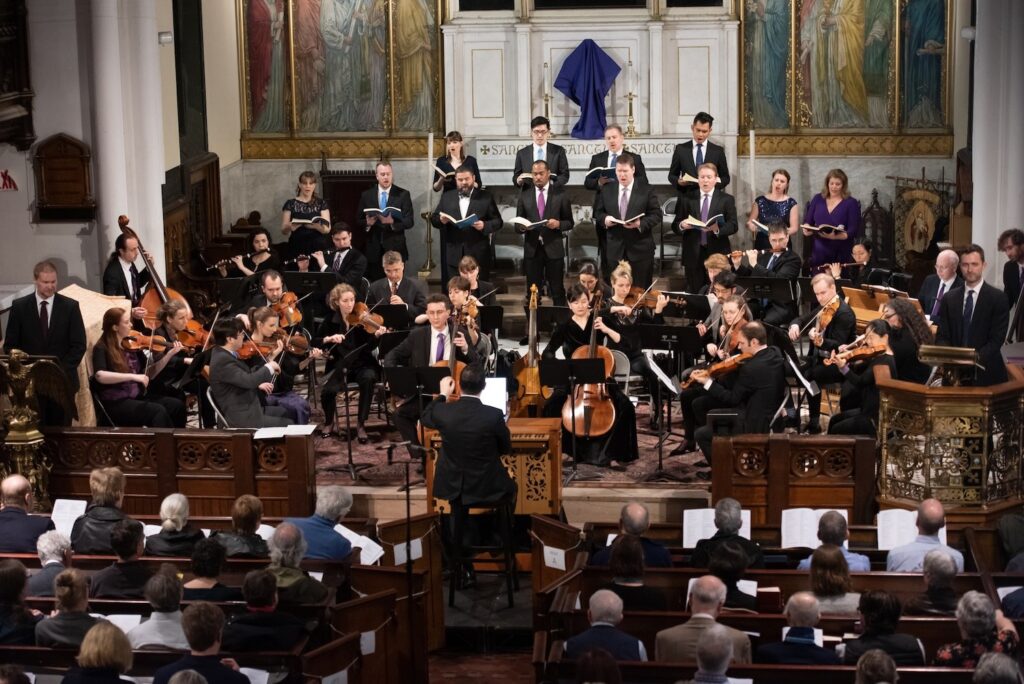
    Two Baroque concerts will be offered on weeknights at Trinity Church, with The Sebastians performing a program of Bach cantatas, BWV 140 “Wachet auf, ruft uns die Stimme” (“Sleepers Awake”) and BWV 80 “Ein feste Burg ist unser Gott” (“A Mighty Fortress Is Our God”), alongside the Orchestral Suite No. 2 in B minor (Trinity, next Tuesday at 7 p.m.).


    Vivaldi’s “The Four Seasons” will highlight a program performed by the ensemble Twelfth Night that will also include works by Pietro Locatelli, Arcangelo Corelli, and Francesco Durante (Trinity, next Thursday at 7 p.m.).


    This year’s fully-staged opera will be Puccini’s “Madama Butterfly.” Soprano Toni Marie Palmertree, who really threw herself into the role (and off Castel Sant’Angelo’s parapet) last year as Tosca – and who recently sang “Butterfly” at the Met – will sing Cio-Cio-San. Victor Starsky, who gave an impassioned performance as Tosca’s lover, Cavarodossi (and, again, will sing with Radvanovksy this Saturday) – will return as Pinkerton. Once again, Milanov will conduct the PSO. The opera will be heard in two performances (Morven, Friday, June 12, at 7 p.m.., and Sunday, June 14, at 4 p.m.).


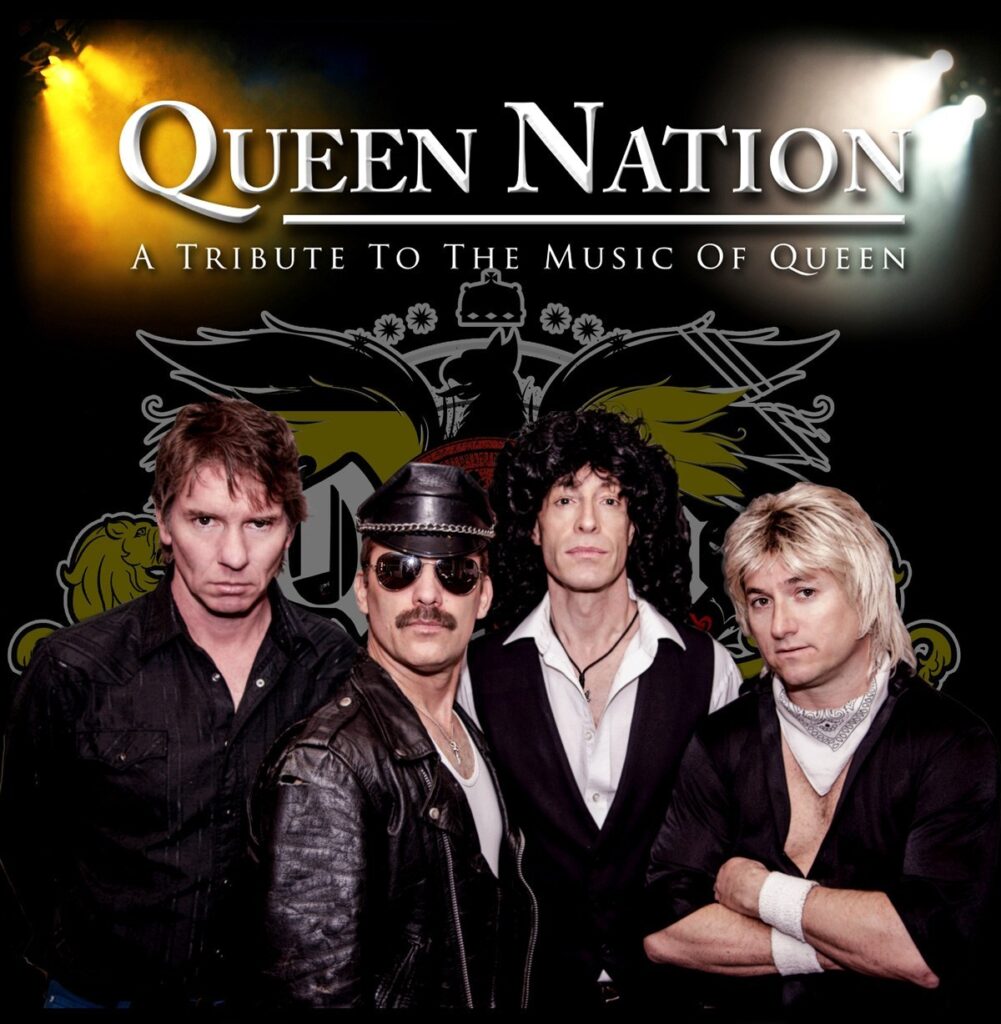
    Impassioned music-making of another sort will rock the pavilion – and you – as musicians of Queen Nation, billed as the undisputed #1 Queen Tribute Band in the United States, declare themselves the champions in iconic Queen ‘70s and ‘80s-era costumes (Morven, Saturday, June 13, at 7 p.m.).


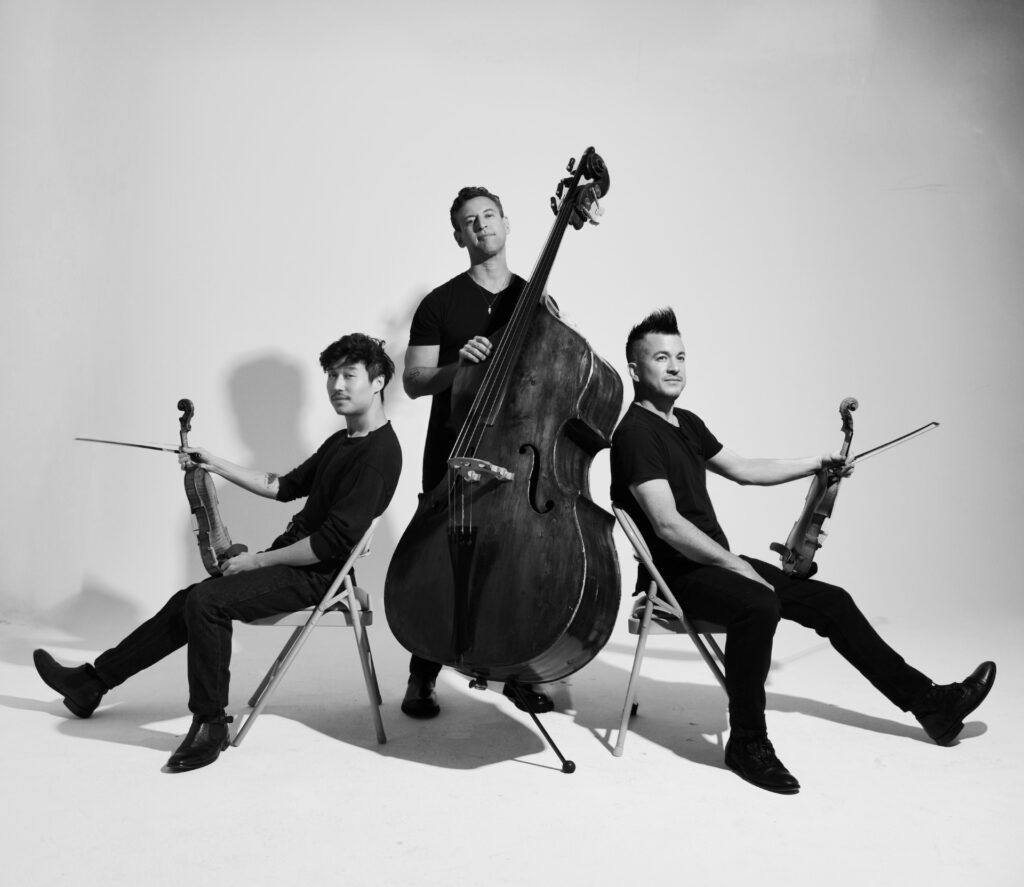
    Grammy and Emmy Award-winning ensemble – and Festival favorites – Time for Three will return with another genre-defying program. The trio of Ranaan Meyer (double bass, vocals), Nicolas “Nick” Kendall (violin, vocals) and Charles Yang (violin, vocals) merge classical, Americana, and singer-songwriter traditions into a singular, remarkable sound. As always, in the spirit of spontaneity, as always, the group will announce its selections from the stage (Morven, Thursday, June 18, at 7 p.m.).


    The concluding weekend will be a three-day showcase of American music, in celebration of America’s Semiquincentennial, with additional family events on Sunday. The weekend will be presented in partnership with the Municipality of Princeton.

    Great Ladies of Jazz will be a tribute to Ella Fitzgerald, Sarah Vaughan, Billie Holiday, Judy Garland, and Ginger Rogers, among others, starring Capathia Jenkins and Aisha de Haas. Lucas Waldin will conduct the Princeton Symphony Orchestra (Morven, Friday, June 19, at 7 p.m.).


    A pre-concert talk, “Jazz and the Civil Rights Movement,” will be delivered by Princeton University voice teacher Dr. Rochelle Ellis. Treats will be available to sample from Tipple & Rose, and Morven’s Museum will be open with free admission from 5-7pm in recognition of Juneteenth.

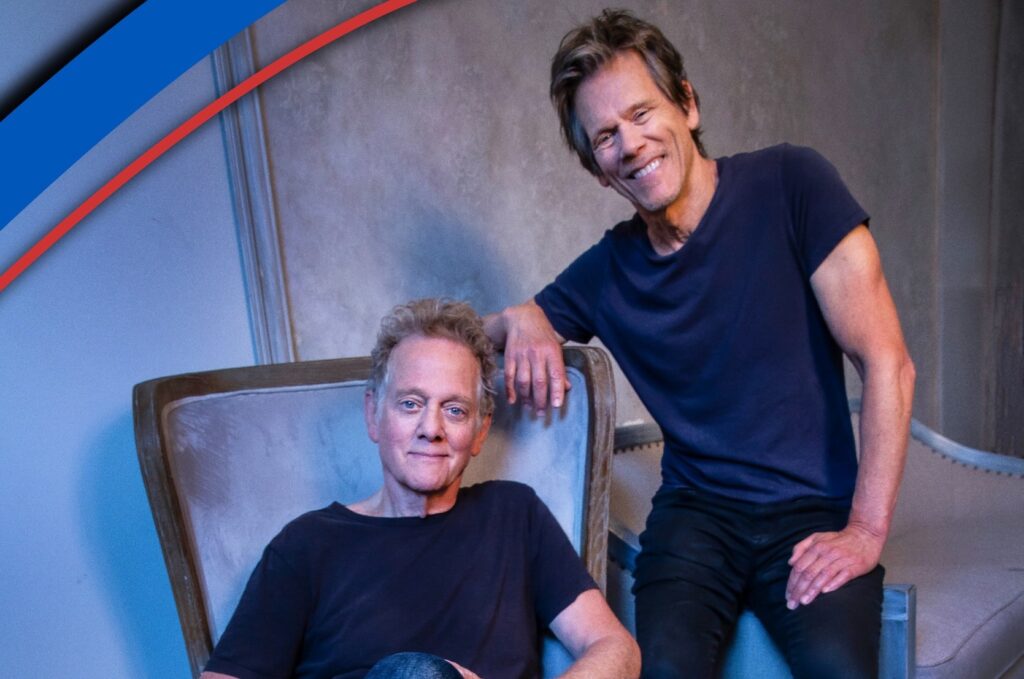
    The Bacon Brothers, Emmy-winner composer Michael and A-list actor Kevin (of “Footloose” and “Apollo 13” fame), will play a mix of folk, rock, soul, and country music. Olsson’s Fine Foods will be onsite with Happy Hour Boxes filled with gourmet cheeses and sandwiches. (Morven, Saturday, June 20, at 7 p.m.).


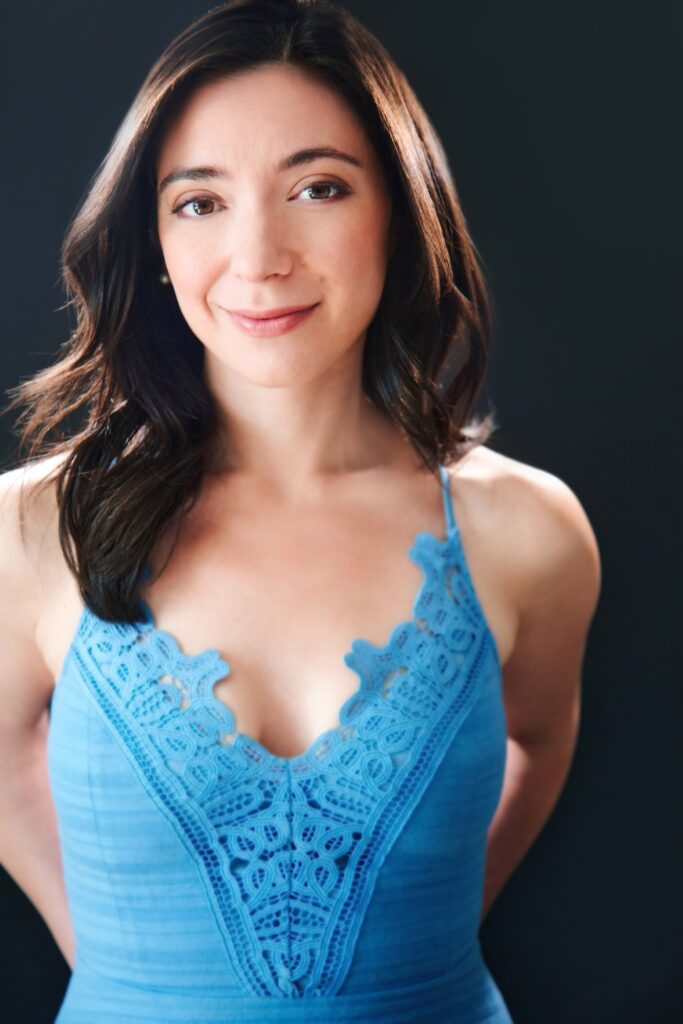
    Finally, the Princeton Symphony Orchestra will offer a star-spangled salute with “American Fanfare,” featuring Broadway vocalist Julie Benko (“Funny Girl”). The patriotic program will include works by Aaron Copland, Valerie Coleman, Virgil Thomson, Richard Rodgers, Harold Arlen, and John Philip Sousa. America 250 flags and red, white, and blue pom-poms will be given out to the first 150 to enter the grounds (Morven, Sunday, June 21 at 3 p.m.).


    Prior to the concert, free family fun for children of all ages will be available, beginning at 1:00.

    Picnic boxes from Jammin’ Crepes may be pre-ordered up to 48 hours before each mainstage Festival performance, except the June 6 Sondra Radvanovsky concert.

    Tickets and information are available by phone at (609) 497-0020 and online at princetonsymphony.org/festival.
  • The Princeton Festival’s “Tosca” Takes Flight

    The Princeton Festival’s “Tosca” Takes Flight

    Once you see “Tosca,” you never forget it. But I never expected to be haunted by it!

    I remember the first time I saw it on PBS back in the 1980s. It was one of those “Great Performances” broadcasts from the Metropolitan Opera, with Hildegard Behrens in the title role and Cornell MacNeil as the villainous Scarpia. Placido Domingo was Cavaradossi. From the perspective of my 19-year-old self, Domingo, especially, seemed a little long in the tooth to be cutting the romantic figure of a dashing young painter turned political prisoner. Funny to think back on it now, as he must have only been in his 40s at the time. And he’s still singing!

    Now, 40 years on, what a difference it makes to experience the work with someone with the pipes AND the youth to really put it across. Last night at The Princeton Festival, tenor Victor Starsky sang Cavaradossi with power and vigor. In fact, all three leads, including soprano Toni Marie Palmertree as Tosca and baritone Luis Ledesma as Scarpia, were extraordinarily well-matched, at every turn heightening the drama and intensifying the passion, in what is really a lean chamber piece writ large by Giacomo Puccini. Frankly, I never recognized its genius before.

    Never had I found myself so engrossed in the work’s interweaving themes, both musical (the interplay of heart-rending leitmotifs clearly paving the way for Hollywood film scores of the 1930s & ’40s) and textual (the libretto a fascinating blend of religion, politics, and sexuality). It really got me thinking about how each of the characters relates to love, death, and God in various combinations. And I thought “Tristan” was perverse in its celebration of love-death! Clearly, Wagner was not Italian.

    It’s the kind of reflection one engages in when one experiences opera as theater, as opposed to listening to it on a recording, where the music and the quality of the singing take precedence. In the opera house, you get the total experience, as you’re also focusing on the action and the words.

    “Tosca” really begins to insinuate itself as it explores various permutations of faith and blasphemy, eroticism and nihilism. Far from the laugh-out-loud experience of that PBS “Tosca” that had me howling in Act III, the opera, when done right, makes you forget how trashy the subject matter really is. It’s no longer the “shabby little shocker” derided by musicologist Joseph Kerman, but rather like Victor Hugo at his most twisted. You just don’t know how to feel about certain things, but you can’t help FEELING. Is there a more desolate aria than Cavaradossi’s “E lucevan le stelle?” Sometimes you’re just screwed. Interesting, though, that the character couches thoughts of impending doom in meditations on all the hot nights he’s going to be missing out on with Tosca. Molto Italiano!

    Tosca’s thoughts, on the other hand, in her own expression of hopelessness, the aria “Vissi d’arte,” turn on contemplations as to why God has deserted her. For Scarpia, virile, dangerous, and subtle, well, he sings – in church no less – “Tosca, you make me forget God!” Because he’ll do anything to have her.

    Ledesma not only has the voice, but the imposing carriage to convince as the morally bankrupt chief of police, who is the recipient of the opera’s most awe-inspiring leitmotif. He is an edifice in himself, the embodiment of power corrupted. We hear echoes of it, even as Tosca enacts a pious ritual with candles and crucifix over his corpse, as if to note, how the mighty have fallen.

    Scarpia is no cartoon villain. He invokes Iago in the first act. Even in death, he dominates. It’s not for nothing that Tosca’s last line is “I’ll see you before God, Scarpia!” The full extent of his calculated evil comes to light only posthumously, and he looms over the fates of the other characters, just as the grim prison of the Castel Sant’Angelo looms over Rome.

    For such a swift opera (Puccini was ruthless in trimming numbers from the libretto, based on a sprawling melodrama conceived by Victorien Sardou as a vehicle for Sarah Bernhardt), the characters are fascinatingly layered. Some contemporaries complained about the resulting sacrifice of lyricism (alleged), but the drama is inexorable. Since there are no set pieces or flashy effects (beyond perhaps that chorus at the end of Act I), it’s essential that all the singers be able to pull their weight, vocally and as actors.

    The opera certainly offers a plum part for a soprano – a diva playing a diva – and Palmertree left nothing on the table. Like Starsky, she brought it when it counted. Tosca’s journey takes her from the comparative innocence of love, religious devotion, and petty jealousy in Act I to desperation and resourcefulness, as she pushes back against Scarpia’s objectification and harassment in Act II, to the point that she takes matters into her own hands. Palmertree made you feel the anguish of Tosca trying to keep her lover’s secret, even as she hears him being tortured in the next room, only to have to rein it in a few moments later to strike the right tone of introspection to navigate her dark night of the soul in “Vissi d’arte.”

    The Princeton Symphony Orchestra was in impressive tune with its conductor, Rossen Milanov, who led the performance as to the manner born. Milanov has ample experience conducting opera and ballet in the U.S. and Europe, but it’s only comparatively recently that we’ve been exposed to that facet of his artistry in Princeton. Nothing I’ve heard at the Princeton Festival since its post-COVID resurrection in 2022 prepared me for what I heard and saw last night. Milanov conjured waves of sound and navigated passionate breakers, but he did so most undemonstratively, as a collaborator, yes, but also as a sensitive accompanist. Conducting opera is like steering a ship, and no matter how turbulent the drama got, Milanov at the helm kept his cool and rode the blue. I don’t know if it’s just that I haven’t been paying close enough attention, but even when conducting the orchestra’s regular subscription concerts at Richardson Auditorium, he really does seem to be more relaxed and just getting better all the time.

    Also, not to be undersold was the production’s stage direction by Eve Summer. Even though I emphasize “Tosca’s” intimacy, the opera would seem to call for grand sets, at least for the outer acts. How do you believably conjure the church of Sant’Andrea della Valle on a stage the size of the one inside the performance pavilion on the grounds of Morven Museum & Garden? And how on earth do you hope to convey the height and imposing grandeur of the Castel Sant’Angelo, and still have room for a firing squad, much less to pull off the opera’s famous ending. Yet Summer and scenic designer Ryan McGettigan made it work. A masterstroke came at the end of the first act, when the chorus (prepared by Vinroy Brown), attired in cowls and miters, processed from the stage up and down the aisles of the tent to surround the audience with spinetingling sonorities.

    Furthermore, I must say, I expected something far less spectacular from Tosca’s final act of defiance. Instead of simply dropping from the parapet, as I anticipated, Palmertree suddenly put on a burst of speed, dashing along the length of the battlement, at the far end flinging herself headlong into oblivion. Kudos for going for broke! I am nearly always slammed by a wave of emotion at the end of an opera, but the music, the visual, and the audience reaction really put it over the top.

    I admit, when I first heard that the opera this summer was going to be “Tosca,” I had my doubts. Previously, the post-COVID, Princeton Symphony Orchestra incarnation of the Princeton Festival had dealt solely in comedy – “The Barber of Seville,” “Albert Herring,” “Cosi fan tutte,” “The Impresario” and “Scalia/Ginsburg” – certainly apt, given the season and the venue. These all had their enjoyments, but I was unprepared for “Tosca,” which despite the stage limitations, was a triumph.

    Anything else this week is bound to seem anticlimactic, but there’s something to be said for just relaxing and enjoying a concert. The Princeton Festival runs through Saturday. For the remainder of this year’s schedule, visit https://www.princetonsymphony.org/festival.
  • Princeton Festival: “Tosca” & More!

    Princeton Festival: “Tosca” & More!

    Life has gone so far over the top recently that even Puccini’s “Tosca” no longer seems farfetched. Once scathingly dismissed by musicologist Joseph Kerman as a “shabby little shocker,” this tale of love, politics, and the world’s most melodramatic diva is now so meta that the characters threaten to leap from the stage. If you’ve never seen it, well, never mind. Now’s your chance! One of the world’s most popular operas will be given three performances at The Princeton Festival, this Friday at 8:00, Sunday at 4:00, and Tuesday at 7:00.

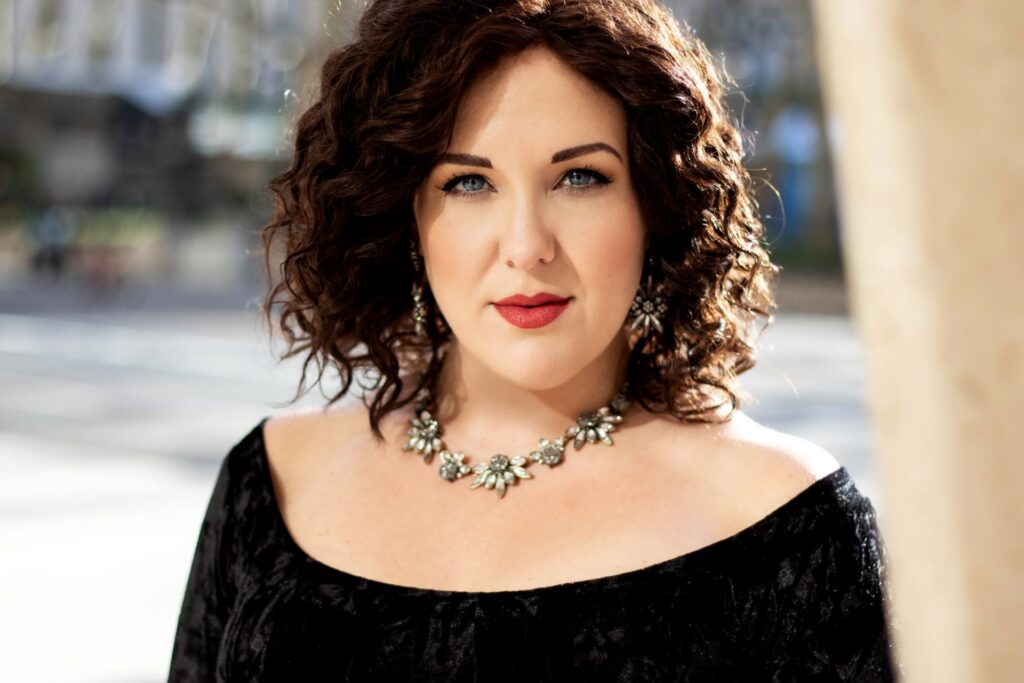
    Soprano Toni Marie Palmertree will sing the title role of the fiery opera singer who has a peculiar idea of what constitutes a kiss, tenor Victor Starsky her lover, the luckless artist Cavaradossi, and baritone Luis Ledesma, the slimy chief of police Scarpia. Puccini’s spinetingling score contains some of his most ardent, shattering music. And that is saying something!

    The Princeton Symphony Orchestra, Princeton Festival Opera Chorus, and student singers of Princeton Middle School will be conducted by music director Rossen Milanov.

    The opera will be presented in the state-of-the-art festival pavilion on the grounds of Morven Museum & Garden at 55 Stockton Street/Rte. 206.

    Prior to the Sunday performance, Westminster Choir College’s Margaret Cusack and stage director Eve Summer will discuss the production in a special presentation at Morven’s Stockton Education Center at 2:15.

    Of course, opera is not the only thing to look forward to this week. Tonight, Kentucky-born, classically-trained violinist Tessa Lark will introduce “Stradgrass” to Princeton. Lark went from playing in her father’s gospel bluegrass band to studies at the New England Conservatory and Juilliard. Her festival program will meld music by Telemann, Bach, and Ysaÿe with Appalachian and bluegrass licks. The concert will take place at Trinity Church Princeton at 33 Mercer Street (across the way from Morven Museum), beginning at 7 p.m.

    Back under the Morven pavilion, and in between this weekend’s performances of “Tosca,” American Repertory Ballet will execute “An Evening of Pas de deux” accompanied by members of the PSO, again conducted by Milanov. On the program will be selections from Tchaikovsky’s “Swan Lake” and Minkus’ “Don Quixote,” along with Ethan Stiefel’s “Delibes Duet.” The dancing will begin this Saturday at 7 p.m.

    Yet to come, next week: “Baroque Brilliance” with The Sebastians, Motown with Masters of Soul, “Viva Vivaldi” with violinist Daniel Rowland and cellist Maja Bogdanović, and “ARRIVAL from Sweden: The Music of ABBA!”

    For more information, visit the Princeton Festival website at https://princetonsymphony.org/festival.

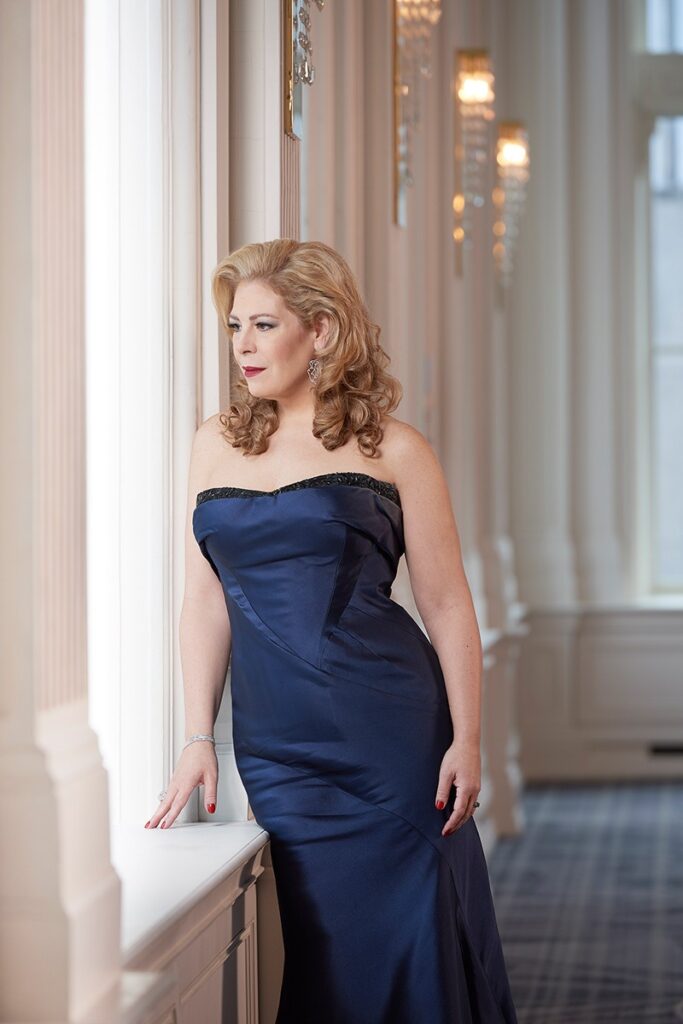
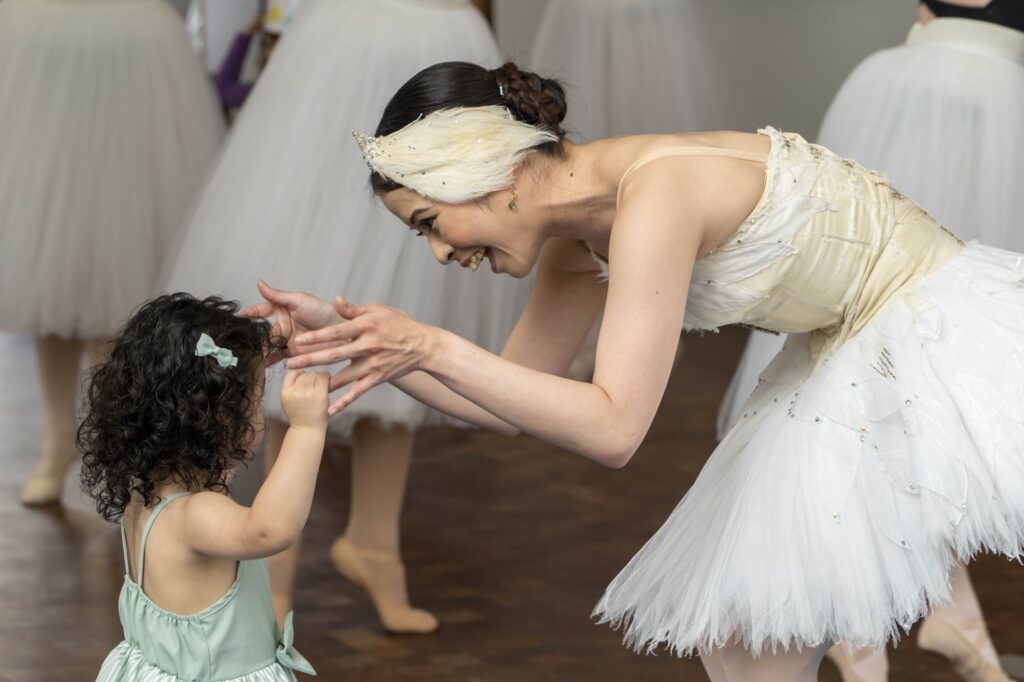
    CLOCKWISE FROM LEFT: Tessa Lark (“Stradgrass,” tonight at 7:00 at Trinity Church), Toni Marie Palmertree (“Tosca,” Friday at 7:00, Sunday at 4:00, and Tuesday at 7:00 at Morven Museum), inside the Festival Pavilion, and American Repertory Ballet (“An Evening of Pas de deux,” Saturday at 7:00 at Morven)

Tag Cloud

Aaron Copland (93) Beethoven (95) Composer (114) Film Music (129) Film Score (143) Film Scores (255) Halloween (94) John Williams (192) KWAX (229) Leonard Bernstein (103) Marlboro Music Festival (125) Movie Music (144) Mozart (88) Opera (206) Philadelphia Orchestra (89) Picture Perfect (174) Princeton Symphony Orchestra (108) Radio (88) Ross Amico (244) Roy's Tie-Dye Sci-Fi Corner (290) The Classical Network (101) The Lost Chord (268) Vaughan Williams (103) WPRB (396) WWFM (881)

DON’T MISS A BEAT

Receive a weekly digest every Sunday at noon by signing up here


RECENT POSTS