Tag: Rosh Hashanah

  • Marriner Reich & Rosh Hashanah on WWFM

    Marriner Reich & Rosh Hashanah on WWFM

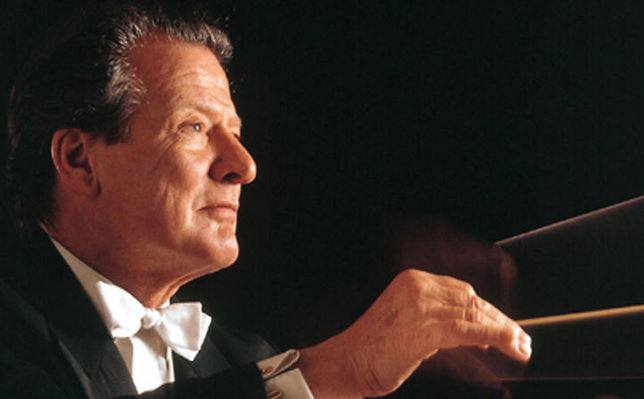
    This afternoon, we’ll remember Sir Neville Marriner, who died yesterday, peacefully, in his sleep, at the age of 92. Impressively, Marriner conducted his final concert in Padua on Thursday. Tomorrow, he was scheduled to begin a tour of Austria, Germany and Belgium with the Academy of St. Martin-in-the-Fields, the orchestra he founded in 1958. We’ll honor this indefatigable musician with a number of his cherished recordings, as well as one or two which are perhaps not so well known.

    We’ll also look to American composer Steve Reich, who is 80 years-old today. We’ll hear his Pulitzer Prize winning “Double Sextet,” performed by Eighth Blackbird. If you’re a Steve Reich fan, you’ll want to join David Osenberg for another “Celebrating Our Musical Community,” tonight at 8:00 EDT. He’ll introduce a concert of Reich’s works presented by gifted students and artists-in-residence at the Curtis Institute of Music in Philadelphia, including members of Eighth Blackbird and Nexus Percussion.

    Finally, we’ll include some music in observance of Rosh Hashanah, the Jewish New Year, including a work for string quartet by Darius Milhaud, based on tunes from High Holy Days liturgies indigenous to the composer’s native Provence.

    That’s a lot to cover in only three hours. We’ll do our best to make the New Year sweet, from 4 to 7 p.m. EDT, on WWFM – The Classical Network and at wwfm.org.

  • Rosh Hashanah & Yom Kippur Music for the High Holy Days

    Rosh Hashanah & Yom Kippur Music for the High Holy Days

    L’shana tova! Rosh Hashanah, the Jewish New Year, begins at sunset. The two-day observance commences ten Days of Awe, concluding with Yom Kippur, the holiest day on the Jewish calendar.

    This Sunday night on “The Lost Chord,” we’ll have selections for the Jewish High Holy Days. We’ll hear a string quartet by Jacob Weinberg, dating from 1950. The work falls into three movements, which bear the respective subtitles “Rosh Hashanah,” “Yom Kippur” (the Day of Atonement) and “Sukkot” (the harvest festival).

    Weinberg’s “Yom Kippur” is based on the familiar declaration of “Kol Nidrei,” best known to gentiles, probably, through the setting for cello by Max Bruch. Bruch, though not Jewish, always had a good ear for characteristic melodies of different cultures (e.g. the “Scottish Fantasy,” the “Swedish Dances,” the “Suite on Russian Themes,” etc.).

    Emil Nikolaus von Reznicek – he of “Donna Diana Overture” fame – was likewise moved by the Yom Kippur melody, on which he wrote a large-scale set of orchestral variations, which we’ll also hear. Interestingly, in contrast to the reverential setting by Bruch, Reznicek puts the theme through a befuddling array of permutations, pivoting back and forth from light to serious. It’s not synagogue music, but it is fascinating.

    We’ll conclude the hour with a moving arrangement by Patrick Sinozich of ”Avinu Malkeynu” (“Our Father, Our King”) by Max Janowski, performed by Chicago a cappella.

    I hope you’ll join me for “Tones of Atonement,” this Sunday night at 10 EDT on WWFM – The Classical Network or at wwfm.org.


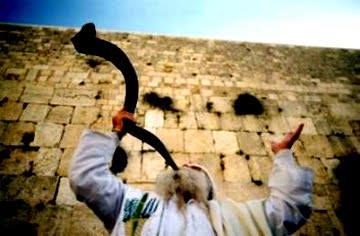
    PHOTO: The ten Days of Awe are bookended by blasts on the shofar

  • Rosh Hashanah Music for the High Holy Days

    Rosh Hashanah Music for the High Holy Days

    L’shanah tovah! A little before the fact, maybe, but Rosh Hashanah, the Jewish New Year, begins at sunset.

    This Sunday night on “The Lost Chord,” we mark the High Holy Days, which encompass the observance of Rosh Hashanah and Yom Kippur – the Day of Atonement – with two complementary works.

    Jacob Weinberg’s String Quartet, Op. 55, of 1950, falls into three movements: “Rosh Hashana,” “Yom Kippur” and “Sukkot.” “Yom Kippur” is based on the familiar melody of the cantorial chant “Kol Nidre.” (You know, the one used by Max Bruch.)

    Ernest Bloch’s “Israel Symphony,” composed between 1912 and 1917, is more like an orchestral rhapsody, with its three sections – “Prayer in the Desert,” “Yom Kippur” and “Succoth” – played continuously and capped by parts for vocal soloists.

    Sukkot, which begins shortly after Yom Kippur, is the harvest festival which commemorates the period following the Exodus, when the Jews erected temporary dwellings, or sukkot, during their wanderings in the desert.

    The High Holy Days are a time of reflection, ten days of awe and repentance. I hope you’ll join me for “Totally Awesome,” tonight at 10 ET, with a repeat Wednesday evening at 6; or that you’ll listen to it later as a webcast at wwfm.org.

Tag Cloud

Aaron Copland (92) Beethoven (95) Composer (114) Film Music (123) Film Score (143) Film Scores (255) Halloween (94) John Williams (187) KWAX (229) Leonard Bernstein (101) Marlboro Music Festival (125) Movie Music (138) Opera (202) Philadelphia Orchestra (89) Picture Perfect (174) Princeton Symphony Orchestra (106) Radio (87) Ralph Vaughan Williams (85) Ross Amico (244) Roy's Tie-Dye Sci-Fi Corner (290) The Classical Network (101) The Lost Chord (268) Vaughan Williams (103) WPRB (396) WWFM (881)

DON’T MISS A BEAT

Receive a weekly digest every Sunday at noon by signing up here


RECENT POSTS