Tag: Symphony No. 4

  • Charles Ives: An American Original

    Charles Ives: An American Original

    With the birthday of Connecticut cranky Yankee, Charles Ives, the autumn of my content deepens, as golden leaves find parallel in the Golden Age of American music and a run of composer birthdays that stretch clear into early December (Howard Hanson, Aaron Copland, Virgil Thomson, Irving Fine, Morton Gould, etc.). As a radio programmer of so many years, I am sensitive to these types of patterns!

    Ives, born on this date in 1874, was the first of our modern giants, and his influence has been the furthest reaching. While piling up acorns in the insurance business, he had the freedom to pursue his idiosyncratic muse. He composed in the evenings, on weekends, and on holidays, creating works of all stripes, tonalities, and quasi-tonalities, even atonality, navigating with remarkable certainty for some 30 years. And he did so in the relative isolation of a prophet, with very few performances to affirm his chosen course.

    Ives retired in 1930, which allowed him to devote himself wholeheartedly to music. Ironically, by then, he found he was no longer able to compose. His wife recalled a day in 1927 when he came downstairs with tears in his eyes and confessed that everything sounded wrong to him. After that, he labored mostly at revision and publication.

    By the time his works finally began to gain recognition, it had already been 20 years since he had stopped composing. At the time of his death, in 1954, he was still widely misunderstood and much of his music remained unperformed. Nevertheless, he had some important champions. He was a recipient of the Pulitzer Prize for Music in 1947, for his Symphony No. 3, “The Camp Meeting,” a work he had written in 1904. His reaction? “Prizes are for boys, and I’m all grown up.” He gave away the prize money, half of it to Lou Harrison, who had conducted the belated premiere.

    Even in the 1960s, the world was still grappling with Ives. In 1965, Leopold Stokowski gave the first performance of the Symphony No. 4. At the time, the work’s complex, kaleidoscopic tempos and layered, shifting meters required multiple conductors, and Stokowski enlisted the aid of David Katz and a young Jose Serebrier. The performance took place at Carnegie Hall with the American Symphony Orchestra and the Schola Cantorum of New York.

    The piece was composed between 1910 and the mid-1920s. The first two movements had been performed by members of the New York Philharmonic under the direction of Eugene Goossens in 1927. This was the only occasion on which Ives would hear any of the music performed live by an orchestra. (He died in 1954.)

    Bernard Herrmann conducted an arrangement of the lovely third movement, the simplest and most conservative of the four (why, then, the need for an arrangement?), in 1933. The music as Ives wrote it was not heard until Stokowski’s complete performance.

    The composer’s biographer, Jan Swafford, describes the work as “Ives’ climactic masterpiece.”

    Stokowski recorded the symphony a few days after the premiere and led a televised studio performance, which can be seen here:

    Stoky kicks off twenty minutes of spoken introductory material (including commentary from producer John McClure) at the 4:30 mark. The symphony proper begins 25 minutes in.

    When’s the last time you saw anything like this on television?

    Marveling at how out of step with musical convention his own compositions could be, Ives once famously remarked, “Are my ears on wrong?” Musicians are still scrambling to address this “unanswered question.”

    Happy birthday, Charles Ives!


    Ives’ “Hallowe’en” for string quartet and piano – watch out for that big drum!

    Leonard Bernstein on the Symphony No. 2:

    My preferred recording of the symphony, so beautiful (though not always entirely accurate, in regard to Ives’ intentions), with Bernstein and the New York Philharmonic in 1958:

    The Yale-Princeton Football Game:

    Ives sings!

  • Happy Birthday Schumann Symphony No 4

    Happy Birthday Schumann Symphony No 4

    Happy birthday, Robert Schumann!

    Here’s a fabulous performance of Schumann’s Symphony No. 4, from perhaps an unexpected source:

    I. https://www.youtube.com/watch?v=y-V6qHLCyto

    II. https://www.youtube.com/watch?v=jXWHDBcAy0o

    III. https://www.youtube.com/watch?v=22Gr4oS8xAI

    IV. https://www.youtube.com/watch?v=l5gyhln2Veg

    Nice to hear Sir Adrian excel in something other than Elgar and Vaughan Williams!

  • Beethoven’s 4th Symphony: A WWFM Birthday Bash

    Beethoven’s 4th Symphony: A WWFM Birthday Bash

    BEETHOVEN BIRTHDAY BASH

    WWFM – The Classical Network’s symphony marathon continues!

    NOW PLAYING: Symphony No. 4 in B flat major (English Chamber Orchestra/Michael Tilson Thomas)

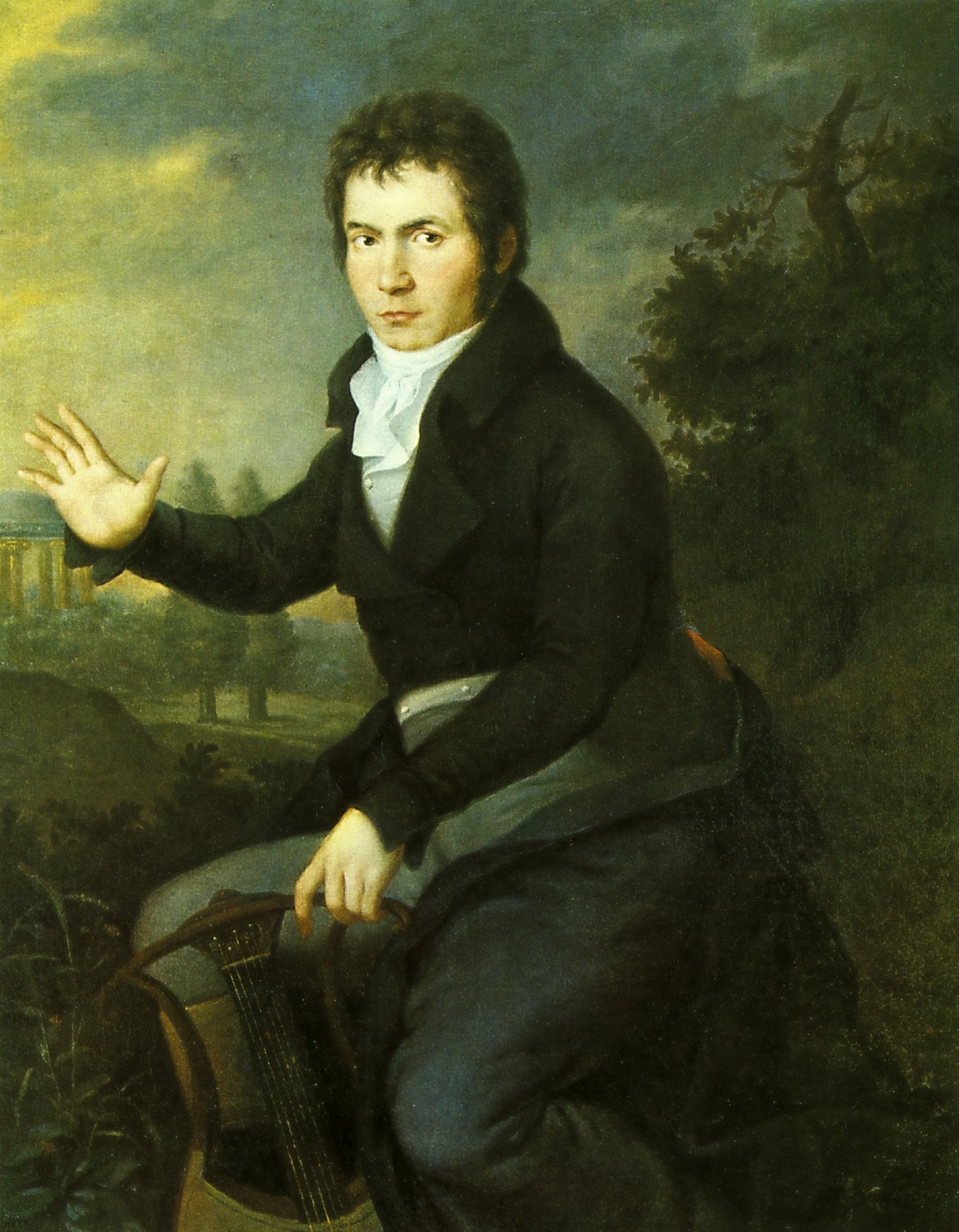
    It was Robert Schumann who memorably described Beethoven’s 4th Symphony as “a Greek maiden between two Norse giants.” While I certainly find that image provocative, I assume he meant it to signify the work’s relative restraint, geniality, and refinement in comparison to the more ambitious, and perhaps even a little uncouth, Symphonies Nos. 3 & 5.

    Let’s hear it for the maiden! Please support it by calling 1-888-232-1212, or by donating online at wwfm.org.

    Thank you for your generous contribution!


    Portrait (1804-05), Joseph Willibrord Mähler

  • Giya Kancheli Georgian Composer Dies at 84

    Giya Kancheli Georgian Composer Dies at 84

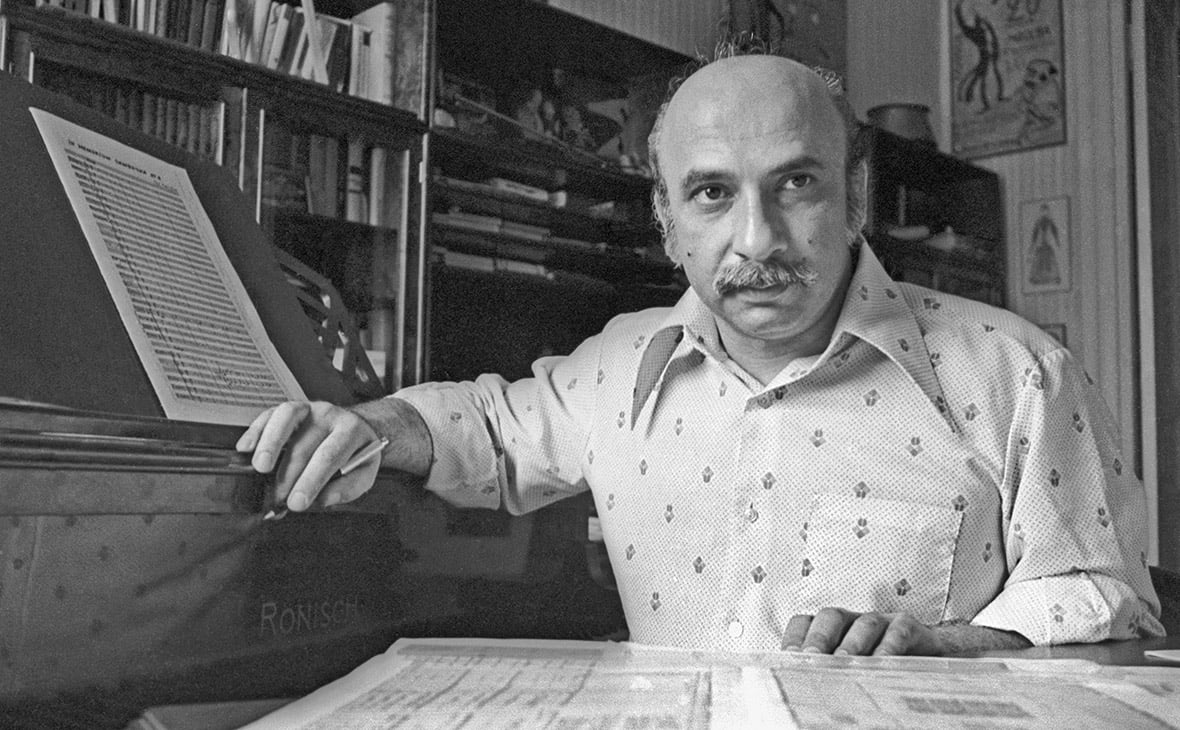
    The eminent Georgian composer Giya Kancheli has died.

    Born in Tblisi in 1935, Kancheli achieved critical acclaim through a body of seven distinctive symphonies and popular recognition for his film scores. His Symphony No. 4, dedicated “To the memory of Michelangelo,” earned him a USSR State Prize in 1976. The work received its American premiere by the Philadelphia Orchestra in 1978.

    With the collapse of the Soviet Union, Kancheli moved to the West, living first in Berlin and then Antwerp, where he was composer-in-residence with the Royal Flemish Philharmonic. Kancheli died earlier today, in his hometown of Tblisi, at the age of 84.

    Kancheli’s fourth symphony will be heard this afternoon, among my featured works, between 4 and 6 p.m. EDT. If you like the music of Henryk Gorecki or Arvo Pärt, you might want to give it a shot. We’ll also mark the birthdays today of English composer Kenneth Leighton and Dutch organist, harpsichordist, and conductor Ton Koopman, a leading figure in the HIP (historically informed performance) movement.

    Somewhere along the way, we’ll also continue our observance of the Jewish High Holy Days with Darius Milhaud’s “Études sur des thèmes liturgiques du Comtat Venaissin,” a work that references tunes from the Rosh Hashana and Yom Kippur liturgies. The piece has a something of a local connection, written as it was on a commission from the Braemer Foundation of Philadelphia.

    I’ll follow that with “Yahrzeit” by former Milhaud student Robert Moran, who has made Philadelphia his home for the past 35 years.

    At 6:00, it’s another “Music from Marlboro.” This week, the focus will be on works by Walter Piston and Johannes Brahms, as performed at the famed Marlboro Music Festival.

    I’ve got Georgia on my mind, from 4 to 7 p.m. EDT, on WWFM – The Classical Network and wwfm.org.

  • Easter Evening Ryelandt Symphony on WWFM

    Easter Evening Ryelandt Symphony on WWFM

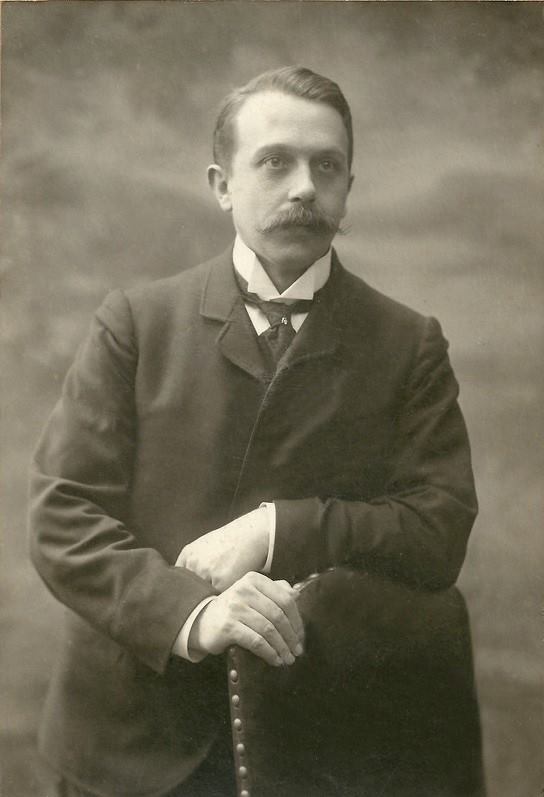
    Soon all the guests will have left, and all the dishes will be cleaned. Time to pop a couple of malted eggs, or to pour yourself a malt scotch, and to wrap up your Easter in inspiring fashion with the Symphony No. 4 by the devout Belgian composer Joseph Ryelandt.

    Ryelandt’s symphony, completed on the very eve of World War I, concludes with a triumphant statement of the Credo from the Catholic Mass. Then stick around for a Credo setting by the Franco-Flemish composer, of some four centuries earlier, Josquin des Prez.

    Enjoy these two spiritual discoveries rooted in the Mass, this Sunday evening at 10:00 EDT, on WWFM – The Classical Network and wwfm.org.

Tag Cloud

Aaron Copland (92) Beethoven (95) Composer (114) Film Music (123) Film Score (143) Film Scores (255) Halloween (94) John Williams (187) KWAX (229) Leonard Bernstein (101) Marlboro Music Festival (125) Movie Music (138) Opera (202) Philadelphia Orchestra (89) Picture Perfect (174) Princeton Symphony Orchestra (106) Radio (87) Ralph Vaughan Williams (85) Ross Amico (244) Roy's Tie-Dye Sci-Fi Corner (290) The Classical Network (101) The Lost Chord (268) Vaughan Williams (103) WPRB (396) WWFM (881)

DON’T MISS A BEAT

Receive a weekly digest every Sunday at noon by signing up here


RECENT POSTS