Tag: Symphony No. 4

  • Rued Langgaard Eccentric Genius Rediscovered

    Rued Langgaard Eccentric Genius Rediscovered

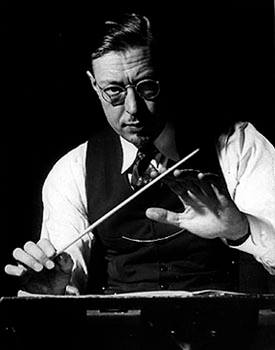
    Even by composer standards, Rued Langgaard (1893-1952) was a little bit of a strange bird. Despite a promising start – born to musical parents, a precocious childhood, meetings with major conductors, and a symphony performed by the Berlin Philharmonic – his personal and creative eccentricities worked against him.

    Langgaard followed his personal muse deep into the realm of late Romanticism at a time when most of the musical world was exploring modernist territory. Though he was given a state grant at 30, he failed to secure a permanent job until the age of 46, as an organist at the cathedral in Ribe, the oldest town in Denmark – which somehow seems appropriate for this most anachronistic of Danish outsiders.

    An eccentric , shabby figure with wild hair, Laangaard died in Ribe 13 years later, in 1952, just shy of his 59th birthday, still largely unrecognized as a composer.

    His reputation would not begin to gain traction for another 16 years. In all, he composed over 400 works, including 16 symphonies – which bear evocative titles such as “Yon Hall of Thunder” and “Deluge of the Sun” – and an opera, “Antikrist.”

    Be sure to listen in, in the 9:00 hour this morning, to enjoy Langgaard’s Symphony No. 4, subtitled “Fall of the Leaf.” It’s all music about autumn this morning until 11:00 ET, at WPRB 103.3 FM and online at wprb.com.
  • Diamond Perle Centenary Celebration

    Diamond Perle Centenary Celebration

    Happy Independence Day!

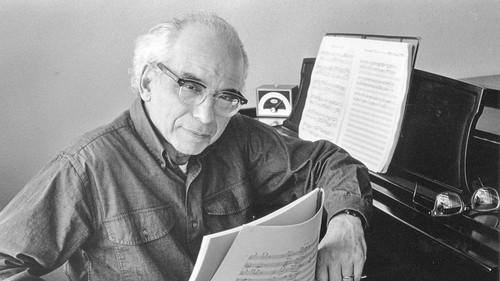
    Is there a more neglected composer among symphonists of the “Greatest Generation” of American composers than David Diamond? I think not. Diamond composed 11 symphonies, and every one that I’ve heard has been wholly worthwhile. Yet, criminally, some of them have not even been recorded.

    This Sunday night on “The Lost Chord,” we celebrate Diamond’s centenary (he was born on July 9, 1915), with his Symphony No. 4 and the orchestral fantasia “The Enormous Room,” after the autobiographical novel of E.E. Cummings.

    In between, we observe the centenary of a seemingly disparate figure, George Perle (born on May 6, 1915). Diamond would occasionally construct a theme on a tone row, but his music was essentially tonal. Perle, by contrast, was twelve tone all the way, yet he managed, much like his musical hero, Alban Berg, to keep it lyrical. Despite their different approaches, both composers, Diamond and Perle, are quite direct in their appeal to the receptive listener.

    I had been toying with the idea of programming Perle’s “Lyric Intermezzo,” a piano suite that manages to convey a romantic sensibility by way of serialism (it was inspired by Schumann’s “Waldszenen”). In the end, however, I opted for his eminently listenable – and Pulitzer Prize-winning – Wind Quintet No. 4.

    I hope you’ll join me for “Pearls from Perle, Diamonds from Diamond,” this Sunday night at 10 ET, with a repeat Wednesday evening at 6; or that you’ll listen to it later as a webcast at http://www.wwfm.org.


    An exhaustive analysis of Diamond’s symphonies by one of his former pupils:
    http://alanbelkinmusic.com/Diamond/DD.html

    David Diamond interview, conducted by Bruce Duffie:
    http://www.bruceduffie.com/diamond.html

    George Perle’s obituary in the New York Times:
    http://www.nytimes.com/2009/01/24/arts/music/24perle.html?pagewanted=all&_r=0

    George Perle in conversation with David Dubal:

    PHOTOS: Perle before swine (top); Diamond is forever

  • Autumn Music from the North: Langgaard & Rautavaara

    Autumn Music from the North: Langgaard & Rautavaara

    So it’s November 1st. All Saints’ Day. Something is seriously wrong with my schedule when I am too busy to write about my favorite day of the year, which is Hallowe’en. Even worse, I couldn’t take any portion of the day simply to relax in front of the television set with Boris Karloff, Bela Lugosi, Vincent Price or Christopher Lee. I shake my fist at the heavens in impotent rage.

    Ah well. I will hope for a more relaxed schedule next year. For now, allow me to thank all of you who supported the station during its recent membership campaign. The station did very good business this week, and we met the challenge that was posed during my “pre-game” show on Wednesday (before the rebroadcast of “The Lost Chord” at 6), so thanks again. I don’t know that it will get me any of my regular shifts back, but thank you all the same.

    Speaking of “The Lost Chord,” I hope you will pardon me if I take this opportunity to tell you a few things about this week’s program. My thesis will be autumn in the North countries, as well as in the Nordic soul – which is another way of saying, we’ll hear two works that deal with natural and metaphorical autumn.

    First we’ll have the Symphony No. 4, subtitled “Fall of the Leaf,” composed in 1916, by the Danish composer Rued Langgaard (he of the impossible-to-pronounce name). Langgaard, an eccentric and an outcast, bucked every trend in Danish music, so that it took well over a decade after his death in 1952, at the age of 59, for his works to begin to gain traction. A number of the symphony’s sections bear descriptive subtitles, such as “Rustle in the Forest;” “Glimpse of Sun;” “Thunderstorm;” “Autumnal;” “Tired;” “Despair;” “Sunday Morning (The Bells);” and “At an End.” Don’t expect sonata-allegro form!

    Then we’ll have a three-movement tone painting by Einojuhani Rautavaara, the grand old man of Finnish music, his “Autumn Gardens,” from 1999. The work is characterized by plenty of late-period Rautavaara lyricism and luminosity. If you enjoy the music of Sibelius and Vaughan Williams, don’t miss it!

    That’s “Fall of the Leif” – autumnal meditations from the North. You can hear it this Sunday night at 10 ET, with a repeat Wednesday evening at 6; or listen to it later as a webcast, at http://www.wwfm.org.

    PHOTO: The Leifs certainly are lovely this time of year

  • Howard Hanson Romantic Composer

    Howard Hanson Romantic Composer

    Howard Hanson, you incurable Romantic. I wish I had time to write about you today, your birthday, but I don’t. For four decades, you were the director of the Eastman School of Music; you were the recipient of a Pulitzer Prize in 1944 for your Symphony No. 4; and you were the champion of dozens of American composers as conductor of the Eastman-Rochester Orchestra.

    Criminally, only a fraction of your recordings have made it to compact disc. Here’s one of them that didn’t, of you conducting your Symphony No. 4:

    Movt. I https://www.youtube.com/watch?v=nMMDVJ2EARA

    Movt. II https://www.youtube.com/watch?v=Ny8RMEGv5GY

    Movt. III https://www.youtube.com/watch?v=8A7jFyddiOo

    Movt. IV https://www.youtube.com/watch?v=3nhFIeigxjI

    The symphony is subtitled “Requiem,” and dedicated to the memory of your father. I could listen to this music again and again (and probably will).

    I salute you, Kindred Spirit!

    PHOTO: Howard Hanson, romantic spirit

Tag Cloud

Aaron Copland (92) Beethoven (95) Composer (114) Film Music (123) Film Score (143) Film Scores (255) Halloween (94) John Williams (187) KWAX (229) Leonard Bernstein (101) Marlboro Music Festival (125) Movie Music (138) Opera (202) Philadelphia Orchestra (89) Picture Perfect (174) Princeton Symphony Orchestra (106) Radio (87) Ralph Vaughan Williams (85) Ross Amico (244) Roy's Tie-Dye Sci-Fi Corner (290) The Classical Network (101) The Lost Chord (268) Vaughan Williams (103) WPRB (396) WWFM (881)

DON’T MISS A BEAT

Receive a weekly digest every Sunday at noon by signing up here


RECENT POSTS