Tag: Tchaikovsky

  • In a York Bowen State of Mind

    In a York Bowen State of Mind

    As a nutty musical Anglophile, I have to say I’ve never been able to get my head around the music of York Bowen. Lord knows, I’ve tried. Every year as a radio host, I’d pull something from the station library on his birthday anniversary and give it a whirl. But he was not someone whose music I sprang for whenever looking for a piece to fill out a program.

    Bowen lived from 1884 to 1961. His contemporaries included Frank Bridge, John Ireland, Cyril Scott, John Foulds, Arnold Bax, George Dyson, Lord Berners, George Butterworth, Rebecca Clarke, and Eric Coates.

    Allegedly, he enjoyed considerable success in his lifetime as a pianist and composer, and his career unquestionably contained some notable achievements. Bowen was the soloist in the first recording of Beethoven’s Piano Concerto No. 4. He played the premiere of William Walton’s Sinfonia Concertante for Orchestra and Piano. He published his own editions of the piano works of Mozart and Chopin. His own music was championed by such artists as Fritz Kreisler, Efrem Zimbalist, Lionel Tertis, and Adrian Boult (naturally).

    Kaikhosru Shapurji Sorabji, who got to the point that he didn’t want his works performed by anyone (to the point that he enacted a 36-year ban), dedicated his to Twenty-Four Preludes, Op. 102, to him. Camille Saint-Saëns went so far as to praise him as “the finest of English composers.”

    Who am I to disagree? But alas, I do.

    Bowen’s music, while Romantic in influence and disposition, is not to my ear especially “English,” in the sense that, say, Vaughan Williams or Walton are English. Also, I just don’t find him all that interesting.

    Or at least I didn’t. But maybe I just wasn’t listening closely enough.

    I have the great good fortune to live near Princeton Record Exchange, with its vast store of secondhand merchandise always deeply discounted. It is not unusual for me to walk out of there with a shopping bag full of classical music treasures priced at a dollar or two or maybe three. The trouble is, I buy so much that, with a collection of over 10,000 recordings, it’s not unusual for me to duplicate. I used to take them back and swap them out, but for a dollar, it got to the point where I figured why bother? Instead, every December I just divvy up the dupes and send them out in bulk as gifts to receptive friends.

    This year, one of these was a Chandos recording from 2011 of York Bowen’s Symphonies Nos. 1 & 2, with Sir Andrew Davis conducting the BBC Philharmonic, which, when I went to unpack my treasures following one of these PREX expeditions, I discovered I already own, but obviously never listened to it. In driving around last week I decided to take it with me as companion on my travels. The Symphony No. 1 did nothing to change my opinion of Bowen. It’s innocuous music, though hardly indelible, a student work, written when the composer was 18 years-old. At times, it seems to be on the verge of blossoming into a light music wallow, along the lines of somebody like Roger Quilter, but sadly it never quite gets there.

    Version 1.0.0

    The Symphony No. 2 (1909-11), however, is another matter entirely, and may at last have made me a convert. The work is compelling, with a degree of drama and forward momentum, it has some good tunes, and it’s strikingly orchestrated. It’s also interesting to note how Tchaikovsky might have been filtered through an English sensibility. It doesn’t sound exactly like its prototype – at times it’s like a hybrid of Tchaikovsky and Bowen’s classmate Arnold Bax – but you can pretty much lay a transparency of a Tchaikovsky symphony over it and the influence is unmistakable. The scherzo reminds me of Mendelssohn (an enormous influence in the U.K. in the 19th century) and even a little bit of Korngold. It’s sparked my interest to go back and listen to all those other Bowen works I’ve dismissed, to see if maybe I’d just been having a bad day, or at the very least, if there’s an ember in there somewhere that in my growing disinterest I might have overlooked.

    This is an often-unacknowledged aspect, I think, of one’s mania for classical music. It’s a genre that, in some respects, is a celebration of the past, as the repertoire, accumulated over centuries, is enormous. Yet because it’s so vast, one discovers new things all the time. So even if the music itself has been around for quite a while, there is the stimulation of novelty. Of course, one can also listen to the greatest works again and again, and in different performances that reveal further wonders within the familiar.

    Even if we’re to ignore the fact that there are new “classical” works being written all the time, in this kind of aural museum, there is always growth. Of course, the experience is not unique to this particular art form. We see or hear things differently, depending on where we are in our individual lives – our maturity, our life circumstances, our moods, our stresses, the time of day, the weather, what we’ve eaten for lunch. Sometimes, for whatever reason that has nothing at all to do with the music itself, it just doesn’t hit us right.

    Who knows, maybe this has been the case for me with York Bowen.

    I typed up these thoughts last week, but it was so late in the day, I figured it would get lost on Facebook, so I set it aside, planning to post it in the morning. Then I forgot all about it, until Rocky Lamanna played a York Bowen piano concerto yesterday afternoon on KWAX. (Thanks, Rocky!) How many half-baked posts linger forgotten among my Word documents, I wonder?

    In the meantime, you know what? I got to enjoying Bowen’s Symphony No. 1 too. It’s nowhere on the same scale or level of flamboyance as its successor, but the work does have its charms. Its geniality is infectious, and revisiting it by way of the Second Symphony, it’s obvious that Bowen’s affection for Tchaikovsky was there all along. I particularly like the last movement, which also picks up a trick or two from Schumann. On the Chandos album, the work receives its world premiere recording.

    Is it life-altering, world-shattering music? No, but it is pleasurable to listen to. I’m glad I made the effort to really let it in. Sometimes you have to live with music for a while, through all moods and extraneous conditions, to truly get to know it.

    See what you make of Bowen’s Symphony No. 2.

  • “The Nutcracker” as Subversive Family Classic

    “The Nutcracker” as Subversive Family Classic

    If you ever detected a sinister undertow in Tchaikovsky’s ballet “The Nutcracker,” the source material, by E.T.A. Hoffmann, is much worse.

    Hoffmann’s 1816 story focuses on the Nutcracker’s battle with the evil Mouse King, filtered through the vivid imagination of a doomed dreamer with a perpetual mistrust of adults. It’s Herr Drosselmayer all the way, baby.

    It often puzzles me how so many adaptations of Hoffmann’s stories gloss over the sinister and the uncanny elements. “The Nutcracker” has its share of up-tempo numbers. They’re mostly the ones we hear in stores while we’re out Christmas shopping. However, there’s little doubt the composer grasped the inexorable undertow of Hoffmann, since his score conveys plenty of anxiety to counterbalance the twee sweets.

    Listen to the bass clarinet slither beneath that glittery celesta in the “Dance of the Sugar Plum Fairy.” And what’s all that creeping around, with the disturbing sforzandi? There’s something desperate and perhaps a little manic underpinning the magic.

    Maurice Sendak completely gets it. If you have never seen Carroll Ballard’s 1986 film of “The Nutcracker,” with the Sendak designs and dancers of Pacific Northwest Ballet, you should make it a point to do so. Its sugar plums are all steeped in acid. Sir Charles Mackerras conducts the London Symphony Orchestra on the soundtrack.

    I’m not even sure I could describe the subtext as Freudian. It’s just out there. And it has the best WTF ending of all “Nutcracker” adaptations.

    But if it’s snowflakes and flowers you’re interested in, here’s an extended suite of highlights with the Boston Pops conducted by Arthur Fiedler, on Fiedler’s birthday.

    Get crackin’!

  • 1980s Concert Programs A Blast from the Past

    1980s Concert Programs A Blast from the Past

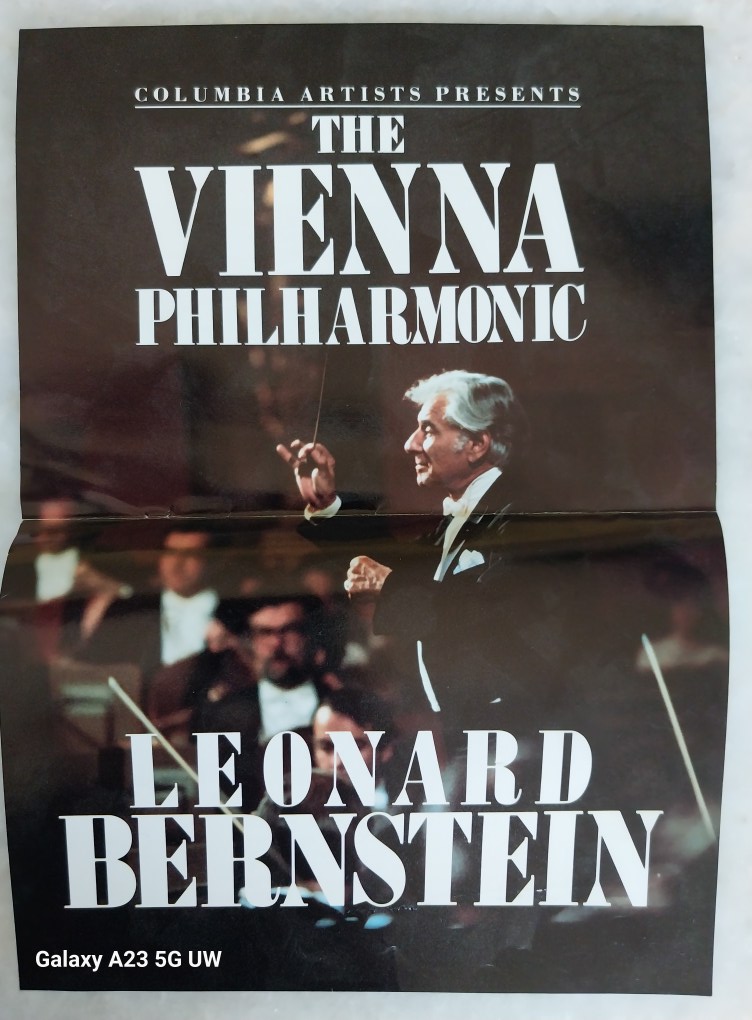
    Recently, during one of my domestic excavations, I tapped into a rich vein of concert programs from the 1980s. I’m only just now flipping through some of them, and they’re churning up waves of nostalgia and making me wistful for an irretrievable past. I mean, I always have been, sort of, but it is only getting worse with age. I can’t believe how lucky we had it back then and the performers and concerts I saw! And these represent but the merest fraction.

    What surprises me is how vividly even the program notes and articles conjure a faded world. It’s unfortunate that in the quest to “demystify” classical music, everything has become so watered-down. And of course the recording industry, at least as it existed in those days, is in tatters.

    But back then, giants still walked the earth. Artists had major recording contracts, and when they came to town, people were eager to see them. Also, you could put on the radio and hear a complete symphony, even one that’s not played all the time. So when it turned up in concert, you were excited to be able to hear it live. Elgar’s Symphony No. 2? Berlioz’s “Symphonie funèbre et triomphale?” Tchaikovsky’s “Manfred?” I’m there!

    Now, after decades of pandering, instead of elevating, in our movies and our television and our books and our music, and with the rise of the internet, people’s attention spans have withered, and interest in any kind of personal growth or brush with the transcendent is practically nonexistent. People can’t even be bothered to get dressed up to go to church anymore. Why should they put on a clean shirt to attend an interminable concert? The snake has been devouring its tail for a long time. I wonder how many regard music these days as more than entertainment, as “product.”

    Alas, it is what it is. I am so glad these printed programs survive. These days, even I hang onto those for most recent concerts only for a week or two before they go to the recycle bin.

    I figure from time to time I can share some images and conjure a few happy memories from 40 years ago, especially on days when I’m up against deadline or have other work to do. I hope they give you some vicarious enjoyment. Try not to be embittered like me.

  • Tchaikovsky’s Manfred Symphony: A Missed Ending?

    Tchaikovsky’s Manfred Symphony: A Missed Ending?

    I stated in an earlier post that there should be an organ in Tchaikovsky’s “Manfred Symphony.” And while an organ is certainly featured in many performances and recordings of the work, it turns out the composer actually called for a harmonium. Live and learn.

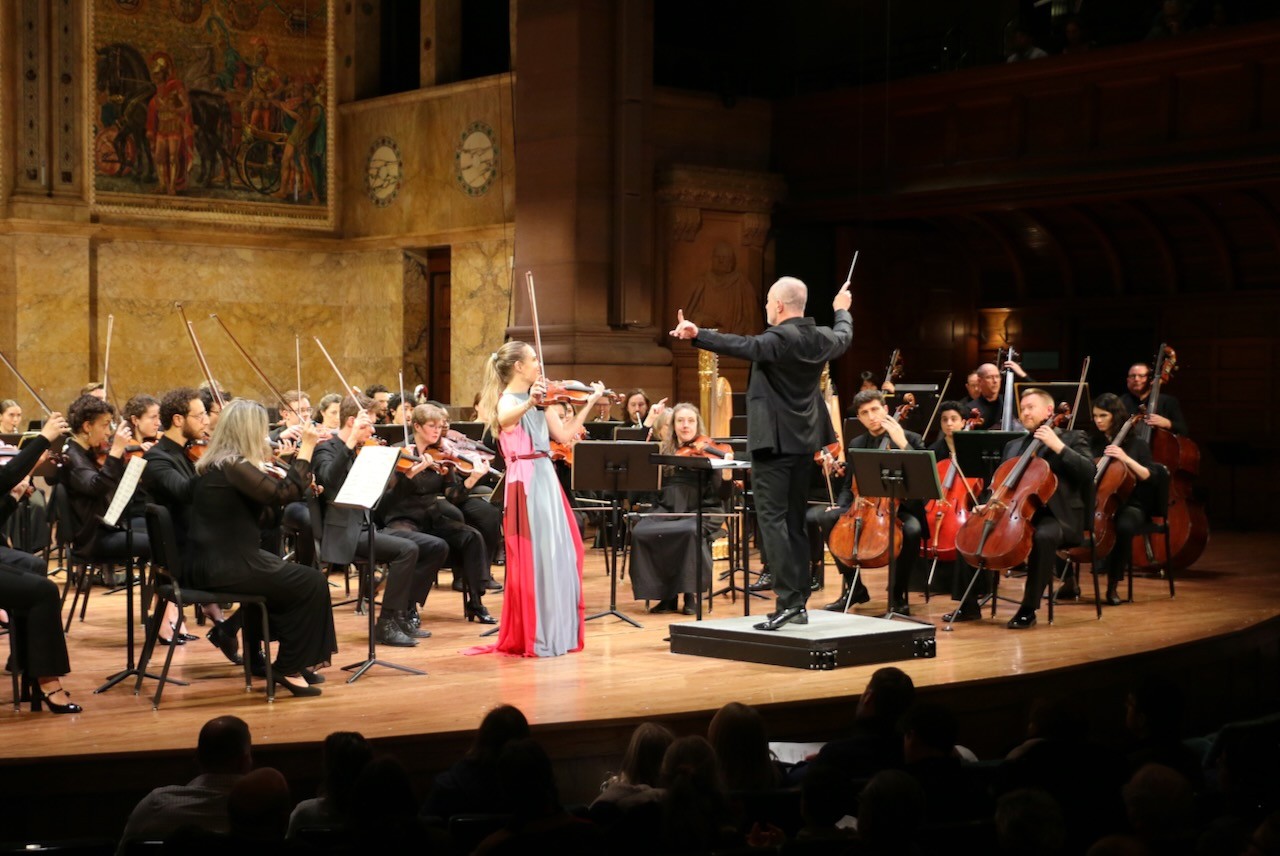
    That said, last night’s otherwise superb performance by the Princeton Symphony Orchestra of this sublime work (in my opinion, one of Tchaikovsky’s most compelling; then again, I’m a fan of Byron’s dramatic poem, overheated film scores, and Romantic seething in general), reverted to the outmoded practice of ditching the reflective denouement (with organ/harmonium) in favor of reprising the powerfully intense coda of the work’s first movement. (Richardson Auditorium’s pipe organ, installed in 1910, has been out of commission for three quarters of a century.) No redemption for this Manfred. I’m pretty sure Tchaikovsky wouldn’t have been happy, but I loved it all the same.

    I confess I also missed the fire of Jeremy Levine’s blazing timpani (Levine had the weekend off, but it turns out had to be called back in as a substitute on the cataclysmic bass drum), which would have pushed this “Manfred” as far over the top as this glorious score deserves.

    At the other end of the spectrum, Stravinsky’s Violin Concerto, as immaculate as a Fabergé egg (though not at the expense of heart and humanity, especially in the Baroque arioso throwback of the work’s third movement), was more than mere icing on the cake – an apt metaphor, it turns out, for a program in celebration of music director Rossen Milanov’s 60th birthday. The soloist was Leila Josefowicz, well-toned in both senses of the word. It’s always a privilege to hear a concerto like this one in such an intimate hall.

    The concert will be repeated at Princeton University’s Richardson Auditorium this afternoon at 4:00. Both works are comparative rarities. As predicted, for me, this proved to be one of the highlights of the season. Miss it to your own detriment.

    https://princetonsymphony.org/


    PSO staff photo

  • Princeton Symphony Tchaikovsky’s Manfred

    Princeton Symphony Tchaikovsky’s Manfred

    From the repertoire alone, how could this weekend’s concerts of the Princeton Symphony Orchestra not stand as a highlight of the current season? And positing that, I take into account the bigger brand name orchestras in the adjacent metropolises of New York and Philadelphia. Rossen Milanov will conduct Tchaikovsky’s vertiginous, broody, and magnificent “Manfred Symphony” at Princeton University’s Richardson Auditorium in two performances, this Saturday at 8 p.m. and Sunday at 4 p.m.

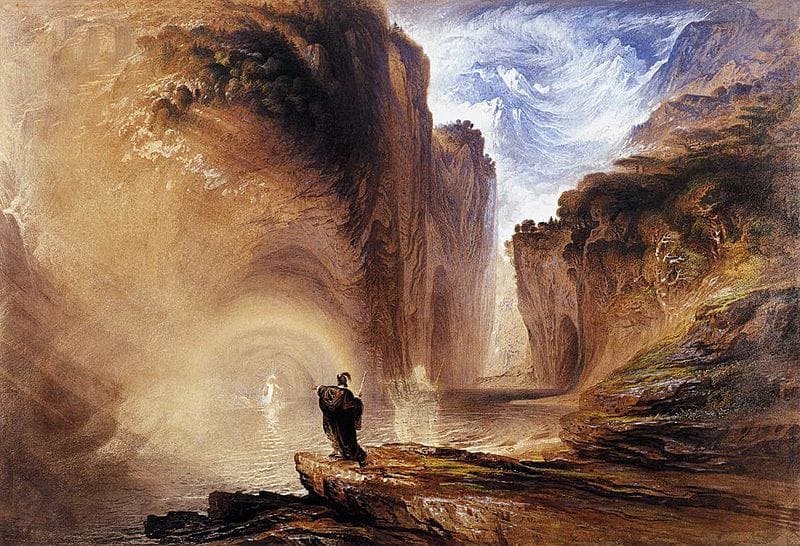
    This music is Romantic with a capital R. The quintessential Byronic hero, Manfred is weary but indomitable, an unconquerable superman, tormented by unimaginable suffering. Haunted by mysterious guilt (in connection with the death of his beloved), he wanders the Bernese Alps, longing for extinction, and meets his fate defiantly, rejecting all authority, corporeal and supernatural. And as you know, it doesn’t take much to get Tchaikovsky to seethe most eloquently.

    It will be very interesting to see how the group tackles this foray into the sublime, which requires a large orchestra with organ. (Richardson’s was removed years ago.) The work was originally scheduled for the ill-fated pandemic season of 2019-20, then coupled with Reinhold Glière’s Harp Concerto. If it could be thus, and it were not a madness and a mockery, I might have been most happy!

    But I will definitely be content with Stravinsky’s Violin Concerto, one of the loveliest works of the composer’s neoclassical period, to be heard on the reconstituted program’s first half. Temperamentally, the concerto is worlds away from Tchaikovsky’s Alpine awesomeness, but its prismatic reflections on Baroque airs can be quite seductive, with the spirit of Bach flitting around the composer’s crystalline heart. Leila Josefowicz, last heard here in Alban Berg’s concerto in 2016, will return to Princeton as the work’s soloist.

    The concerts are being presented in celebration of PSO music director Rossen Milanov’s 60th birthday. In the spirit of Manfred, I defy the solace of both cake and conviviality! However, I confess, I can’t wait to hear this program.

    For tickets and information, visit princetonsymphony.org.


    IMAGE: John Martin, “Manfred and the Witch of the Alps” (1837)

Tag Cloud

Aaron Copland (92) Beethoven (95) Composer (114) Film Music (119) Film Score (143) Film Scores (255) Halloween (94) John Williams (185) KWAX (229) Leonard Bernstein (99) Marlboro Music Festival (125) Movie Music (134) Opera (198) Philadelphia Orchestra (86) Picture Perfect (174) Princeton Symphony Orchestra (106) Radio (87) Ralph Vaughan Williams (85) Ross Amico (244) Roy's Tie-Dye Sci-Fi Corner (290) The Classical Network (101) The Lost Chord (268) Vaughan Williams (102) WPRB (396) WWFM (881)

DON’T MISS A BEAT

Receive a weekly digest every Sunday at noon by signing up here


RECENT POSTS