Tag: The Lost Chord

  • Sir David Willcocks Remembered RIP

    Sir David Willcocks Remembered RIP

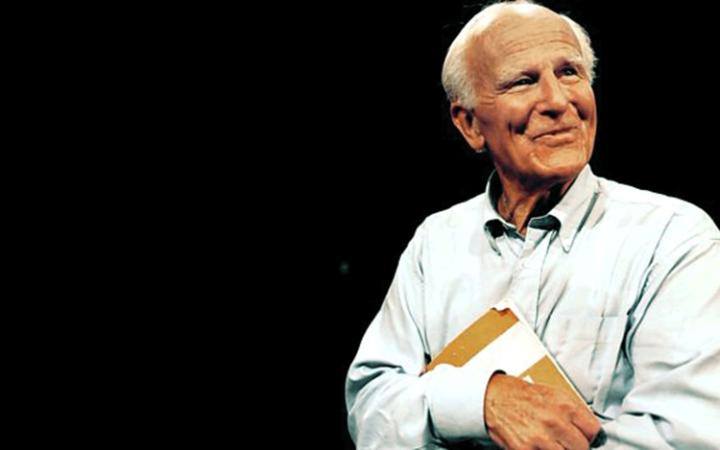
    I’m sorry to share the news that Sir David Willcocks has died. He may have been the senior lion of English music. With Sir Colin Davis, Vernon Handley, and even Richard Hickox gone, I can’t think of anyone else. Of course, the big choral works were a specialty. I will honor him soon on “The Lost Chord.” R.I.P.

    His obituary in The Guardian:

    http://www.theguardian.com/music/2015/sep/17/david-willcocks

    An appreciation in The Telegraph:

    http://www.telegraph.co.uk/music/classical-music/sir-david-willcocks-appreciation/

  • Honegger’s Summer Pastoral Alps Serenity

    Honegger’s Summer Pastoral Alps Serenity

    Here’s a late summer treat courtesy of Arthur Honegger – his “Pastorale d’été” (“Summer Pastoral”), a musical souvenir of a morning in the Swiss Alps. The work is one of Honegger’s most attractive pieces, alternately languorous and lively in its serene, eight minute span, with plenty of sunshine, gentle breezes, and bird song. Note the allusions to Beethoven’s “Pastoral Symphony.”

    I hope you’ll join me tonight for more Honegger on “The Lost Chord,” when we listen to a very different work – his ballet “Sémiramis” – as part of a salute to the dancer Ida Rubinstein. (You can read more about it in yesterday’s post.) That’s “Ida Danced All Night.” Enjoy it at 10 ET, with a rebroadcast Wednesday evening at 6; or listen to it later as a webcast at wwfm.org.

    PHOTO: Idyllic Alps

  • British Composers Abroad on The Lost Chord

    British Composers Abroad on The Lost Chord

    This Sunday night on “The Lost Chord,” we holiday on the Continent with the British. We’ll have works by English composers inspired by their travels abroad.

    Elisabeth Lutyens must have been a prickly personality. She wrote principally in a modified twelve tone idiom. While she despised the modal melodies of the English pastoralists (in reference to whose works, she coined the term “cow-pat music”), she was equally dismissive of strict serialism.

    It’s interesting that someone who made so many enemies could turn around and write a piece like “En Voyage,” a delightful suite of British light music. But I suppose it served to keep Lutyens in cucumber sandwiches.

    Lennox Berkeley met Benjamin Britten at a contemporary music festival in Barcelona in 1936. While there, they witnessed some Catalan folk dancing in a park. Britten jotted down some of the melodies onto an envelope, and the two composers worked closely to create an orchestral suite called “Mont Juic.”

    Finally, it was the remembrance of a trip to Upper Bavaria that inspired the Elgars to collaborate on a set of part-songs, which would be called “Scenes from the Bavarian Highlands.” Edward Elgar (not yet knighted), set texts of his wife, C. Alice Elgar. Three of the movements would later be published separately, in a purely orchestral version, much better known, as “Three Bavarian Dances.”

    I hope you’ll join me for “Channel Hopping” – the English abroad – this Sunday night at 10 ET, with a repeat Wednesday evening at 6; or that you’ll listen to it later as a webcast at wwfm.org.

  • Father’s Day Sports Music Tribute on The Lost Chord

    Father’s Day Sports Music Tribute on The Lost Chord

    Happy Father’s Day! This week on “The Lost Chord,” we pay tribute to Dad, with an hour of music about sports.

    I realize it’s a possibility that not all dads necessarily like sports, but it’s been my experience that Sunday afternoons and Monday nights have always been off-limits, as far as the family television is concerned. For me personally, that meant that after Abbott and Costello or the Bowery Boys, it was football, golf or “Wide World of Sports,” and that I never saw “MAS*H” during its first run.

    Be that as it may, it’s Dad’s day, so we’re going to give him what he wants – an hour of rough-and-tumble, the thrill of victory, and the agony of defeat.

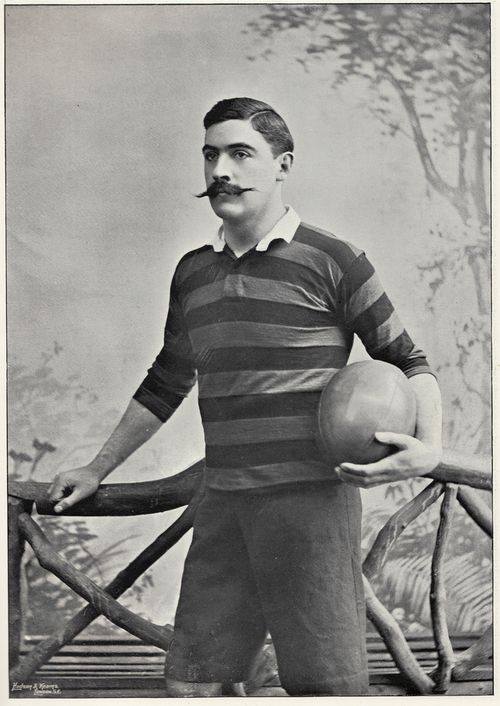
    We’ll begin with “Rugby” by Arthur Honegger; after that, we’ll have “Half-Time” by Bohuslav Martinu;” then “Yale-Princeton Football Game” by Charles Ives; and finally, highlights from the baseball opera “The Mighty Casey” by William Schuman.

    Combine with a La-Z-Boy and a cold beer, and it’s a recipe for dad contentment. I hope you’ll join me for “Good Sports,” tonight at 10 ET, with a repeat Wednesday evening at 6; or that you’ll listen to it later as a webcast at http://www.wwfm.org.

  • Musical Wonder Cabinets: “Curiouser and Curiouser”

    Musical Wonder Cabinets: “Curiouser and Curiouser”

    Cabinets of curiosities, also sometimes referred to as “wonder rooms,” were small collections of extraordinary objects, strange and often fanciful precursors of today’s museums, which attempted to categorize and explain oddities of the natural world. This Sunday night on “The Lost Chord,” we’ll have three examples of musical equivalents.

    Princeton University professor Dmitri Tymoczko’s “Typecase Treasury” recalls a small table his parents acquired, made from a typecase subdivided into a hundred little compartments. “Each had been filled with a tiny mineralogical curiosity,” he writes, “a strange crystal, a piece of iron pyrite, a shark’s tooth, or a fossilized tribolyte.” He found it a useful metaphor for a multi-movement collection of short pieces, in which he attempts to produce “a sense of form through juxtaposition.”

    Grammy Award-winner Michael Colina is perhaps best known for his jazz and Latin projects. However, Colina was classically trained, having studied at the North Carolina School of the Arts, and then abroad, at the Chigiana Academy, in Sienna, Italy. We’ll hear his Violin Concerto, subtitled “Three Cabinets of Wonder,” a work inspired by Fanny Mendelssohn, the Buddha, and an Amazonian nature spirit.

    Finally, we’ll sample just a bit from “Cabinet of Curiosities” by Philadelphia-based composer Robert Moran, who’s something of a wonder himself. “The Habsburg Kunstkammer” employs graphic notation and is scored for marimba, hairbrush, aluminum foil, bells played with fingers, finger cymbals, telephone bell, vibraphone, rubber ball, celesta and harpsichord.

    I hope you’ll join me for “Curiouser and Curiouser,” a tour of musical wonder cabinets, tonight at 10 ET, with a repeat Wednesday evening at 6; or that you’ll listen to it later as a webcast at http://www.wwfm.org.

    More about cabinets of curiosities here:

    https://en.wikipedia.org/wiki/Cabinet_of_curiosities

    PHOTO: Just like my apartment

Tag Cloud

Aaron Copland (92) Beethoven (95) Composer (114) Film Music (123) Film Score (143) Film Scores (255) Halloween (94) John Williams (187) KWAX (229) Leonard Bernstein (101) Marlboro Music Festival (125) Movie Music (138) Opera (202) Philadelphia Orchestra (89) Picture Perfect (174) Princeton Symphony Orchestra (106) Radio (87) Ralph Vaughan Williams (85) Ross Amico (244) Roy's Tie-Dye Sci-Fi Corner (290) The Classical Network (101) The Lost Chord (268) Vaughan Williams (103) WPRB (396) WWFM (881)

DON’T MISS A BEAT

Receive a weekly digest every Sunday at noon by signing up here


RECENT POSTS