Tag: The Lost Chord

  • St. David’s Day Welsh Harp Music on The Lost Chord

    St. David’s Day Welsh Harp Music on The Lost Chord

    St. David’s Day (March 1st) has been a national day of celebration in Wales since the Middle Ages. This week on “The Lost Chord,” we’ll honor the country’s patron saint, with an hour of Welsh music – interestingly, all of it in some way connected to the harp.

    Structurally, Grace Williams’ “Penillion” (1955) draws on the ancient Welsh practice of improvising vocal counterpoint to a traditional melody played on the harp. However, in this instance, the role of the harp is assigned to the trumpet, so as not to be swallowed up by the rest of the orchestra.

    We’ll also hear a set of variations on “Megan’s Daughter,” by the 19th century harpist John Thomas. In 1861, Thomas was given the bardic title, “Chief Musician of Wales.” In 1872, he became official harpist to Queen Victoria.

    Then bass-baritone Bryn Terfel will be heard, in his first ever commercial recording, in a Welsh song employing a text by Caradog Pritchard, extolling the virtues of the Ogwen River. “The River’s Song” is sung to the accompaniment of a harp, in this setting by Elsbeth M. Jones. Terfel will be joined by his former schoolmate, the tenor John Eifion.

    We’ll conclude with a personal favorite, the Harp Concerto (1970) by William Mathias. According to the composer, the first movement is connected with the land and seascapes of South West Wales, where the music was composed. The slow movement is a landscape of the mind, reflective of the great elegies of early Welsh poetry. The third movement is a spritely jig, which brings the piece to a rhythmic and joyful conclusion.

    Dydd Gŵyl Dewi Hapus!

    There’s a giant leek in the fridge. Yes, you heard correctly, and no, it’s not broken.

    I hope you’ll join me in celebrating St. David’s Day. That’s “And God Created Great Wales,” on “The Lost Chord,” now in syndication on KWAX, the radio station of the University of Oregon!


    Clip and save the start times for all three of my recorded shows:

    PICTURE PERFECT, the movie music show – Friday at 8:00 PM EST/5:00 PM PST

    SWEETNESS AND LIGHT, the light music program – Saturday at 11:00 AM EST/8:00 AM PST

    THE LOST CHORD, unusual and neglected rep – Saturday at 7:00 PM EST/4:00 PM PST

    Stream them, wherever you are, at the link!

    https://kwax.uoregon.edu/
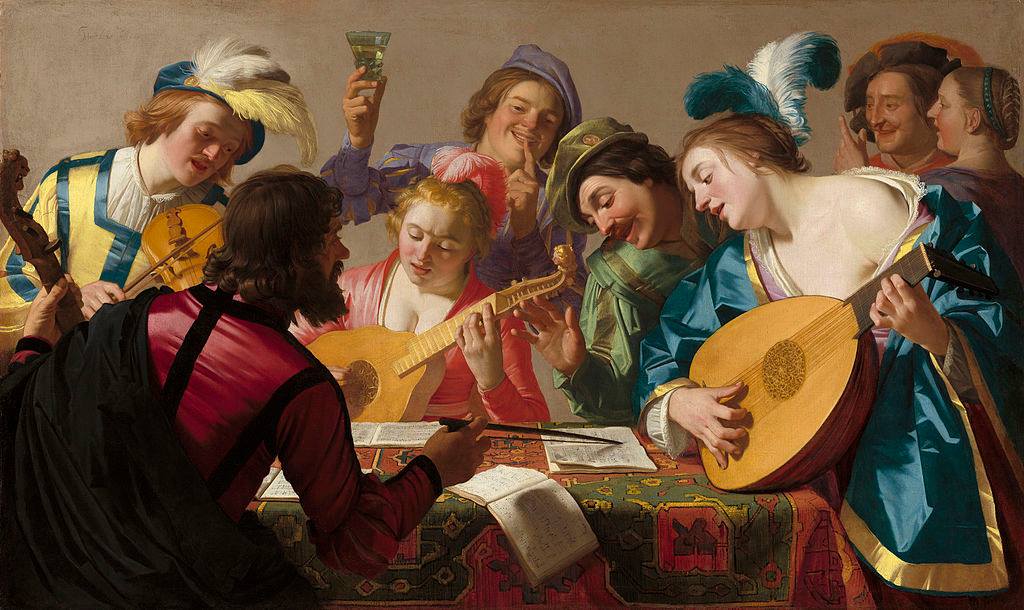
  • William Grant Still’s “Afro-American Symphony”

    William Grant Still’s “Afro-American Symphony”

    It’s hard to believe I made the following observations as recently as 2019, prior to this show’s first airing. So much has changed since then. William Grant Still has gone from a neglected master to probably one of the most frequently programmed American symphonists of his generation. The change may have been propelled by social and political trends, but if ever anyone deserved more notice, it’s this composer.


    As someone with an insatiable appetite for American symphonies composed during the first half of the 20th century, I try not to miss a performance or even a radio broadcast of music by Roy Harris, William Schuman, or Aaron Copland. But for as much as I adore these composers, the American symphonies that delight me the most, off the top of my head, are Charles Ives’ 2nd, Howard Hanson’s 2nd (the “Romantic”), and William Grant Still’s 1st (the “Afro-American”). I never get tired of listening to these, and they move me like few others.

    I am only too happy to include Still’s symphony, then, as a kind of capstone to my four-part survey of the landmark Black Composer Series of the 1970s – reissued on Sony Classical as a 10-CD boxed set – this week on “The Lost Chord.”

    The “Afro-American Symphony,” composed in 1930, is informed by African-American spirituals, the blues, and syncopated banjo-like riffs. Indeed, a banjo actually turns up in the work’s third movement.

    To me, the symphony has always been a kind of “portrait of the artist as a young man.” (Still was born in Woodville, Mississippi, and grew up in Little Rock, Arkansas.) In this respect, it puts me in the mind somewhat of Virgil Thomson “Symphony on a Hymn Tune,” which similarly draws on hymns and folk songs of his boyhood in Kansas City, Missouri.

    But Still’s music comes across as more personal, more sincere, and certainly less self-consciously “modernist.” It goes straight to my heart and then gets in my head so that it literally disturbs my sleep. It’s one of the great American symphonies. The concert suites from George Gershwin’s “Porgy and Bess” remain popular, but some enterprising music director should give the “Afro-American Symphony” a shot, because I know audiences will love it. (NOTE: Again, since I wrote this, the work has gone on to be played by seemingly every major American orchestra.)

    There is a solid Gershwin connection. Still quotes the melody of “I Got Rhythm” in the third movement of his symphony. And for good reason. It’s actually his! According to Eubie Blake, Gershwin was in the audience during one of Still’s performances in the pit band for Blake’s revue “Shuffle Along.” Still’s improvisation became the basis for Gershwin’s hit tune. (Blake was quick to add that the appropriation was probably inadvertent.)

    The “Afro-American Symphony” is now the best-known piece in the Black Composers Series, which originally appeared on vinyl between 1974 and 1978. But at the time of the recording’s original release that was by no means definitively the case. The only previous recording of the work, made by Karl Krueger and the Royal Philharmonic Orchestra, was available only through mail-order subscription. Exposure to this gem of a symphony, then, was comparatively limited.

    Thankfully, there have been a number of recordings since, but for me none match the commitment and loving attention to detail of the performance in this set, with Paul Freeman conducting the London Symphony Orchestra.

    Also included on today’s program will be “Markings,” by Ulysses Kay, composed in 1966 to the memory of Dag Hammerskjöld, secretary general of the United Nations. Called “the greatest statesman of our century” by John F. Kennedy, Hammarskjöld was killed in a plane crash in Zambia en route to ceasefire negotiations during the Congo Crisis of 1961. Hammarskjöld was awarded a posthumous Nobel Peace Prize.

    We’ll conclude on an “up” note, with the lively “Danse Nègre” from the “African Suite” of 1898, by Afro-English composer Samuel Coleridge-Taylor.

    I hope you’ll join me for the grand finale of my month-long survey of highlights from CBS Records’ forward-looking Black Composers Series – that’s “Black to the Future, Part IV,” on “The Lost Chord,” now in syndication on KWAX, the radio station of the University of Oregon!


    Clip and save the start times for all three of my recorded shows:

    PICTURE PERFECT, the movie music show – Friday at 8:00 PM EST/5:00 PM PST

    SWEETNESS AND LIGHT, the light music program – ALL NEW! – Saturday at 11:00 AM EST/8:00 AM PST

    THE LOST CHORD, unusual and neglected rep – Saturday at 7:00 PM EST/4:00 PM PST

    Stream them, wherever you are, at the link!

    https://kwax.uoregon.edu/

  • Columbia Records Black Composers Series Rediscovered

    Columbia Records Black Composers Series Rediscovered

    Columbia Records’ Black Composers Series was a bold undertaking in the 1970s, a pioneering effort and an idealistic investment in the future – nine albums of unknown repertoire by minority composers, only several of whom might have been on the very periphery of a few collectors’ consciousness, at best. Even so, it’s rumored that the series was originally intended to run to 20 volumes. We are so lucky to have what we got.

    On some level, it’s hardly surprising that the plug got pulled, back in the day. After all, the series was a bold gamble. (On the other hand, record labels did take more chances then, and it was an accepted fact that classical records needed time to find their audience.) But did it really have to take Sony 40 years to reissue it on compact disc?

    Yet somehow, remarkably, they were still ahead of the curve. Since the seismic social and political shift precipitated by the death of George Floyd, you can’t get through a week without new recordings and live performance of music by Black composers. But in the 1970s, these records were like Holy Grails, and as a collector, in the decades since, my heart would skip a beat if I ever happened across one of the original albums on vinyl.

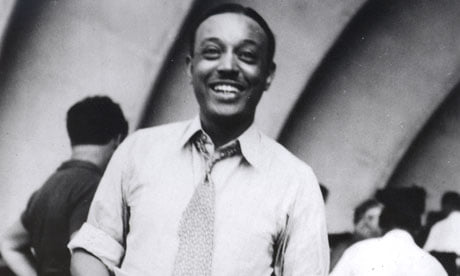
    I was so juiced at obtaining the entire series on CD that I promptly devoted four weeks of shows to the box set on “The Lost Chord” in 2019. Now, for the first time, the programs are being repeated, to coincide with Black History Month, over the four Saturdays in February. Part II will feature contrasting works by George Walker and José Maurício Nunes Garcia.

    Walker was the first African American recipient of the Pulitzer Prize for Music – as recently as 1996 – for his “Lilacs for Voice and Orchestra.” He was the first Black musician to graduate from the Curtis Institute of Music. He also studied at the Eastman School and was a pupil of Nadia Boulanger. Tune in for Walker’s Trombone Concerto of 1957.

    Then it’s off to South America for Nunes Garcia’s Requiem Mass of 1816. Nunes Garcia was Master of Music of the Royal Chapel in Rio de Janeiro. He composed over four hundred pieces of music, including the first Brazilian opera. The Requiem was written at the request of John VI of Portugal for funeral services for his mother, Maria I.

    I hope you’ll join me for Part II of “Black to the Future” – selections from Columbia Records’ landmark Black Composers Series of the 1970s – on “The Lost Chord,” now in syndication on KWAX, the radio station of the University of Oregon!


    Clip and save the start times for all three of my recorded shows:

    PICTURE PERFECT, the movie music show – Friday at 8:00 PM EST/5:00 PM PST

    SWEETNESS AND LIGHT, the light music program – ALL NEW! – Saturday at 11:00 AM EST/8:00 AM PST

    THE LOST CHORD, unusual and neglected rep – Saturday at 7:00 PM EST/4:00 PM PST

    Stream them, wherever you are, at the link!

    https://kwax.uoregon.edu/
  • Spanish Classics on The Lost Chord Radio Show

    Spanish Classics on The Lost Chord Radio Show

    Hola! This week on “The Lost Chord,” I’ll be dipping deep into the archive for a 2007 show devoted to Spanish classics from the Naxos catalogue.

    We’ll enjoy rarely heard works by Joaquín Rodrigo (his “Preludio para un poema a la Alhambra,“ from 1928), Basque composer Jesús Guridi (“Asi cantan los chicos” – variously translated as “So the boys sing” or “Thus sing the children” – settings of poems by Juan Carlos Gortázar, from 1915), and Antonio José (“Sinfonía castellana,” of 1923), whose life was cut tragically short by the Spanish Civil War.

    Few of us have the time, money, or motivation to hop the Atlantic for the weekend. Happily, as always, music is a passport to a wider world. I hope you’ll join me for “No Spain, No Gain,” on “The Lost Chord,” now in syndication on KWAX, the radio station of the University of Oregon!


    Clip and save the start times for all three of my recorded shows:

    PICTURE PERFECT, the movie music show – Friday at 8:00 PM EST/5:00 PM PST

    SWEETNESS AND LIGHT, the light music program – ALL NEW! – Saturday at 11:00 AM EST/8:00 AM PST

    THE LOST CHORD, unusual and neglected rep – Saturday at 7:00 PM EST/4:00 PM PST

    Stream them, wherever you are, at the link!

    https://kwax.uoregon.edu/
  • Leif Kayser: Composer, Priest, & Organ Master

    Leif Kayser: Composer, Priest, & Organ Master

    Leif Kayser was certainly a multifaceted individual. This week on “The Lost Chord,” we’ll listen to some of his music, of course, but we’ll also talk about his many roles.

    Born in Copenhagen on 1919, Kayser began his studies at the Royal Danish Academy of Music in 1936. In Stockholm, he studied composition with Hilding Rosenberg and conducting with Tor Mann. In 1941, he made his debut as a pianist, in Copenhagen, and as a conductor, in Gothenburg.

    As a composer, he emerged as one of Denmark’s most promising young symphonists. However, following theological studies in Rome, Kayser was ordained in 1949. He largely abandoned concert music – but you can’t keep a good composer down.

    Over time, he began to write for the organ and gradually he produced another symphony. He served as pastor and organist of St. Ansgar Roman Catholic Cathedral until 1964. Then he left the Church to marry and to teach at his alma mater, the Royal Danish Academy of Music.

    Kayser died in 2001. He is still regarded as one of the leading organ composers of Denmark.

    We’ll hear one of Kayser’s gorgeous symphonies, from 1939. That will be prefaced by “Caleidoscopio,” a work for flute and organ, composed between 1974 and 1976. After a brief introduction, it gradually becomes apparent that the piece is constructed as a series of reflections on the familiar chorale “Von Himmel hoch.” Interesting that a former Catholic priest would write variations on a chorale associated with Martin Luther!

    But, like Whitman, Kayser contained multitudes, as composer, organist, pianist, conductor, priest, husband, and teacher. I hope you’ll join me for “Kayser Roles,” on “The Lost Chord,” now in syndication on KWAX, the radio station of the University of Oregon!


    Clip and save the start times for all three of my recorded shows:

    PICTURE PERFECT, the movie music show – Friday at 8:00 PM EST/5:00 PM PST

    SWEETNESS AND LIGHT, the light music program – ALL NEW! – Saturday at 11:00 AM EST/8:00 AM PST

    THE LOST CHORD, unusual and neglected rep – Saturday at 7:00 PM EST/4:00 PM PST

    Stream them, wherever you are, at the link!

    https://kwax.uoregon.edu/


    PHOTO: Kayser pulls out all the stops

Tag Cloud

Aaron Copland (92) Beethoven (95) Composer (114) Film Music (123) Film Score (143) Film Scores (255) Halloween (94) John Williams (187) KWAX (229) Leonard Bernstein (101) Marlboro Music Festival (125) Movie Music (138) Opera (202) Philadelphia Orchestra (89) Picture Perfect (174) Princeton Symphony Orchestra (106) Radio (87) Ralph Vaughan Williams (85) Ross Amico (244) Roy's Tie-Dye Sci-Fi Corner (290) The Classical Network (101) The Lost Chord (268) Vaughan Williams (103) WPRB (396) WWFM (881)

DON’T MISS A BEAT

Receive a weekly digest every Sunday at noon by signing up here


RECENT POSTS