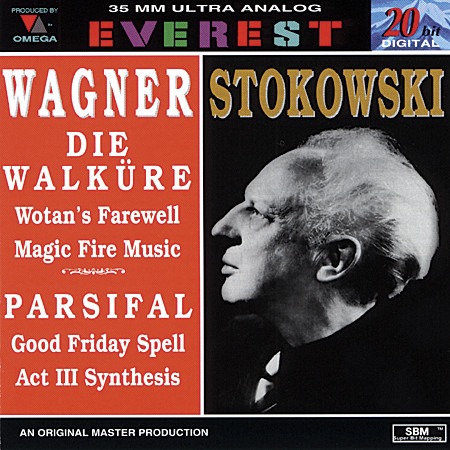
Every year during Holy Week, I try to listen to Wagner’s “Parsifal” – whether I need it or not. This year, I am especially interested to do so, since I have been reading Alex Ross’ recent book, “Wagnerism.”
Ross, music critic at The New Yorker for the past quarter century, makes a convincing case that Richard Wagner was the single most influential artist, not only in music, but in all spheres of life, of perhaps the last 180 years.
A mite hyperbolic? I thought so too, but as chapter is laid out upon chapter, over the course this 700-page tome, one soon comes to realize – from Tannhäuser’s Venusberg to Lohengrin’s swan-boat, from Alberich’s Ring to Amfortas’ wound – that in fact, he’s absolutely right!
And not simply because of Wagner’s prominent, recurrent archetypes, but also because of his underlying ideas, and how they’re processed and presented in his overwhelming music dramas.
Literature, poetry, visual art, architecture, design, theater, dance, movies, politics, economics, religion, philosophy, nationalism, prejudice, psychology, technology, and sexuality – for better or worse, there is almost no one who has not been influenced in some way or other by Wagner. Not only in the West, but in the entire industrialized world.
This applies even to those who have never heard of Wagner, or even a note of his music. It would seem that one embraces, rejects, or grapples with Wagner, or affects indifference or lives in ignorance, but sooner or later, even the most skeptical will be steamrolled by someone or something driven by his ideas. Seriously, once you take in the evidence, your head will explode.
To be honest, I found Ross’ approach to be a little lightweight at first, the kind of book that would impress readers who don’t really know that much about a subject. The writing is not particularly stylish. Most of the supporting evidence is not dwelt upon for more than a few pages. Some examples are little more than namedropped. That’s not to say it’s not well-written and that there aren’t plenty of insights along the way.
But it soon becomes apparent that Ross has a longer, larger aim, and that he knows exactly what he’s doing. The sheer scope of the narrative serves to illustrate the inescapable accumulation of Wagnerian influence on the development of human society.
I hasten to add, this is not an academic exercise. It is not at all dry or abstruse. The book is geared toward a popular audience, not the ivory tower. Furthermore, it can be ridiculously entertaining.
From the Department of You Can’t Please Everyone comes this delicious assessment of “Parsifal,” by the Futurist firebrand Filippo Tommaso Marinetti. Without going too much into the history behind it, Marinetti was fed up with the “Parsifal” craze that swept Europe in 1914. Previously, the opera had been permitted only to be performed at Wagner’s own specially-outfitted Festspielhaus in Bayreuth, where it had been staged since 1882. The monopoly was lifted on January 1st. In the next six months, “Parsifal” was performed in no fewer than 50 European opera houses.
Marinetti responded with a two-page screed, titled “A bas le Tango et Parsifal!” (“Down with the Tango and Parsifal!”), from which this is but an excerpt:
“If the tango is bad enough, ‘Parsifal’ is even worse, as it inoculates the dancers, swaying to and fro, bored and listless, with an incurable musical neurasthenia. How can we avoid ‘Parsifal,” with its downpours, its puddles, and its floods of musical tears? ‘Parsifal’ is a systematic devaluation of life! A factory cooperative of sadness and despair. Tuneless stretching and straining for weak stomachs. Poor digestion and heavy breathing for forty-year-old virgins. Whining of flabby and constipated old priests. Wholesaling and retailing of bad consciences and a stylish effeminacy for snobs. Blood deficiency, feebleness of the loins, hysteria, anemia, and greensickness. Prostration, brutalization, and violation of Mankind. Ridiculous scraping of failed, mutilated notes. Snoring of drunken organs sprawling in the vomit of foul-tasting leitmotifs. False tears and pearls flaunted by a Mary Magdalene with a plunging neckline more suited to Maxim’s. Polyphonic pus from Amfortas’ festering scabs. Worn-out wailings of the Knights of the Holy Grail. Nonsensical Satanism of Kundry… Antediluvianism! Antediluvianism! Enough of it!”
Ouch!
Yeah, that about sums it up. I can’t wait to listen to it again.