Tag: Wagner

  • Dvořák Wagner & Marlboro Music Festival

    Dvořák Wagner & Marlboro Music Festival

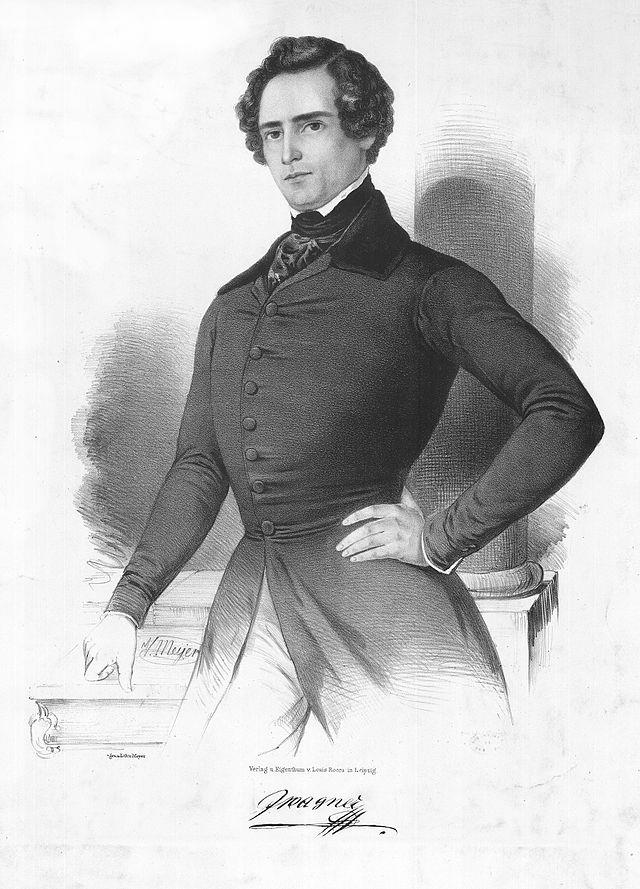
    In an interview granted in 1885, Bohemian composer Antonin Dvořák expressed his early admiration for Richard Wagner. Wagner visited Prague in 1863. Dvořák recalled, “I was perfectly crazy about him, and recollect following him as he walked along the streets to get a chance now and again of seeing the great little man’s face.” General opinion seems to be that the Czech master outgrew his infatuation by the 1870s – but perhaps not entirely.

    The two composers will be reunited in spirit on this week’s “Music from Marlboro.” Tying in with The Classical Network’s end-of-the-fiscal-year fundraiser, “Play It Again,” I’ve selected two works from the lists of favorites submitted last week by WWFM hosts and listeners. These will be performed, in their entirety, by musicians from the legendary Marlboro Music Festival.

    So as not to spoil the surprise(s), I won’t tell you what they are in advance, but I do hope you’ll tune in, and I hope you’ll support us with your financial contribution at 1-888-232-1212, or online at wwfm.org.

    We’re now in our second day of sharing YOUR playlists. You never know from one moment to the next what we’ll be playing. In the spirit of the occasion, I won’t know from one moment to the next what I’m doing – but you’re guaranteed I will execute it with such grace, beginning this afternoon at 4 p.m. EDT. “Music from Marlboro” starts at 6.

    Thank you for supporting WWFM – The Classical Network!

    Marlboro School of Music and Festival: Official Page

  • Wagner Mendelssohn Feud & Chamber Music

    Wagner Mendelssohn Feud & Chamber Music

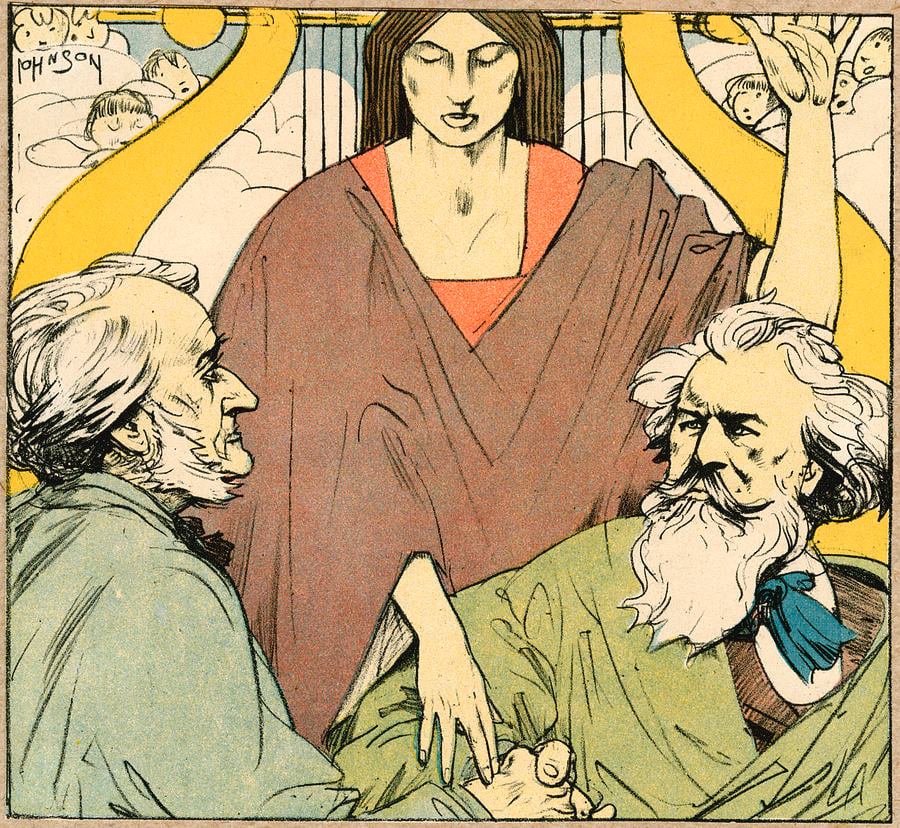
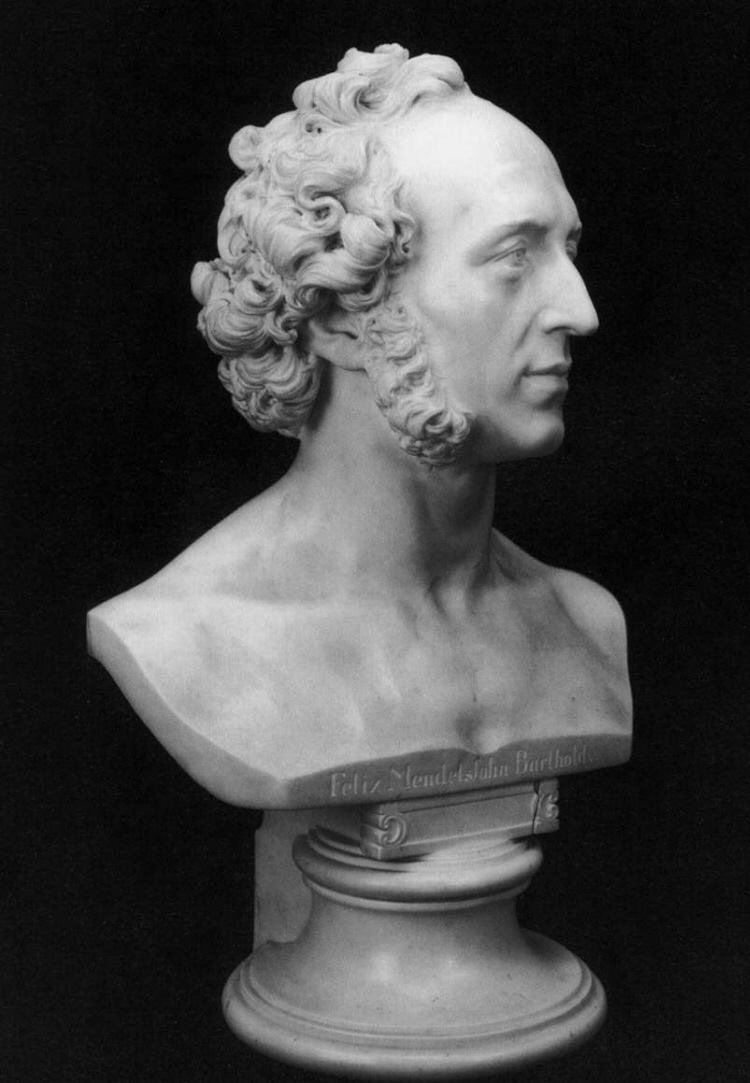
    Richard Wagner, of course, was not very fond of Felix Mendelssohn. He had given the manuscript of his early Symphony in C major to Mendelssohn as a “gift” in 1836, and then became resentful when Mendelssohn didn’t make a special case for the work in his position as kapellmeister of the Leipzig Gewandhaus Orchestra. For this, Wagner never forgave him. Nevermind the fact that the symphony had been performed by the Leipzig orchestra in 1833.

    Okay, so Wagner may have been a little disappointed, but he could have stopped short of his notorious screed “Judaism in Music,” first published in 1850, in which Mendelssohn was singled out for preferential treatment. But at least he was in good company. Wagner also targeted Giacomo Meyerbeer, who had helped secure the first performance of Wagner’s break-out success, “Rienzi,” in 1842. (The conductor Hans von Bülow joked that “Rienzi” was Meyerbeer’s best opera.) Mendelssohn had already been dead for three years, and Wagner published his essay under a pseudonym. Not exactly fair play, by any standard.

    Ironically, the tract wound up damaging his own reputation more than Mendelssohn’s. It’s a good thing for Wagner that his genius was such that we still revere his innovative music dramas even in the shadow of his own psychological frailty.

    Mendelssohn, too, remains in the canon, his own genius undiminished. Mendelssohn’s String Quintet No. 1 in A minor will be the concluding work on today’s Noontime Concert on The Classical Network, which will be made up of performances by the Manhattan Chamber Players.

    Also on the program will be Maurice Ravel’s Introduction and Allegro for Harp, Flute, Clarinet, and String Quartet, Johannes Brahms’ Clarinet Trio, and John Blasdale’s Elegy in F sharp minor, a work for string quartet inspired by Beethoven’s Piano Sonata in E major, Op. 109. The broadcast will be drawn from two concerts given at the Baruch Performing Arts Center in December and April. The Baruch Performing Arts Center is located on 25th Street, between Lexington and 3rd Avenues, in New York City.

    This Thursday, the Manhattan Chamber Players will be joined by formidable cellist Peter Wiley. Wiley is a veteran of both the Beaux Arts Trio and the Guarneri Quartet. The program, titled “Cello Power,” will include Wolfgang Amadeus Mozart’s String Quartet in B flat major, K. 589, and the String Quintets by Alexander Glazunov and Franz Schubert. The concert will take place at 7:30 p.m. at Holy Trinity Lutheran Church, New York City, 3 West 65th Street, at the corner of 65th and Central Park West. For more information, visit manhattanchamberplayers.com.

    Following today’s Noontime Concert broadcast, I’ll mark Wagner’s birthday anniversary with some unusual works and exceptional performances – maybe even the Symphony in C. We’ll find beauty in the beast, between 12 and 4 p.m. EDT, on WWFM – The Classical Network and wwfm.org.

  • Stokowski’s Wagner Philadelphia Orchestra

    Stokowski’s Wagner Philadelphia Orchestra

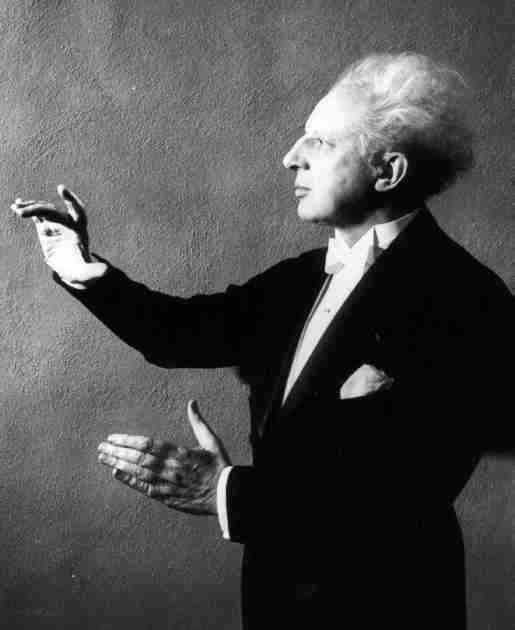
    With the exception, perhaps, of his own transcriptions of the music of Johann Sebastian Bach, Leopold Stokowski recorded more Wagner with the Philadelphia Orchestra than any other single composer.

    This Sunday night on “The Lost Chord,” we’ll revisit some of Stoky’s early recordings, originally issued on 78s, including the controversial “Liebesnacht,” the original version of his symphonic synthesis after “Tristan und Isolde” – an arrangement that infuriated listeners, with its inconclusive ending – and the “Liebestod,” which he undertook by popular demand, in order to provide a more satisfactory conclusion.

    We’ll also hear baritone Lawrence Tibbett, in a role he never sang on stage, in a superb recording of “Wotan’s Farewell and Magic Fire Music.”

    That’s “Magic Fire” – Leopold Stokowski’s early Wagner recordings with the Philadelphia Orchestra” – this Sunday night at 10:00 EDT, on WWFM – The Classical Network and wwfm.org.

  • Wagner Migraines and My Headache

    Wagner Migraines and My Headache

    I am not a chronic migraine sufferer, thank God, but for the past two days I have been oppressed by headaches, and this morning’s is worse than yesterday’s (which finally subsided last night). Suffice it to say, I am typing this on my laptop with the brightness turned way down.

    By coincidence, I happen to be reading Simon Callow’s compellingly-written “Being Wagner.” Callow, in addition to being a grandiloquent character actor (you may recollect him from “Amadeus,” “A Room with a View,” “Shakespeare in Love,” or “Four Weddings and a Funeral”), has portrayed some of the great artists (notably Charles Dickens) in one-man stage shows. He’s also written a comprehensive, three volume biography of Orson Welles.

    It was in the scripting of his Wagner play that he became consumed with this complex figure. So he decided to write a book. The subtitle, in its first printing, was “The Story of the Most Provocative Composer Who Ever Lived.” Apparently, it has since been amended to “Triumph of the Will.” Both would be equally valid.

    Wagner’s antisemitism was as pervasive as it was irrational. As a frequently struggling and misunderstood artist, he received nothing but support from his Jewish acquaintances – including Giacomo Meyerbeer, the most successful opera composer in Paris, who helped secure him his big break. Wagner rewarded Meyerbeer’s generosity by making him his bête noire. In fact, Wagner would often froth about the Jews, much to the discomfort of nearly everyone around him. His mania is chillingly prescient of the social corrosion that would allow Hitler’s rise to power. But yes, there is a double meaning in the latter subtitle in that Wagner, for all intents and purposes, willed himself to success.

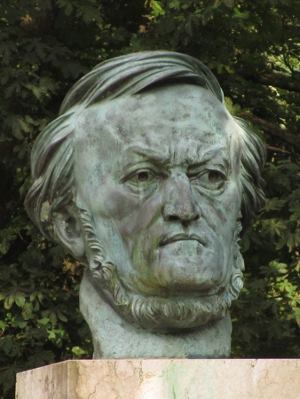
    With all that I know about Wagner and his music, I suppose I shouldn’t have been surprised when I googled “classical music headache” and what popped up, but Little Richard himself. I had forgotten that Wagner, always very tightly wound, was a migraine sufferer.

    https://migraineagain.com/migraine-music-of-wagner/

  • Thor’s Hammer Mjolnir in Comics and Wagner Opera

    Thor’s Hammer Mjolnir in Comics and Wagner Opera

    Every fan of Marvel Comics knows that Thor’s hammer is called Mjolnir. At the climax of Richard Wagner’s “Das Rheingold,” Thor (here called Donner) summons a thunderstorm in order to clear the air so that the gods may enter Valhalla. Feel the power of Mjolnir!

    https://www.youtube.com/watch?v=sICdPq3kfp8

Tag Cloud

Aaron Copland (92) Beethoven (95) Composer (114) Film Music (123) Film Score (143) Film Scores (255) Halloween (94) John Williams (187) KWAX (229) Leonard Bernstein (101) Marlboro Music Festival (125) Movie Music (138) Opera (202) Philadelphia Orchestra (89) Picture Perfect (174) Princeton Symphony Orchestra (106) Radio (87) Ralph Vaughan Williams (85) Ross Amico (244) Roy's Tie-Dye Sci-Fi Corner (290) The Classical Network (101) The Lost Chord (268) Vaughan Williams (103) WPRB (396) WWFM (881)

DON’T MISS A BEAT

Receive a weekly digest every Sunday at noon by signing up here


RECENT POSTS