Tag: William Schuman

  • Einstein’s Unexpected Music Taste at Princeton

    Einstein’s Unexpected Music Taste at Princeton

    Yesterday, I had folks in from out of town and took them over to see Einstein’s furniture at Updike Farm on Quaker Road. Since 2004, the property has been owned by the Historical Society of Princeton.

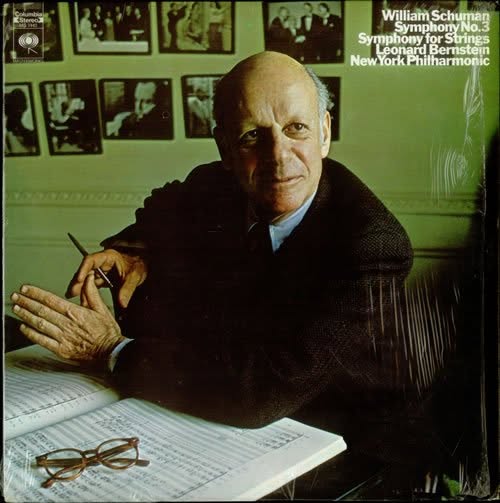
    I’d been there before, but yesterday was the first time I thought to lean in and take note of what was on Einstein’s turntable. By squinting, I could just about make out Eugene Ormandy and the Philadelphia Orchestra, but it was only by taking a photo, flipping it, and enlarging that I could make out the music: William Schuman’s Symphony No. 3! A most bizarre selection as, despite his friendship with Bohuslav Martinů and association with Arnold Schoenberg, from everything I’ve heard, Einstein was not really a contemporary music guy. He was all about the meat-and-potato classics. (He loved Haydn and Mozart.)

    If this record was indeed from Einstein’s personal collection, it was a very interesting choice, making more of an impression on me than E = mc². But I am the first to admit, as a classical music lover at the science fair, I tend to look at things a little differently.

    More than likely, someone who didn’t know William Schuman from Robert Schumann had selected it – if he or she even knew who Schumann was. I like to think the record was actually from Einstein’s collection and not just something from the period that somebody picked up at a yard sale. The docent, while friendly and attentive, didn’t seem to know anything about it. But I’m used to that.

    In the same room, as part of an Innovators Gallery, there’s also some material on Freeman Dyson, one of Einstein’s colleagues at Princeton’s Institute for Advanced Study, who also happened to be the son of eminent English composer Sir George Dyson. Again, I appeared to be the only one with much interest in the connection (neither was it noted, that I could see, in the literature).

    In his day, William Schumann was recognized as one of our great American symphonists. In particular, his Symphony No. 3 of 1941 was held up, alongside the corresponding symphonies of Roy Harris and Aaron Copland, as among the best this country had to offer. Schuman won the Pulitzer Prize for Music in 1943, became president of the Juilliard School in 1945, and president of Lincoln Center in 1961.

    By coincidence, he was a student of Roy Harris, whose Symphony No. 3 is being performed this afternoon by the Princeton University Orchestra. The concert, a repeat of last night’s program, will be held at Princeton University’s Richardson Auditorium at 3:00. Also on the program will be Hector Berlioz’s “Symphonie fantastique.” Be there, or be square.

    For tickets, visit

    https://tickets.princeton.edu/

    Discover Albert Einstein at Updike Farmstead

    Discover Albert Einstein

    Ormandy conducts William Schuman’s Symphony No. 3

    Article I wrote about Einstein’s musical activities and enthusiasms

    https://www.communitynews.org/princetoninfo/artsandentertainment/relatively-musical-albert-einstein-and-bohuslav-martin/article_68a1ba00-fe7d-11ef-a05a-2f8ce43f2de6.html

  • Ormandy’s Lost American Legacy Rediscovered

    Ormandy’s Lost American Legacy Rediscovered

    Eugene Ormandy was born Jenő Blau in Budapest in 1899. In 1927, he became a naturalized American citizen and wound up directing the Philadelphia Orchestra for 44 years.

    In that capacity, he championed much contemporary music and works by his adopted countrymen – a fact eclipsed by his reputation as a superb interpreter of the 19th century classics.

    In fact, for many years, much of his American legacy dropped out of print. In the late 1990s, Albany Records attempted to rectify the situation by reissuing some of Ormandy’s recordings of lesser-heard American music. The series only made it to three volumes, but each one of them is a treasure.

    This week on “The Lost Chord,” we’ll hear two selections from these invaluable anthologies. Both are by Pulitzer Prize winners whose music has sadly fallen out of fashion.

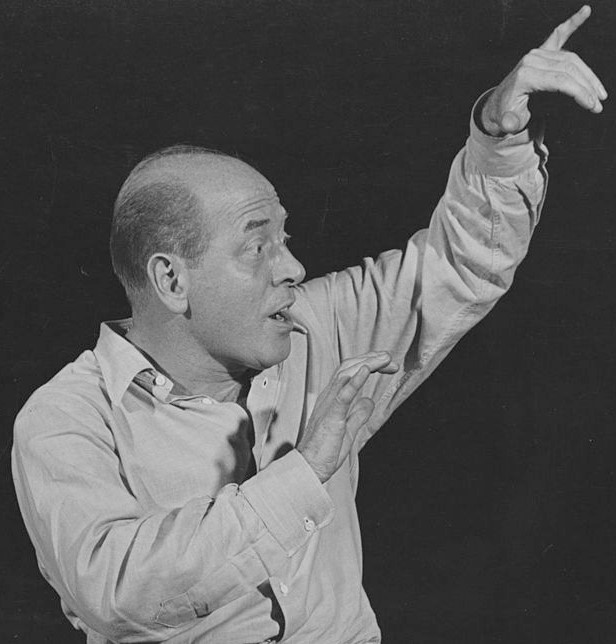
    William Schuman was the very first recipient of the Pulitzer Prize for Music, in 1943, for his “Cantata No. 2, A Free Song.” At the height of his fame, he was also President of Lincoln Center. He was considered such an important figure in American culture, he was even brought on to “What’s My Line?” (Those were the days.)

    We’ll hear Schuman’s “Credendum – Article of Faith,” composed in 1955. The work was written in response to the first ever commission by the U.S. government for a symphonic work.

    Two years later, the Pulitzer was awarded to Norman Dello Joio, for his “Meditations on Ecclesiastes.” His symphonic suite “Air Power” was adapted from 22 individual scores composed for the CBS television series about the history of aviation. The series ran from November 1956 through the spring of 1957. (Dello Joio would collect his prize in April.) The individual sections were used to underscore segments on the early days of flight, with their barnstormers and daredevils, air battles and war scenes.

    I hope you’ll join me for these rarely-heard recordings of American music. Ormandy flies American, on “All-American Ormandy,” on “The Lost Chord,” now in syndication on KWAX, the radio station of the University of Oregon!


    Remember, KWAX is on the West Coast, so there’s a three-hour difference for the Trenton-Princeton area. Here are the respective air-times of my recorded shows (with East Coast conversions in parentheses):

    PICTURE PERFECT, the movie music show – Friday on KWAX at 5:00 PACIFIC TIME (8:00 PM EST)

    THE LOST CHORD, unusual and neglected rep – Saturday on KWAX at 4:00 PACIFIC TIME (7:00 PM EST)

    Stream them here!

    https://kwax.uoregon.edu/


    William Schuman on “What’s My Line?” (1962):

    https://www.youtube.com/watch?time_continue=10…

    “Air Power,” narrated by Walter Cronkite (1956):

    https://www.youtube.com/watch?v=gKXKTh50USM


    PLEASE NOTE: Ormandy’s recording of Dello Joio’s “Air Power Suite” will be reissued on Friday, November 17, as part of Sony Classical’s impending 88-CD box, “Eugene Ormandy/The Philadelphia Orchestra: The Columbia Stereo Collection.”

    Schuman’s “Credendum” was reissued in 2021, as part of Sony’s 120-CD box (all mono), “Eugene Ormandy: The Columbia Legacy.”

    Both Sony releases have been newly-remastered.
  • Classical Music for Dad A Sports-Themed Father’s Day

    Classical Music for Dad A Sports-Themed Father’s Day

    I may have been told to clean out my locker at a certain classical music station in the Trenton-Princeton area, but happily there’s still room for me on the bench at KWAX, the radio station of the University of Oregon. So buy me some peanuts and Cracker Jack. I don’t care if I never go back!

    This week on “The Lost Chord,” it’s the mother of all Father’s Day shows, as we pay tribute to Dad with an hour of music about sports.

    I realize it’s possible that not all dads necessarily like sports. However, it’s been my experience that Sunday afternoons and Monday nights have always been off-limits, as far as the family television is concerned. For me personally, that meant that after Abbott and Costello or the Bowery Boys, it was football, golf, or “Wide World of Sports,” and that I never saw “MAS*H” during its first run.

    Be that as it may, it’s All-Dads Eve, so we’re going to give him what he wants – an hour of rough-and-tumble, the thrill of victory, and the agony of defeat.

    We’ll hear “Rugby” by Arthur Honegger, “Half-Time” by Bohuslav Martinu, “The Yale-Princeton Football Game” by Charles Ives, and highlights from the baseball opera “The Mighty Casey” by William Schuman.

    Combine with a La-Z-Boy and a cold beer, and it’s a recipe for dad contentment. I hope you’ll join me for “Good Sports,” now in syndication on KWAX, the radio station of the University of Oregon!

    See below for streaming information.


    Keep in mind, KWAX is on the West Coast, so there’s a three-hour difference for the Trenton-Princeton area. Here are the respective air-times of my recorded shows (with East Coast conversions in parentheses):

    PICTURE PERFECT, the movie music show – Friday on KWAX at 5:00 PACIFIC TIME (8:00 PM EDT)

    THE LOST CHORD, unusual and neglected rep – Saturday on KWAX at 4:00 PACIFIC TIME (7:00 PM EDT)

    Stream them here!

    https://kwax.uoregon.edu/


    PHOTO: Philadelphia Baseball Club, 1887 (Dad center)

  • American Music Greats Born on This Day

    American Music Greats Born on This Day

    A great day for American music.

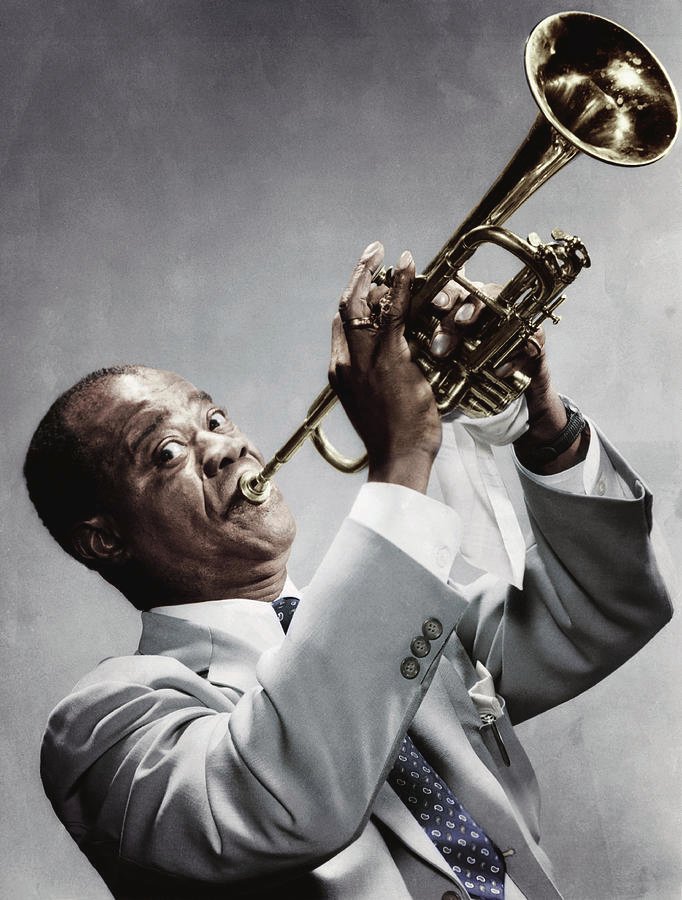
    Seminal jazz artist and pop cultural icon Louis Armstrong was born on this date in 1901. Armstrong’s birth certificate didn’t come to light until years after his death, so he always celebrated his birthday on July 4. Can’t get much more American than that.

    William Schuman, president of the Julliard School (1945-61) and Lincoln Center (1961-69), and first recipient of the Pulitzer Prize for Music for his cantata “A Free Song” in 1943, was born on this date in 1910. In his day, he was regarded as one of our great American symphonists. His Symphony No. 3 (1941) was especially well-regarded.

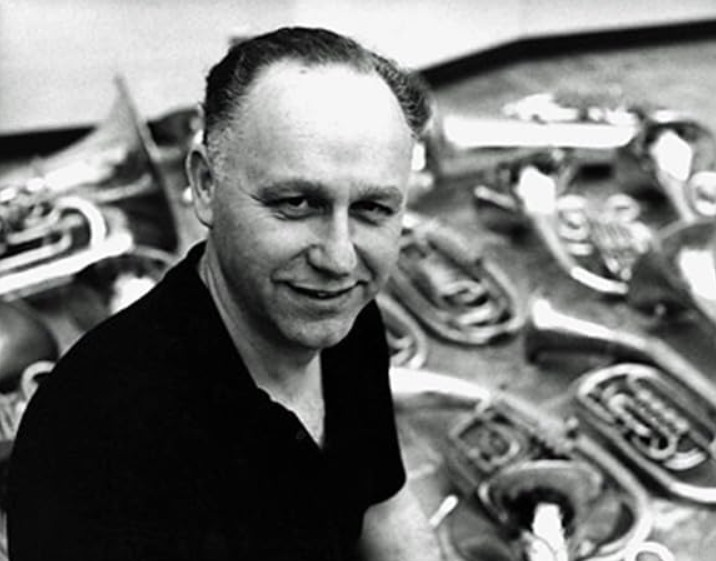
    Film composer David Raksin, who got his start working with Chaplin on “Modern Times,” but best-remembered for his music for the noir classic “Laura,” was born in Philadelphia on this date in 1912. Due to his longevity – Raksin lived to see 92 – he became an invaluable fount of information about old Hollywood.

    Pretty great country, that could produce that array of talent. Happy birthday, gentlemen. Thanks for all the music.


    Armstrong live in 1933

    With Velma Middleton, “All That Meat and No Potatoes”

    William Schuman on “What’s My Line?”

    Schuman, Symphony No. 3

    Raksin talks about working with Chaplin on “Modern Times”

    Raksin plays “Laura”

  • Childhood Nostalgia in Classical Music

    Childhood Nostalgia in Classical Music

    The end of summer can be a time of reminiscence, sentiment, and undefined yearning. The limpid air, the lambent, silvery light of late August imbue one with a sense of nostalgia, swaddled in the gentle melancholy of an idyllic dream. How I feel for the young ‘uns straining against the inescapable vortex of another school year.

    This Sunday night on “The Lost Chord,” we’ll hear music by four composers who indulged in musical reminiscences of childhood.

    William Schuman grew up to become President of Lincoln Center – and one of our country’s most respected symphonists – but his “American Festival Overture” (1939) is permeated by a three-note call-to-play (“Wee-Awk-Eee!”) recollected from his boyhood.

    Haskell Small’s “Visions of Childhood” (2011) is a piano cycle in the Robert Schumann “Kinderszenen” mode, again a mature artist reflecting on halcyon days. The suite falls into ten brief movements: “A Long Time Ago,” “Playing Rough,” “A Little Story,” “Feeling Lonely,” “School’s Out,” “Haunted House,” “Frolicking,” “Look at Me!,” “Roller Coaster,” and “Lullaby.”

    Charles Ives may have been a radical innovator, but his music is often infused with a nostalgia for the New England of his youth. His Violin Sonata No. 4 (1906-1915, revised in 1942) bears the subtitle, “Children’s Day at the Camp Meeting,” a programmatic work that balances hymn tunes and rowdy boyhood high jinks.

    Finally, as he entered his eighth decade, George Crumb embarked on a remarkably productive Indian Summer, which resulted in no less than seven volumes of “American Songbooks,” the last completed in 2011, when the composer was 82 years-old. Each volume consists of deeply personal treatments of folk songs and hymns Crumb recollected from his formative years in West Virginia.

    We’ll hear selections from “American Songbook III: The River of Life” (2008). By employing his characteristic shades and cross-hatchings by way of an assortment of ear-tickling percussion effects, the composer provides his own commentary on the time-worn source material, lending it both unsuspected depth and an aura of timelessness.

    It’s a far cry from “Kinderszenen.” I hope you’ll join me for “Nostalgia Isn’t What It Used to Be” – 20th and 21st century composers look back on childhood – this Sunday night at 10:00 EDT, on WWFM – The Classical Network and wwfm.org.

Tag Cloud

Aaron Copland (92) Beethoven (95) Composer (114) Film Music (123) Film Score (143) Film Scores (255) Halloween (94) John Williams (187) KWAX (229) Leonard Bernstein (101) Marlboro Music Festival (125) Movie Music (138) Opera (202) Philadelphia Orchestra (89) Picture Perfect (174) Princeton Symphony Orchestra (106) Radio (87) Ralph Vaughan Williams (85) Ross Amico (244) Roy's Tie-Dye Sci-Fi Corner (290) The Classical Network (101) The Lost Chord (268) Vaughan Williams (103) WPRB (396) WWFM (881)

DON’T MISS A BEAT

Receive a weekly digest every Sunday at noon by signing up here


RECENT POSTS