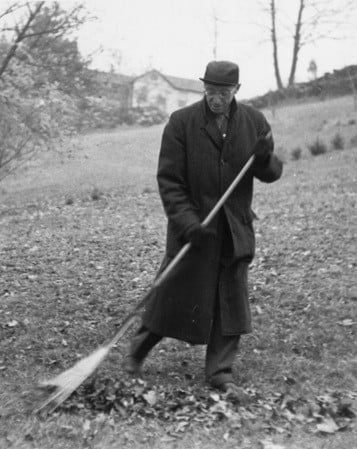
Tag: William Schuman

  • Aaron Copland Documentary Rediscovered

    Aaron Copland Documentary Rediscovered

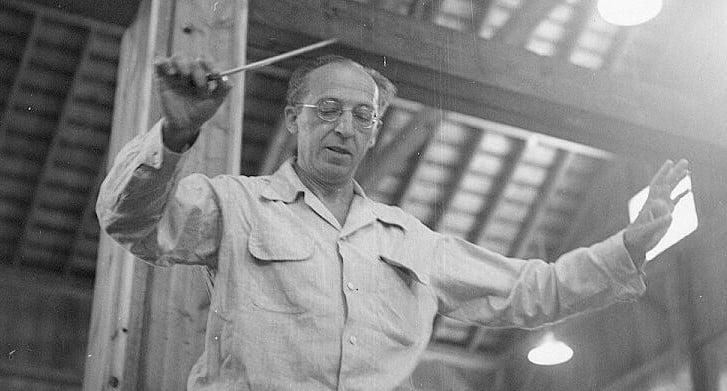
    I am so happy to rediscover this 30-minute documentary on Aaron Copland. I remember watching it years ago. What an exciting time for American music – and for America – to say nothing of the arts in general. Not that American music does not remain vital. But Copland seems to be the last man standing, in terms of the active repertoire, of that great generation. To catch a Roy Harris or a William Schuman symphony in concert is very rare indeed.

    It is the fate of even the greatest composers to be remembered through but a handful of pieces, usually from a particular phase of his or her career. In Copland’s case, it’s pretty much the cowboy music. Some people love it; some are put off by it. Cowboys aren’t exactly “in” right now, and when someone hears “I Ride an Old Paint,” they may not trouble themselves to look beyond the trappings. But nearly everything Copland wrote is worth hearing – and I’ve heard most of it – even the misfires. Once you get to know him, his sound is immediately identifiable in anything he touched. He had vision, he had craft, and he had integrity.

    I love this man, and I love his music, and I love what he did for music. Would that we had someone of his caliber today. Happy birthday, Aaron Copland.
  • Rediscovering Copland’s Genius

    Rediscovering Copland’s Genius

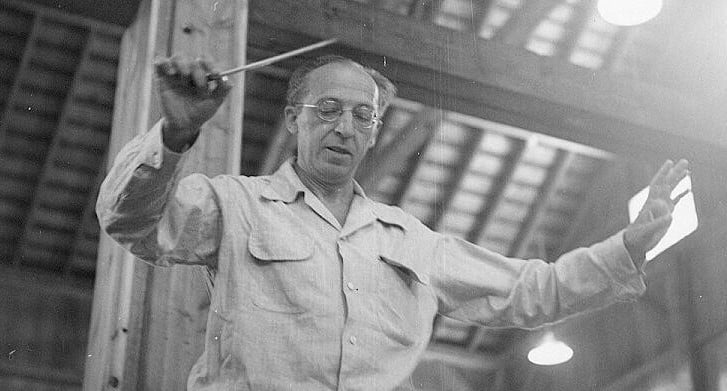
    I am so happy to rediscover this 30-minute documentary on Aaron Copland. I remember watching it years ago. What an exciting time for American music – and for America – to say nothing of the arts in general. Not that American music does not remain vital. But Copland seems to be the last man standing, in terms of the active repertoire, of that great generation. To catch a Roy Harris or a William Schuman symphony in concert is very rare indeed.

    It is the fate of even the greatest composers to be remembered through but a handful of pieces, usually from a particular phase of his or her career. In Copland’s case, it’s pretty much the cowboy music. Some people love it; some are put off by it. Cowboys aren’t exactly “in” right now, and when someone hears “I Ride an Old Paint,” they may not trouble themselves to look beyond the trappings.

    But nearly everything Copland wrote is worth hearing – and I’ve heard most of it – even the misfires. Once you get to know him, his sound is immediately identifiable in anything he touched. He had vision, he had craft, and he had integrity.

    I love this man, and I love his music, and I love what he did for music. Would that we had someone of his caliber today. Happy birthday, Aaron Copland.
  • Ormandy’s Lost American Legacy

    Ormandy’s Lost American Legacy

    Eugene Ormandy, of course, was born in Hungary. His birth name was Jenő Blau. But he became a naturalized American citizen in 1927 and directed the Philadelphia Orchestra for 44 years.

    In that capacity, he championed much contemporary music and works by his adopted countrymen –facts frequently forgotten next to his legacy as a superb interpreter of the 19th century classics.

    In fact, much of his American legacy has dropped out of print. In the late 1990s, Albany Records briefly attempted to rectify the situation by reissuing some of Ormandy’s recordings of lesser-heard American music. In the event, the series only reached three discs, but each of them is a treasure.

    This Sunday night on “The Lost Chord,” we’ll hear two works by Pulitzer Prize-winners, both of whose music has sadly fallen out of fashion. The first is William Schuman, the very first recipient of the Pulitzer Prize for Music in 1943, for his “Cantata No. 2, ‘A Free Song.’” At the height of his fame, Schuman was also President of Lincoln Center.

    We’ll hear music he composed in 1955, called “Credendum – Article of Faith,” which was written in response to the first ever commission by the U.S. government for a symphonic work.

    Norman Dello Joio was the recipient of the Pulitzer in 1957 for his “Meditations on Ecclesiastes.” The concert suite from “Air Power” was adapted from 22 individual scores he composed for the CBS television series, about the history of aviation, which aired from November 1956 through spring of 1957. Its individual sections underscore the early days of flight, with its barnstormers and daredevils, followed by those of air battles and war scenes.

    I hope you’ll join me for these rarely heard recordings of American music, conducted by Eugene Ormandy. That’s “All-American Ormandy,” tonight at 10 ET, with a repeat Wednesday evening at 6; or listen to it later as a webcast at wwfm.org.

  • Childhood Nostalgia in Classical Music

    Childhood Nostalgia in Classical Music

    The limpid air and lambent, silvery light of late August imbue one with a sense of nostalgia swaddled in the gentle melancholy of another summer winding down. How I feel for the young ‘uns straining against the inescapable vortex of another school year.

    This Sunday night on “The Lost Chord,” we listen to music by four composers who engage in musical reminiscences of childhood.

    The American symphonist William Schuman based his “American Festival Overture” (1939) on a three-note call-to-play from his boyhood in New York City that was shouted on the syllables “Wee-Awk-Eee!”

    Haskell Small’s “Visions of Childhood” (2011) is a cycle of piano pieces in the Robert Schumann “Kinderszenen” mode, a grown artist looking back to his boyhood. The work falls into ten brief movements: “A Long Time Ago;” “Playing Rough;” “A Little Story;” “Feeling Lonely;” “School’s Out;” “Haunted House;” “Frolicking;” “Look at Me!;” “Roller Coaster;” and “Lullaby.”

    Charles Ives may have been a radical innovator, but his subject matter frequently looked back in nostalgia to the New England of his childhood. His Violin Sonata No. 4 (1906-1915, revised in 1942) bears the subtitle, “Children’s Day at the Camp Meeting,” a programmatic work that balances hymn tunes and rowdy boyhood high jinks.

    As he entered his 70s, George Crumb embarked on a remarkably productive Indian Summer, which resulted in no less than seven volumes of “American Songbooks,” the last completed in 2011, when the composer was 82 years-old. Each volume consists of deeply personal treatments of songs Crumb recollected from growing up in West Virginia. We’ll hear selections from “American Songbook III: The River of Life” (2008). By employing his characteristic shades and cross-hatchings through an assortment of ear-tickling percussion effects, the composer provides his own commentary on the time-worn source material, lending it both unsuspected depth and an aura of timelessness.

    It’s a far cry from “Kinderszenen.” Join me for “Nostalgia Isn’t What It Used to Be” – 20th and 21st century composers look back to childhood – this Sunday night at 10:00 EDT, on WWFM – The Classical Network and wwfm.org.

  • Ormandy’s Lost American Legacy

    Ormandy’s Lost American Legacy

    Eugene Ormandy, of course, was born in Hungary. His birth name was Jenő Blau. But he became a naturalized American citizen in 1927 and directed the Philadelphia Orchestra for 44 years.

    In that capacity, he championed much contemporary music and works by his adopted countrymen –facts frequently forgotten next to his legacy as a superb interpreter of the 19th century classics.

    In fact, much of his American legacy has dropped out of print. In the late 1990s, Albany Records briefly attempted to rectify the situation by reissuing some of Ormandy’s recordings of lesser-heard American music. In the event, the series only reached three discs, but each of them is a treasure.

    This Sunday night on “The Lost Chord,” we’ll hear two works by Pulitzer Prize-winners, both of whose music has sadly fallen out of fashion. The first is William Schuman, the very first recipient of the Pulitzer Prize for Music in 1943, for his “Cantata No. 2, ‘A Free Song.’” At the height of his fame, Schuman was also President of Lincoln Center.

    We’ll hear music he composed in 1955, called “Credendum – Article of Faith,” which was written in response to the first ever commission by the U.S. government for a symphonic work.

    Norman Dello Joio was the recipient of the Pulitzer in 1957 for his “Meditations on Ecclesiastes.” The concert suite from “Air Power” was adapted from 22 individual scores he composed for the CBS television series, about the history of aviation, which aired from November 1956 through spring of 1957. Its individual sections underscore the early days of flight, with its barnstormers and daredevils, followed by those of air battles and war scenes.

    I hope you’ll join me for these rarely heard recordings of American music, conducted by Eugene Ormandy. That’s “All-American Ormandy,” tonight at 10 ET, with a repeat Wednesday evening at 6; or listen to it later as a webcast at wwfm.org.

Tag Cloud

Aaron Copland (92) Beethoven (95) Composer (114) Film Music (123) Film Score (143) Film Scores (255) Halloween (94) John Williams (187) KWAX (229) Leonard Bernstein (101) Marlboro Music Festival (125) Movie Music (138) Opera (202) Philadelphia Orchestra (89) Picture Perfect (174) Princeton Symphony Orchestra (106) Radio (87) Ralph Vaughan Williams (85) Ross Amico (244) Roy's Tie-Dye Sci-Fi Corner (290) The Classical Network (101) The Lost Chord (268) Vaughan Williams (103) WPRB (396) WWFM (881)

DON’T MISS A BEAT

Receive a weekly digest every Sunday at noon by signing up here


RECENT POSTS