Tag: William Schuman

  • Forgotten Pulitzer Music: Beyond the Familiar

    Forgotten Pulitzer Music: Beyond the Familiar

    Beyond Aaron Copland’s “Appalachian Spring” and Charles Ives’ Symphony No. 3, how many Pulitzer Prize winners are actually known to the average concertgoer? Sure, the operas of Gian Carlo Menotti and Robert Ward get revived from time to time, and Jennifer Higdon has been exceptionally fortunate for a composer in her prime. But most Pulitzer winners tend to languish in relative obscurity.

    This Sunday night on “The Lost Chord,” in advance of Friday’s announcement of this year’s winners and nominees, we’ll take another look back on Pulitzer history and sample three honored works.

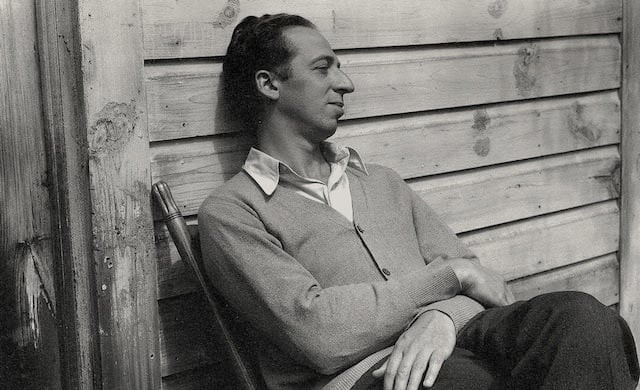
    The very earliest recipient in the music category, in 1943, was William Schuman’s “A Free Song.” Schuman sets a text drawn from Walt Whitman’s “Drum Taps,” verse which grew out of the poet’s Civil War experiences, but also spoke with vigor and optimism to a country once again caught in the throes of conflict. The work was recorded for the first time only in 2011.

    Also on the program will be music by William Bolcom. Bolcom, who only just turned 83, is a composer at home in all genres. His cabaret recitals with his wife, Joan Morris, have always been great favorites; his rag, “Graceful Ghost,” receives heavy air time around Halloween; and his magnum opus, “Songs of Innocence and of Experience,” is a kaleidoscopic, two-and-a-half-hour journey enlivened by bluegrass, country, soul, folk, vaudeville, rock, reggae, and classical influences. We’ll hear selections from Bolcom’s “12 New Etudes for Piano,” the Pulitzer-winner from 1988, performed by the unflappable Marc-André Hamelin.

    Finally, we’ll turn to Caroline Shaw and her extraordinary “Partita for 8 Voices,” which was awarded the Pulitzer in 2013. Shaw, the youngest recipient of the prize for music, was only 30 years-old at the time and a doctoral candidate at Princeton University. Her “Partita” navigates a dizzying array of genres and techniques. The piece will be presented in a flabbergastingly virtuosic performance by the a cappella ensemble Roomful of Teeth, of which Shaw is a founding member.

    I hope you’ll join me for an hour of prized Pulitzer music. That’s “Further Pulitzer Surprises,” this Sunday night at 10:00 EDT, on WWFM – The Classical Network and wwfm.org.


    PHOTO: Caroline Shaw (front left) with Roomful of Teeth

  • Ormandy’s Lost American Legacy Rediscovered

    Ormandy’s Lost American Legacy Rediscovered

    Eugene Ormandy was born Jenő Blau in Budapest in 1899. In 1927, he became a naturalized American citizen and wound up directing the Philadelphia Orchestra for 44 years.

    In that capacity, he championed much contemporary music and works by his adopted countrymen – a fact eclipsed by his reputation as a superb interpreter of the 19th century classics.

    In fact, much of his American legacy has dropped out of print. In the late 1990s, Albany Records attempted to rectify the situation by reissuing some of Ormandy’s recordings of lesser-heard American music. The series only made it to three volumes, but each one of them is a treasure.

    This Sunday night on “The Lost Chord,” we’ll hear two selections from these invaluable anthologies. Both are by Pulitzer Prize winners whose music has sadly fallen out of fashion.

    William Schuman was the very first recipient of the Pulitzer Prize for Music, in 1943, for his “Cantata No. 2, A Free Song.” At the height of his fame, he was also President of Lincoln Center. He was considered such an important figure in American culture, he was even brought on to “What’s My Line?” (Those were the days.)

    We’ll hear Schuman’s “Credendum – Article of Faith,” composed in 1955. The work was written in response to the first ever commission by the U.S. government for a symphonic work.

    Two years later, the Pulitzer was awarded to Norman Dello Joio, for his “Meditations on Ecclesiastes.” His symphonic suite “Air Power” was adapted from 22 individual scores composed for the CBS television series about the history of aviation. The series ran from November 1956 through the spring of 1957. (Dello Joio would collect his prize in April.) The individual sections were used to underscore segments on the early days of flight, with their barnstormers and daredevils, air battles and war scenes.

    I hope you’ll join me for these rarely-heard recordings of American music. Ormandy flies American, on “All-American Ormandy,” this Sunday night at 10:00 EST, on WWFM – The Classical Network and wwfm.org.
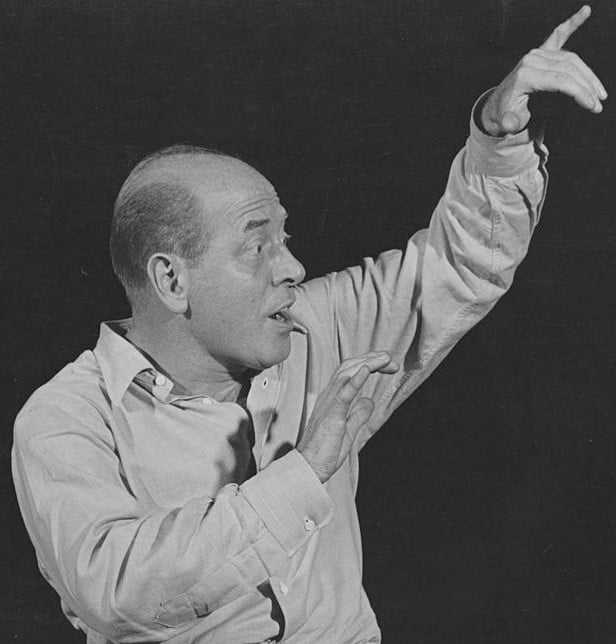

    William Schuman on “What’s My Line?” (1962):

    “Air Power,” narrated by Walter Cronkite (1956):

    https://www.youtube.com/watch?v=gKXKTh50USM

  • Rediscovering Copland American Music Icon

    Rediscovering Copland American Music Icon

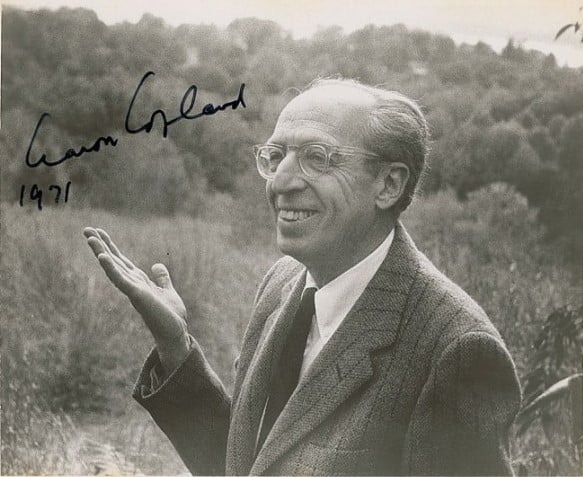
    I am so happy to rediscover this 30-minute documentary on Aaron Copland. I remember watching it years ago. What an exciting time for American music – and for America – to say nothing of the arts in general. Not that American music does not remain vital. But Copland seems to be the last man standing, in terms of the active repertoire, of that great generation. To catch a Roy Harris or a William Schuman symphony in concert is very rare indeed.

    It is the fate of even the greatest composers to be remembered through but a handful of pieces, usually from a particular phase of his or her career. In Copland’s case, it’s pretty much the cowboy music. Some people love it; some are put off by it. Cowboys aren’t exactly “in” right now, and when someone hears “I Ride an Old Paint,” they may not trouble themselves to look beyond the trappings.

    But nearly everything Copland wrote is worth hearing – and I’ve heard most of it – even the misfires. Once you get to know him, his sound is immediately identifiable in anything he touched. He had vision, he had craft, and he had integrity.

    I love this man, and I love his music, and I love what he did for music. Would that we had someone of his caliber today. Happy birthday, Aaron Copland.

  • Rediscovering Copland American Music Icon

    Rediscovering Copland American Music Icon

    I am so happy to rediscover this 30-minute documentary on Aaron Copland. I remember watching it years ago. What an exciting time for American music – and for America – to say nothing of the arts in general. Not that American music does not remain vital. But Copland seems to be the last man standing, in terms of the active repertoire, of that great generation. To catch a Roy Harris or a William Schuman symphony in concert is very rare indeed.

    It is the fate of even the greatest composers to be remembered through but a handful of pieces, usually from a particular phase of his or her career. In Copland’s case, it’s pretty much the cowboy music. Some people love it; some are put off by it. Cowboys aren’t exactly “in” right now, and when someone hears “I Ride an Old Paint,” they may not trouble themselves to look beyond the trappings.

    But nearly everything Copland wrote is worth hearing – and I’ve heard most of it – even the misfires. Once you get to know him, his sound is immediately identifiable in anything he touched. He had vision, he had craft, and he had integrity.

    I love this man, and I love his music, and I love what he did for music. Would that we had someone of his caliber today. Happy birthday, Aaron Copland.

  • Rediscovering Copland American Music Icon

    Rediscovering Copland American Music Icon

    I am so happy to rediscover this 30-minute documentary on Aaron Copland. I remember watching it years ago. What an exciting time for American music – and for America – to say nothing of the arts in general. Not that American music does not remain vital. But Copland seems to be the last man standing, in terms of the active repertoire, of that great generation. To catch a Roy Harris or a William Schuman symphony in concert is very rare indeed.

    It is the fate of even the greatest composers to be remembered through but a handful of pieces, usually from a particular phase of his or her career. In Copland’s case, it’s pretty much the cowboy music. Some people love it; some are put off by it. Cowboys aren’t exactly “in” right now, and when someone hears “I Ride an Old Paint,” they may not trouble themselves to look beyond the trappings.

    But nearly everything Copland wrote is worth hearing – and I’ve heard most of it – even the misfires. Once you get to know him, his sound is immediately identifiable in anything he touched. He had vision, he had craft, and he had integrity.

    I love this man, and I love his music, and I love what he did for music. Would that we had someone of his caliber today. Happy birthday, Aaron Copland.

Tag Cloud

Aaron Copland (92) Beethoven (95) Composer (114) Film Music (123) Film Score (143) Film Scores (255) Halloween (94) John Williams (187) KWAX (229) Leonard Bernstein (101) Marlboro Music Festival (125) Movie Music (138) Opera (202) Philadelphia Orchestra (89) Picture Perfect (174) Princeton Symphony Orchestra (106) Radio (87) Ralph Vaughan Williams (85) Ross Amico (244) Roy's Tie-Dye Sci-Fi Corner (290) The Classical Network (101) The Lost Chord (268) Vaughan Williams (103) WPRB (396) WWFM (881)

DON’T MISS A BEAT

Receive a weekly digest every Sunday at noon by signing up here


RECENT POSTS