Category: Daily Dispatch

  • Hedy Lamarr Google Doodle Honors Trenton’s Antheil

    Hedy Lamarr Google Doodle Honors Trenton’s Antheil

    If Google is your search engine of choice, keep an eye out today for Trenton’s own George Antheil. Antheil makes an appearance in Google’s tribute to actress Hedy Lamarr on what would have been her 101st birthday.

    Not only was Lamarr marketed as the stunner she was, but she possessed a scientific curiosity decidedly at odds with her big screen persona. During WWII, she and Antheil devised a frequency-hopping system that would have prevented the Nazis from jamming radio-controlled Allied torpedoes.

    What this article doesn’t tell us is that Lamarr had initially approached Antheil, a neighbor, to discuss endocrinological matters (a noted polymath himself, Antheil had written books on the subject), in reference to increasing the size of certain of her “assets,” or that neither Lamarr or Antheil ever saw a cent for their patent, which went on to form the basis for modern wireless technology.

    Antheil, of course, was the self-proclaimed “Bad Boy of Music” (actually the title of his autobiography), who set Paris on its ear with his “Ballet Mécanique.” The work, conceived for 16 player pianos, 3 airplane propellers, 7 electric bells, and siren, instigated one of classical music’s most notorious riots. Later, the composer settled into a more conservative language to become one of America’s most performed composers.

    There was never anything romantic between Lamarr and Antheil. They were just two quirky, misunderstood, lonely, intelligent Americans looking to do their patriotic duty. Happy birthday, Hedy Lamarr, and thank you, Google, for acknowledging George Antheil.

    If you’re not a Google user, read more about it and see the animation here:

    http://www.cnn.com/2015/11/09/entertainment/hedy-lamarr-google-doodle-feat/

  • Ormandy’s Lost American Legacy

    Ormandy’s Lost American Legacy

    Eugene Ormandy, of course, was born in Hungary. His birth name was Jenő Blau. But he became a naturalized American citizen in 1927 and directed the Philadelphia Orchestra for 44 years.

    In that capacity, he championed much contemporary music and works by his adopted countrymen –facts frequently forgotten next to his legacy as a superb interpreter of the 19th century classics.

    In fact, much of his American legacy has dropped out of print. In the late 1990s, Albany Records briefly attempted to rectify the situation by reissuing some of Ormandy’s recordings of lesser-heard American music. In the event, the series only reached three discs, but each of them is a treasure.

    This Sunday night on “The Lost Chord,” we’ll hear two works by Pulitzer Prize-winners, both of whose music has sadly fallen out of fashion. The first is William Schuman, the very first recipient of the Pulitzer Prize for Music in 1943, for his “Cantata No. 2, ‘A Free Song.’” At the height of his fame, Schuman was also President of Lincoln Center.

    We’ll hear music he composed in 1955, called “Credendum – Article of Faith,” which was written in response to the first ever commission by the U.S. government for a symphonic work.

    Norman Dello Joio was the recipient of the Pulitzer in 1957 for his “Meditations on Ecclesiastes.” The concert suite from “Air Power” was adapted from 22 individual scores he composed for the CBS television series, about the history of aviation, which aired from November 1956 through spring of 1957. Its individual sections underscore the early days of flight, with its barnstormers and daredevils, followed by those of air battles and war scenes.

    I hope you’ll join me for these rarely heard recordings of American music, conducted by Eugene Ormandy. That’s “All-American Ormandy,” tonight at 10 ET, with a repeat Wednesday evening at 6; or listen to it later as a webcast at wwfm.org.

  • Alwyn Michelle Kwan’s Olympic Composer

    Alwyn Michelle Kwan’s Olympic Composer

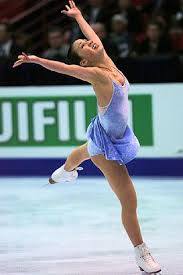
    What composer helped spur Michelle Kwan to Olympic excellence? Kwan skated to William Alwyn’s harp concerto, “Lyra Angelica,” during her legendary free skate at the 1998 Winter Olympics.

    Polyglot, poet, artist and especially musician, Alwyn played flute for a time with the London Symphony Orchestra. He taught composition at the Royal Academy of Music from 1926 to 1955. He was a composer of symphonies, operas, concertos, string quartets and film scores.

    My personal favorite of the symphonies is No. 4. Dig that cascading scherzo of a second movement! Then feel your heart tug at the third.


    His Symphony No. 3 may be the most structurally amazing, with the first movement generated from an 8-note theme, the second from a 4-note fragment, and the last a combination of the two. By golly, that’s all twelve notes of the chromatic scale – twelve-tone music! Then why is it so damned beautiful?


    Of course, there is much to be said for the simple pleasures of his music for “The Crimson Pirate.”

    Another fun fact: Alwyn was a cousin of Gary Cooper!

    Happy birthday, William Alwyn (1905-1985)!

  • Remembering Maureen O’Hara Irish Film Legend

    Remembering Maureen O’Hara Irish Film Legend

    Maureen O’Hara received an honorary Academy Award in November of 2014. She was only the second actress, after Myrna Loy, to receive an Academy Award for acting without having previously being nominated for a competitive Oscar.

    This week on “Picture Perfect,” we remember the Irish-American actress, who died on October 24, at the age of 95. A striking redhead, she photographed particularly well, especially during the Technicolor era. Her fiery heroines stood toe-to-toe with Errol Flynn, Douglas Fairbanks Jr., John Garfield, Brian Keith, Tyrone Power, and especially John Wayne. We’ll honor her with selections from four of her classic films.

    We’ll hear some of Alfred Newman’s music from “The Hunchback of Notre Dame” (1939). Charles Laughton played the hunchback Quasimodo and O’Hara played the Gypsy, Esmeralda. Laughton and O’Hara had previously teamed on the film “Jamaica Inn.” It was Laughton who had recognized O’Hara’s talent early on, and indeed gave her her screen name. Previously, she was known by her birth name, Maureen FitzSimons.

    Newman also wrote the score to “How Green Was Our Valley” (1941), based on Richard Llewellyn’s novel about a family of Welsh miners. The cast also featured Walter Pidgeon, Donald Crisp, and a very young Roddy McDowall. The film was nominated for ten Academy Awards. It won five of those, including Best Picture and Best Director, for John Ford. The Best Picture win remains controversial, in that one of the other contenders for the honor was “Citizen Kane,” often held to be the greatest film of all time!

    “The Quiet Man” was a dream project for Ford. The film is chock full of Irish character actors and Ford regulars, including Barry Fitzgerald, Victor McLaglen, Mildred Natwick, and Ward Bond. However, to get the film made at Republic Pictures, Ford first had to agree to make a profitable western. He had already directed two films about the United States Cavalry, “Fort Apache,” in 1948, and “She Wore a Yellow Ribbon,” in 1949. He opted to round off what became something of a trilogy with “Rio Grande” (1950).

    No one involved really wanted to make the film, but everyone went along with it, and even seemed to actually have a lot of fun. “Rio Grande” is now regarded as one of Ford’s masterpieces. O’Hara and John Wayne play an estranged husband and wife in the first of their five screen pairings. The music is by Victor Young.

    It was Republic Pictures studio head Herbert Yates who demanded “Rio Grande” up front, to help pay for Ford’s “folly” about an Irish-American who returns home to the village of his youth. In the event, “The Quiet Man” (1952) went on to become the studio’s highest ever grossing movie – and it remains a St. Patrick’s Day favorite.

    O’Hara’s role as the fiery Mary Kate Danaher became one of her most defining. Again the music was by Victor Young. According to her family, O’Hara listened to music from “The Quiet Man” during her final hours.

    I hope you’ll join me, as we salute Maureen O’Hara, this evening at 6 ET, with a repeat Saturday morning at 6; or that you’ll enjoy it later as a webcast at wwfm.org.

  • Wittgenstein’s Left Hand Piano Legacy

    Wittgenstein’s Left Hand Piano Legacy

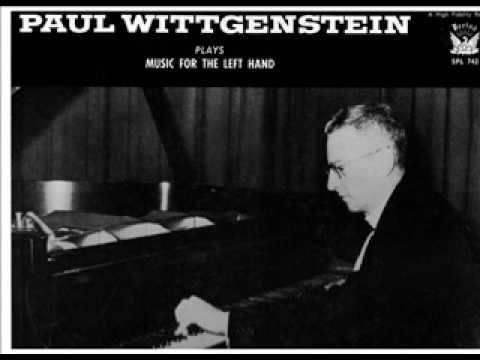
    Some of us may puzzle over the Zen riddle about the sound of one hand clapping, but, thanks in large part to Paul Wittgenstein, we all have a pretty good idea of the sound of one hand playing.

    I hope you’ll join me this morning on WPRB, as we observe the anniversary of the birth of Wittgenstein (1887-1961), a pianist from a immensely wealthy and rather eccentric Viennese family, who famously who lost his right arm in the First World War. Through hard work and the power of sheer will, he managed to return to the concert stage, using his fortune to commission many of the great composers of his time to write new works for the left hand alone.

    Among the composers to take up the challenge were Sergei Bortkiewicz, Benjamin Britten, Erich Wolfgang Korngold, Sergei Prokofiev, Franz Schmidt, Richard Strauss, and of course Maurice Ravel. We’ll hear Wittgenstein himself grapple with Ravel’s masterpiece in a 1937 concert recording.

    We’ll also enjoy a work composed in 1923 by Paul Hindemith that remained unheard for 80 years, until its rediscovery in a Pennsylvania farmhouse in 2002, following the death of Wittgenstein’s widow. Wittgenstein retained exclusive performance rights to many of his commissions, and if he didn’t somehow connect with a work, it simply went unheard. Such was the case with Hindemith’s “Klaviermusik mit Orchester” and also Sergei Prokofiev’s Piano Concerto No. 4.

    In the case of the latter, composed in 1931, Wittgenstein was eventually convinced by Siegfried Rapp, another pianist who had lost his arm in the war, to allow him to give it its premiere in Berlin in 1956. The U.S. premiere was given by Rudolf Serkin, with Eugene Ormandy and the Philadelphia Orchestra, in 1958. We’ll hear those same forces perform it this morning. Rapp will perform Bohuslav Martinu’s “Concertino for Piano (Left-Hand) and Orchestra.”

    Leon Fleisher, who grappled with focal dystonia for 40 years, was the pianist who gave the Hindemith its belated premiere in 2004, with the Berlin Philharmonic conducted by Sir Simon Rattle. We’ll hear Fleisher, now a vibrant 87 years-old, perform it – and great deal else – this morning.

    Get ready to rub shoulders with a lot of southpaws this week. Tune in from 6 to 11 ET to WPRB 103.3 FM or online at wprb.com. It will be wholly intentional, for a change, when nothing goes “right,” on Classic Ross Amico.

Tag Cloud

Aaron Copland (93) Beethoven (95) Composer (114) Film Music (139) Film Score (143) Film Scores (255) Halloween (94) John Williams (195) KWAX (229) Leonard Bernstein (103) Marlboro Music Festival (125) Movie Music (154) Mozart (89) Opera (210) Philadelphia Orchestra (89) Picture Perfect (174) Princeton Symphony Orchestra (108) Radio (88) Ross Amico (244) Roy's Tie-Dye Sci-Fi Corner (290) The Classical Network (101) The Lost Chord (268) Vaughan Williams (103) WPRB (396) WWFM (881)

DON’T MISS A BEAT

Receive a weekly digest every Sunday at noon by signing up here


RECENT POSTS