Category: Daily Dispatch

  • Victor Young The Immortal Composer

    Victor Young The Immortal Composer

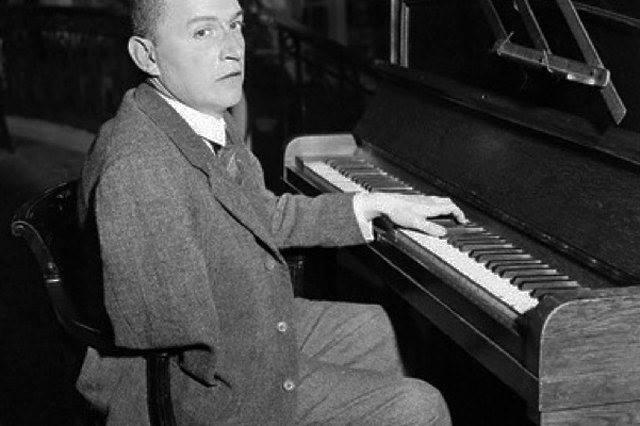
    He may have died in 1956, but his music is forever Young. Victor Young was born in Chicago on this date in 1900.

    The composer of “Stella by Starlight” and “When I Fall in Love” was classically trained and thoroughly drilled: a violinist from the age of 6, he studied at the Warsaw Imperial Conservatory and found employment (following further training on the piano at the Paris Conservatory) while still a teen in the Warsaw Philharmonic Orchestra.

    His talent was admired by Czar Nicholas II, but his ability to capitalize on the connection was sharply curtailed as Russia boiled over into revolution, and Young barely escaped with his life. He fled to Warsaw and then Paris, and he didn’t stop running until he reached the United States.

    Here, he acted as a conductor and arranger of popular music. He was responsible for transforming Hoagy Carmichael’s “Stardust,” which had previously been played as an up-tempo dance number, into a romantic ballad, which secured its status as a mega-hit. “Stardust” went on to become one of the most-recorded songs of all time.

    In the mid-‘30s, Young made the move to film, where his gift for melody served him well. Over the course of the next two decades, he received 22 Academy Award nominations. Twice, he was nominated four times within a single year. Young holds the record for the most nominations prior to a win.

    Unfortunately, the honor of Oscar gold would be bestowed posthumously. His score for “Around the World in 80 Days” was recognized in 1957. Young died of a cerebral hemorrhage in November of 1956.

    In 20 years, he managed to compose 300 scores, among them those for “Reap the Wild Wind,” “The Glass Key,” “The Palm Beach Story,” “For Whom the Bell Tolls,” “The Uninvited,” “State of the Union,” “A Connecticut Yankee in King Arthur’s Court,” “Sands of Iwo Jima,” “Samson and Delilah,” “Rio Grande,” “The Greatest Show on Earth,” “Scaramouche,” “The Quiet Man,” “Shane,” “Three Coins in a Fountain” and “Johnny Guitar.”

    In 1960, he received a star on the Hollywood Walk of Fame. In 1970, he was inducted into the Songwriters Hall of Fame.

    Happy birthday, Victor Young. What he might have accomplished had he lived to be old!


    Nat King Cole singing “When I Fall in Love”

    A suite from “Scaramouche” (1952)

    “The Quiet Man” (1952)

    “Around the World in 80 Days” (1956):

    PHOTO: Orson, Bing and Young

  • Bard Salutes Mexican Composer Carlos Chávez

    Bard Salutes Mexican Composer Carlos Chávez

    In a development that promises to be as enlightening as it is mildly disorienting, a drive north this weekend will lead you “south of the border.”

    Carlos Chávez (1899-1978), regarded by many as Mexico’s foremost composer and conductor, will be the focus of this year’s Bard Music Festival, which begins today at Bard College in Annandale-on-Hudson, NY.

    For the next two weeks, Bard will bring together crackerjack artists (an impressive number of them on the Bard Conservatory faculty), leading musicologists, and appreciative audiences to celebrate music of the Americas, with an unusual focus on underplayed music of Mexico and South America.

    Among the featured performers will be Princeton University’s ensemble-in-residence, So Percussion, which will appear on a concert of music by Chávez, John Cage, Lou Harrison, Henry Cowell, Amadeo Roldán, and Colin McPhee, on August 14.

    Chávez is a fascinating figure, whose influence cannot be underestimated. His own works are divided between nationalistic utterances, pitched to the people, and more cosmopolitan, modernist experiments. His most famous bit of populism is his Symphony No. 2, the “Sinfonia India,” based on melodies by indigenous tribes of northern Mexico. The piece will be heard at Bard on August 15, alongside works by Latin American powerhouses Heitor Villa-Lobos, Silvestre Revueltas, and José Pablo Moncayo.

    In 1937, Chávez conducted the world premiere of Aaron Copland’s “El Salón México,” which essentially launched Copland into the mainstream.

    As always with the Bard festival, a tie-in book of scholarly essays, “Carlos Chávez and His World,” is being issued by Princeton University Press.

    Read more about this amazing, total immersion in the composer’s life and work in my article in today’s Trenton Times.

    http://www.nj.com/times-entertainment/index.ssf/2015/08/bard_music_festival_focuses_on.html

  • Fairy Tale Music with Ross Amico

    Fairy Tale Music with Ross Amico

    Did you ever have one of those mornings? You dream of being awakened by a kiss, but instead you get a four-legged friend panting (or worse) for his or her breakfast.

    This morning, we turn our backs on reality to immerse ourselves in the fantasy worlds of the Brothers Grimm, Hans Christian Andersen, Charles Perrault, Aesop and others.

    Okay, so maybe sometimes things turn out even worse in fairy tales. But the subjects invariably offer a blank canvas for the imaginative flights of some of the world’s great composers.

    I hope you’ll join me this morning for music by Havergal Brian, Daniel Dorff, Paul Hindemith, Gustav Holst, William Hurlstone, Nikolai Medtner, Robert McBride, Robert Moran, Nikolai Rimsky-Korsakov, Ernst Toch, Siegfried Wagner, Ralph Vaughan Williams, Alexander Zemlinsky, and others of their ilk.

    Musical subjects will include Pinocchio, Snow White, Old King Cole, The Little Mermaid, Three Blind Mice, and Beauty and the Beast.

    It all takes place from 6 to 11 a.m. ET, on WPRB 103.3 FM or at wrpb.com. Keep the ogres at bay – and the earbuds in – with Classic Ross Amico.

  • Tyrannical Sea Captains Movie Music

    Tyrannical Sea Captains Movie Music

    This week on “Picture Perfect,” take the lash and prepare to be keelhauled. We’ll have music from movies featuring tyrannical sea captains.

    Tyranny and sadism are common ingredients in nautical adventure films, where hard-bitten sea captains find it better to reign in hell, than serve in heaven.

    At least that’s the mantra of Wolf Larsen, who does his best to uphold the philosophy of Milton’s Satan, in Jack London’s “The Sea Wolf.” Larsen is a tough Norwegian sea captain who presides over his ship, the Ghost, through strength and brutality.

    Edward G. Robinson plays Larsen in the 1941 film version. John Garfield is the working class seaman who opposes him. And Ida Lupino is the castaway with a past, with whom he falls in love in spite of himself. The score is by Erich Wolfgang Korngold, who provided the music for some of the memorable seafaring adventures of Errol Flynn.

    Captain Ahab is a familiar enough figure that he requires little introduction. Everyone knows about his ivory leg and his obsessive quest for the White Whale. Gregory Peck played Ahab in a 1956 film adaptation (with a screenplay by Ray Bradbury) of Herman Melville’s “Moby Dick,” which was directed by John Huston. The score was by English composer Philip Sainton.

    Humphrey Bogart was nominated for an Academy Award for his performance as Lieutenant Commander Phillip Francis Queeg, in the big screen adaptation of Herman Wouk’s “The Caine Mutiny,” in 1954. Queeg, in charge of a U.S. Navy destroyer-minesweeper, is pushed over the edge by his obsession for strawberries pilfered from the officers’ mess. Max Steiner’s upbeat, patriotic theme provides a nice counterpoint to the interpersonal turmoil aboard the Caine.

    Finally, the most iconic of tyrannical sea captains, Captain Bligh, will be represented with “Mutiny on the Bounty.” Historical novelists Charles Nordhoff and James Norman Hall make hay from the 1789 insurrection aboard the HMS Bounty.

    The classic film version from 1935 starred Charles Laughton as Bligh and Clark Gable as Fletcher Christian. The 1962 remake featured Trevor Howard as Bligh, with Marlon Brando envisioning Christian as a kind of high seas dandy.

    It’s said that Brando essentially directed all his own scenes himself. The film was colossal failure, earning back only $13 million of its $19 million budget. Nonetheless, it managed to inspire Bronislau Kaper to compose one of his most monumental scores.

    Take a bucket of salt water with your stripes, you dog! It’s tyrannical sea captains on “Picture Perfect,” music for the movies – this Friday evening at 6, with a repeat Saturday morning at 6; or listen to it later as a webcast at wwfm.org.

  • Fairy Tale Music on WPRB This Week

    Fairy Tale Music on WPRB This Week

    Once upon a time (yesterday), I decided it might be fun to do a show of fairy tale music and music inspired by nursery rhymes. This is the kind of thing I often did for Mother’s Day, back when I had my regular weekend air shifts. But a lazy August morning seems as good a time as any to spend with the Brothers Grimm, Hans Christian Andersen, Charles Perrault and others.

    To this end, we’ll hear music by Havergal Brian, Daniel Dorff, Paul Hindemith, Gustav Holst, William Hurlstone, Nikolai Medtner, Robert McBride, Robert Moran, Nikolai Rimsky-Korsakov, Ernst Toch, Siegfried Wagner, Ralph Vaughan Williams, and Alexander Zemlinsky (or variations thereof).

    Musical subjects will include Pinocchio, Snow White, Old King Cole, The Little Mermaid, Three Blind Mice, and Beauty and the Beast.

    Fall under the enchantment tomorrow from 6 to 11 a.m. ET, on WPRB 103.3 FM or at wprb.com. Awake to a musical kiss from Classic Ross Amico.

Tag Cloud

Aaron Copland (92) Beethoven (95) Composer (114) Film Music (119) Film Score (143) Film Scores (255) Halloween (94) John Williams (185) KWAX (229) Leonard Bernstein (99) Marlboro Music Festival (125) Movie Music (134) Opera (198) Philadelphia Orchestra (87) Picture Perfect (174) Princeton Symphony Orchestra (106) Radio (87) Ralph Vaughan Williams (85) Ross Amico (244) Roy's Tie-Dye Sci-Fi Corner (290) The Classical Network (101) The Lost Chord (268) Vaughan Williams (102) WPRB (396) WWFM (881)

DON’T MISS A BEAT

Receive a weekly digest every Sunday at noon by signing up here


RECENT POSTS