After a dark and stormy Wednesday – a totally perfect day for spooky music – Thursday in Princeton is projected to be partly cloudy with a high near 70. Curses!
That said, we’ll do our best to keep Hallowe’en in our hearts, with music about ghosts, vampires, witches, demons, werewolves, headless horsemen, and psychopathic murderers. You know, the kind of thing you’ve come to expect on Thursday mornings.
In addition to all that, we’ll have a treat in the form of a visit from conductor Mark Laycock, who generally posts his comments on this page from Berlin, Germany. Mark is in Princeton this week and has agreed to stop by the studios to say hello at around 9:00 this morning. Mark’s Princeton performance of Beethoven’s 9th Symphony last year with the Wiener KammerOrchester and Westminster Symphonic Choir, presented in honor of the 100th birthday of William H. Scheide, will air on PBS in November. (Locally, it can be seen on WHYY TV, on November 9 at 9 p.m.)
Children of the night! What beautiful music they’ll make, this morning from 6 to 11 ET, on WPRB 103.3 FM or online at wprb.com. We’ll be handing out dimes in lieu of candy, on Classic Ross Amico.
This week on “Picture Perfect,” it’s all widow’s peaks and plastic fangs, as we listen to music from film adaptations of novels about vampires.
“Interview with the Vampire” (1994), based on the novel by Anne Rice, featured some pretty counterintuitive casting, including Tom Cruise as Lestat (Rice would have preferred Rutger Hauer), but thanks largely to director Neil Jordan the film still managed to deliver the goods. Elliot Goldenthal’s music was nominated for an Academy Award. Interestingly, The American Boychoir sings the opening “Libera me.”
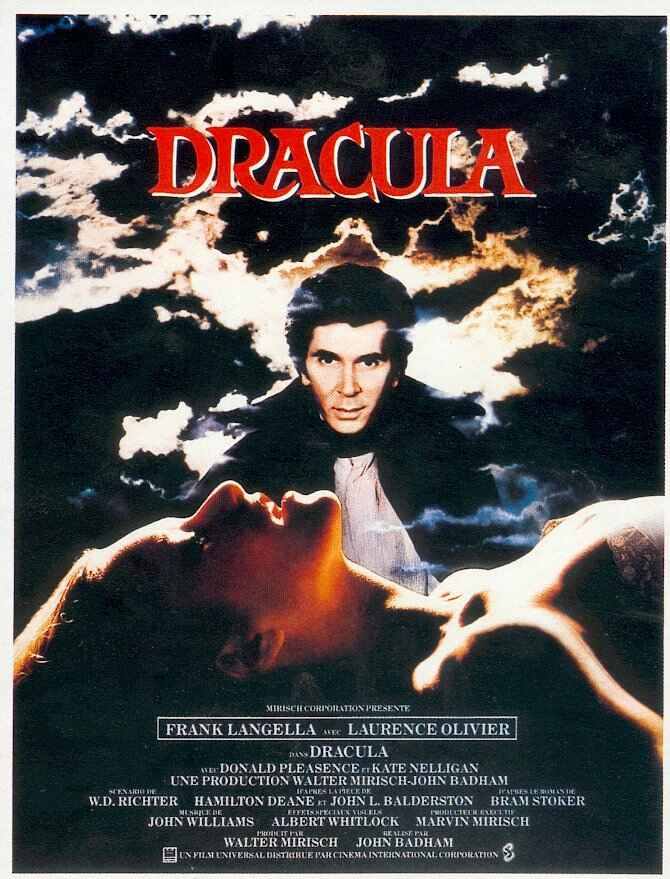
Frank Langella’s characterization of Bram Stoker’s Dracula drove the critics wild when the play by Hamilton Deane and John L. Balderston was revived on Broadway in 1977. (It was the same adaptation that launched Bela Lugosi on his big screen career.) But when the film “Dracula” (1979) was released a couple of years later, reviews were mixed. Langella retained his dreamy magnetism, and the producers managed to secure Sir Laurence Olivier and Kate Nelligan for the parts of Van Helsing and Mina, respectively, but I wonder if John Badham was the best choice for director. Badham had just come off the enormous box office success of “Saturday Night Fever,” and it looks as if his Dracula retains John Travolta’s hair. You know, just for luck.
I remember being so excited to see this when I saw the trailer at the movies. The sight of Langella leaping through a window and transforming into a wolf in mid-flight to John Williams anticipatory music was almost more than I could bear. Watch the trailer here:
How could a film called “Abraham Lincoln: Vampire Hunter” (2012) ever live up to its title? The answer is, it can’t, but the adaptation of Seth Grahame-Smith’s supernatural-historical mash-up wasn’t as terrible as everyone says it was. Sure, I would have preferred it had Daniel Day-Lewis played Lincoln, but put anybody in a stove-pipe to fight vampires with an axe, and I would have been happy. I probably wouldn’t have been so permissive had I seen it in the theater, where the noise and effects would have pushed me over the edge, but it was a diverting rental, with a gothic score by Henry Jackman that ping-ponged between Americana lyricism and an orchestra bolstered by electronics and heavy metal guitars. But what are you going to listen to when you’re fighting vampires, a string quartet?
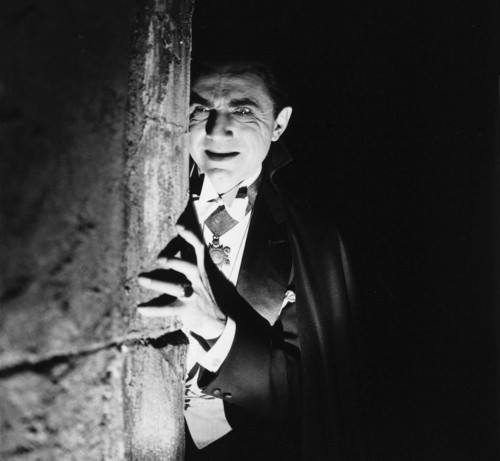
James Bernard’s music for Hammer Studios’ “Dracula,” released in the United States as “Horror of Dracula” (1958), is one of his best-known efforts. His Dracula theme, with its clashing harmonies, laid the groundwork for the sound of the film’s numerous sequels, most of which featured Christopher Lee in his most iconic role. Bernard became so closely associated with Hammer and vampires that he was approached late in life to provide a score for the silent classic “Nosferatu.”
Finally, “Bram Stoker’s Dracula” (1992), despite the claims of fidelity in its very title, was not a faithful adaptation of Stoker’s book. Why? WHY??? The film was lovely to look at, with eye-popping costumes and production design that combined Universal Studios in-the-camera trickery and honest-to-goodness miniatures with a few more Jean Cocteau references than perhaps was for its own good. This could have been THE Dracula film. Alas, it wasn’t. However, for me, it had THE Dracula score. It was a stroke of genius to hire Polish composer Wojciech Kilar to give the film just the right Eastern European sound.
I hope you’ll join me for page-to-screen vampires this week on “Picture Perfect,” tomorrow night at 6:00 ET, with a repeat Saturday morning at 6; or that you’ll listen to it later as a webcast at wwfm.org.
NOTE TO FILMMAKERS: “Dracula” is NOT a love story. And it is not about disco.
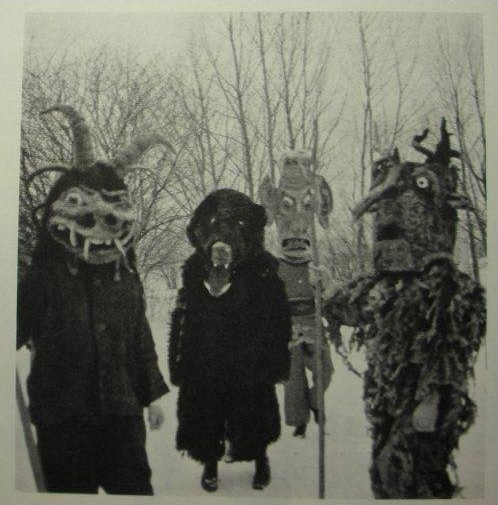
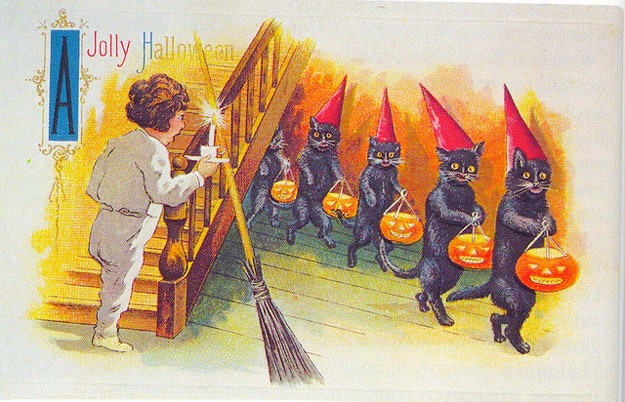
At the height of the most glorious season comes the greatest of holidays: Hallowe’en. Hallowe’en has always been my favorite. I love it so, I spell it with an apostrophe, just to extend the pleasure.
This Thursday morning on WPRB, we’ll get a head start on the mischief and the incipient tooth decay, with a blend of the chillies and the sillies. We’ll hear spooky works like André Caplet’s “Conte fantastique,” after Edgar Allan Poe’s “The Masque of the Red Death,” Henry Cowell’s “The Banshee,” and George Crumb’s “A Haunted Landscape,” alongside such light-hearted treats as Kurt Schwertsik’s “Dracula’s House-and-Court Music,” Frederic Curzon’s “Dance of an Ostracised Imp,” and Billy Mayerl’s “Bats in the Belfry.”
The best preventative for having your tree branches draped with toilet paper is to join me tomorrow morning from 6 to 11 ET, on WPRB 103.3 FM or online at wprb.com. We’ll be cutting holes in our parents’ bed sheets and rubbing our cheeks with burnt cork a few days early, on Classic Ross Amico.
Hope you’ve had your caffeine this morning. If you haven’t, Conlon Nancarrow will wake you up.
Nancarrow was one of the first composers to treat musical instruments as if they were machines, rigging them so that they could perform in a manner far beyond human capability. He worked his experiments in virtual isolation, living in Mexico (where he fled to escape harassment for his communist affiliations) since the 1940s.
He remained largely unrecognized until the late ‘60s, when Columbia released an album of his music. Indeed, it could be said he wasn’t terribly well known until recordings of his player piano pieces began to appear, on the 1750 Arch label, about ten years later. György Ligeti lauded Nancarrow as “the greatest discovery since Webern or Ives… the best of any composer living today.”
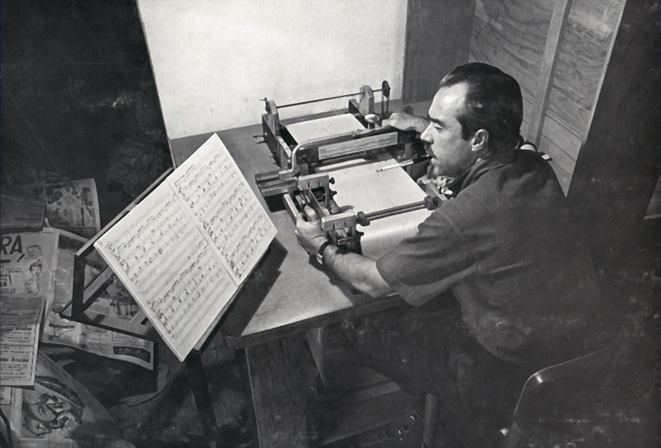
In 1947, Nancarrow acquired a custom-built, manual punching machine, which enabled him to create his own piano rolls. It was very meticulous work, very slow. He also souped-up his player pianos, increasing their dynamic range, and covering the hammers with materials like leather and metal to create a more percussive sound.
While his later pieces tend to be abstract, a lot of them extremely intricate canons, his early experiments emulate jazz. Drive your coworkers batty with this selection from Nancarrow’s Study No. 3 for Player Piano, known as the “Boogie-Woogie Suite.”