How much joy is too much joy?
In an impressive display of excess, 10,000 singers gather for Beethoven’s “Ode to Joy.”
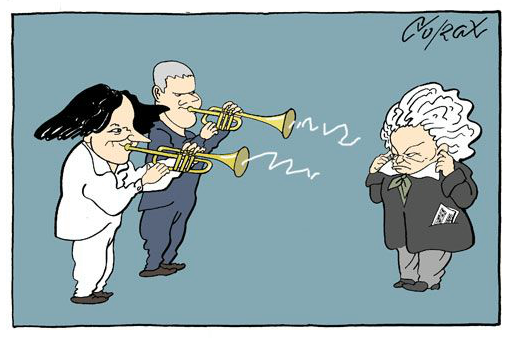
How much joy is too much joy?
In an impressive display of excess, 10,000 singers gather for Beethoven’s “Ode to Joy.”
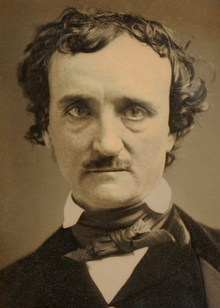
We’re bearing down on Hallowe’en, the perfect time to get out your black frock coat and brood over many a quaint and curious volume of forgotten lore. This Sunday night on “The Lost Chord,” we’ll have music inspired by the verse of Edgar Allan Poe.
We’ll hear a “melo-declamation,” for narrator and orchestra, on “The Raven” by Arcady Dubensky (1890-1966), a violinist in the New York Philharmonic. The piece was given its world premiere at the Academy of Music in Philadelphia in 1932, captured in an experimental recording by RCA Victor, on 35mm optical film, and issued on a special 78 rpm 2-record set, with the poem, together with monochrome engravings of Stokowski and Poe, etched into the shellac. Benjamin de Loache is the speaker.
Then we’ll have a symphonic poem inspired by Poe’s “Ulalume” by English composer Joseph Holbrooke (1878-1958). Holbrooke evidently adored Poe, as he wrote a number of pieces inspired by his writings, including “The Raven,” “The Bells” (which predated the work by Rachmaninoff), and “The Masque of the Red Death.” “Ulalume” was first performed in 1905. The composer thought it one of his finest pieces. Again, the source poem is a gloomy meditation on the loss of a loved one.
From a brand new compact disc, one of the inaugural recordings on the Affetto label, we’ll hear selections from the song cycle “Lenoriana” (which gives the album its name) by Benjamin C.S. Boyle (b. 1979). Boyle is on the faculty of Westminster Choir College of Rider University, as are the performers, baritone Elem Eley and pianist J.J. Penna. Of the seven songs, we’ll hear Boyle’s settings of “Annabel Lee,” “The Conqueror Worm,” and “To Helen.”
Finally, we’ll have an orchestral etude on “The Haunted Palace,” which Poe incorporated into his story “The Fall of the House of Usher.” The French composer Florent Schmitt (1870-1958) knew the work from the translation by Stéphane Mallarmé. It tells of a king of olden times full of presentiments of impending doom to his palace and himself. The house and the royal family are destroyed, and remnants of the court may still be glimpsed as phantoms flickering in the windows and doors.
“The Haunted Palace” may be the first piece of music by a French composer to be inspired by Poe. It was completed in 1904, and first performed the following year.
I hope you’ll join me for “Edgar Allan Poems,” tonight at 10 ET, with a repeat Wednesday evening at 6; or that you’ll listen to it later as a webcast at wwfm.org.

Today is the 86th birthday of George Crumb. Crumb is another one of our great American originals, perhaps the reigning Grand Old Man of American Music. He produces works with an economy and elegance that seem to contradict and yet, somehow, paradoxically, to reinforce an Ivesian tendency to suggest greater vistas beyond their seemingly modest means.
On a more visceral level, sometimes he can be downright scary. Which is especially amusing, since by all accounts – as well as on the perhaps five or six occasions I have met him – he has been unfailingly approachable, modest and even cheerful.
It’s fortuitous indeed that his birthday falls so close to Hallowe’en. It’s not for nothing that his work for electric string quartet, “Black Angels,” was used in “The Exorcist.”
In the last 15 years or so, Crumb has been enjoying a productive Indian summer, mining the hymns and folk songs of his West Virginia boyhood, lending them a unique resonance through his imaginative and colorful use of percussion.
Happy birthday, George Crumb!
“Black Angels”:
From his “American Songbook,” “All the Pretty Horses”:
And “Poor Wayfaring Stranger”:
PHOTOS: George Crumb (left) with The Exorcist’s Pazuzu
I’ve been so busy the past two days that I haven’t even been able to type up a description of this week’s “Picture Perfect,” which is slated to air in just a few minutes. Nothing too in-depth, then. Suffice it to say, I’ll be featuring music from movies inspired by real-life horror and science fiction icons.
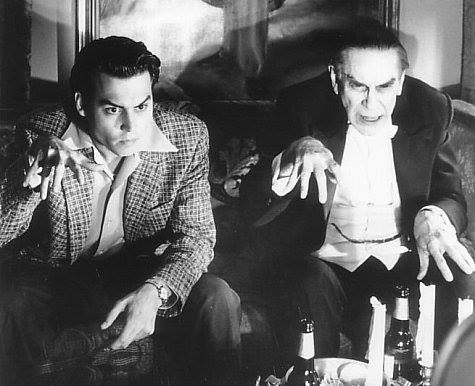
We’ll be listening to selections from “Hitchcock” (2012), a behind-the-scenes look at the making of “Psycho,” with music by Danny Elfman; “Matinee” (1993), with John Goodman as a William Castle-type filmmaker, promoting his latest B-masterpiece against the backdrop of the Cuban Missile Crisis, with music by Jerry Goldsmith; “Gods and Monsters” (1998), set during the final days of James Whale, the director of “Frankenstein” and “The Invisible Man,” with music by Carter Burwell; and “Ed Wood” (1994), Tim Burton’s love-letter to the director notorious for having helmed some of the worst films ever made, including “Plan 9 from Outer Space,” with bongo- and theremin-laden music by Howard Shore.
I hope you’ll join me for an hour of behind-the-scenes horrors this week, on “Picture Perfect,” tonight at 6 ET, with a repeat tomorrow morning at 6; or that you’ll listen to it later as a webcast at wwfm.org.
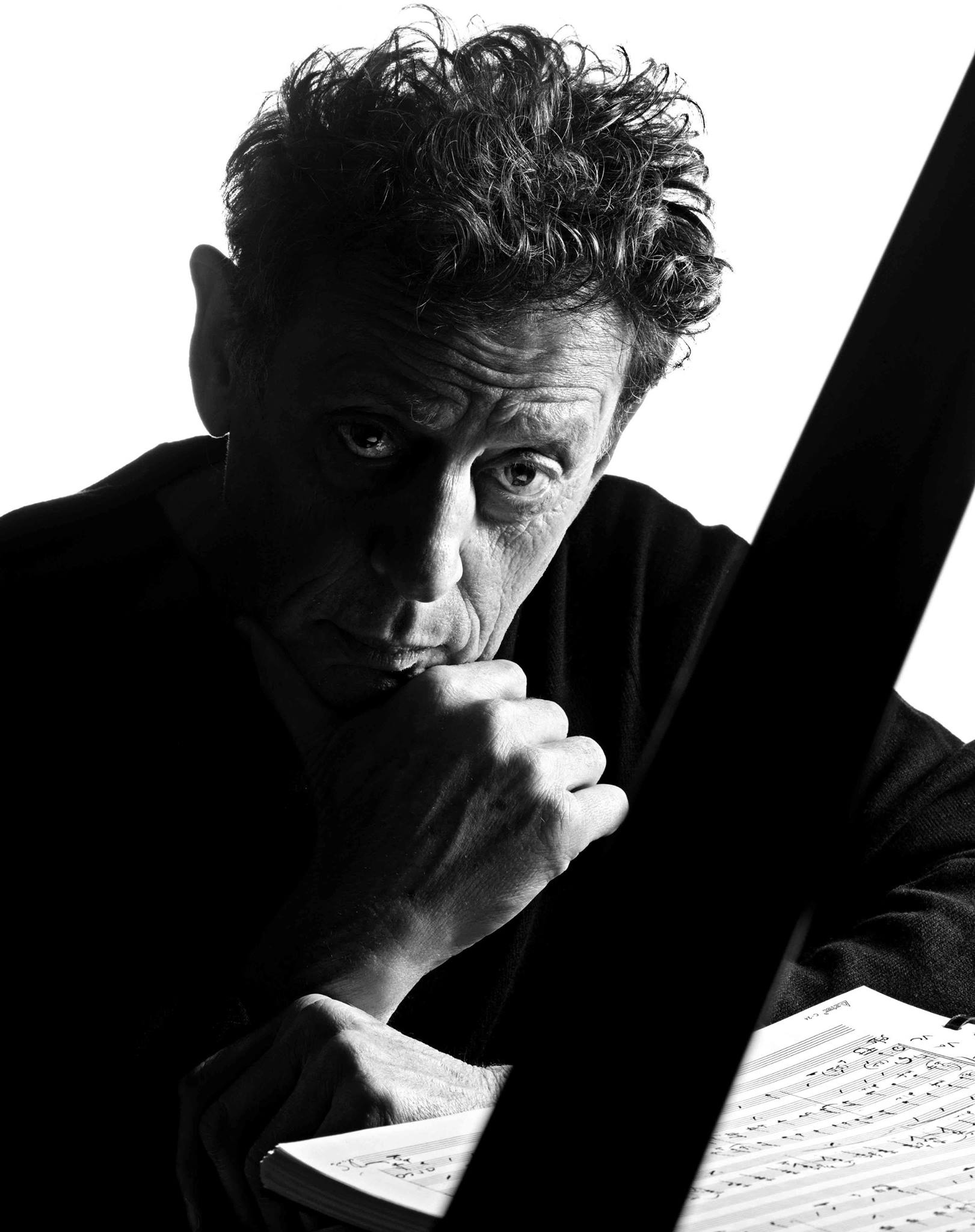
Two old cronies are brought together again, if only in my newspaper article.
Composer Robert Moran enlisted Philip Glass to be one of 25 composers to participate in “The Waltz Project” in the late 1970s. The project was documented on an album released by Nonesuch Records in 1981.
In 1985, the two collaborated on an opera, “The Juniper Tree,” after a tale by the Brothers Grimm (and a very grim one at that), the composers divvying up its four acts between them. In the meantime, Moran set about arranging 21 variations, for various combinations of instruments, on Glass’ “Modern Love Waltz,” which have also been recorded.
On Saturday at 7:30 p.m., Glass’ “Concerto Fantasy for Two Timpanists and Orchestra” will open the New Jersey Capital Philharmonic Orchestra season, at the Trenton War Memorial. The soloists will be Jonathan Haas (for whom Glass wrote the work) and William Trigg (who has performed with the Philip Glass Ensemble). Also on the program will be Tchaikovsky’s Symphony No. 5.
By coincidence, on Saturday morning, from 10:00 to 1:00, Moran will preside over a workshop hosted by Westminster Conservatory Honors Music Program. The composer will lead the HMP community on a freewheeling journey through his creative process, seasoned with personal anecdotes, audio and video illustrations, advice to young composers, and what promises to be lively discussion, offered up in a kind of master class setting.
The event, which is free and open to the public, will take place at Hillman Performance Hall, The Marion Buckelew Cullen Center, at Westminster Choir College of Rider University in Princeton. Refreshments will be provided.
Moran studied with Hans Erich Apostel in Vienna and then with Darius Milhaud and Luciano Berio at Mills College. He gained notoriety in the late 1960s and early ‘70s through a series of performance pieces incorporating entire cities, including San Francisco, Bethlehem, Pa. and Graz, Austria. These involved tens of thousands of performers.
His many stage works include “Desert of Roses,” written for Houston Grand Opera, and, in 2011, “Alice” composed for the Scottish Ballet.
For the occasion of the tenth anniversary of the terrorist attacks on the World Trade Center, he was commissioned to write a work for the youth chorus of Trinity Wall Street, the so-called “Ground Zero” church in Lower Manhattan. “Trinity Requiem,” scored for children’s chorus, four cellos, harp and organ, offers a similar brand of solace to that conjured in the 19th century masterwork by Gabriel Fauré.
With Robert Moran, you never know what you’re going to get. In his more puckish moments, he might write for harpsichord and electric frying pan. But then there are times when his natural gift for lyricism will melt your heart.
Read more about it in my article in today’s Trenton Times:
http://www.nj.com/times-entertainment/index.ssf/2015/10/classical_music_njcp_opening_s.html
Aaron Copland (93) Beethoven (95) Composer (114) Film Music (139) Film Score (143) Film Scores (255) Halloween (94) John Williams (195) KWAX (229) Leonard Bernstein (103) Marlboro Music Festival (125) Movie Music (154) Mozart (89) Opera (210) Philadelphia Orchestra (89) Picture Perfect (174) Princeton Symphony Orchestra (108) Radio (88) Ross Amico (244) Roy's Tie-Dye Sci-Fi Corner (290) The Classical Network (101) The Lost Chord (268) Vaughan Williams (103) WPRB (396) WWFM (881)