Category: Daily Dispatch

  • Joachim Raff A Composer Worth Rediscovering

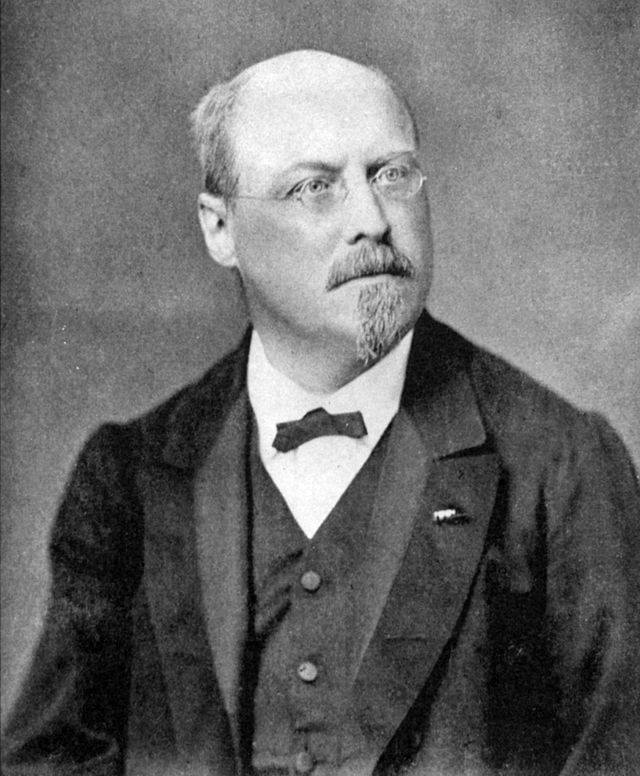
    Joachim Raff A Composer Worth Rediscovering

    There’s one story about the German-Swiss composer Joachim Raff that I find so endearing. When Raff learned that Franz Liszt would be playing in Basel, he traveled by foot from Zurich (a distance of nearly 50 miles), through a driving rain, only to discover upon reaching the venue that the concert had sold out.

    Word reached Liszt of the young man’s predicament, and the great pianist, in yet another of his legendary acts of generosity, had a chair put up on the stage so that Raff would be able to enjoy the recital – which he did, sitting there, grinning like an idiot, amidst a widening pool of water.

    Raff became Liszt’s assistant at Weimar, where he orchestrated a number of the elder composer’s works, until Liszt gained the technique and confidence himself; after which time, Liszt went back and revised many of the earlier pieces. In turn, Liszt staged the premiere of Raff’s opera “King Alfred” (though, because of an illness in the family, he had to hand over the conducting duties to Raff himself).

    Raff must have been a singularly likable figure. His was the rare instance of a composer who was accepted in both camps, on either side of the seemingly unbridgeable divide that separated the “absolute” music of Mendelssohn and Schumann and the “program” music – the so-called “Music of the Future” – of Liszt and Wagner.

    In 1878, Raff became the first director of the Hoch Conservatory in Frankfurt, where he hired Clara Schumann, among the eminent faculty, and initiated a class for female composers.

    During his lifetime, Raff was one of the best-known German composers. It’s unfortunate that so little of his music endures in the public memory (beyond, perhaps, the “Cavatina” for violin and piano), but the symphonies, in particular, have not aged well.

    Raff’s practice was to choose a promising program – for instance, in the Symphony No. 5, the “Lenore” Symphony, he selected an overheated ballad by Gottfried August Bürger, about a maiden who is swept away amidst jeering specters by the phantom of her former lover – and then he would negate all the drama by rendering the symphony in classical form. In other words, the story would be straightjacketed in order to suit the requirements of form, rather than the other way around – which would be easier to forgive if the symphony weren’t nearly an hour long.

    However, he did leave behind some very impressive music. You just really have to look for it. I hope you enjoy these “diamonds in the Raff”:

    Piano Concerto in C minor:

    “Ode to Spring”:

    Happy birthday, Joachim Raff (1822-1882).

  • Goossens’ Downfall Masks Incense and Scandal

    Goossens’ Downfall Masks Incense and Scandal

    Everything was going swimmingly for Sir Eugene Goossens – until they found the rubber masks and incense in his luggage at Sydney Airport.

    Goossens was the third generation in a dynasty of conductors, all of whom bore the same name. However, the family being of Belgian origin, his forebears employed an accent grave (i.e. Eugène). Eugene III was born in London, and studied in Bruges, Liverpool, and at the Royal Academy of Music under Sir Charles Villiers Stanford.

    He was a violinist, and later assistant conductor, under Sir Thomas Beecham. Ultimately, he would carry out Beecham’s notorious arrangement of Handel’s “Messiah.”

    Even so, he was a considerably talented composer. He wrote symphonies, operas, concertos and chamber music. He was also the guiding force behind a collection of patriotic fanfares, of which Aaron Copland’s “Fanfare for the Common Man” was destined to become the most famous.

    Goossens accepted several conducting positions in the United States, including at the Rochester Philharmonic Orchestra (while he taught at the Eastman School) and the Cincinnati Symphony (where he succeeded Fritz Reiner).

    He then spent the better portion of a decade in Australia, where he conducted the Sydney Symphony Orchestra and directed the NSW State Conservatorium of Music.

    While “Down Under,” he entered into a passionate affair with Rosaleen Norton, also known as Thorn, later referred to as the Witch of Kings Cross. Norton was an artist and occultist, whose paintings of demons and phalluses were decidedly out-of-step with the spirit of the time.

    In 1955, a scandal involving a mentally ill woman who claimed she had participated in a Satanic Black Mass at Norton’s flat had a domino effect. (Sure, Norton had her own coven, but she denied being a Satanist; she did however stand by her charms and hexes.) Her paintings were removed from public exhibitions and photographs were confiscated from her home. Arrests on obscenity and blasphemy charges came fast and furious. The tabloids had a field day.

    Unfortunately, Goossens became collateral damage. Incriminating letters, which he had asked Norton to destroy after reading, were found stashed beneath her sofa. Though he was in England when the storm broke, wholly ignorant of the antipodean moral panic, the authorities lay in wait upon his return. Among his luggage were found 800 “pornographic” photos, some film, and the aforementioned masks and incense. As a high profile musical figure, for all intents and purposes, the conductor’s Goossens was cooked. He resigned from his posts in disgrace.

    Later he was engaged by the BBC, and especially by Everest Records, for which he made some very fine recordings late in his career. But by all accounts, by that time he was a broken man. You wouldn’t know it from his discography. The conductor continued to turn in powerful performances to the very end.

    Happy birthday, Sir Eugene Goossens (1893-1962).

    Here is Ottorino Respighi’s “Feste Romane” (Goossen’s final recording, released posthumously):

    Circuses https://www.youtube.com/watch?v=45GaSoDpbg0
    The Jubilee https://www.youtube.com/watch?v=UKnQyRXFmd4
    The October Festival https://www.youtube.com/watch?v=t-xWO2Lmf9g
    The Epiphany https://www.youtube.com/watch?v=Bwk3EyrsMZ0

    There are many other examples of his artistry on YouTube, but unfortunately, as above, most of them seem to be saved in segments.

    Here is some of Goossens’ own music, a Baxian tone poem, “The Eternal Rhythm,” composed at the age of 19:

    https://www.youtube.com/watch?v=djZQsdCqj5U

    PHOTOS: Eugene Goossens (left), bewitched, bothered and bewildered; the charming Rosaleen Norton

  • Copland’s Memorial Day Sonata

    Copland’s Memorial Day Sonata

    Memorial Day.

    Aaron Copland dedicated his one and only Violin Sonata, composed in 1942 and 1943, to the memory of his close friend, Lieutenant Harry H. Dunham (a Princeton alumnus), who died in action in the South Pacific shortly after the work was completed.

    Virgil Thomson wrote in the New York Herald Tribune, “I suspect it is one of the author’s most satisfying pieces… It has a quality at once of calm elevation and buoyancy that is characteristic of Copland and irresistibly touching.”

    Here’s a performance by Louis Kaufman (who advised the composer on bowings and fingerings), with Copland himself at the keyboard:

    Mov’t I https://www.youtube.com/watch?v=w8kY1jO4Z34
    Mov’t II https://www.youtube.com/watch?v=DKr4ZZrT3Sw
    Mov’t III https://www.youtube.com/watch?v=KUvAi33DkXQ

    PHOTO: Aaron Copland, American music’s secret weapon

  • Memorial Day Military Symphonies on The Lost Chord

    Memorial Day Military Symphonies on The Lost Chord

    This Sunday night on “The Lost Chord,” in anticipation of Memorial Day, we’ll have two symphonies composed for the armed forces.

    Morton Gould wrote his Symphony No. 4 for the United States Military Academy at West Point. It was his first large scale piece for symphonic band. The score calls for a “marching machine,” but the recording we’ll hear, issued on the Mercury label, employs the feet of 120 musicians of the Eastman School Symphony Band. Frederick Fennell directs the Eastman Wind Ensemble.

    Samuel Barber composed his Symphony No. 2 in 1943, while he was serving in the U.S. Army Air Force. 20 years later, he revised and published the slow movement as a separate opus, titled “Night Flight,” and then jettisoned – and actually tried to destroy – the rest. The work was reconstituted after the composer’s death, and is now back in circulation. We’ll hear a recording with Marin Alsop and the Royal Scottish National Orchestra.

    I hope you’ll join me for “Orchestrated Maneuvers” – American military symphonies for Memorial Day – tonight at 10 ET, with a repeat Wednesday evening at 6; or that you’ll listen to it later as a webcast, at http://www.wwfm.org.

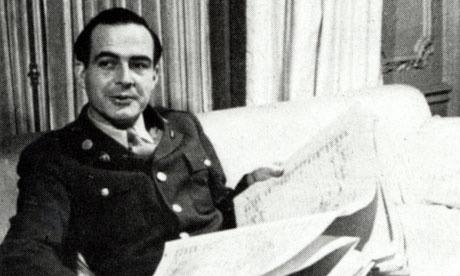
    PHOTO: Corporal Samuel Barber with the score of his Second Symphony

  • Rubbra Resurgam Easton’s Unlikely Maestro

    Rubbra Resurgam Easton’s Unlikely Maestro

    Who knew that between the ages of 5 and 10 I lived next door to the world authority on the music of Edmund Rubbra? Who’d have thought that such a figure would have resided in Easton, Pa.?

    Rubbra is a now underrated British composer of rewarding symphonies and choral music, sometimes overtly inspired by his Roman Catholic faith, always propelled by spontaneous melody and dreamy logic.

    Ralph Scott Grover joined the faculty of Lafayette College, in Easton, in 1965. He was the first head of Lafayette’s music department. His affection for the music of Rubbra resulted in a book, “The Music of Edmund Rubbra” (Scolar Press, 1993). He was also invited to write the Rubbra article for “The New Grove Dictionary.”

    Grover himself was a composer of art songs, or so I’m told. I remember he and his wife would spend time each year visiting at Rubbra’s castle in the UK. Previously, he had written a book titled “Ernest Chausson: The Man and His Music.”

    I find it amusing to reflect that as a boy I would be playing on the sidewalk, around the tree out front, not knowing the first thing about classical music – my grandfather, with whom I lived, was a product of the Great Depression and World War II, who spent most of his life working with his hands – and here I was, living next door to someone totally steeped in English music, which would later become one of my life’s passions.

    Mr. Grover died in 2002. I am happy to say that I met him again later in life, by which time I had already become quite knowledgeable about the field. In fact, I know he listened to me on WWFM. I remember that he and his wife pledged their financial support during one of my shifts. Grover also expressed an affection for the music of Gerald Finzi, whom I also happen to adore, and was a member of the Peter Warlock Society.

    I do regret not having had more of a master-disciple relationship with him. By that time, I had already left Easton, and though he extended a non-specific invitation to visit, nothing ever came of it. We nearly missed one another completely. I’m thankful we had the conversations we did, and that he saw that I had become something more than the goofy kid he scarcely regarded.

    Happy birthday, Edmund Rubbra (1901-1986). It is you I have to thank for this reminiscence.

    Here’s a sample of Rubbra’s music: “Overture Resurgam,” from 1975, inspired by a memory of the war and an example of the composer’s religious convictions translated to sound. In March 1941 Nazi planes bombed Plymouth and laid waste to much of the city, including the Church of St. Andrew. Only its tower remained intact. On the north door of the tower stood one word, “Resurgam” – “Risen Again.”

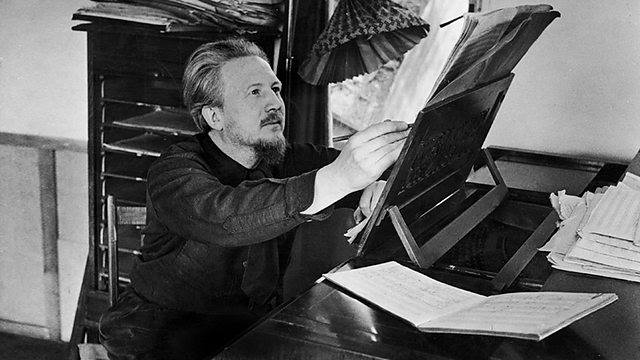
    PHOTO: Rubbra resurrected

Tag Cloud

Aaron Copland (93) Beethoven (95) Composer (114) Film Music (139) Film Score (143) Film Scores (255) Halloween (94) John Williams (195) KWAX (229) Leonard Bernstein (103) Marlboro Music Festival (125) Movie Music (154) Mozart (89) Opera (210) Philadelphia Orchestra (89) Picture Perfect (174) Princeton Symphony Orchestra (108) Radio (88) Ross Amico (244) Roy's Tie-Dye Sci-Fi Corner (290) The Classical Network (101) The Lost Chord (268) Vaughan Williams (103) WPRB (396) WWFM (881)

DON’T MISS A BEAT

Receive a weekly digest every Sunday at noon by signing up here


RECENT POSTS