Memorial Day weekend. The unofficial start of summer.
If you find yourself transplanted to a beach in South Jersey over the next couple of weeks, you might be interested in rinsing the sand out of your bathing suit and heading on over to Cape May for some concerts.
The 26th annual Cape May Music Festival will begin on Sunday and run through June 11. This year’s roster will include brass band, chamber music, orchestral, jazz and traditional Celtic groups.
You can read more about it in my article in today’s Trenton Times.
It’s all about valor and sacrifice this week on “Picture Perfect,” as we anticipate Memorial Day.
Memorial Day has its roots in Decoration Day, established in 1868 to honor the Civil War dead. We’ll hear music from “Glory” (1989), inspired by the extraordinary courage of Colonel Robert Gould Shaw’s 54th Massachusetts Voluntary Regiment, an all African American outfit that distinguished itself in an impossible assault on Fort Wagner, near Charleston, South Carolina. The outstanding cast features Morgan Freeman, Matthew Broderick, and Cary Elwes, with an Oscar-winning performance by Denzel Washington. The poignant score is by James Horner.
(Incidentally, the movie will be shown on Turner Classic Movies: TCM tomorrow night at 10:30 ET, as part of its annual Memorial Day marathon.)
Gary Cooper had one of his best roles as “Sergeant York” (1941), based on the true story of Alvin C. York, who went from backwoods hell-raiser to devout pacifist. After a period of soul-searching, York was able to reconcile his strong moral convictions with the unfortunate reality that sometimes it really is necessary to fight. He went on to distinguish himself on the battlefield and become one of the most-decorated soldiers of the First World War. The folksy score, evocative of York’s Tennessee roots, is by Max Steiner.
In director Michael Cimino’s “The Deer Hunter” (1978), three men from a small Pennsylvania steel town serve in Vietnam, then struggle to cope with the war’s psychological impact. The harrowing film, especially memorable for its scenes of Russian roulette in a P.O.W. camp, won five Academy Awards, including Best Picture and Best Director. Christopher Walken was honored with the award for Best Supporting Actor. Stanley Myers wrote the music. We’ll hear his famous “Cavatina,” performed by guitarist John Williams, not to be confused with…
… composer John Williams, who provided one of his sparser scores for “Saving Private Ryan” (1998). Steven Spielberg’s war-is-hell narrative yet manages to honor the sacrifice of the fighting men of World War II. The opening – a sustained “you-are-there” battle sequence on Omaha Beach – is unforgettable. Remarkably, it is presented wholly without music, Williams preferring to allow the tension of the mise-en-scène to speak for itself. Spielberg picked up his second Academy Award for Best Director. The film, however, inexplicably, lost to “Shakespeare in Love.”
I hope you’ll join me for music from these cinematic meditations on the costs and consequences of war, as we honor the sacrifice of soldiers who died while serving in America’s armed forces, this evening at 6 ET, with a repeat Saturday morning at 6; or that you’ll listen to it later as a webcast, at http://www.wwfm.org.
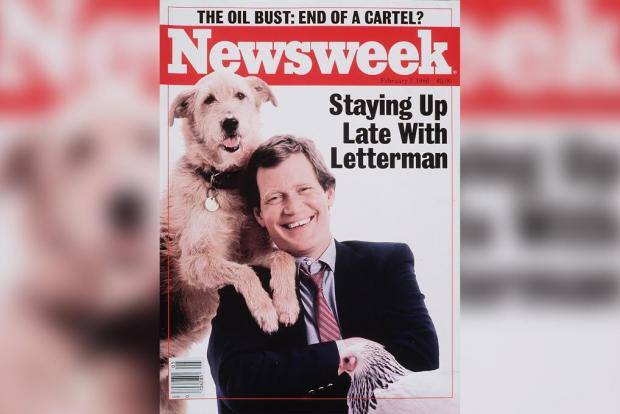
Unfortunately, after Dave left NBC for CBS, after being passed over for “The Tonight Show,” NBC withheld the rights to re-air these clips from the show’s first, funniest, edgiest ten years. Those who know Letterman only from his CBS incarnation (“The Late Show,” as opposed to “Late Night”) really don’t know Letterman. There used to be at least one gag a night that had me in tears.
PHOTO: Dave in 1986. Note the chicken, bottom right.
Here with a Loaf of Bread, beneath the Bough,
A Jug of Wine, an Accordion… and Douglas Fairbanks, Jr.
On this date in 1977, one of my favorite works by Alan Hovhaness was given its premiere by the New York Philharmonic, under the direction of André Kostelanetz.
In theory, Hovhaness, with his marked affection for the East, should have been the ideal composer to set “The Rubaiyat of Omar Khayyam.” What is striking is how unconventional his approach turned out to be. Is there a less likely instrument to bring to life the hedonistic fatalism of the medieval Persian master than the accordion?
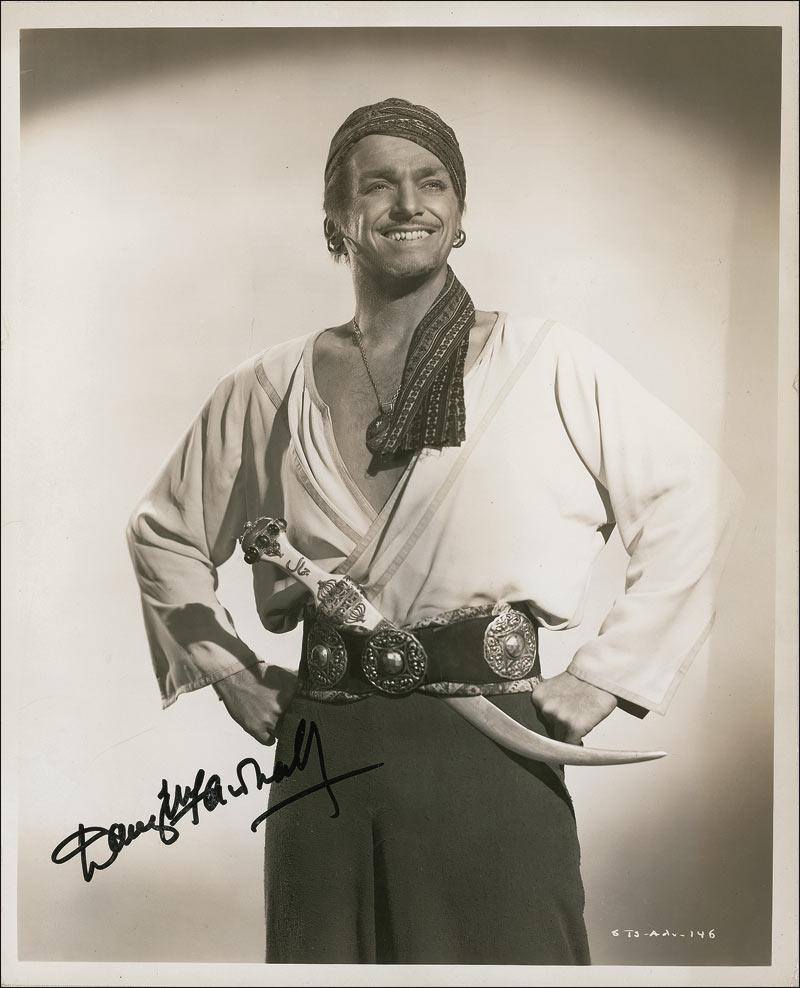
A recording of the work was issued on a Columbia LP, with Fairbanks as the narrator. To me, Fairbanks’ theatricality is a huge asset, conjuring memories of his turn as Sinbad the Sailor.
Unfortunately, to date, the performance has not been reissued on CD. Presumably the masters languish in the Sony vaults. O that they could be licensed to another label, even to be pressed-on-demand at http://www.arkivmusic.com (which has already made available Kostelanetz’s recording of “Floating World – Ukiyo”). The Bird is on the Wing!
For now, I make due with a fine performance with Michael York, the Seattle Symphony and accordionist Diane Schmidt.
An amusing anecdote: York appeared in Philadelphia a number of years back, in a touring revival of Lerner & Loewe’s “Camelot.” Following one of the performances, I walked around to the stage door, where there were a handful of people standing with memorabilia from “Cabaret” and “Logan’s Run.” Eventually, York emerged and politely signed everything, though you could tell he was a little fatigued after a long evening.
When he got to me, I handed him the CD booklet, and his eyes lit up. “Oh!” he exclaimed. “I would be DELIGHTED to sign this.”
That’s my Michael York story. Since the Fairbanks recording isn’t even posted on YouTube, here’s a link to York’s mellifluous, though more subdued reading:
Come, fill the Cup, and in the Fire of Spring
The Winter Garment of Repentance fling:
The Bird of Time has but a little way