Category: Daily Dispatch

  • Il Musichiere Italian Game Show

    Il Musichiere Italian Game Show

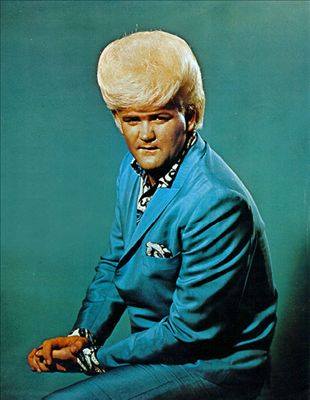
    Only in Italy. A game show, on which a blindfolded contestant attempts to identify an opera singer?

    Here Giuseppe di Stefano gets a doll:

    Does anybody know this program? It’s called “Il musichiere,” and YouTube is full of clips. It’s definitely worth having a look at a few of them. They are nostalgic, touching, and at times downright Felliniesque.

    The host is Mario Riva. How could he have died at 48, when (judging from the clips) he’s got to be at least 60?

  • Ernest Chausson: Romantic Composer & Cyclist

    Ernest Chausson: Romantic Composer & Cyclist

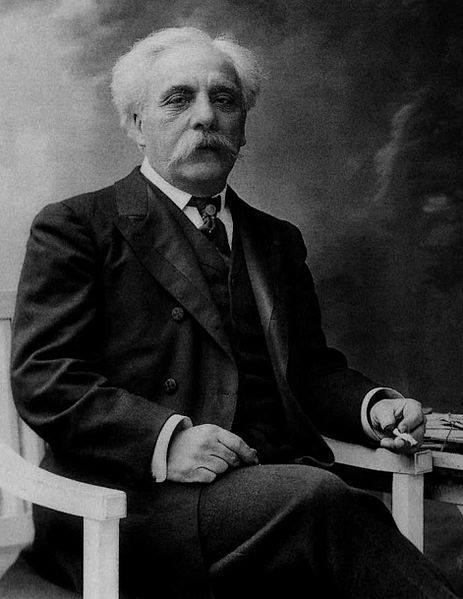
    Ah! Ernest Chausson…

    You wrote such beautiful music. Très romantique!

    If only you had been so skilled at riding a bicycle.

    In 1899, Chausson cruised downhill into a brick wall at the age of 44. He left behind a comparatively small, but meticulous output, 39 opus numbers total, but among them his ravishing “Poeme” for violin and orchestra, the song cycle “Poeme de l’amour et de la mer,” and the Concert for Piano, Violin and String Quartet.

    Oddly enough, I am not a fan of his popular symphony, generally held to be his most impressive accomplishment (I’m not crazy about the Franck, either, upon which it is clearly modeled), though I am sure the fault is in me, not the music. However, I adore his works on Arthurian themes, the symphonic poem “Viviane” and especially his opera, “Le roi Arthus.”

    His incidental music after Shakespeare, “La tempête” (1888), is believed to have been the first piece to employ the celesta.

    Bon anniversaire, mon vieux.

    Here’s the Prelude and Scene I from Chausson’s “Le roi Arthus”:

    And the “Poeme,” in a fine performance by Zino Francescatti, unfortunately posted in two parts:


    PHOTO: Exercise can be bad for your health

  • MLK Day Willie Stargell & Freedom’s Song

    MLK Day Willie Stargell & Freedom’s Song

    Martin Luther King Jr. Day

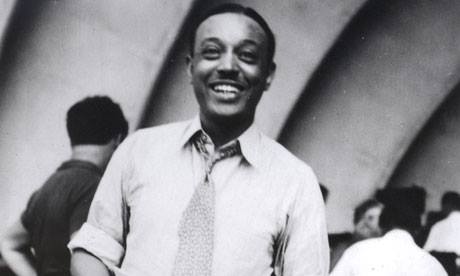
    Here’s Willie Stargell in Joseph Schwantner’s “New Morning for the World (Daybreak of Freedom),” from 1982, the text compiled from speeches of MLK.

    These are the forces which gave the piece its premiere on January 15, 1983 (King’s birthday), at the Kennedy Center in Washington, DC. For my money, it is still the preferred recording of the work. Why has this never been issued on compact disc?

    In fact, there don’t appear to be any recordings of the piece currently in print! Schwanter was the recipient of the Pulitzer Prize for Music in 1979 for his work, “Aftertones of Infinity.”

    More about Stargell here:

    http://en.wikipedia.org/wiki/Willie_Stargell

    It makes me realize how naive and complacent I am that I am surprised by the episodes of discrimination and harassment against such a beloved figure. It also makes me realize just how short history is.

  • Rattle, My Bookshop, and Serendipity in Philadelphia

    Rattle, My Bookshop, and Serendipity in Philadelphia

    I once owned a secondhand bookshop located a block from Philadelphia’s Rittenhouse Square. Because of the nature of the business, and its location (around the corner from the Curtis Institute of Music and three blocks from the stage door of the old Academy of Music), I met a number of notable musicians over the years and dealt with even more online.

    One day, I was out walking my dog in the park, when who should pass through but Simon Rattle. I hailed him, and though he was on his way to an orchestra rehearsal (as I knew from the time of day, the direction he was walking, and the fact that he was slated to guest conduct over the weekend), he stopped and took the time to chat. Apparently Rattle wasn’t overly concerned with punctuality. A friend of mine told me that a short while later, he saw Rattle taking a leisurely walk around the outside of the Academy, looking up at its roof.

    Rattle is fairly gregarious and, I gather, somewhat of a dog lover. So a few days later, when I knew there would be another rehearsal, I was sure to have one of his recordings on me in the park, and he was kind enough to inscribe the booklet. At the time, he commented on how we had similar hairstyles, so he appended a quick self-portrait (see photo; you may have to click on it for a better look). I think I scored brownie points for selecting Nicholas Maw’s “Odyssey,” clearly a labor of love on Rattle’s part, and certainly not the popular choice.

    Rattle had been guest conductor of the Philadelphia Orchestra already for a number of years, and I heard him lead memorable concerts of Mahler, Sibelius and Schoenberg (the monumental “Guerrelieder”). The organization at the time was hot to make him the successor of Wolfgang Sawallisch as its music director. As I recall, he had not yet received his knighthood, and he had certainly not yet been named principal conductor of the Berlin Philharmonic, arguably the most prestigious conducting position in the world. I can’t imagine that Herbert von Karajan would have walked to work, much less stopped to chat about dogs and hair (although, given Karajan’s immaculately sculpted coiff, I would have been very interested to hear his thoughts on the latter).

    Some time later, I missed out on a third chance to meet Rattle. One of the many interesting figures to wander into my shop was the youngest grandson of Jean Sibelius. I know this, because by coincidence I happened to be playing the old Kajanus recording of the Third Symphony. His grandson was astonished (although if he knew me better at the time, he would not have been, since Sibelius happens to be one of my favorite composers), and I equally so. Who knew Sibelius’ grandson was an independent filmmaker living in Philadelphia?

    When I noted that Rattle would be coming back to Philadelphia to conduct Sibelius’ Fifth Symphony, I was determined to get the composer’s grandson into the rehearsals. Why he couldn’t accomplish that on his own, I have no idea. Perhaps he lacked the self-confidence or had an inflated sense of my worth. At any rate, all it took was a phone call, and we were at the Academy watching Rattle put the piece together.

    The rehearsal ran long, and I had to get back to open my shop, so that I could be there for all the customers who wouldn’t be coming in that day. Bad choice. Sibelius’ grandson was brought backstage afterward, and not only was he introduced to Rattle, but was done so at the time that a Vanity Fair photographer was busily snapping away to have something to illustrate an article for an upcoming issue. Somewhere there exists a photograph of Rattle planting a big kiss on Sibelius’ grandson – which would be especially funny if you knew the grandson.

    Anyway, he told me about this, and of course I was disappointed to have missed out on this backstage love fest. He made it up to me a short while later by introducing me to Einojuhani Rautavaara, who was in town for the premiere of his Symphony No. 8. There is a photo of that meeting as well, but as this was in the days before cell phones and laptops, it is sitting in an envelope somewhere in my apartment with all my other old-style photos. Just as well, since, as I recall, I was grinning like a Tyrannosaurus rex.

    I hope you’ll join me for “The Lost Chord” this week, as I celebrate the 60th birthday of Sir Simon Rattle (born January 19, 1955) with an hour of his recordings. The show is called “Simon Says.” You can hear it tonight at 10 ET, with a repeat Wednesday evening at 6, or listen to it later as a webcast at http://www.wwfm.org.

    PHOTOS: Rattle at Curtis in 1997 (top); signature with self-portrait

  • Old Twelfth Night: Celebrate a Medieval Christmas

    Old Twelfth Night: Celebrate a Medieval Christmas

    Just in case you missed out on this year’s Twelfth Night revels on the 6th (or the 5th, depending on the tradition), you’ve got one more chance tonight.

    January 17th is Old Twelfth Night, a time of joyous celebration marking the last day of the medieval Christmas festivities and the end of Twelfthtide, the Twelve Days of Christmas, which follows on the heels of Christmas Day.

    What’s that, you say? Christmas is on December 25th? This Anglo-Saxon custom pre-dates the Gregorian calendar. Charmingly, it is still observed in parts of the United Kingdom, particularly in southwest England.

    Families feast on cakes and cider and ale. When they’ve imbibed enough, they go out and wassail the trees. They sing and dance and maybe fire off a few guns (loaded with powder, but no shot), in the certitude that the racket will wake the trees for the coming season and drive off any bad energy.

    Of course, to make the most of it, you’ll have to assemble a gang of folks as steeped in arcane Christmas lore as yourself, unless your idea of a good time is banging pots and pans in the woods alone while wearing yellow stockings and cross-garters.

    A final Merry Christmas to you, until November 29th!

    https://www.youtube.com/watch?v=LCrv15aG0xs

    By the way, according to tradition it’s bad luck to leave your Christmas decorations up beyond Twelfth Night. In order to avert misfortune, if you forget, you’ll need to leave them in place all year. Horrors!

    Perhaps of interest, I found this article in praise of wassailing:

    http://www.theguardian.com/lifeandstyle/2012/feb/08/wassailing-weird-folk-rituals

    And an explanation of Old Christmas Day:

    http://www.christmas-time.com/cp-old.html

    PHOTO: Wassailing the apple trees in Devonshire (1902)

Tag Cloud

Aaron Copland (92) Beethoven (95) Composer (114) Film Music (119) Film Score (143) Film Scores (255) Halloween (94) John Williams (185) KWAX (229) Leonard Bernstein (99) Marlboro Music Festival (125) Movie Music (134) Opera (198) Philadelphia Orchestra (87) Picture Perfect (174) Princeton Symphony Orchestra (106) Radio (87) Ralph Vaughan Williams (85) Ross Amico (244) Roy's Tie-Dye Sci-Fi Corner (290) The Classical Network (101) The Lost Chord (268) Vaughan Williams (102) WPRB (396) WWFM (881)

DON’T MISS A BEAT

Receive a weekly digest every Sunday at noon by signing up here


RECENT POSTS