Category: Daily Dispatch

  • Robert Belinic Croatian Guitarist Princeton Symphony

    Robert Belinic Croatian Guitarist Princeton Symphony

    How much is a ten-minute phone call to Croatia?

    I interviewed Croatian guitarist Robert Belinić – who speaks impeccable (and, to my ear, unaccented) English, by the way – for my article in today’s Trenton Times.

    Belinić will join the Princeton Symphony Orchestra for Joaquin Rodrigo’s beloved “Concierto de Aranjuez” at Princeton University’s Richardson Auditorium this Sunday at 4 p.m. The program will also include Ottorino Respighi’s “Three Botticelli Pictures” and Beethoven’s Symphony No. 7.

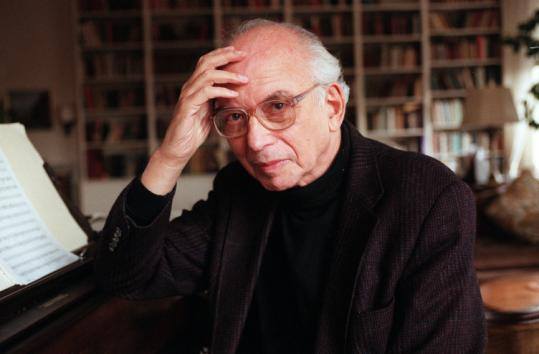
    Daniel Boico, for two seasons assistant conductor of the New York Philharmonic, will guest conduct. I find it amusing – or perhaps bemusing – that although the focus of the article is Belinić, the Times selected a photo of Boico.

    You can read more about it here:

    http://www.nj.com/times-entertainment/index.ssf/2015/01/classical_music_princeton_symp_1.html

    BTW – As a follow-up to my Shakespeare article the other week, the New Jersey Symphony Orchestra will present their second program of Bard-inspired works this weekend, including a concert at Richardson Auditorium tonight at 8 p.m.

    The program will include Dvorak’s “Othello Overture,” Sergei Taneyev’s recovered love duet from a projected opera on “Romeo and Juliet” by Tchaikovsky, selections from Samuel Barber’s rarely-heard “Antony and Cleopatra,” and the “Walk to the Paradise Garden” from “A Village Romeo and Juliet” by Frederick Delius.

    In addition, violinist Sarah Chang will appear in a suite after Leonard Bernstein’s “West Side Story” (of course inspired by “Romeo and Juliet”) in an arrangement by film composer David Newman.

    If you missed the write-up, here it is again:

    http://www.nj.com/times-entertainment/index.ssf/2014/12/classical_music_nj_symphony_or_1.html

    Happy listening!

    PHOTO: Robert Belinić, the guitarist whose image the Times would not print

  • Lieutenant Kijé Film Link & Troika Scene

    Lieutenant Kijé Film Link & Troika Scene

    If you’re here in search of a link to the film “Lieutenant Kijé,” mentioned on this week’s “Picture Perfect,” I thought I’d make it easier for you and include it here it under a separate post.

    The famous “Troika” begins just before the 45 minute mark. Allegedly, that’s Prokofiev himself on the soundtrack, tossing off a bawdy drinking song in his lusty baritone. He stepped in on the spur of the moment when he deemed the original singer hired for the purpose to be too refined.

  • Wintry World Cinema Picture Perfect

    Wintry World Cinema Picture Perfect

    This week on “Picture Perfect,” we look beyond our shores for an hour of wintry scenes from world cinema, with entries from England, Finland, the Soviet Union and Japan.

    “Dersu Uzala,” from 1975, was one of the best of Akira Kurosawa’s later films, although it seems to have slipped into obscurity in the shadow of “Kagemusha” and “Ran.” The plot concerns the friendship in the early 20th century between a Russian explorer and an East Asian trapper and hunter, who acts as his guide.

    “Dersu Uzala” was the last of Kurosawa’s works to be recognized with an Academy Award for Best Foreign Language Film. The music is by Isaac Schwartz.

    Snow again is in abundance in “The White Reindeer,” a Finnish film from 1952. Set in Lapland, it tells the tale of a lonely herder’s wife, who visits a local shaman and is transformed into a shapeshifting, vampiric white reindeer.

    The film was honored at the Cannes Film Festival with a special award for Best Fairy Tale Film, and at the Golden Globes as Best Foreign Film. Einar Englund wrote the music.

    Sergei Prokofiev’s concert suite from “Lieutenant Kijé ” is very well known, but for some reason the film is not. In fact, it has been widely circulated in program notes that the film was never actually completed, which is false. It has not been available for purchase in the U.S. for as long as I can remember, but you can watch it here:

    Why Criterion can’t get a hold of this one, I don’t know, but I’m sure there must be an explanation. The famous sleigh-ride, the “Troika,” begins just before the 45 minute mark. Note that the baritone on the soundtrack is none other than the composer himself, who thought the original singer employed for the purpose too refined.

    Finally, we head to the South Pole with Robert Falcon Scott, for “Scott of the Antarctic.” England’s Ealing Studios is best recognized for its classic comedies of the 1950s, many of them starring Alec Guinness. There’s not much funny about this harrowing story, released in 1948, which stars John Mills and sports the most celebrated film score of Ralph Vaughan Williams. Vaughan Williams’ music perfectly reflects the sublime, austere beauty of a hostile environment. Material from the score was later reworked to create his Symphony No. 7, the “Sinfonia Antarctica.”

    Bring your gloves and a hat. It’s a small world of cold this week, on “Picture Perfect,” this Friday evening at 6 ET, with a repeat Saturday morning at 6, or you can listen to it later as a webcast at http://www.wwfm.org.

  • Warsaw Concerto and the Rage for Cinematic Concerti

    Warsaw Concerto and the Rage for Cinematic Concerti

    Yesterday, Richard Addinsell’s birthday, I wrote about the “Warsaw Concerto,” which was introduced in the English film “Dangerous Moonlight” (released in the U.S. as “Suicide Squadron”). The mini Rachmaninoff-style concerto went on to sell millions. I want to live in a world where a piano concerto can attain Platinum status!

    As I mentioned, the work’s success sparked an unlikely rage for cinematic concerti. There followed the “Cornish Rhapsody” by Hubert Bath, from the film “Love Story” (1944), the “Dream of Olwen” by Charles Williams, from “While I Live” (1947), and most successfully, the “Spellbound Concerto,” from the Alfred Hitchcock classic (1945), actually arranged into a concerto after the fact, by Miklós Rózsa.

    Other Hollywood productions, such as “The Enchanted Cottage” (1945), with music by Roy Webb, flirted with the concept, with blind pianist Herbert Marshall’s “tone poem” played throughout the film, but whether or not there was ever a commercial recording, I don’t know.

    David Lean’s “Brief Encounter” (1945) went whole hog and simply used Rachmaninoff’s Piano Concerto No. 2, which is interesting since Addinsell’s orchestrator, Roy Douglas, claimed the reason for creating the “Warsaw Concerto” in the first place was because either the Rachmaninoff’s use was forbidden by the copyright holders or that it was simply too expensive.

    “Dangerous Moonlight” tells the tale of a Polish pianist and composer who becomes a fighter pilot during World War II. He is discovered by an American reporter while practicing one of his compositions in a bombed-out building, and their love story commences. The title refers not only to the romantic influence of the moon, but also the more palpable threat of nighttime bombing raids.

    By the way, Douglas who whipped Addinsell’s sketches into the concerto’s final form, worked for years as an assistant to Ralph Vaughan Williams and Sir William Walton. He is still listed as a vice president of the Ralph Vaughan Williams Society. Probably best known for his ballet “Les Sylphides,” he was born on December 12, 1907 – which means, as of last month, he is 107 years old!

    Here’s Miklós Rózsa’s “Spellbound Concerto,” in its superior version for two pianos and orchestra, with ondes Martenot (in lieu of theremin), arranged by the composer to twice its former length:

    PHOTO: The dangerous moonlight pales beside the hazard of secondhand smoke

  • Richard Addinsell Warsaw Concerto Birthday

    Richard Addinsell Warsaw Concerto Birthday

    Today is the birthday of Richard Addinsell (1904-1977). Here is his world-famous “Warsaw Concerto,” composed for the 1941 film “Dangerous Moonlight” (known in the U.S. by the more lurid title, “Suicide Squadron”).

    The “Warsaw Concerto” was not the first spin-off concerto from the movies, but the record sold like hotcakes, sparking an unlikely rage for cinematic concerti.

    The performance is by the great Hungarian-born British pianist Louis Kentner, who is the pianist who performs the theme music each week to my radio program, “The Lost Chord” (in that case, the “Berceuse” from the Transcendental Etudes of Sergei Lyapunov).

    I should mention, Kentner insisted on not receiving credit in the film, since he was afraid it would damage his integrity as a concert pianist. He was less inhibited when the record sold in the millions!

    I have plenty more I’d like to share about the “Warsaw Concerto” and the subgenre of the cinematic concerto, but I need to get started with my day. Hopefully I’ll have time to get back to it later on.

Tag Cloud

Aaron Copland (92) Beethoven (95) Composer (114) Film Music (119) Film Score (143) Film Scores (255) Halloween (94) John Williams (185) KWAX (229) Leonard Bernstein (99) Marlboro Music Festival (125) Movie Music (134) Opera (198) Philadelphia Orchestra (87) Picture Perfect (174) Princeton Symphony Orchestra (106) Radio (87) Ralph Vaughan Williams (85) Ross Amico (244) Roy's Tie-Dye Sci-Fi Corner (290) The Classical Network (101) The Lost Chord (268) Vaughan Williams (102) WPRB (396) WWFM (881)

DON’T MISS A BEAT

Receive a weekly digest every Sunday at noon by signing up here


RECENT POSTS