For reasons known not even to me, I was looking over the roster for Woodstock today – yes, THAT Woodstock – and was amused to find Sha Na Na sandwiched between the Paul Butterfield Blues Band (Monday, August 18, 6 a.m.) and Jimi Hendrix (9 a.m.)
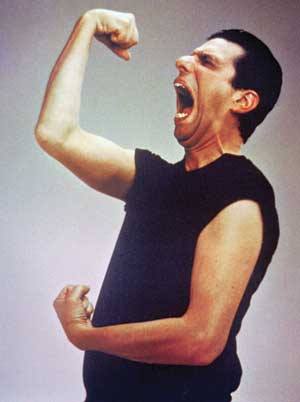
What was a fifties tribute band doing at Woodstock?
He maintained a filing cabinet filled with drawings of imaginary medieval buildings, the properties of which he would periodically put up for sale in local journals by way of anonymous ads.
He founded his own church – Église Métropolitaine d’Art de Jésus Conducteur (Metropolitan Art Church of Jesus the Conductor) – of which he was the only member, and for which he promptly composed a mass.
He only ate white food: eggs, sugar, shredded bones, the fat of dead animals, veal, salt, coconuts, chicken cooked in white water, moldy fruit, rice, turnips, sausages in camphor, pastry, cheese (only white varieties), cotton salad (whatever that is) and certain kinds of fish.
When he died, his friends produced umbrella after umbrella after umbrella from his room.
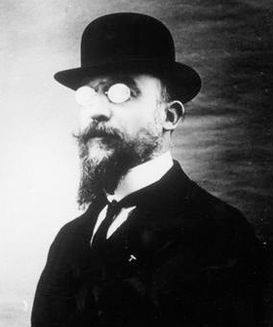
Erik Satie (1866-1925) was an artist whose life was full of enigmas and ambiguities. He is often misclassified as an Impressionist. He was viewed by some (including Maurice Ravel) as a precursor to Debussy, even as he felt a greater affinity with the younger generation of composers who made up Les Six.
In practice, he elevated salon and cabaret music, of which he spoke slightingly. After he went back to school at mid-life in order to bone up on classical counterpoint, he stopped using bar lines in his manuscripts. He blazed trails later rediscovered by Morton Feldman and John Cage. He was a minimalist more than half a century before Minimalism.
Satie rejected the concept of musical development, believing it to be an unconscionable imposition on the public’s time. For him, brevity was the soul of wit. He could be profoundly ironic. Many of his piano pieces bear titles like “Trois Morceaux en forme de poire” (“Three Pieces in the Shape of a Pear”), “Embryons desséchés” (“Desiccated Embryos”), and “Véritables préludes flasques pour un chien” (“Veritable Flabby Preludes for a Dog”).
A friend of Jean Cocteau, the two collaborated on the surrealist curio “Parade,” written for the Ballets Russes, with choreography by Léonide Massine and costumes and set design by Picasso. The scenario involves three circus acts trying to attract an audience to an indoor performance.
It was one of a number of works that were introduced in the ‘Teens that attempted to create a scandal through the incorporation of low-brow elements into what was perceived as a high-brow art form. Hoping for a strong reaction, Cocteau pushed for the inclusion of such provocative “instruments” as a typewriter, a foghorn, a siren, milk bottles, gunshots, and boots sloshing around in a wash tub. The work bore the subtitle “A Realist Ballet.” The opening night audience responded by rioting energetically.
Politically, Satie was a radical socialist, who eventually teetered over into Communism. For a time, his wardrobe consisted of seven identical grey suits. During his quasi-religious phase, he went about in a priest-like habit. Then he became a “velvet gentleman.” Finally, during his communist period, he assumed the appearance of a bourgeois functionary, never to be seen without a bowler and an umbrella.
No one would have guessed that such an impeccable dresser would have lived out his life in clutter and squalor. When Satie died, his friends, who had never been invited back to his place in 27 years, were aghast at the piles of newspapers, the unending collection of umbrellas, and most of all the stacked grand pianos, the uppermost of which had been used by the composer as a repository for papers and parcels. Among these, and in the pockets of Satie’s wardrobe, were discovered a number of manuscripts which the composer had believed long lost.
Happy birthday, Erik Satie! I will have eggs for breakfast in your honor.
“Je te veux” (“I want you”):
Selections from “Parade,” with the Picasso designs. Love the horse!
Sure, it’s artistically satisfying to perform with the New York Philharmonic and to have your works choreographed by Léonide Massine and George Balanchine and all, but a popular hit is guaranteed to keep food on the table.
This Sunday night on “The Lost Chord,” we’ll hear from two composers whose concert music has been overshadowed by their works for the musical theater.
Vernon Duke lives on through his standards “April in Paris” and “Autumn in New York,” with his greatest stage success the Broadway musical “Cabin in the Sky.”
However, his early ambition was to become a “serious” composer. Born Vladimir Dukelsky in what is now Belarus in 1903, Duke studied composition with Reinhold Gliere. His music was championed by Serge Koussevitzky and admired by Sergei Prokofiev. Indeed, Duke continued to write works for the concert hall (as Dukelsky) right up through the mid-1950s.
In 1921, he came to New York. There, he was befriended by George Gershwin. It was Gershwin (born Jacob Gershowitz) who suggested the name change. Thereafter, Duke/Dukelsky lived a double-life, Duke writing for popular consumption and Dukelsky composing symphonies and concertos.
Dukelsky’s Piano Concerto was requested by none other than Arthur Rubinstein, who recognized the 19 year-old’s promise.
Allegedly, Rubinstein and Gershwin were delighted with the piece when they heard it in its two-piano form. Unfortunately, so was impresario Serge Diaghilev. When Diaghilev heard Dukelsky play through it in Paris (with Georges Auric on the second piano), he immediately offered the talented young man a commission to compose “Zephyr et Flore” for the Ballets Russes. This led to further offers from London’s West End. As a result, Dukelsky never got around to orchestrating the piece. It was left to pianist Scott Dunn to do so, in time for some Gershwin centennial concerts in 1999.
Meredith Willson is best-remembered for “The Music Man” and “The Unsinkable Molly Brown.”
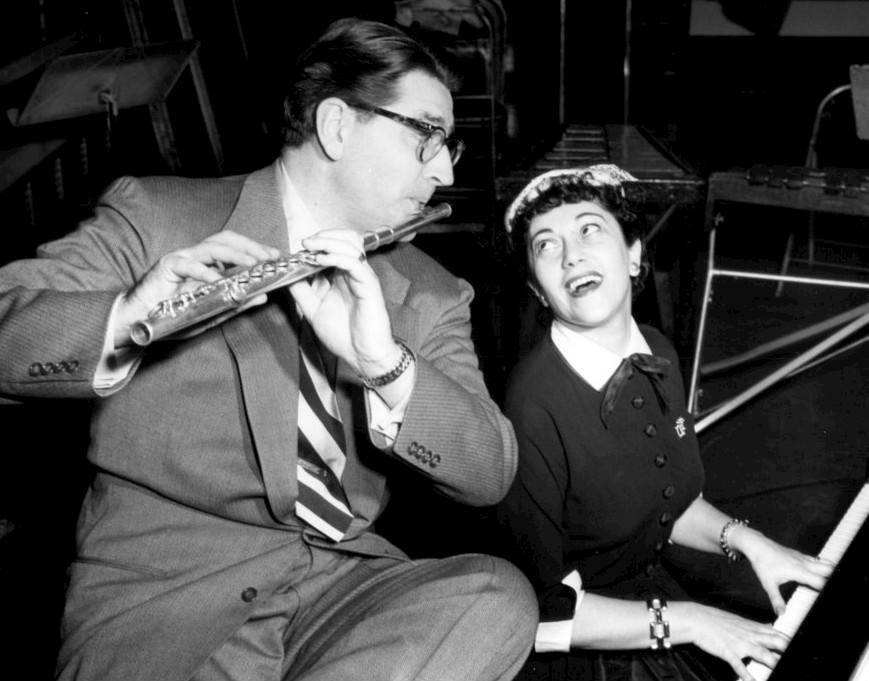
However, prior to his success in musical theater, he had been a flutist in the Sousa band and with the New York Philharmonic. He worked as an orchestrator on Charlie Chaplin’s “The Great Dictator.” He was also a gifted conductor, author, librettist, and humorist. His autobiography, “And There I Stood with my Piccolo,” became a bestseller.
Willson composed two symphonies, both of them extended love letters to specific California sites. His Symphony No. 1 pays tribute to San Francisco. The Symphony No. 2, the one we’ll be listening to, is evocative of the missions of Southern California. In contrast to Professor Harold Hill, Willson clearly “knew the territory.”
I hope you’ll join me for “Broad Talents from Broadway,” this Sunday night at 10 ET, with a repeat Wednesday evening at 6; or that you’ll enjoy it later as a webcast at http://www.wwfm.org.
PHOTO: Meredith and Rini Willson make beautiful music together
This week on “Picture Perfect,” we’ve got the need for speed.
With Mad Max back in theaters, we’ll have music from the second installment in the series, “The Road Warrior” (1981). Australian composer Brian May wrote the music, as he did for the original. The director, George Miller, specified that he was looking for a gothic, Bernard Herrmann-type mood to underscore his dystopian vision of a post-apocalyptic Australian Outback.
Maurice Jarre took over to write the music for the third installment, “Mad Max Beyond Thunderdome,” but it’s purely by coincidence that we’ll hear selections from another Jarre score built for speed, “Grand Prix” (1966). The film’s international cast featured James Garner, Eva Marie Saint, Yves Montand, and Toshiro Mifune, but the plot’s assorted relationship and business conflicts take a back seat to driver’s-eye views of lapping the track.
When we remember Steve McQueen, chances are one of the first images that springs to mind is that of McQueen behind the wheel of his Ford Mustang GT 390 Fastback, tearing up and down the streets of San Francisco in “Bullitt” (1968). The high-octane action sequence became the yardstick against which all big screen car chases were measured (at least until “The French Connection”). Lalo Schifrin provided the jazzy score.
Finally, Marty McFly and Doc Brown’s time-travelling DeLoreon needs to hit 88 miles per hour in order to get “Back to the Future” (1985). Director Bob Zemeckis had already worked with composer Alan Silvestri on “Romancing the Stone,” but the producer of “Back to the Future,” Steven Spielberg, didn’t care for the music in that film. Zemeckis’ advice to his colleague: go grand and epic, since Spielberg had a marked preference for the music of John Williams. It was a very good choice.
I hope you’ll join me for an hour of chases and races, this evening at 6 ET, with a repeat tomorrow morning at 6; or that you’ll listen to it later as a webcast, at http://www.wwfm.org.
“It’s guaranteed to be the first and last time the complete cycle of sonatas is ever presented in Freehold,” quips Mark Hyczko, artistic director of the Downtown Concert Series in Freehold, NJ.
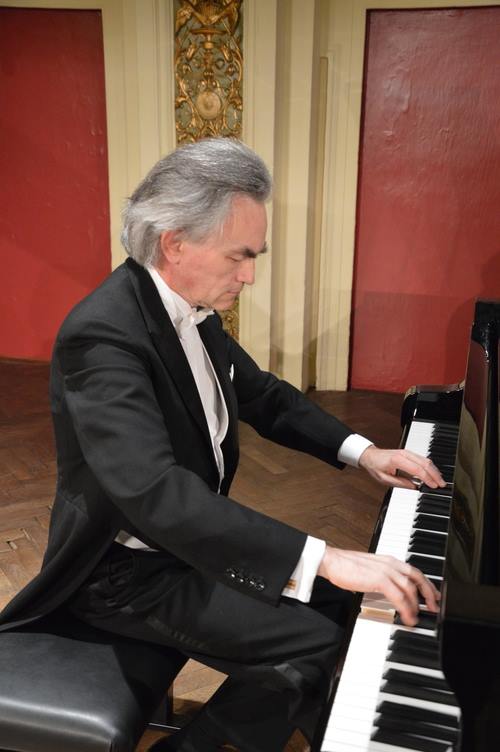
German-born Austrian pianist Stephan Möller will conclude the organization’s 2014-2015 season, offering the grandest of grand finales, by undertaking an epic journey encompassing all 32 Beethoven sonatas. The sonatas will be presented in chronological order, on eight recitals over the course of a week, beginning tomorrow at 7:30 p.m. The concerts will be held at historic St. Peter’s Church in Freehold.
Interestingly, the venue is just about as old as Beethoven himself. The construction of St. Peter’s began all the way back in 1771, the year after the composer’s birth. Originally conceived on a design of Philadelphia architect Robert Smith, the structure’s completion was delayed by the Battle of Monmouth, when the site is alleged to have served as a hospital.
Following the Revolution, it was employed as an army storehouse, until the 1790s. It was in the last decade of the 18th century that the interior was finally completed so that services could be held. Throughout the 1800s, continued renovations and expansions transformed the original meeting house design into the gothic structure which stands today.
In anticipation of Möller’s Beethoven marathon, Hyczko has been posting a “Sonata-a-Day” feature on the Downtown Concert Series Facebook page, with links to complete performances of the works by different pianists and little-known facts about the composer.
On Sunday, the Capital Singers of Trenton will present music by one of Beethoven’s teachers, Franz Joseph Haydn. Haydn’s setting of the “Te Deum” will appear on the first half of the program, alongside selections from “The Creation” and the “Mass in Time of War.” The second half will feature works by contemporary composers Franz Biebl and Stephen Paulus. The most grandiose entry should be a second “Te Deum” setting by Mark Hayes.
“It’s more romantic, almost like film scores of the 1950s,” says the chorus’ artistic director, Richard Loatman. “I don’t know if you know the composer Miklós Rózsa, who wrote the music for ‘Ben-Hur’ and ‘El Cid’ and those biblical epics, but it has that kind of a feel to it.”
Sounds good to me!
The concert will be held on Sunday at 4 p.m., at Sacred Heart Church in Trenton. You can read more about it in my article in today’s Trenton Times.