Category: Daily Dispatch

  • Fairy Tale Music with Ross Amico

    Fairy Tale Music with Ross Amico

    Did you ever have one of those mornings? You dream of being awakened by a kiss, but instead you get a four-legged friend panting (or worse) for his or her breakfast.

    This morning, we turn our backs on reality to immerse ourselves in the fantasy worlds of the Brothers Grimm, Hans Christian Andersen, Charles Perrault, Aesop and others.

    Okay, so maybe sometimes things turn out even worse in fairy tales. But the subjects invariably offer a blank canvas for the imaginative flights of some of the world’s great composers.

    I hope you’ll join me this morning for music by Havergal Brian, Daniel Dorff, Paul Hindemith, Gustav Holst, William Hurlstone, Nikolai Medtner, Robert McBride, Robert Moran, Nikolai Rimsky-Korsakov, Ernst Toch, Siegfried Wagner, Ralph Vaughan Williams, Alexander Zemlinsky, and others of their ilk.

    Musical subjects will include Pinocchio, Snow White, Old King Cole, The Little Mermaid, Three Blind Mice, and Beauty and the Beast.

    It all takes place from 6 to 11 a.m. ET, on WPRB 103.3 FM or at wrpb.com. Keep the ogres at bay – and the earbuds in – with Classic Ross Amico.

  • Tyrannical Sea Captains Movie Music

    Tyrannical Sea Captains Movie Music

    This week on “Picture Perfect,” take the lash and prepare to be keelhauled. We’ll have music from movies featuring tyrannical sea captains.

    Tyranny and sadism are common ingredients in nautical adventure films, where hard-bitten sea captains find it better to reign in hell, than serve in heaven.

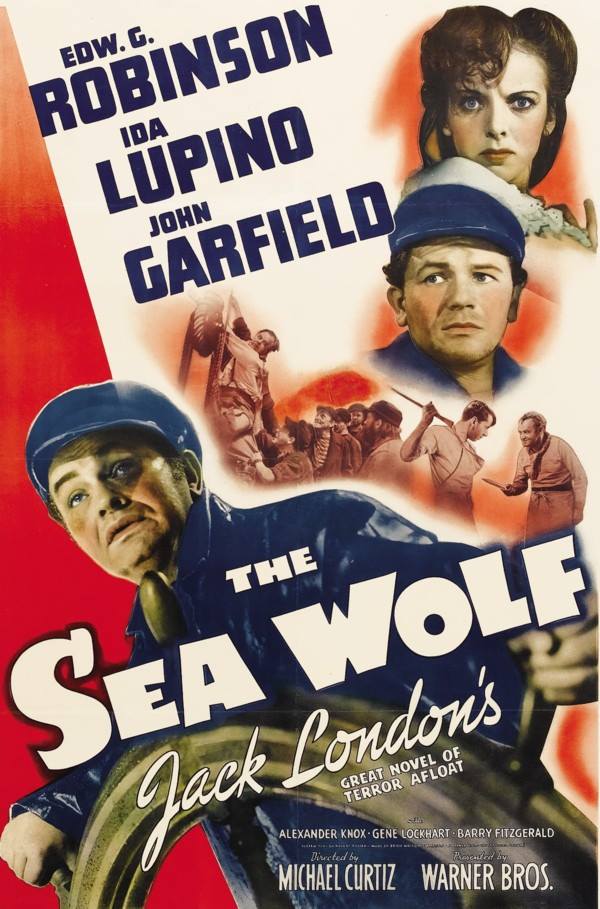
    At least that’s the mantra of Wolf Larsen, who does his best to uphold the philosophy of Milton’s Satan, in Jack London’s “The Sea Wolf.” Larsen is a tough Norwegian sea captain who presides over his ship, the Ghost, through strength and brutality.

    Edward G. Robinson plays Larsen in the 1941 film version. John Garfield is the working class seaman who opposes him. And Ida Lupino is the castaway with a past, with whom he falls in love in spite of himself. The score is by Erich Wolfgang Korngold, who provided the music for some of the memorable seafaring adventures of Errol Flynn.

    Captain Ahab is a familiar enough figure that he requires little introduction. Everyone knows about his ivory leg and his obsessive quest for the White Whale. Gregory Peck played Ahab in a 1956 film adaptation (with a screenplay by Ray Bradbury) of Herman Melville’s “Moby Dick,” which was directed by John Huston. The score was by English composer Philip Sainton.

    Humphrey Bogart was nominated for an Academy Award for his performance as Lieutenant Commander Phillip Francis Queeg, in the big screen adaptation of Herman Wouk’s “The Caine Mutiny,” in 1954. Queeg, in charge of a U.S. Navy destroyer-minesweeper, is pushed over the edge by his obsession for strawberries pilfered from the officers’ mess. Max Steiner’s upbeat, patriotic theme provides a nice counterpoint to the interpersonal turmoil aboard the Caine.

    Finally, the most iconic of tyrannical sea captains, Captain Bligh, will be represented with “Mutiny on the Bounty.” Historical novelists Charles Nordhoff and James Norman Hall make hay from the 1789 insurrection aboard the HMS Bounty.

    The classic film version from 1935 starred Charles Laughton as Bligh and Clark Gable as Fletcher Christian. The 1962 remake featured Trevor Howard as Bligh, with Marlon Brando envisioning Christian as a kind of high seas dandy.

    It’s said that Brando essentially directed all his own scenes himself. The film was colossal failure, earning back only $13 million of its $19 million budget. Nonetheless, it managed to inspire Bronislau Kaper to compose one of his most monumental scores.

    Take a bucket of salt water with your stripes, you dog! It’s tyrannical sea captains on “Picture Perfect,” music for the movies – this Friday evening at 6, with a repeat Saturday morning at 6; or listen to it later as a webcast at wwfm.org.

  • Fairy Tale Music on WPRB This Week

    Fairy Tale Music on WPRB This Week

    Once upon a time (yesterday), I decided it might be fun to do a show of fairy tale music and music inspired by nursery rhymes. This is the kind of thing I often did for Mother’s Day, back when I had my regular weekend air shifts. But a lazy August morning seems as good a time as any to spend with the Brothers Grimm, Hans Christian Andersen, Charles Perrault and others.

    To this end, we’ll hear music by Havergal Brian, Daniel Dorff, Paul Hindemith, Gustav Holst, William Hurlstone, Nikolai Medtner, Robert McBride, Robert Moran, Nikolai Rimsky-Korsakov, Ernst Toch, Siegfried Wagner, Ralph Vaughan Williams, and Alexander Zemlinsky (or variations thereof).

    Musical subjects will include Pinocchio, Snow White, Old King Cole, The Little Mermaid, Three Blind Mice, and Beauty and the Beast.

    Fall under the enchantment tomorrow from 6 to 11 a.m. ET, on WPRB 103.3 FM or at wprb.com. Awake to a musical kiss from Classic Ross Amico.

  • David Raksin Laura’s Composer Remembered

    David Raksin Laura’s Composer Remembered

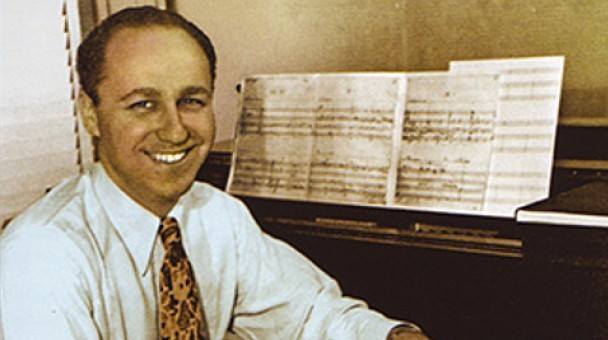
    There are a number of interesting birthday anniversaries today, including those of Jean-Baptiste Lully, William Schuman and Louis Armstrong (who believed he was born on July 4).

    However, I’m going to focus on David Raksin, the Philadelphia-born film composer, who attained immortality with his music for “Laura” (1944), which, with the addition of lyrics by Johnny Mercer, went on to become a popular standard. In fact, it’s said that in Raksin’s lifetime “Laura” was recorded more than any other song, save Hoagy Carmichael’s “Stardust.”

    Raksin worked on over 100 films and 300 television shows. One of the earliest was Charlie Chaplin’s “Modern Times” (1936). While Chaplin was an amateur violinist who “composed” all of his own scores, it was people like Raksin who really did the heavy lifting, filling out the harmony and the orchestration and so forth. Their work together led to some friction, with the demanding Chaplin firing Raksin at least once, but the two wound up fast friends, full of mutual respect.

    Despite decades of fine work, Raksin never attained the status of composers like Max Steiner or Erich Wolfgang Korngold. However, film historians and classic movie fans owe Raksin much, since he lived long enough (he was 92 when he died in 2004) and possessed a sharp enough memory that he was able to recount many, many interesting anecdotes about colleagues who had since passed on into legend.

    Some thumbnails are posted on the website of the American Composers Orchestra, so that it’s possible to enjoy a few of Raksin’s recollections of Steiner, Korngold, Bernard Herrmann and the rest. You can find them by clicking here:

    http://www.americancomposers.org/raksin_intro.htm

    Happy birthday, David Raksin!


    Raksin conducts “Laura”:

  • Australian Music & Indigenous Instruments

    Australian Music & Indigenous Instruments

    G’day, mate!

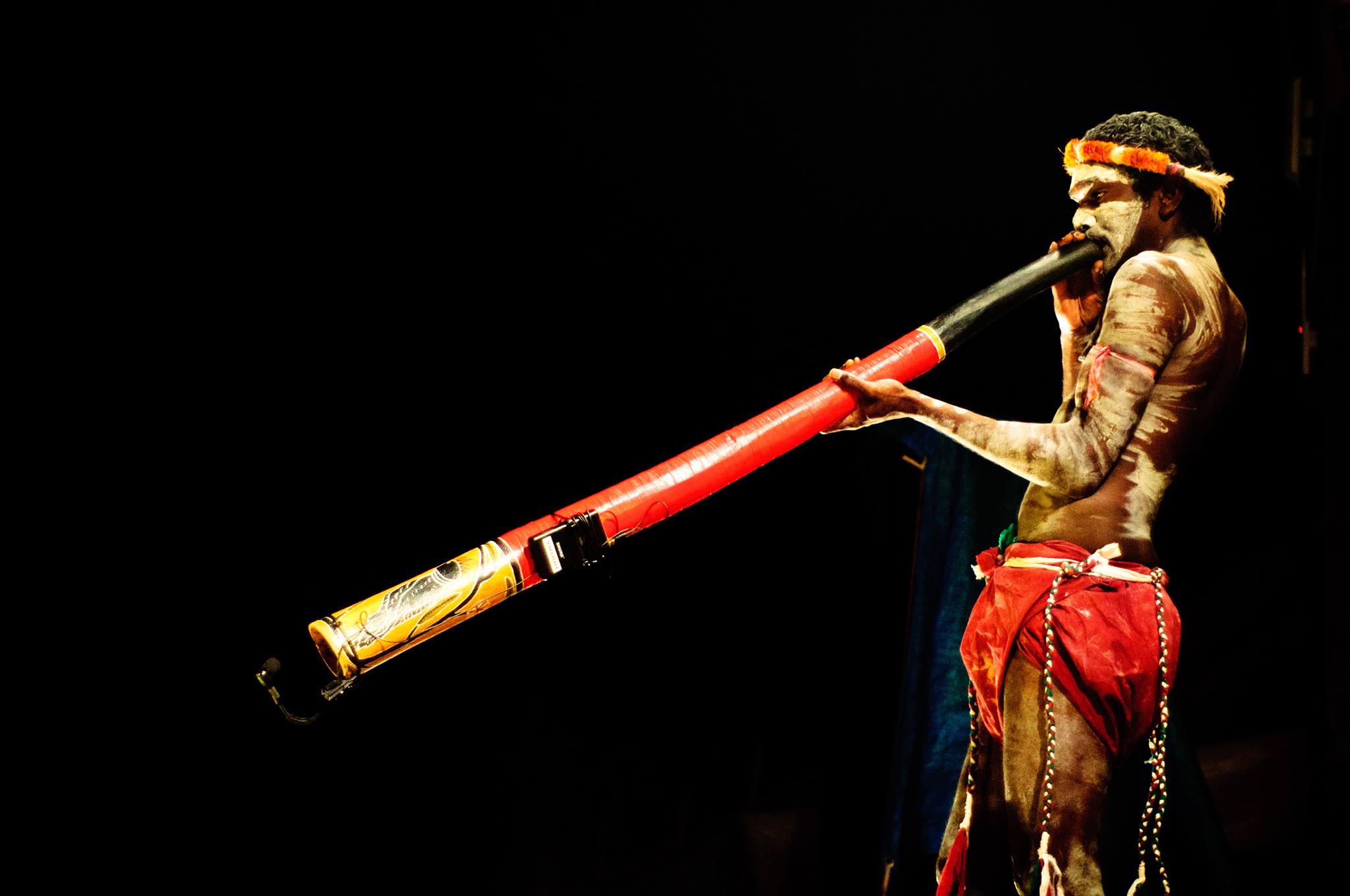
    This Sunday night on “The Lost Chord,” the focus is on Australian music that incorporates authentic instruments of the indigenous peoples.

    It’s possible that no composer has embraced the didgeridoo to quite the extent of Peter Sculthorpe, who lived from 1929 to 2104. Sculthorpe, in his maturity Australia’s most prominent composer, was occupied with environmental concerns, such as preservation of wildlands and climate change, and possessed an overt sympathy with aboriginal culture.

    He composed 18 string quartets. Four of them have a part for didgeridoo. His String Quartet No. 12, completed in 1994, is inspired by Ubirr, a large rocky outcrop in Kakadu National Park in northern Australia, which houses some of the best and most varied aboriginal rock paintings in the country.

    John Antill’s ballet, “Corroboree,” from 1944, was one of the first attempts to incorporate authentic aboriginal elements into modern classical music. Corroboree is the anglicized word for an aboriginal ceremony involving singing and dancing, in order to communicate “dreaming stories” about journeys and actions of ancestral beings which will continue to have consequences in the future.

    Antill attended one of these sacred ceremonies in Botany Bay in 1913, the same year as the debut of Stravinsky’s “The Rite of Spring.” Antill later denied any previous knowledge of Stravinsky’s ballet, even at the point he came to write the work 30 years later.

    In addition to the use of the didgeridoo, the orchestration also includes a part for bullroarer, a kind of blade on a long cord that when swung in a large circle makes a roaring vibrato sound.

    “Corroboree” received its first complete recording on the Naxos label in 2008. That’s the version we’ll hear, though in terms of unbridled primitivism, it’s difficult to match the suite, as recorded by Sir Eugene Goossens and the London Symphony Orchestra, back in 1958. If you like what you hear, definitely seek that one out.

    I hope you’ll join me for this musical walkabout through the Australian outback. “Didya Hear the One About the Didgeridoo?” Tonight at 10 ET, with a repeat Wednesday evening at 6; or listen to it later as a webcast at wwfm.org.

    To get you in the mood, here’s ten hours of didgeridoo music:

    And a demonstration of the bullroarer:

    https://www.youtube.com/watch?v=2ODGE2f7gLQ

Tag Cloud

Aaron Copland (94) Beethoven (95) Composer (114) Film Music (153) Film Score (143) Film Scores (255) Halloween (107) John Williams (198) KWAX (233) Leonard Bernstein (105) Marlboro Music Festival (125) Movie Music (168) Mozart (92) Opera (222) Philadelphia Orchestra (91) Picture Perfect (174) Princeton Symphony Orchestra (110) Radio (90) Ross Amico (244) Roy's Tie-Dye Sci-Fi Corner (290) The Classical Network (101) The Lost Chord (269) Vaughan Williams (107) WPRB (397) WWFM (881)

DON’T MISS A BEAT

Receive a weekly digest every Sunday at noon by signing up here


RECENT POSTS