I didn’t really have a lot of skin in the game for this year’s Academy Awards. I only saw three of the films nominated for Best Picture. (Last year, for the first time in years, I managed to see everything.) But I love “the movies” – by which I mean, not necessarily this year’s nominated films, but the more general embrace of an entertainment and, at its best, an art form I have appreciated for as long as I can remember.
The Academy Awards were always a big deal in my house when I was growing up, with my stepfather and I, in particular, being big film buffs, and the family would always gather around the television to take in the broadcast, predict the winners, and chow down on quite the extensive spread of hors d’oeuvres. So, for me, the Oscars will always have that extra layer of nostalgic association. Last night, I checked in with my stepdad beforehand (there’s no extraneous talking during the Oscars!), and at 83, he was still planning to watch – and to eat.
Of course, over time the movies have evolved, and not always in ways that I particularly enjoy. And my reactions to the Oscars have gotten a little more complicated.
This year’s broadcast didn’t offer the consistent “feels” of 2023, for me the recent high-water mark, after I swore off Oscar for a couple of years, I think beginning in 2020. You may recall that the 2023 ceremony was chock-full of engaging comeback stories and long-deferred rewards, with Ke Huy Kwan, Michelle Yeoh, Brendan Fraser, and Jamie Lee Curtis all winners. Now that was a compelling show! This year, of the big four, only Zoe Saldaña managed to really stir.
And last year, of course, we had the whole Barbenheimer phenomenon, which, regardless of what you may have thought about “Barbie” and “Oppenheimer,” was at least a genuine pop cultural moment that centered around movies, on a scale which I hadn’t experienced in decades.
Where this year’s ceremony satisfied, and surprised most pleasantly, was in its uncomplicated embrace of Oscar tradition. I don’t know where it came from, but this year, for once, I feel like the producers were coming at it from the right place, with plenty of nods to the sweet spots of Oscar broadcasts of yore: film clips and montages, salutes to different genres of film, production numbers rooted in Hollywood and Broadway standards, and an orchestra, frequently visible and literally elevated, in the hall.
When the orchestra played into commercial breaks, the overripe “Vegas showroom” arrangements did not seem like nostalgic pandering. Rather, they conjured a pleasurable sense of continuity. If I had nodded off during a three-and-a-half hour Oscars broadcast in the 1990s and woken up in the middle of this one, the tone would have been fairly consistent. Of course, I would have recognized a lot more people in the audience back then and the movies would have been totally different.
Thank god, they finally figured out how to get back to doing a solid “In Memoriam” segment. After several years of overly-intrusive, cross-cutting camera work that seemed more interested in the live performers than it was on those being honored – the actual clips of whom to all appearances were assembled by a hyper-caffeinated editor – this year was right in the Goldilocks zone. For an attentive viewer, it was at least possible to take in all the pertinent information and to feel a pang of loss.
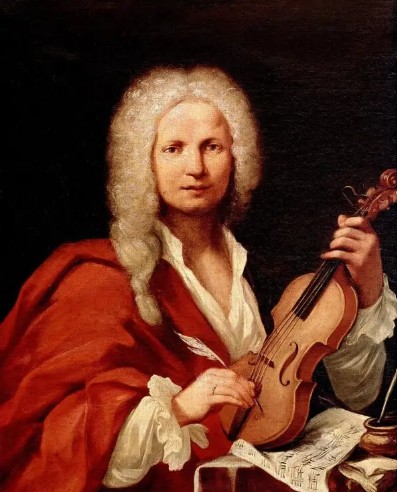
Ironically, a lot of the credit probably goes to Mozart, as the chosen music bed, from the composer’s Requiem, which involved a choir (the Los Angeles Master Chorale), and therefore likely reined in the temptation, and indeed eliminated the necessity, to focus on any star performers. This would be Mozart’s biggest night at the Oscars since 1985, when the Academy showered statuettes on “Amadeus.” From a musical standpoint, it might have been Mozart’s biggest night ever, as I’m not sure he ever before enjoyed a simultaneous audience of tens of millions around the world.
The planning for the segment had to have been in the works for weeks beforehand, but it was as if everyone fell into lockstep for fear of retribution from the ghost of Gene Hackman. While Hackman would have been a last-minute addition to a year that, cumulatively speaking, proved to be one of staggering creative loss (including Maggie Smith, Donald Sutherland, James Earl Jones, and David Lynch, among many others), there was no evidence that a few extra clips had been slapped on to the end. Morgan Freeman provided a spoken prelude to the segment, remembering his friend. Hackman’s image (from “Wyatt Earp,” not “Unforgiven,” as so many seem to think) was present throughout.
Also honored last night was Quincy Jones, who we lost in November at the age of 91. Oprah Winfrey and Whoopi Goldberg, who were discovered by Jones for the first film adaptation of “The Color Purple,” directed by Steven Spielberg in 1985, introduced the segment, and Queen Latifah performed “Ease on Down the Road” from “The Wiz.”
The show opened with a montage of movie clips from films set in L.A., as a tribute to the city, recently beleaguered, like too much of California, by wildfires. (A web address for donations to a disaster relief fund was posted several times throughout the broadcast.) The montage was the kind of thing I always loved about the Oscars of decades past, when the ceremony, in general, was more cognizant of the history of the industry (even if some of the actors still seemed pretty clueless, even back then). Initiated by three clicks of Dorothy Gale’s ruby slippers (Oz was another recurring motif, and a welcome one, throughout the evening), the salute ran about a minute, and most of the films would have been recognized by modern audiences. I think the earliest one was from “Chinatown,” released in 1974. But “La La Land” was more the speed. Still, any montage that includes “The Big Lebowski” and Steve Martin’s “L.A. Story” earns bonus points with me.
This was followed by Ariana Grande and Cynthia Erivo (both nominated for “Wicked”) performing “Somewhere Over the Rainbow” (Grande), “Home” from “The Wiz” (Erivo), and “Defying Gravity” (both of them) from their “Wizard of Oz” prequel. This was pitch-perfect in tone and a welcome throwback to the Oscar ceremonies I loved. They allowed plenty of space to breath, with time for reflection and perhaps even a little emotion.
As I’ve suggested, the evening conjured plenty of memories of Oscar’s better days. Without overtly referencing past ceremonies, the spirit of the show was classic, including a James Bond tribute (I’m not saying that it was good, but it was definitely Oscar) that reminded me of Sheena Easton singing “For Your Eyes Only” in 1982. I remember thinking the earlier production number was pretty lame – or at least the choreography was – but also pretty cool, because it resurrected some classic Bond villains for cameos. The timing for last night’s tribute, allegedly to the franchise’s longtime producers, Barbara Broccoli and Michael G. Wilson, was a little awkward, coming as it did right on the coattails of the news that the rights to Bond had been sold to Amazon for something like a billion dollars. (I’m not kidding.) Is there even that much money in the world? Priorities, people…
In any case, it was a nice gesture, even if the singers didn’t always live up to their iconic predecessors. I never heard of Lisa, Raye, or Doja Cat, but they sure did make me miss Shirley Bassey.
I do wonder if the organizers realized too late their miscalculation in playing Mark Hamill on to “Star Wars” to introduce this year’s nominees for Best Original Score. It reminds me of my own unintended insensitivity when I played a professional recording of Mussorgsky’s “Pictures at an Exhibition” for a niece, who had just performed an arrangement of “The Great Gate of Kiev” with her school orchestra. How’s a kid suppose to live up to that? So it was with this year’s music nominees when placed beside the impossible standard of John Williams.
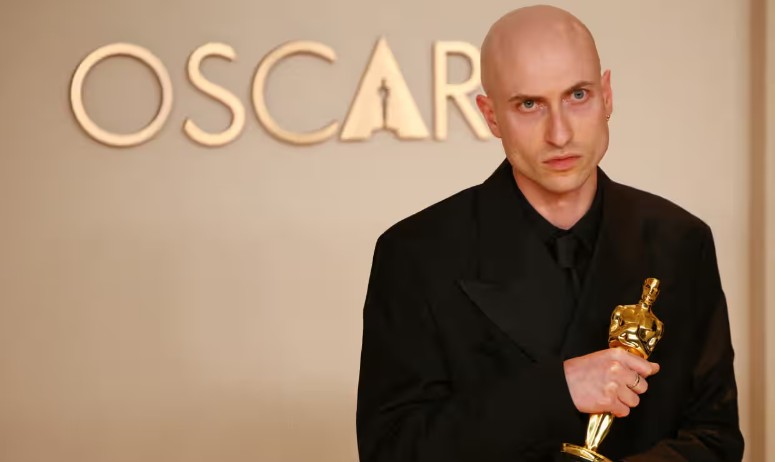
The winner of the award was Daniel Blumberg, recognized for his work on “The Brutalist.” A strange looking dude with an awkward presence, Blumberg, who is the former frontman for indie rock band Yuck (yes, you read that correctly), in two minutes channeled Nosferatu better than director Robert Eggers did in two hours.
Best Original Song went to Camille & Clément Ducol for “El Mal,” from “Emilia Perez,” really a non-song which in the film really glides on its execution. The couple was also nominated for “Mi Camino,” also from “Emilia Perez.” For anodyne as it is (it’s played as a karaoke number in the movie), at least it sounds like an actual song. But this has hardly been my category of expertise since the mid-20th century.
Two of the nominated films were actually about music: “Instruments of a Beating Heart,” about a Japanese schoolgirl who aspires to play the cymbal in a performance of Beethoven’s “Ode to Joy,” and “The Only Girl in the Orchestra,” about double-bassist Orin O’Brien, hired by Leonard Bernstein in 1966 as the first female musician in the New York Philharmonic. (Producer-director Molly O’Brien, who may have forgotten her blouse, is Orin’s niece.) Both were previously unknown to me, as nominees in the category of Best Documentary Short Film. (“The Only Girl in the Orchestra” won.) Shame on me, as “The Last Repair Shop,” last year’s winner, was one of the most moving films of 2024.
Like many people, I suspect, I wind up mopping up the shorts that look interesting to me after learning of them at the ceremony. It’s not something I plan. I just get swept up into the “buzz” tide, and these smaller films receive next to no publicity. It’s a matter of out of sight, out of mind. It’s too bad, since independent projects are invariably made by passionate, dedicated filmmakers with fire in their bellies, who will never enjoy the celebrity of Martin Scorsese or Christopher Nolan. Often those in the crew resort to guerilla methods and wear multiple hats.
While we’re on the subject, can the Academy please stop playing off these filmmakers, who in their moment of glory have 30 seconds to divvy-up between them so that they can make multiple brief acceptance speeches? I’d rather they hold firm on the meandering if well-intentioned Adrien Brody. I’m all in favor of spontaneity, or the appearance of spontaneity, over reading from a slip of paper in a shaky hand, but for godsake, man, tighten it up a little bit.
I like Conan O’Brien fine. I can jibe with his quirky humor. (One of the better bits of the night had no dialogue: during one of the commercial bumpers, Conan, with an assembled crew, stands in profile with a pipe in his mouth and a pointer in his hand before a map of Europe. Few others would find that funny, but as someone who has seen more than his share of British war movies, it tickled me.)
That said, Conan’s awkward presence doesn’t really seem suited to the format. He’s not as smooth and assured as Jimmy Kimmel. He reminded me a bit of when David Letterman hosted in 1995 and was critically lambasted. I enjoyed that show too and found Letterman entertaining, but he was not the best fit for the much larger Dorothy Chandler Pavilion. Both of these guys are better suited to the cozier confines of a talk show desk. That said, if Conan were asked to come back next year, I’d be good with it. Kudos to him for hosting representatives of the L.A. firefighters to accept some applause and to stand in to tell some pretty good jokes.
The producers of the show must have sensed Conan’s quirky incompatibility from the start, as rather than going directly to his monologue, by way of a squirm-inducing bit with the comedian crawling out of a fissure in Demi Moore’s back (achieved using borrowed footage from “The Substance”), they launched with the L.A. salute and then went right into the “Oz” medley. Johnny Carson, who hosted the Oscars five times, was a better fit, and Kimmel at four, is the probably the best we’ve got now. I agree with Conan that Billy Crystal was the best Oscars host ever, at least since I’ve been watching (basically my entire life), and it was good to see Crystal at the end of the night, even if he didn’t have much to do other than hand out the Best Picture award with Meg Ryan. You could tell he could do the show again in a heartbeat, except there’s no way he would ever bring the demographic the Academy is hoping for. (Not that anyone else would.)
It’s sobering to think that the Academy would regard Crystal and Ryan as Hollywood elder statesmen. It seems like just yesterday we were getting Laurence Olivier or Kirk Douglas. Though now that I think about it, the other year we did get Warren Beatty and Faye Dunaway. That was the year of the “La La Land”/”Moonlight” envelope mix-up…
Recipient of the Kennedy Center’s Mark Twain Award for American Humor (!) Adam Sandler’s cameo was more horrifying than anything in “The Substance,” and furthermore sent the wrong message during a show which demonstrated, with its honorees coming from so many different nations and backgrounds, inclusivity. (Hey, Conan! Lay off Estonia!) And Conan’s production number about not wasting time took me back to the more inane moments of Seth MacFarlane’s hosting gig in 2013. (Interestingly, MacFarlane created “The Family Guy,” and Conan wrote for “The Simpsons.”) But there was also a recurring bit with John Lithgow, which, while not hilarious, at least involved John Lithgow.
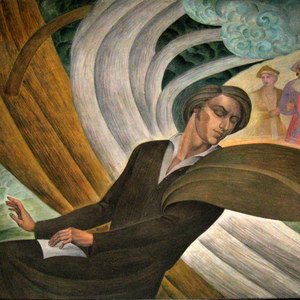
At a point, Ennio and Andrea Morricone’s music for “Cinema Paradiso” was used to play on some award presenters (who exactly escapes me at the moment). Chopin, whose music features throughout “A Real Pain,” was played when Kieran Culkin rose to accept his Oscar for Best Supporting Actor.
It was nice to see so many of the smaller films honored. Again, let’s hear it for real musicians in the theater – with a special shout-out to the (Juilliard trained) sandworm from “Dune II” who got two solos!
Congratulations to all the winners and good work on the part of all the nominees!
PHOTOS: Daniel Blumberg, reflecting on the plague rats pouring from his coffin (top); and sandworm gets a harp solo