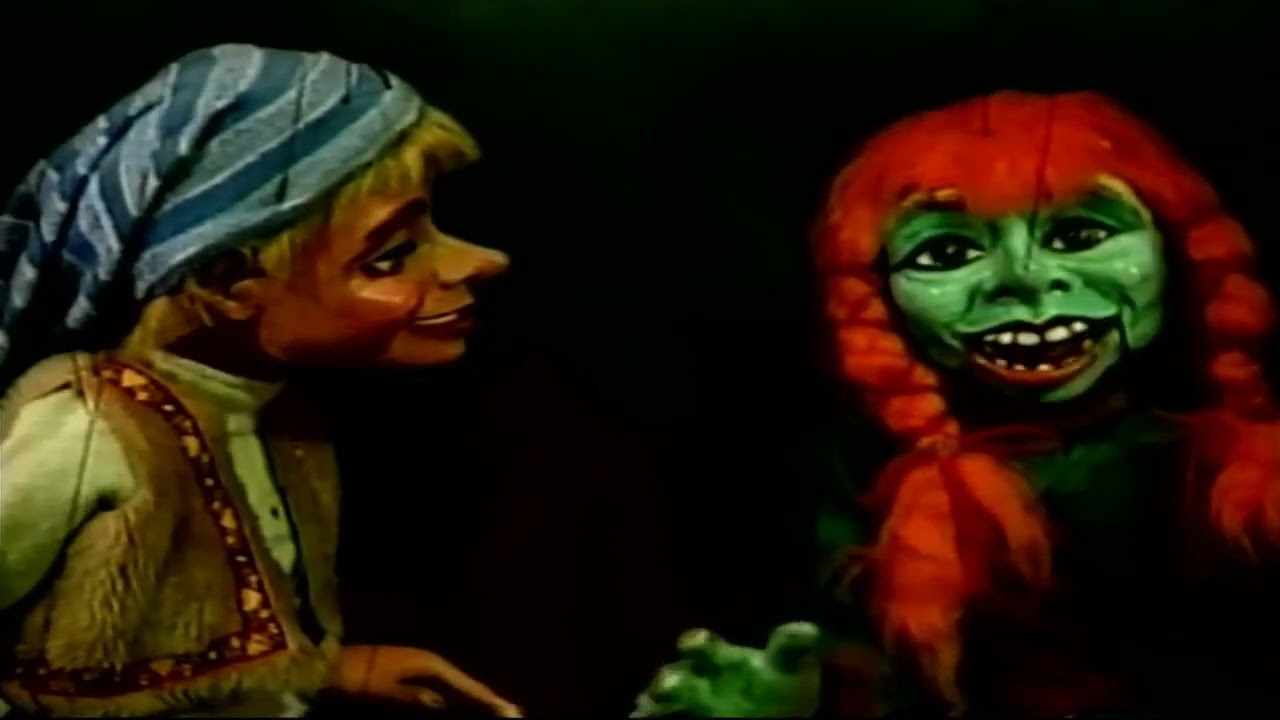
I just finished producing “Sweetness and Light,” which will air, as usual, this Saturday morning at 11:00 EST/8:00 PST on KWAX. Taking a cue from the show’s signature tune, “Puppets on Parade” by Rudolf Friml, I figured I’d go full-on puppet/marionette this week. I turned up plenty of material in my own music collection, of course, but in bouncing around the internet for ideas, I stumbled across this marionette performance of Ibsen’s “Peer Gynt” that employs the famous incidental music by Edvard Grieg. It’s not on my show, but if you’re of a certain age, perhaps it still haunts your memories of elementary school music class. Watch through your fingers, if you dare; then join me for “Puppet Masters” on “Sweetness and Light,” this Saturday morning on KWAX!
Category: Daily Dispatch
-
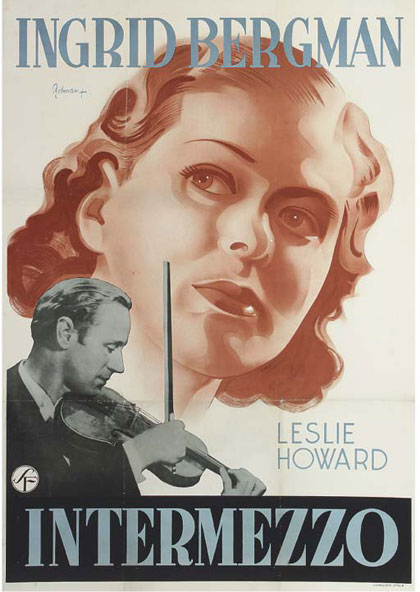
Ingrid Bergman’s Intermezzo A Classic Rediscovered
Around here, there are at least two Ingrid Bergman movies that get played with some frequency. One is “The Bells of St. Mary’s,” which I watch every year around Christmas. Bergman’s delightful in it, and her bantering interaction with Bing Crosby is priceless. Of course, any viewing is followed by the inevitable debate with whomever I happen to be watching as to whether or not it’s actually a Christmas movie. (I maintain that it is.)
The other, of course, is “Casablanca,” which could very well be my favorite movie of all time. I mean, I have lots of favorites, but rare is the film that manages to stay fresh with every viewing – that is, where I’m actually living every moment of it, rather than simply having it wash over me (having seen it so many times), anticipating certain moments, noting how far into the movie I am, testing my memory of the dialogue, and so forth. But I hardly need to sing the praises or enumerate the qualities of “Casablanca” here. As Captain Renault (Claude Rains) comments to Major Strasser (Conrad Veidt), “Everybody comes to Rick’s.”
Last week, prior to my most recent viewing, I decided to check out Bergman’s American debut, “Intermezzo,” which believe it or not, even as a classic movie buff, I’d never seen. This is especially surprising, in that the characters are all musicians. Then again, historically, at the movies, that can be something of a mixed blessing.
“Intermezzo” is set, for the most part, in Sweden, I guess to accommodate Bergman’s accent. (She is radiant even here and seems younger – she IS younger – even though it’s only three years before “Casablanca.”) Also, it’s a remake of one of Bergman’s Swedish films, so there’s that. More difficult to explain is why the very English Leslie Howard plays Holger Brandt, an international violinist, who returns home to Stockholm between tours to be with his family.
Bergman plays his daughter’s piano teacher, Anita. When, during a social gathering, Anita is persuaded, after some hesitation, to perform, she launches into the first movement of Grieg’s Piano Concerto – in the living room, yet somehow managing not to drown out all extraneous conversation – and Holger/Howard is suddenly compelled to pick up his violin and join her for an impromptu duet. Kitsch crashes against the promontory of high art in a manner than can only be described as pure Hollywood. Furthermore, there are repeated statements throughout the film of Holger’s favorite encore, one of his own compositions, “Intermezzo,” which his daughter plays repeatedly on the hi-fi whenever her father is on tour.
The actual composer of the piece was Heinz Provost. Provost, responding to a contest held for the original Swedish film in 1935, submitted “Souvenir de Vienne” (Vienna being the city of his birth). He had no qualms about changing the title to “Intermezzo,” and the royalties made him a wealthy man. Provost actually moved to Stockholm in the late 1940s and died there in 1959.
The same year as the Hollywood version, 1939, Howard would play Ashley Wilkes, in vibrant Technicolor, in “Gone with the Wind.” Both films were David O. Selznick productions. Selznick was a complete autocrat, micromanaging every aspect of his films, and there’s no denying his mogul genius. As a craftsman and as an entertainer, he possessed exceptional instincts. I also give him credit for appreciating classical music, or at least recognizing its inherent quality. However, his actual musical taste could be questionable.
In his correspondence, Selznick asserts repeatedly that his ideal would be to have his movies scored with the world’s great masterpieces (which is why we get all that Debussy in Selznick’s “Portrait of Jennie”). Miklós Rózsa hated working on “Spellbound” (another Bergman film), as he repeatedly butted heads with Selznick, who wanted his hands in everything. At least Rózsa won an Oscar for his troubles. Not so poor Max Steiner, who was practically run into the ground, flying on amphetamines the entire time, as he worked around the clock trying to meet Selznick’s demands for “Gone with the Wind,” under threat of having the entire project yanked away and handed off to Herbert Stothart (who, ironically, beat out Steiner that year because of his involvement with “The Wizard of Oz”).
I realize I’m flirting with digression here, but I suspect Selznick’s musical appreciation – and comparative musical ignorance – explains why “Intermezzo,” set in Sweden, is so top-heavy with Norwegian music. I mean, to Selznick, to your average American with a passing knowledge of classical music, it would all be pretty much be the same thing, right? Sweden, Norway, what’s the dif? So we get Grieg and we get Bergman humming Christian Sinding’s “Rustle of Spring.”
Naturally, a forbidden attraction develops between Holger and Anita. But I must say, I was surprised by certain wrinkles in the storyline, as the lovers allow their passion to flair, consequences be damned – the complete opposite, in fact, of “Brief Encounter,” with Trevor Howard (no relation) and Celia Johnson agonizing to Rachmaninoff. A question for the ladies: Leslie Howard certainly has it all over Trevor in the looks department, but does anyone actually find him sexy? Apparently, women did then.
“Brief Encounter,” being British, eschews Hollywood fantasy to give us something that more closely resembles life. Given the choice between movies, I’d stick with the latter. “Intermezzo” is entertaining enough and certainly worth seeing if you’re a classic movie buff, but “Brief Encounter” holds up better, even if the ideals the characters uphold may seem hopelessly antiquated in our more cynical time, when the concepts of honor and sacrifice are frequently viewed ironically or derided. But I think most of us, to some degree, still respond to the nobility and beauty, especially if bittersweet, of doing the right thing. Which is one of the reasons we all still love “Casablanca.”
I could just end there, but as a footnote, I happened to look up Ann Todd, who plays Holger’s daughter and Anita’s pupil. Typical of many child actors, Todd had a comparatively brief career in the movies – although at 14 years, still a pretty good run. Later, she studied library science and became a librarian at U.C. Berkeley. She wrote reviews for the Music Library Association journal and served as its music review and book review editor. In 1984, she established Fallen Leaf Press, which published music books and scores of contemporary American chamber music. Among those in the Fallen Leaf catalogue were Charles Fussell, Robert Greenberg, and Virgil Thomson. Having come across some of these books over the years, I found this interesting. Todd died in 2020 at the age of 88.
On the soundtrack of “Intermezzo,” we hear professional musicians, but I must say, Bergman does a very impressive job of pantomiming. To my eyes, she’s hitting all the keys. By contrast, it’s evident that Howard never held a violin in his life! For close-ups, a musician stood on his knees off-camera and provided all the fingering. So the pitiable bowing is all Howard and the left hand is that of violinist Al Sack, who also doubled for the actor in long shots in front of an orchestra. On the soundtrack, Toscha Seidel played the violin, and Norma Drury played the piano.
Bergman also portrayed a pianist in her final feature film, “Autumn Sonata,” directed by Igmar Bergman (no relation), in 1978. Howard was killed in 1943, only four years after he made “Intermezzo” and “Gone with the Wind,” when during a flight from Lisbon to Bristol, his plane was shot down by the Nazis. He was 50 years-old.
Provost’s “Intermezzo,” played by violinist Toscha Seidel and pianist Eugene Kusmiak
-

New Romeo Cascarino Album Pathways of Love
As a belated Valentine’s treat, a new album has dropped featuring the love songs of Philadelphia composer Romeo Cascarino.
“Pathways of Love” is collection of eight songs on texts by Sara Teasdale, Eugene Field, Robert Frost, and others. Incredibly, Cascarino, who lived from 1922 to 2002, composed all but one of the songs at the age of 16, adding “Little Blue Pigeon,” during his courtship of soprano Dolores Ferraro. Like a latter-day Mendelssohn, he manages to replicate in the newer material the tone of his more precocious utterances.
The couple recorded the songs in their original versions for voice and piano on an Orion LP. The songs were then orchestrated as a set under their unifying title.
Rounding out the new release is Cascarino’s string arrangement of “Danny Boy,” undertaken as a birthday gift for Ferraro, by then long his wife.
The soprano on the new recording is Jessica Beebe, certainly no stranger to Princeton or Philadelphia audiences – although her career has taken her all over the United States, as a soloist, recitalist, and chorister. Aside from her work in opera and oratorio, she’s a member of the Grammy-winning ensemble The Crossing, the Grammy-nominated Clarion Society, and the Grammy-nominated Seraphic Fire.
The conductor is Timothy McDonnell, a Cascarino student.
The recording will be made available on Spotify, Amazon Music, Apple Music, etc. For now, enjoy it on YouTube.
If you like what you hear, don’t forget this lovely album of Cascarino’s orchestral works, conducted by JoAnn Falletta.
-
Washington & Lincoln in Music: Forgotten Gems
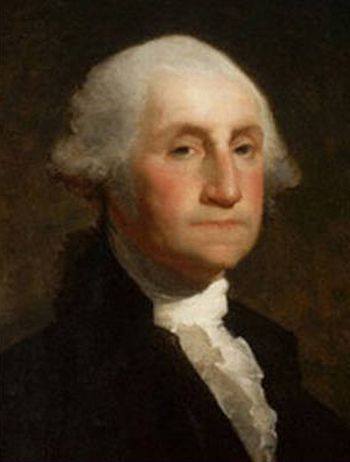
One never told a lie. The other gave everything to keep us united. We’ve come a long way, baby.
Hard to believe, but Virgil’s Thomson’s George Washington ballet “Parson Weems and the Cherry Tree” (a Bicentennial commission) doesn’t seem to be posted anywhere online in the version for chamber orchestra. I did, however, find it for piano. You just have to let it play through, from tracks 10-21.
Concert overture “McKonkey’s Ferry (Washington at Trenton)” by Trenton’s own George Antheil. Curious that a local boy would spell McConkey with two k’s!
John Lampkin, “George Washington Slept Here”
Roy Harris’ setting of Vachel Lindsay’s “Abraham Lincoln Walks at Midnight.” (The poem is posted below the video.)
Florence Price’s setting of the same poem
From “Abraham Lincoln: A Likeness in Symphony Form,” by Robert Russell Bennett
More Lincoln music under my post for Lincoln’s birthday on February 12
https://www.facebook.com/photo/?fbid=1489109922008066&set=a.883855802533484
-
Remembering Edward Sargent Rare Records & Philadelphia
A couple of days ago, I was doing some searches in my email, as I often do, to call up old correspondence or scripts I may have saved in drafts, and somehow I came across some messages from Edward Sargent.
Sargent was an old customer of mine from my Philadelphia bookshop days. At a point, he intuited that I would be interested in his record collection, which he was in the act of digitizing or converting to reel-to-reel or something. Maybe he knew who I was from listening to the radio. I don’t remember. In any case, it wasn’t unusual for used bookstores to have LP sections, back in the day.
As you can imagine, I had a lot of garbage dumped on my doorstep in the night, boxes of textbooks and self-help and dog-eared paperbacks and musty records. What was salvageable I would toss out on a shelf in front of the store for a dollar. So I was about as cynical as any used bookdealer you’ve ever encountered. An interesting side-post might examine the question of whether owning a bookstore makes one cantankerous, or if cantankerous people are attracted to the trade.
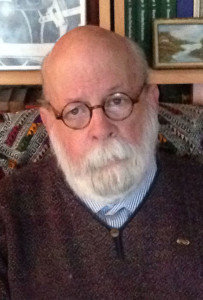
Be that as it may, Sargent didn’t fit the profile of someone who just wanted the Hefty bags out of his garage. The man radiated quiet intelligence and discernment. I confess I was always a little intimidated by him. He spoke softly, kept his lower face wreathed in white whiskers that ran right up to and obscured the lip, and peered through coke-bottle glasses with a steady gaze that suggested he could see into your inner fool. I knew I wasn’t exactly an idiot myself, but I found him unnerving. He seemed to me the very caricature of a philosopher. I could imagine him drawing on a long-stemmed pipe while cogitating over abstractions in an isolated cottage in the woods, like something out of James Stephens’ “The Crock of Gold.”
Perhaps I flatter myself that he somehow wound up taking a shine to me. He did maintain the utmost formality in his emails, addressing me as “Dear Ross Amico” and signing-off “Edward Sargent.” No “Warmly,” no “Regards,” not even “Best.” More likely, he found himself in the position I’m in now, having reached an age when he was starting to wonder to whom he was going to leave all this stuff. Anyone could discern from how well I curated my inventory that I at least had some awareness and refinement. Whatever the case, he proposed giving me his records. When he handed me his card, I noted “Pohjola” was part of his email address. If you know your Sibelius, then you know I’d connected with a soulmate.
But because of his unnerving quiet or my own insecurity, or some combination of the two, we were never as friendly as we could have been. In fact, I went out of my way to avoid him. I never ignored him if he tried to contact me, but sometimes I’d hold back until I could find the courage to follow-up. I was also very busy, remember, working seven days a week, between the shop and my radio shifts. On more than one occasion I’d arrive to open the shop and find that Edward had already been there and left a handful of records behind the bars. Once, I happened across some boxes of rare classical LPs at a rummage sale being held at a church on the corner. These, of course, were further cast-offs from his collection. While everything I had gotten from him so far was free, I shelled out for these immediately and added them to my hoard.
Eventually, after five years, I closed the shop (my second location in Philadelphia), and we lost touch. On the one hand, I really, really wanted his records; on the other, I feared to have them, as they would have just required so much storage and so much effort to collect (you try to find convenient parking in residential Philadelphia), including having to haul them up the stairs to my third-story walk up (which was more like four, because of the high-ceilinged art gallery at street level), all the while risking a hefty ticket for having to park in the bike lane with my four-ways flashing.
In the end, I estimate I wound up with maybe half of his collection. If he hadn’t still been in the process of cataloguing and transferring audio when he first offered it to me, perhaps I would have just taken everything. It was the most amazing record collection I’d ever seen, not so much for the size as for the diversity of offerings, which stretched back decades. Highly-collectible Louisville and Mercury recordings that never made it to compact disc; 10-inch LPs pressed on colored vinyl; Melodiya releases with jackets in Cyrillic; rarely-heard Scandinavian composers; composers of the Antipodes and Latin America. I don’t even know how he accumulated it all in the era before the internet. They were not the kinds of things that would have been in the regular inventory of most record stores.
He also slipped me a bootleg of the U.S. premiere of Hindemith’s then recently-rediscovered “Klaviermusik mit Orchester” (a performance now easily accessible on YouTube), with Leon Fleisher and the San Francisco Symphony conducted by Simon Rattle. (A few years later, I would attend the East Coast premiere.)
I remember googling Edward once before, a few years ago, and came across an interesting article about him, written in 2013. It doesn’t surprise me that he was related to the painter John Singer Sargent. Here’s the link.
Sadly, when I did a search for him after coming across his emails the other day, I discovered he died in December 2024. The obituary didn’t read like much, but I found this more flavorful reminiscence by a friend.
https://www.chestnuthilllocal.com/stories/edward-sargent-most-unorthodox,31239
Rest easy, sir, and thanks for the records.
CLOCKWISE FROM LEFT: Edward Sargent and three selections from his jaw-dropping collection: Dean Dixon conducting Howard Hanson’s Pulitzer Prize-winning Symphony No. 4; Norman Dello Joio’s “New York Profiles” on red 10” vinyl; and Philadelphia composer Paul Nordoff’s “Winter Symphony,” one of the legendary Louisville Orchestra series of world premieres, never reissued on compact disc
Tag Cloud
Aaron Copland (94) Beethoven (95) Composer (114) Film Music (150) Film Score (143) Film Scores (255) Halloween (100) John Williams (198) KWAX (233) Leonard Bernstein (105) Marlboro Music Festival (125) Movie Music (165) Mozart (91) Opera (215) Philadelphia Orchestra (90) Picture Perfect (174) Princeton Symphony Orchestra (110) Radio (90) Ross Amico (244) Roy's Tie-Dye Sci-Fi Corner (290) The Classical Network (101) The Lost Chord (269) Vaughan Williams (107) WPRB (397) WWFM (881)