Category: Daily Dispatch

  • Sweetness and Light Autumn Music Mix on KWAX

    This week on “Sweetness and Light,” with a nip in the air and color in the trees, it’s a light music autumn!

    Pick out a cozy sweater and join me for a fortifying brunch of hot cider and molasses cookies, as we listen to a fall sampler of works by Leo Sowerby, Cécile Chaminade, Archibald Joyce, Billy Mayerl, Virgil Thomson, Vernon Duke, Scott Joplin, Gheorghe Zamfir, and Alexander Glazunov.

    It’s the perfect preamble to your epic leaf-fight. The apples are tart, but the music is sweet, on “Sweetness and Light,” this Saturday morning at 11:00 EDT/8:00 PDT, exclusively on KWAX, the radio station of the University of Oregon!

    Stream it wherever you are at the link:

    https://kwax.uoregon.edu/

  • Madness & Movie Music The Piano’s Dark Side

    If the definition of insanity is doing the same thing over and over and expecting a different result, then surely Hanon etudes are a ticket to the madhouse.

    This week on “Picture Perfect,” get keyed-up with music from movies about madness and the piano.

    Whenever he hears a loud, discordant sound, unhinged pianist-composer Laird Cregar is compelled to commit murder, in the 1945 film “Hangover Square.” Bernard Herrmann wrote the moody, romantic score, which includes a piano concerto, played by Cregar’s character during the film’s conflagration finale.

    Peter Lorre is an unstable musicologist who is haunted by the disembodied hand of a murdered pianist with a penchant for Brahms’ arrangement of Bach’s Chaconne, in “The Beast with Five Fingers,” from 1946. Max Steiner was the composer. The hand is played by concert pianist Victor Aller, brother-in-law of Felix Slatkin and Leonard Slatkin’s uncle.

    Alan Alda plays a frustrated pianist who falls in with a ring of Satanists, in “The Mephisto Waltz” from 1971. This time, Jerry Goldsmith blends Franz Liszt with amplified instruments and electronics to memorably eerie effect. Five years later, Goldsmith would win his only Academy Award for his music to “The Omen.”

    Finally, Hans Conried plays a dictatorial pedagogue in “The 5,000 Fingers of Dr. T,” released in 1953. “5,000 Fingers” holds the distinction of being the only feature ever written by Dr. Seuss. The film sports an outrageous production design (including a gargantuan keyboard for 500 enslaved boys) and whimsical songs.

    The composer was Frederick Hollander. Born in London, Hollander attained fame in Germany as Friedrich Hollander. His best-known international success was “The Blue Angel,” starring Marlene Dietrich, who introduced his song, “Falling in Love Again.” With the rise of the Nazis, Hollander fled to the United States, where he worked on over 100 films.

    We go crazy for the keyboard this week. Practice makes psychotic on “Picture Perfect,” music for the movies, now in syndication on KWAX, the radio station of the University of Oregon!


    Clip and save the start times for all three of my recorded shows:

    PICTURE PERFECT, the movie music show – Friday at 8:00 PM EDT/5:00 PM PDT

    SWEETNESS AND LIGHT, the light music program – ALL NEW! – Saturday at 11:00 AM EDT/8:00 AM PDT

    THE LOST CHORD, unusual and neglected rep – Saturday at 7:00 PM EDT/4:00 PM PDT

    Stream them, wherever you are, at the link!

    https://kwax.uoregon.edu/

  • Film Music Talk Michael Abels Princeton Symphony

    The @[100043116381457:2048:Princeton Symphony Orchestra] has posted the film music talk I delivered last week at Princeton Public Library. Videographer Briann Dixon did an amazing job making me look and sound great. I gave a whirlwind history of music in film, interleaved with some of my personal observations and experiences, including some especially affectionate memories of a childhood full of monster movies and “Star Wars.” Follow the link if you care to check it out.

    Michael Abels, a Pulitzer Prize winner (for his opera “Omar”) and composer of choice for director Jordan Peele (“Get Out,” “Us,” and “Nope”), will be one of the featured composers on this weekend’s concerts of the PSO, at Princeton University’s Richardson Auditorium, Saturday at 8 p.m. and Sunday at 4 p.m. Abels’ “More Seasons” is a response to Vivaldi’s “Four Seasons.”

    Also on the program will be Prokofiev’s “Classical Symphony” and Beethoven’s “Triple Concerto,” which should be something else in Richardson’s intimate setting. PSO concertmaster Basia Danilow will be joined by principal cellist Alistair MacRae and pianist Steven Beck. The orchestra’s music director, Rossen Milanov, will conduct. To learn more, visit princetonsymphony.org

    My personal thanks to the PSO, Princeton Public Library, and Briann!

  • Left-Hand Piano & Cello Repertoire Music

    Left-Hand Piano & Cello Repertoire Music

    Lots of repertoire for left-hand piano. Any for left-hand cello?

  • Ives Bellamann Kings Row A Lost Chord

    Ives Bellamann Kings Row A Lost Chord

    In putting together a special edition of “The Lost Chord” for the 150th anniversary of the birth of Charles Ives, I learn that the first performances of Ives’ “Concord Sonata,” following the work’s publication in 1920, were organized by Henry Bellamann.

    Bellamann, later chairman of the examination board at Juilliard (1924-26) and dean of the Curtis Institute of Music in Philadelphia (1931-32), wrote the bestselling novel “Kings Row.” The book was published in 1940 and adapted into a film by Warner Bros. in 1942.

    I’ve always loved “Kings Row,” the movie, even though it is rather bizarre and over-the-top. Okay, I admit it: I love it BECAUSE of those things. It’s actually a very grim story, anticipating the work of David Lynch, in some respects, as it gradually reveals the dark underbelly of life in a small Midwestern town. A sign on the outskirts advertises it as “a good town… a good clean town… a good town to live in… and a decent place to raise your children.” Of course it’s none of those things. But for as dark as the movie gets, it somehow never loses its sense of optimism. Bellamann’s book, on the other hand, is unrelentingly melancholy and bleak-as-hell. I have to say, it’s a massive downer. Even so, readers adored it. So much so, that Bellamann was spurred to write a sequel (which I have not read), “Parris Mitchell of Kings Row.”

    As you can imagine, the notoriety of “Kings Row” caused quite a stir in Bellamann’s hometown of Fulton, Missouri, and not necessarily because of its success. Rather, a few too many people and institutions recognized themselves in the extremely unflattering narrative. Allegedly the book was banned from the town library, and Bellamann was the target of at least one indignant editorial in the local newspaper.

    “Kings Row” is one of the most subversive films of Hollywood’s golden age. How it managed to get around the Hays Code is anybody’s guess, but I’m putting my money on the music by Erich Wolfgang Korngold, which breathes uplift and hope into what could have been two hours and seven minutes of sustained misery.

    Also, the ending was changed, such an obvious overcompensation, with the climax an almost ludicrous eruption of joy. It’s a neat trick, as somehow, in the film, not only is the wicked in human nature balanced by the good, but the whole is infused with an undercurrent of nostalgia for a passing world. It’s kind of like how people choose to remember “It’s a Wonderful Life,” even though you have to go through hell before you get to heaven.

    Amusingly, from the title, Korngold thought he was being assigned yet another historical adventure (he was Warners’ composer of choice for the Errol Flynn swashbucklers), which is why the theme is so wildly exuberant. By 1942, Korngold could do pomp and braggadocio in his sleep. When he learned of his misunderstanding, he just kept at it. And what a happy accident! The film is so much better – and so much more bearable – than it otherwise would have been. After all, how much madness, suicide, amputation, and incest can one take, especially in the 1940s? It really is quite the sleight of hand.

    FUN FACT: When John Williams came to write the main title for “Star Wars,” “Kings Row” was one of his principal inspirations.

    It was decades earlier that Bellamann reached out to Ives, in preparation for his lectures on the “Concord Sonata.” Bellamann toured the work across the American South, from New Orleans to Spartanburg, South Carolina, providing spoken introductions to each of the four movements, the music itself performed by pianist Lenore Purcell.

    Bellamann would go on to write important articles about Ives, based on his extensive correspondence with the composer. He was the first to report on the influence of Ives’ musically progressive father, George, who was as much ahead of his time as Charles would be, and the composer’s perceptions of his hidebound teacher, Horatio Parker. Bellamann also provided program notes for some early Ives’ performances.

    A graduate of Westminster College in Fulton (no relation to the Princeton institution), Bellamann also studied piano at the University of Denver. He then taught music at several girls’ schools in the South, while in the summers, he traveled to Europe to continue his studies with Charles-Marie Widor and Isador Philipp. Bellamann would hold several prominent administrative and teaching positions in the U.S. In addition to his work at Juilliard and Curtis, he was also a professor of music at Vassar College.

    Since I won’t be talking about him on my Ives show, I figured I’d mention him here. The “Concord Sonata” will be heard in a most unusual form on “Concord and Discord,” an all-new episode of “The Lost Chord,” this Saturday, the eve of Ives’ sesquicentenary, at 4:00 EDT/7:00 PDT, exclusively on KWAX, the radio station of the University of Oregon.

    Stream it wherever you are at the link:

    https://kwax.uoregon.edu/


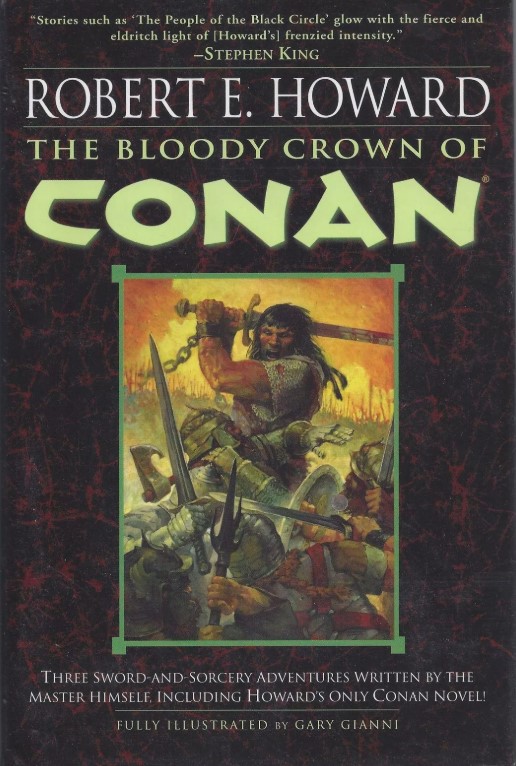
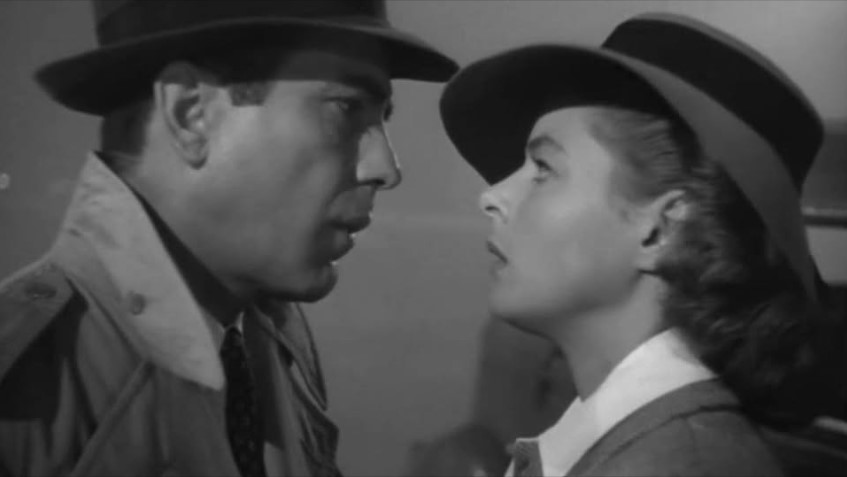
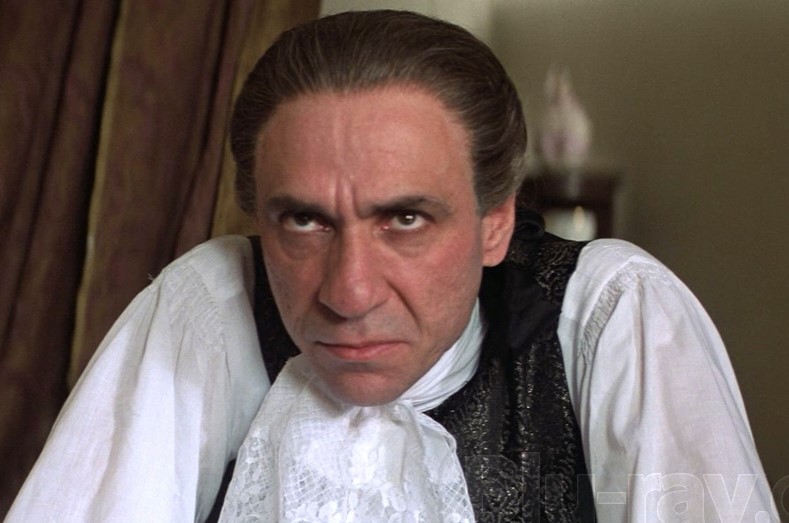
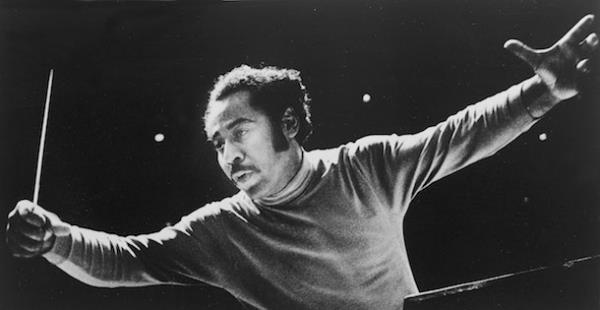
    CLOCKWISE FROM LEFT: Ives; Bellamann; and 680 pages of pure misery

Tag Cloud

Aaron Copland (93) Beethoven (95) Composer (114) Film Music (124) Film Score (143) Film Scores (255) Halloween (94) John Williams (188) KWAX (229) Leonard Bernstein (101) Marlboro Music Festival (125) Movie Music (139) Opera (202) Philadelphia Orchestra (89) Picture Perfect (174) Princeton Symphony Orchestra (106) Radio (87) Ralph Vaughan Williams (85) Ross Amico (244) Roy's Tie-Dye Sci-Fi Corner (290) The Classical Network (101) The Lost Chord (268) Vaughan Williams (103) WPRB (396) WWFM (881)

DON’T MISS A BEAT

Receive a weekly digest every Sunday at noon by signing up here


RECENT POSTS