This week on “Sweetness and Light,” the cat’s out of the bag. It’s an hour of felicitous feline music!
On the 150th anniversary of the birth of American composer John Alden Carpenter, we’ll hear the ballet “Krazy Kat,” inspired by George Herriman’s cult comic strip. Carpenter characterized it as a “jazz pantomime”, but if there’s any jazz in it, it’s “white man” jazz of the 1920s (i.e. less jazz than “Rhapsody in Blue”). Believe it or not, I’ve actually seen this performed – twice! If memory serves, Sergei Prokofiev, in the U.S. for the debut of his opera “The Love for Three Oranges” and to perform his Piano Concerto No. 3 with the Chicago Symphony Orchestra, was present at the work’s premiere. I can’t find anything on the internet to back it up right now, so it looks like I’ll be sleuthing around my library.
Carpenter’s music will headline a meow mix of melodies by Leroy Anderson, Ernst von Dohnányi, Richard Rodney Bennett, Gioachino Rossini, Nino Rota, Samuel Barber, and Zez Confrey.
It will be programming you can sink your claws into, on “Sweetness and Light.” The music, like your host, will be the cat’s pajamas, this Saturday morning at 11:00 EST/8:00 PST, exclusively on KWAX Classical Oregon!
Stream it, wherever you are, at the link:
https://kwax.uoregon.edu/
Category: Daily Dispatch
-
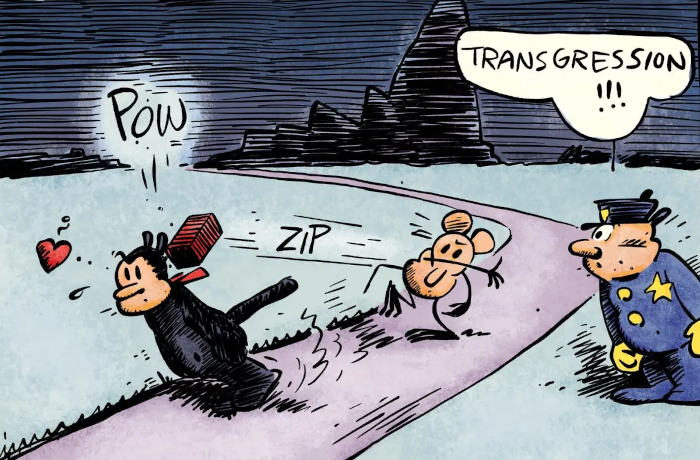
Feline Affection and Frivolity on “Sweetness and Light”
-
Cinematic Beauty Patches on “Picture Perfect”
Beauty patches are back!
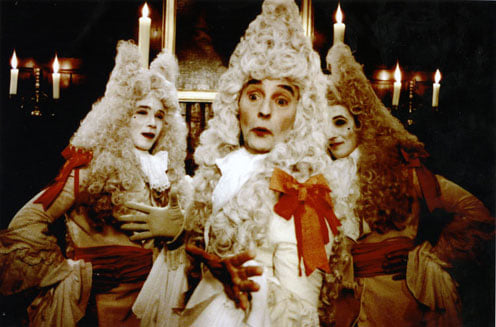
This week on “Picture Perfect,” it’s an hour of lace and licentiousness, with music from movies set during the reign of Charles II.
“Restoration” (1995) features quite the cast, with a pre-“Iron Man” Robert Downey, Jr. as a young doctor torn between duty and debauchery. He succumbs to the latter at the court of Charles, played by Sam Neill, before finding redemption as he battles the Great Plague and braves the Fire of London. The film also stars David Thewlis, Polly Walker, Meg Ryan, Ian McKellen, and Hugh Grant. The main title of James Newtown Howard’s score takes its impetus from Henry Purcell’s “The Fairy Queen.” And indeed there are baroque inflections throughout.
George Sanders plays Charles in “The King’s Thief” (1955). Edmund Purdom is a highwayman who pilfers an incriminating book from David Niven. An aristocratic schemer, Niven will stop at nothing to get it back. The swashbuckling score is by Miklós Rózsa.
I don’t recall Charles making an appearance in “The Draughtsman’s Contract” (1982), Peter Greenaway’s saucy, though strangely aloof, Restoration opus. However, there is plenty of licentiousness and an abundance of outlandish wigs. And, it being a Greenaway film, it is certainly strange in more ways than one. Michael Nyman’s score puts a minimalist spin on baroque sources.
Finally, “Forever Amber” (1947) is based on a then-scandalous novel by Kathleen Winsor, about an ambitious young woman’s rise through the bedchambers of the Royal Court. The film was directed by Otto Preminger. Linda Darnell is Amber. Once again, George Sanders plays Charles, eight years before reprising the role for “The King’s Thief.” Cornel Wilde, Richard Greene, and Jessica Tandy are also in the cast. Philadelphia-born composer David Raksin, he of “Laura” fame, plays fast and loose with music of the era.
Bwoo-hoo-hoo-hoo! It’s so naughty! Everyone, giggle into your handkerchiefs and wear ribbons on your shoes. We’ll be powdering our faces and going heavy on the rouge, on “Picture Perfect,” music for the movies, now in syndication on KWAX Classical Oregon!
——–
Clip and save the start times for all three of my recorded shows:
PICTURE PERFECT, the movie music show – Friday at 8:00 PM EST/5:00 PM PST
SWEETNESS AND LIGHT, the light music program – Saturday at 11:00 AM EST/8:00 AM PST
THE LOST CHORD, unusual and neglected rep – Saturday at 7:00 PM EST/4:00 PM PST
Stream them, wherever you are, at the link!
https://kwax.uoregon.edu -
Le Maître de Musique, José van Dam
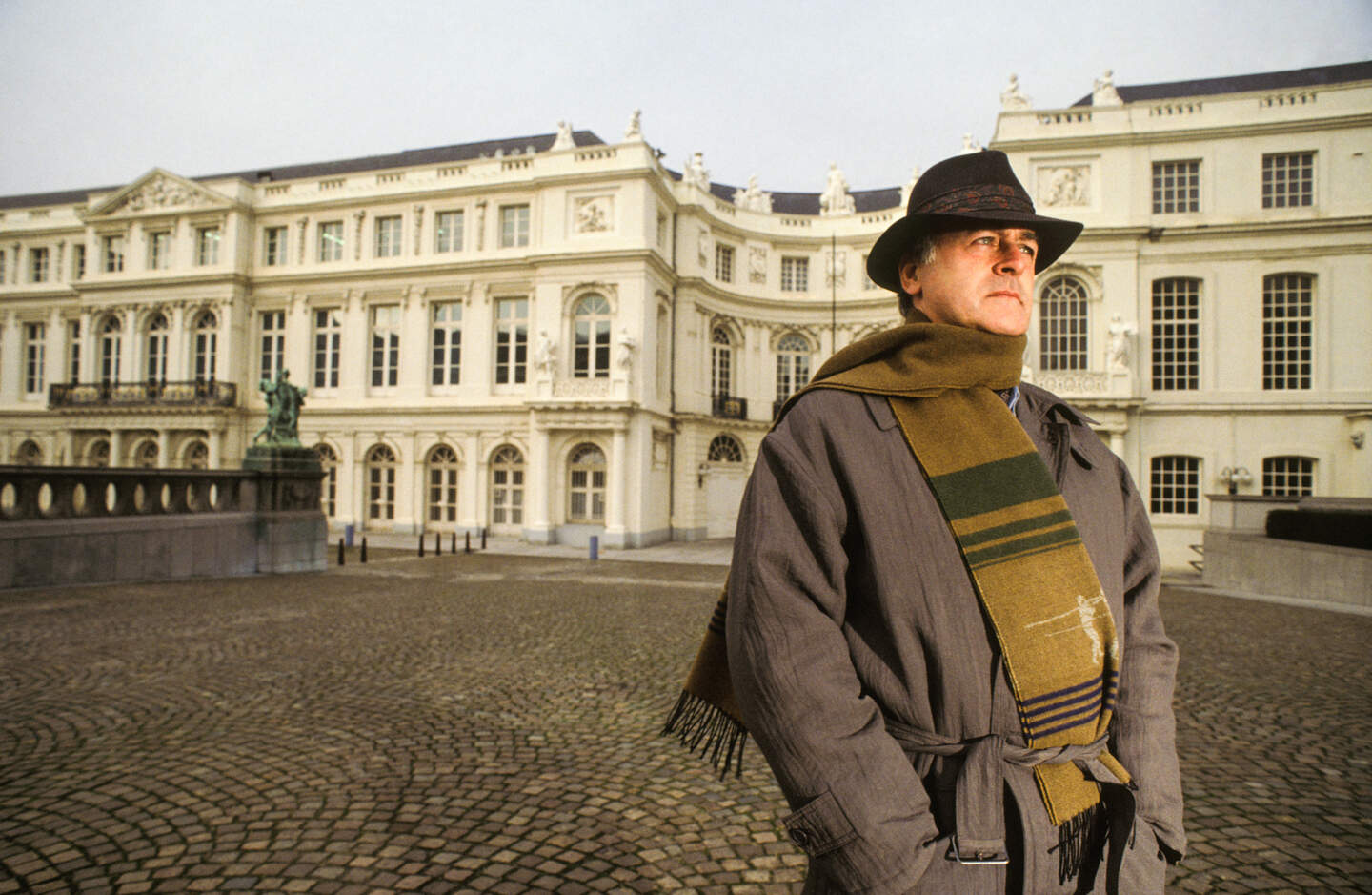
I’ve been sick for a couple of weeks (nothing serious, just a lingering cold), so it’s been difficult for me to focus. Also, I had a deadline yesterday for a newspaper article. But now at last I am free and clear to remember José van Dam the way he deserves. The great Belgian bass-baritone died on February 17 at the age of 85.
Van Dam was more than just a voice and left many memorable, versatile characterizations – Escamillo, Méphistophélès, The Flying Dutchman, Don Quichotte. He also sang Leporello, Don Giovanni’s servant, which must have been a stretch for him, as he always impressed me as having something of an aristocratic bearing. (Perhaps more fittingly, he also played the Don.) He certainly bore himself with confidence and dignity.
It only seems fitting, then, that in 1998 he was made a baron by Belgium’s King Albert II – which is why you will now sometimes see him listed in references as Joseph, Baron Van Damme.
I concede my impressions of the artist may have been colored somewhat by his performance in the film “Le Maître de musique,” or “The Music Teacher” (1988). In it, he plays an opera singer who retires abruptly at the height of his fame and retreats to a remote manor house, only to emerge from his life of brooding introspection to subject some extraordinarily gifted pupils-in-the-raw to some rigorous, tough-love training.
“The Music Teacher” was nominated for Best Foreign Language Film at the 61st Academy Awards, but really, it’s just classical music junk food – nice costumes, beautiful settings, alluring cinematography, attractive young people, and lots of opera arias. And of course, Van Dam. During the climactic sing-off, the contestants wear concealing Amadeus-style masks and cloaks. ‘Tis a silly movie. Naturally I enjoyed it very much.
I can’t believe my parents took me to see it (I was in college at the time), as it really was not their bag. My stepfather, in particular, has always been a shot-and-a-beer kind of guy, more at home watching football than listening to lieder. (My mom was really more my speed.) But my parents were always very indulgent, and I used to drag them to concerts whenever they visited me in Philadelphia. We saw “The Music Teacher” at the Paris Theater in New York, right around the corner from the Plaza Hotel.
I’d always been interested to revisit the film, which was not easy to find, especially in the days before streaming. Finally, a couple of years ago, I stumbled across an import DVD at Princeton Record Exchange. While I still wouldn’t rank it as Best Foreign Language Film material, it was fun to see it again. Here’s a clip of Van Dam singing Schubert’s “An die Musik.”
What do you know? Here it is complete – in French with Korean subtitles!
Or if you prefer, Spanish
The trailer
From the lower class, he also sang Figaro and Wozzeck, and at 60, St. Francis, in the premiere of Messiaen’s “St. François d’Assise.” A versatile artist, then, a gifted singer and an actor who was able to convincingly inhabit quite a significant range of roles.
R.I.P. José van Dam -
Propelled by Enthusiasm – and Deadlines
Ordinarily, I think I’m a pretty laid-back guy. When I’m not explosively angry, that is. But something happens to me when I write. Give me a word count and a deadline, and I’m like a lackadaisical Seabiscuit until he catches another horse coming up out of the corner of his eye. Word counts are shredded, the fabric of time is tested, and editors despair.
I just submitted 1600 words on Julian Grant’s new harpsichord concerto, “Vaudeville in Teal,” to be given its premiere by Mahan Esfahani and the Princeton Symphony Orchestra, March 7 & 8. On the same program with Stravinsky’s “Pulcinella?” You know I’ve got plenty to say.
The article is scheduled to appear in the community newspapers U.S. 1 and Princeton Echo next week. But it might just as easily be taking up all the memory in somebody’s inbox, crippling their account.
princetonsymphony.org -

Arrigo Boito, Giving the Devil His Due
Richard Strauss’ final opera, “Capriccio,” is an extended, if lighthearted debate on the relative merits of words and music. But for Arrigo Boito, the two never really came into conflict.
As one of the great librettists, Boito provided the texts for Verdi’s late masterpieces, “Otello” and “Falstaff.” He also worked up a revision of “Simon Boccanegra” and – under the anagram Tobia Gorrio – provided the libretto for Ponchielli’s “La Gioconda.” That should be enough to guarantee his place in music history, right?
But Boito himself was also a composer of merit, if not a prolific one. Although he destroyed his first opera, “Ero e Leandro,” and his last, “Nerone,” was left incomplete at the time of his death (to be finished by Arturo Toscanini and Vincenzo Tommasini), he totally nailed it with “Mefistofele.”
There may be those who look down their noses at Boito’s take on Goethe’s “Faust,” yet the work stubbornly clings to the outskirts of the standard repertoire. Audiences love it. For me it is much more entertaining than anything in Verdi (I know, them’s fightin’ words), and I personally find the melodic invention much richer than that in the more popular version by master melodist Charles Gounod.
Sure, as narrative it’s a little clunky – it’s as if Boito presents the story as a series of tableaux that are just kind of stitched together – and the most hair-raising set piece, the prologue in Heaven, comes right at the beginning. How could it not be all downhill from there? But the composer has the good sense to bring it all back at the end.
What the opera really demands is a strong personality at its core, someone who, through his magnetic stage presence and sheer force of will, can tow the circus parade of wonders, wagon after wagon, before our astonished eyes and ears.
Feodor Chaliapin, by all accounts, was just such a force. He gained wide notoriety in the title role, for his earthy interpretation and his insistence on playing it half-naked.
In the recent past, Samuel Ramey owned the piece. He too preferred to show a fair amount of skin (though less than Chaliapin) – but really, couldn’t that be said for just about any of Ramey’s roles?
Here’s the stunning – and cheeky – Robert Carson production first presented by San Francisco Opera in 1989, which I belatedly caught up with in New York, unfortunately after Ramey retired. The first 26 minutes will knock your socks off.https://www.youtube.com/watch?v=vSSbn9y-js0
Chaliapin in 1927
https://www.youtube.com/watch?v=uVfjMHOeOVA
Happy birthday, Arrigo Boito (1842-1918). Whether in words or in music, you gave the devil his due!
Tag Cloud
Aaron Copland (94) Beethoven (95) Composer (114) Film Music (149) Film Score (143) Film Scores (255) Halloween (98) John Williams (197) KWAX (232) Leonard Bernstein (105) Marlboro Music Festival (125) Movie Music (164) Mozart (91) Opera (215) Philadelphia Orchestra (90) Picture Perfect (174) Princeton Symphony Orchestra (110) Radio (90) Ross Amico (244) Roy's Tie-Dye Sci-Fi Corner (290) The Classical Network (101) The Lost Chord (269) Vaughan Williams (107) WPRB (397) WWFM (881)