
On George Frideric Handel’s birthday, check out these H. Paul Moon films documenting four of the composer’s operas tailored for outdoor performance in New York community gardens by Opera Essentia. The company’s artistic director, countertenor Jeffrey Mandelbaum, manages to get each of them down to about an hour. The operas are rarely-heard. The abridgments are tasteful. The productions are no-budget, bare-bones, and beautiful. I posted about “The Queen’s Heart,” the distillation of “Radamisto,” early in January. Hear all four here:
https://zenviolence.com/handel
Happy birthday, Handel!
Category: Daily Dispatch
-
Adieu to John Bertalot
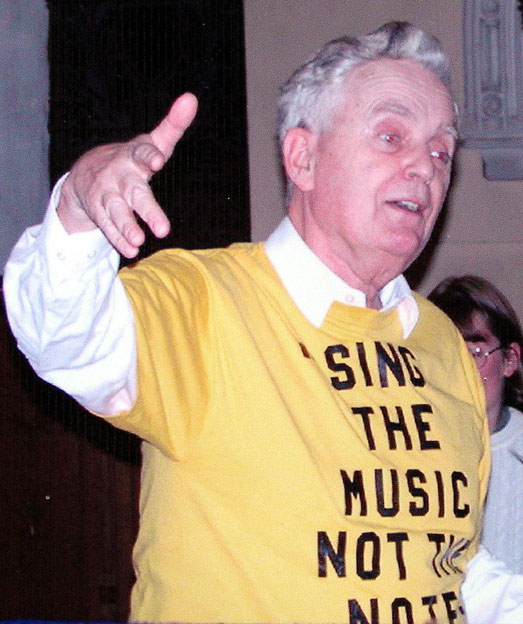
It’s tough for me to keep up with everything sometimes, especially on a weekend when I want to promote my shows and I’ve got to be in New York for the day. So it’s only now that I’m getting around to posting about English organist and choir director John Bertalot, for 15 years director of music at Princeton’s Trinity Episcopal Church. Bertalot, who died on Saturday, founded the Princeton Singers in 1983.
Across the pond, he was organist and director of music at St Matthew’s Church, Northampton (1958-1964) and Blackburn Cathedral (1964-1982). He wrote several books on choral directing and singing.
In 1998, Bertalot was succeeded as director of the Princeton Singers by composer-conductor Steven Sametz. Under Sametz, the group, a professional chamber choir based at Trinity Church, also served as resident ensemble for the Lehigh University Summer Choral Composers Forum. The organization folded in August, after 41 years, due to “ongoing financial challenges… significantly intensified by the pandemic.”
At the time of his death, Bertalot, who was born in Maidstone, Kent, in 1931, was 94 years-old. It was difficult for me to find a good or interesting photo (beyond those that have already been shared by others), as sadly, it appears his website has expired. Here’s something of an informal one, with Bartelot in neither gown nor tie. Thankfully, there are still some decent videos posted on YouTube.
R.I.P.
——-
Bertalot at Blackburn (complete program in the description)
https://www.youtube.com/watch?v=ZiSEicR9lt0&t
Bertalot at Trinity
https://www.youtube.com/watch?v=22FS_48V6fE
With the Princeton Singers, Herbert Howells’ “Take Him, Earth, for Cherishing,” to the memory of JFK
https://www.youtube.com/watch?v=K3tXoLC2Fqg -
Irving Berlin and Fred Astaire Contort on Washington’s Birthday
February 22. Washington’s birthday. Not the contemporary holiday (a.k.a. Presidents Day), mind you, but the actual anniversary of his birth.
Anybody else a fan of “Holiday Inn” (1942), with Bing Crosby and Fred Astaire? Irving Berlin astounds with a dozen songs constructed on holidays from the American calendar. Some have earned their immortality (“White Christmas” and “Easter Parade”). Others are completely forgettable. The song celebrating Washington’s Birthday falls soundly into the latter category – which, I argue, only makes it all the more enjoyable.
I find “Holiday Inn” vastly superior to its remake-of-sorts, “White Christmas” (1954), which pairs Crosby with Danny Kaye. Unfortunately Berlin’s celebration of Lincoln’s Birthday as a jaw-dropping black face number hasn’t aged particularly well. (At one point, Bing actually interjects, “Who dat?”) This number, more than anything, is probably what damns “Holiday Inn” to comparative obscurity – except for “White Christmas,” anyway – which is a shame, because the movie is very entertaining. These days, the segment is edited out of most television airings of the film, with the exception of those broadcast on TCM, which doesn’t attempt to whitewash history.
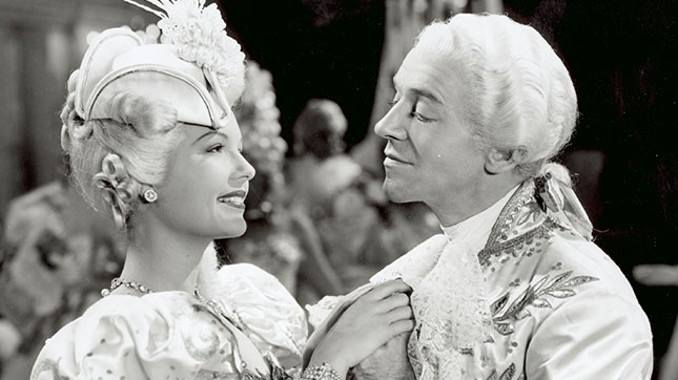
Washington’s Birthday is represented by “I Can’t Tell a Lie.” The number features Bing in a disheveled powdered wig, attempting to undermine Astaire, his rival in love, with a schizophrenic musical accompaniment that ping-pongs wildly (in the film) between 18th century minuet and 1940s big band.
Get a load of Berlin’s excruciatingly contrived lyrics. They can’t all be “White Christmas,” you know.
https://www.youtube.com/watch?v=Bxh52CY7EsU -

Samuel Coleridge-Taylor on “The Lost Chord”
Afro-British composer Samuel Coleridge-Taylor (1875-1912) achieved much in his comparatively short life, attracting the attention and advocacy of Sir Charles Villiers Stanford, Sir Edward Elgar, and Sir Malcolm Sargent.
His cantata “Hiawatha’s Wedding Feast” became a cultural phenomenon between the wars. Sargent conducted the piece annually, from 1928 to 1939, in a costumed, semi-ballet version, featuring close to a thousand performers. Unfortunately, this was among the works the composer had sold outright, his heirs thereby missing out on the royalties. By the time of Sargent’s advocacy, the short-lived Coleridge-Taylor had already been dead for 16 years.
This week on “The Lost Chord,” we’ll hear selections from a complete recording of “Scenes from ‘The Song of Hiawatha,’” one of the earliest to feature rising star Bryn Terfel, released on the Argo label back in 1991. We’ll also hear Sargent’s 1932 recording of Coleridge-Taylor’s “Othello Suite.” The hour will conclude with one of the composer’s musical explorations of his African heritage, the “Symphonic Variations on an African Air,” in a performance conducted by Grant Llewellyn, released on Argo in 1993.
I hope you’ll join me for “Taylor-Made,” music of Samuel Coleridge-Taylor, on “The Lost Chord,” now in syndication on KWAX, the radio station of the University of Oregon!
——–
Clip and save the start times for all three of my recorded shows:
PICTURE PERFECT, the movie music show – Friday at 8:00 PM EST/5:00 PM PST
SWEETNESS AND LIGHT, the light music program – Saturday at 11:00 AM EST/8:00 AM PST
THE LOST CHORD, unusual and neglected rep – Saturday at 7:00 PM EST/4:00 PM PST
Stream them, wherever you are, at the link!
https://kwax.uoregon.edu -
Enjoy Your Coffee Black on “Sweetness and Light”
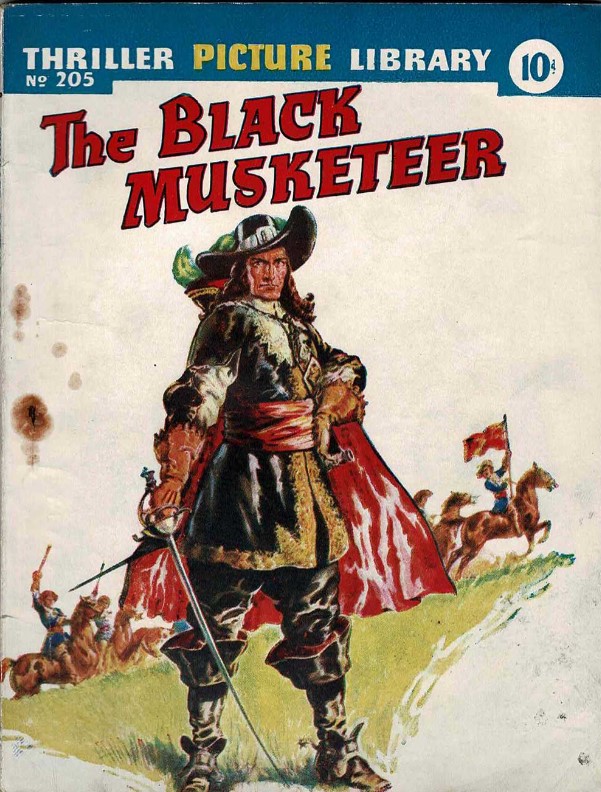
Very little is known about the Chevalier de Meude-Monpas. Among what we DO know is that he was a musketeer in the service of Louis XVI, who went into exile with the onset of the French Revolution. He also studied music in Paris and published six concertos for violin in 1786. In 1997, violinist Rachel Barton (now Rachel Barton Pine) put together a revelatory album for Cedille Records, “Violin Concertos by Black Composers of the 18th and 19th Centuries.” Meude-Monpas’ Violin Concerto No. 4 will be among the featured works this morning on “Sweetness and Light,” cumulatively guaranteed to put a smile on your face.*
Much better known, William Grant Still was regarded in his day as the “Dean of Afro-American Composers.” He the first composer of color to have a symphony performed by a major orchestra, the first to have a symphony widely performed, the first to conduct a major orchestra, and the first to have an opera televised nationally. A pupil of both George Whitefield Chadwick and Edgard Varèse, Still certainly had “serious” credentials, but he also worked in pit bands and wrote arrangements for Hollywood musicals. In many senses, he was the quintessential American composer. Also, he always knew how to write a good tune. This morning we’ll enjoy his “Danzas de Panama,” performed by the Oregon String Quartet.
It took nearly 90 years for Florence Price to become an overnight success. Price was the first African American woman to have a symphony performed by a major orchestra. Her Symphony No. 1 was played by the Chicago Symphony, conducted by Frederick Stock, in 1933. But it’s only fairly recently, after decades of comparative neglect, that her music has finally begun to gain traction. From a 2-disc set devoted to her piano works on the Guild label, we’ll hear Kirsten Johnson play “Dreamboat.”
Duke Ellington requires little introduction. He was a major figure in American music, especially in the field of jazz. But for the past hundred years or so, there has been quite a bit of “blurring of the lines” between genres of art music. In 1943, Ellington composed “New World a-Comin’,” a work for piano and 15-piece band. He never wrote down the piano part, so it was reconstructed by ear by Maurice Peress from a recording made of an Ellington concert at Carnegie Hall in 1943. Subsequently, Peress expanded the jazz band to full orchestra. The soloist on the recording we’ll hear, Jeffrey Biegel, obtained permission from Sir Roland Hanna to transcribe the improvised final cadenza from a recording Hanna made with the American Symphony Orchestra under Peress’ baton.
We’ll be enjoying our coffee black on “Sweetness and Light,” this Saturday morning at 11:00 EST/8:00 PST, exclusively on KWAX Classical Oregon!
Stream it, wherever you are, at the link:
https://kwax.uoregon.edu/
——–
* Please note: Meude-Monpas is not to be confused with that other swashbuckling composer, the Chevalier de Saint-Georges, whose music also appears on Barton Pine’s record.
Tag Cloud
Aaron Copland (94) Beethoven (95) Composer (114) Film Music (149) Film Score (143) Film Scores (255) Halloween (98) John Williams (197) KWAX (232) Leonard Bernstein (105) Marlboro Music Festival (125) Movie Music (164) Mozart (91) Opera (215) Philadelphia Orchestra (90) Picture Perfect (174) Princeton Symphony Orchestra (110) Radio (90) Ross Amico (244) Roy's Tie-Dye Sci-Fi Corner (290) The Classical Network (101) The Lost Chord (269) Vaughan Williams (107) WPRB (397) WWFM (881)