Here’s our whirlwind, slapdash history of the robot in science fiction movies and television, spurred by the 100th anniversary of the first use of the word “robot” in Karel Čapek’s “R.U.R.” Čapek’s play was first performed on January 25, 1921.
Even at an indulgent two hours and seven minutes, there really wasn’t much time to explore many literary antecedents. In any case, that’s not really what the show’s all about. With 600+ viewer comments, clearly there was a spirited, parallel discussion about robots! Again, it was impossible to include everything, but we were able to give some real love to Maschinenmensch, Gort, Robby, and Artoo and Threepio, among others.
Also, around the midway point, we visited with Lew Place, who shared his very cool, life-size, totally homemade reproductions of Robby and B-9 from “Lost in Space.” If you still can’t get enough Robot, definitely check out Lew’s website at lisrobot.com. Domo arigato, Mr. Roboto!
Roy’s special guest tomorrow night will be actor David Frankham, who will discuss his career and contributions to the golden age of science fiction television, including his appearances on “The Outer Limits” and “Star Trek.”
The next Facebook livestream of Roy’s Tie-Dye Sci-Fi Corner will take place this Sunday night at 7:00 EST!
This week on Roy’s Tie-Dye Sci-Fi Corner, we celebrate the 100th anniversary of the robot in science fiction. The word “robot” was coined for Karel Čapek’s play “R.U.R. (Rossum’s Universal Robots),” first performed on January 25, 1921.
“Robot” derives from the Slavic word “robota,” meaning literally “serf labor,” and figuratively “drudgery” or “hard work.” But we all know from “The Golem” and “Frankenstein” that man-made “men” don’t always develop as planned. Clearly Čapek’s robots didn’t read Asimov’s Three Laws.
Join us as we meander through the history of the robot in film and television, from “Metropolis” to Marvel’s Vision. Along the way, we’ll marvel at Lew Place’s life-size replicas of Robby the Robot and B-9 from “Lost in Space.”
Try not to blow a circuit. It’s 100 years since the first robot uprising! CRUSH… KILL… DESTROY! Or enjoy an oil-bath with C-3PO. Leave your comments and observations, as we live-stream on Facebook, this Friday evening at 7:00 EST.
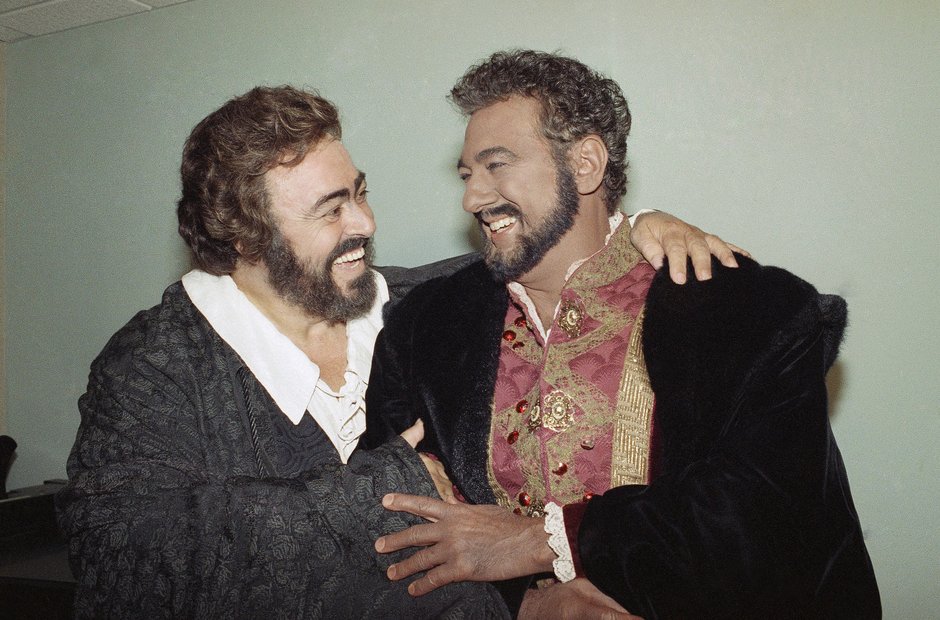
Today is the 80th birthday of Placido Domingo. Although his star may have lost some of its luster over the past 18 months or so, pocked by the brickbats of # metoo, enough of his colleagues have stepped up to attest to his character that, while he remains something of a political hot potato, especially in the United States, he is still performing, if perhaps under the cloud of greylisting.
All that has little bearing on the fact that, in his prime, he was one of the greatest tenors of his day, and an “Otello” for the ages. No less than Sir Laurence Olivier once remarked, “Domingo plays Othello as well as I do, AND he has that voice.” In 2009, he diversified, pivoting into baritone roles, even as new operas continued to be written for him. He also frequently appeared in the pit, as a conductor.
There are those who grouse about his refusal to retire, but Domingo owes nothing to anyone, at least as far as his art is concerned. He’s had an amazing career, with a heroic voice that outlasted those of almost any other in his profession. (Hugues Cuénod sang supporting roles until he was 90.)
In fact, until 2019, Domingo’s greatest sin seemed to be not having been born Luciano Pavarotti. But it was not for want of trying. Domingo turned up on variety shows, singing alongside John Denver, Julie Andrews, and Kermit the Frog. He appeared in magazine ads for Rolex. He conversed with Johnny Carson. He parodied himself on “The Simpsons.”
Eventually, he adopted a strategy of “if you can’t beat him, join him.” In 1990, on the eve of the FIFA World Cup Final in Rome, he joined Pavarotti and José Carreras for the first of the blockbuster “Three Tenors” concerts. A recording of the event rapidly became the bestselling classical record of all time.
The man clearly loves performing, and the adulation. While he’s stated that this month’s run of “Nabucco,” with the Vienna State Opera, will be his farewell with the company, as recently as August – having just beat Covid – he told the press that, while he may at some point have to retire from the stage, he will never retire from music.
Tomorrow, in compliance with the city’s coronavirus safety standards, Vienna’s “Nabucco” will be livestreamed from an empty house at 4:30 pm. Presumably, that’s Vienna time, or 10:30 am EST. You’ll find more information here:
It’s rather likely that Domingo will keep singing for as long as people will keep paying, or until he feels he can’t do it anymore. Some view this refusal to quit as a mar to his legacy. I say the man has had enough high points in a stunning career that he’ll always be remembered as one of the greats in his field.
It’s National Disc Jockey Day. In the classical music industry, we tend to describe ourselves as “hosts.” All the same, it’s been 34 years of service. Thank you in advance for your cards, gifts, and well-wishes. I’ll be accepting your adulation all day.
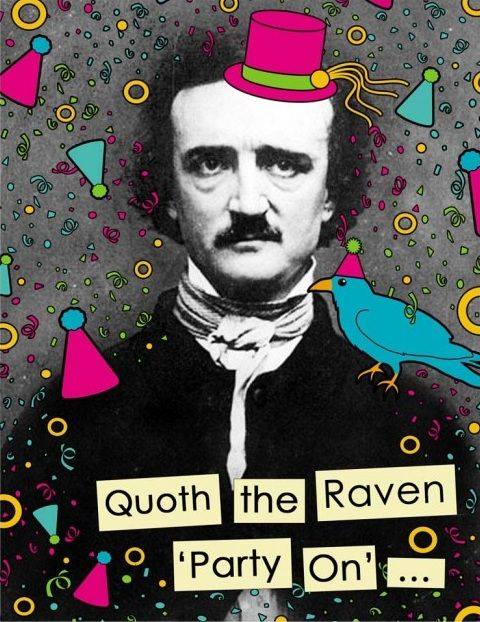
Poe’s classic story, “The Masque of the Red Death,” has particular resonance in this time of COVID, with the seemingly blithe indifference of a decadent ruler to the sufferings of his people. Instead, Prince Prospero invites those loyal to him to party on the brink of disaster, with inevitably horrifying consequences. The hour of reckoning arrives as the ebony clock strikes twelve.
The story, first published in 1842, has inspired a number of pieces of music over the years, but this one is new to me. Christopher Rouse was composer-in-residence with the New York Philharmonic when he wrote “Prospero’s Rooms” in 2011. Rouse was the recipient of the Pulitzer Prize for Music for his Trombone Concerto in 1993. He died in 2015 at the age of 70.
Rouse talks about the story and his music:
My favorite setting of the piece is still the “Conte fantastique” (“Fantastic Tale”) by Debussy associate André Caplet: