Category: Daily Dispatch

  • Thanksgiving Movie Music Americana & Gratitude

    Thanksgiving Movie Music Americana & Gratitude

    There’s more to Thanksgiving than just turkey and football. This week on “Picture Perfect,” we count our blessings and aspire to do better, with music from movies reflective of what’s best in human nature and most admirable in the American character.

    Aaron Copland’s work on “The Cummington Story” (1945), a semi-documentary produced by the Office of War Information, underscores the gradual acceptance of European war refugees into a cautious but fundamentally decent New England community. The music is pure Americana, with some of the material later finding its way into Copland’s Clarinet Concerto and “Down a Country Lane.”

    “Field of Dreams” (1989) is one of those rare films that has the ability to reduce manly men – even those without father issues – to a pool of tears. Phil Alden Robinson’s superior adaptation of W.P. Kinsella’s novel, “Shoeless Joe,” is a male wish-fulfillment fantasy, in which a man finds redemption, and a new understanding of his father, in the enchanted cornfields of America’s heartland. And it’s all brought about courtesy of America’s pastime, baseball. The evocative score, much indebted to Copland, is by James Horner.

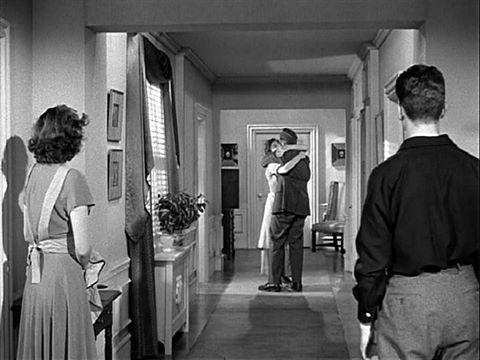
    “The Best Years of Our Lives” (1946) is one of the great American classics. This touching film tells the tale of the three WWII veterans struggling to readjust to civilian life. It isn’t easy, but with the support of family and friends, there’s plenty of hope for the future. Hugo Friedhofer wrote the Academy Award-winning score, earning the film one of its seven Oscars. The orchestrations were by Copland protégé (and composer of “The Big Country”) Jerome Moross.

    Finally, Daniel Day-Lewis elevated Steven Spielberg’s “Lincoln” (2012) to greatness with one of the uncanniest performances ever captured on film. Day-Lewis’ gentle but shrewd Man of Destiny would go to any lengths to hold the country together. John Williams tapped into America’s proud musical heritage, clearly influenced by Copland and Ives to create a score of stirring nobility.

    I hope you’ll join me as we give thanks for family, community and country on “Picture Perfect,” music for the movies, this Saturday evening at 6:00 EST, on WWFM – The Classical Network and at wwfm.org.


    And thank you, YouTube, for making “The Cummington Story” available online!

    Watching it again, it’s interesting to reflect on what an influence, for good or ill, media and government have had in shaping the popular consciousness.
  • Lincoln, the Marine Band, and Gettysburg

    Lincoln, the Marine Band, and Gettysburg

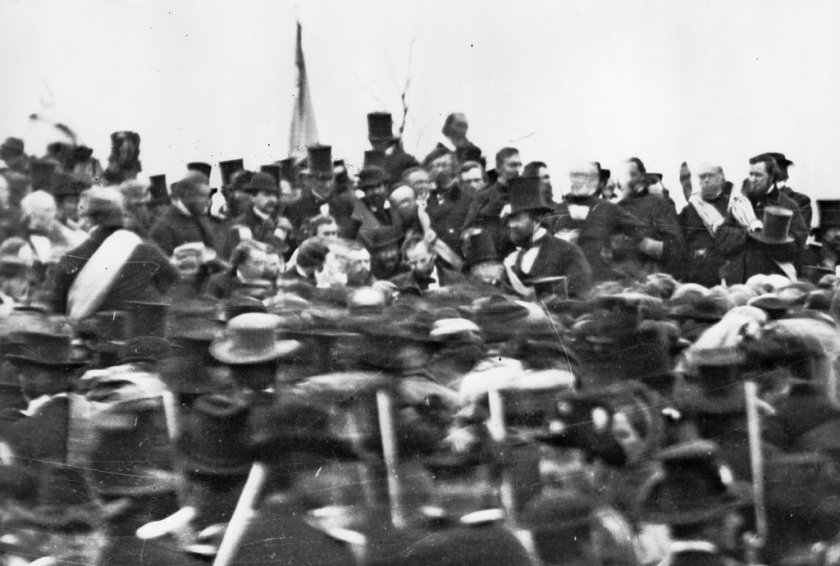
    On November 18, 1863, the United States Marine Band accompanied President Abraham Lincoln to Gettysburg for the dedication of the Soldiers’ National Cemetery there, for which Lincoln was to deliver his celebrated Gettysburg Address.

    Lincoln and the band traveled by train from Washington, by way of Baltimore and Hanover Junction. Directed by Francis M. Scala, the 27-member ensemble, which included trombonist Antonio Sousa, father of John Philip Sousa, serenaded the president on route with a lunchtime concert.

    The next day, November 19th, 157 years ago this afternoon, members of “The President’s Own” performed the “Old Hundred” at the consecration and dedication ceremony, with Lincoln honoring those who fell. According to an article in the Washington Daily Morning Chronicle, the music was played “with great effect, in all its grand and sublime beauty.”

    Lincoln’s Address had a more divided reception – ironic, since this modest, three-minute speech is now ensconced as one of the most hallowed pieces of American oratory. We as Americans have revered Lincoln’s noble sentiments since childhood, for generations, as well we should. It is all the more striking, when viewed through the lens of the present, for not labeling those who laid down their lives as “losers” and for delivering a message of national unity – and respect – at a time of unprecedented national conflict. It doesn’t get more patriotic than that.

    A copy of the Address, signed and dated by President Lincoln, is on display in the Lincoln Room at the White House – a room apparently never visited by the outgoing administration. Here is a reminder of what Lincoln said regarding the sacrifice of those who died.

    “Four score and seven years ago our fathers brought forth on this continent, a new nation, conceived in Liberty, and dedicated to the proposition that all men are created equal.

    “Now we are engaged in a great civil war, testing whether that nation, or any nation so conceived and so dedicated, can long endure. We are met on a great battle-field of that war. We have come to dedicate a portion of that field, as a final resting place for those who here gave their lives that that nation might live. It is altogether fitting and proper that we should do this.

    “But, in a larger sense, we can not dedicate – we can not consecrate – we can not hallow – this ground. The brave men, living and dead, who struggled here, have consecrated it, far above our poor power to add or detract. The world will little note, nor long remember what we say here, but it can never forget what they did here. It is for us the living, rather, to be dedicated here to the unfinished work which they who fought here have thus far so nobly advanced. It is rather for us to be here dedicated to the great task remaining before us – that from these honored dead we take increased devotion to that cause for which they gave the last full measure of devotion – that we here highly resolve that these dead shall not have died in vain – that this nation, under God, shall have a new birth of freedom – and that government of the people, by the people, for the people, shall not perish from the earth.”

    Abraham Lincoln
    November 19, 1863

    https://www.tecom.marines.mil/News/News-Article-Display/Article/527553/the-gettysburg-address-2-minutes-that-changed-a-young-nation-forever/

    The Marine Band at Gettysburg:

    http://tapsbugler.com/wp-content/uploads/2018/11/Lincoln-and-The-Marine-BAnd-at-Gettysburg.pdf

    Copland’s “Lincoln Portrait,” narrated by James Earl Jones:

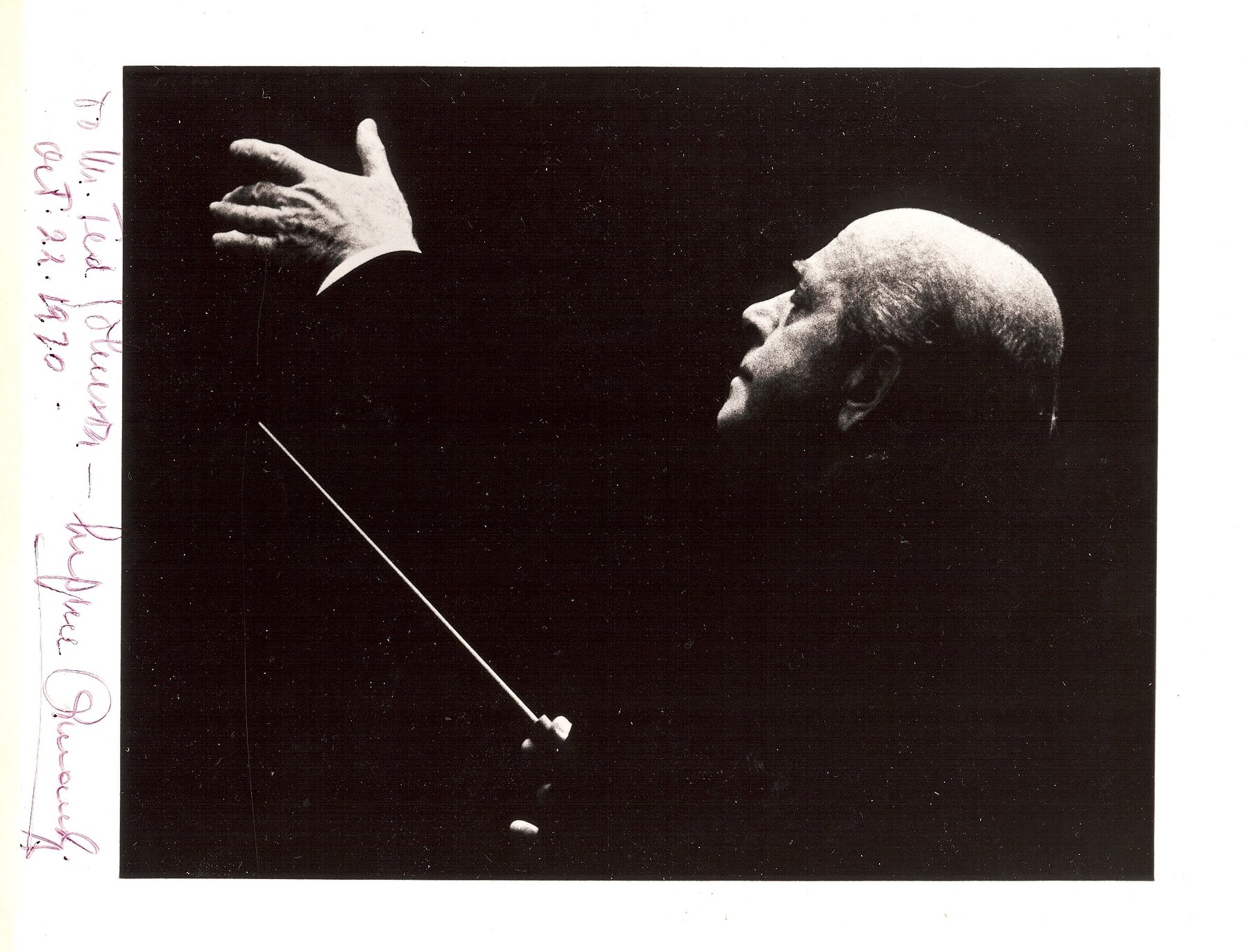
  • Eugene Ormandy Underrated Maestro

    Eugene Ormandy Underrated Maestro

    What’s the big deal about this guy, Jenő Blau? Well, you probably know him better by his adopted name, Eugene Ormandy.

    Ormandy, a Hungarian-born violinist who had studied with Jenő Hubay (for whom he was named), became a naturalized American citizen in 1927. He ultimately wound up directing The Philadelphia Orchestra for 44 years. In that capacity, he became one of the world’s most-recorded conductors.

    However, in some respects, he remains a vastly underrated one. Sure, he was a superb interpreter of 19th century and post-romantic classics (his Columbia recording of Tchaikovsky’s “Pathétique” was one of my go-to favorites as a teen, and he was an authoritative conductor of Rachmaninoff and Sibelius), but he also championed much contemporary music and new works written by his adopted countrymen. Also, if ever there was a more sensitive accompanist in the concerto repertoire, I don’t know of him.

    One of my favorite Ormandy records was also one of his later ones. Throughout his career Ormandy succeeded in selling Sibelius’ “Four Legends from the Kalevala,” a collection of tone poems inspired by the Finnish national epic the “Kalevala,” for the early masterpiece that it is.

    Here again is the final section, “Lemminkainen’s Homeward Journey,” even more thrilling, in 1940:

    https://www.youtube.com/watch?v=FzQMyCsB8eQ

    The legendary Philadelphia strings in Vaughan Williams’ “Fantasia on a Theme by Thomas Tallis”

    Hindemith, “Concert Music for Strings and Brass”

    Ivan Davis joins Ormandy and the Philadelphians for Liszt’s “Hungarian Fantasy,” slight abridged:

    Bruckner “Te Deum” with Temple University Choir

    World premiere performance of Samuel Barber’s Violin Concerto:

    Shostakovich Symphony No. 4:

    Reinhold Glière’s “Russian Sailor’s Dance”

    Rachmaninoff Piano Concerto No. 2, with Eugene Istomin

    Ormandy conducts “Scheherazade” (complete). This is the Philly Orchestra I remember from my college years.

    Debussy, “Reverie”

    Saint-Saens’ Symphony No. 3 “Organ”


    Happy birthday, Eugene Ormandy (1899-1985)!

  • Celebrating 9 Decades of David Amram

    Celebrating 9 Decades of David Amram

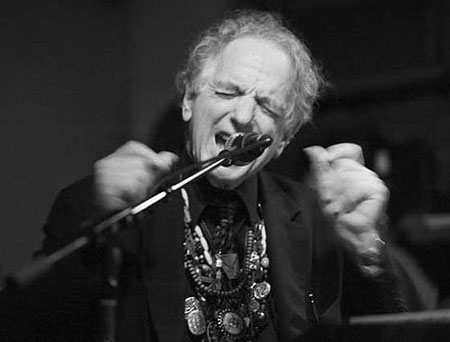
    Celebrate nine decades of David Amram.

    Amram, born in Philadelphia on this date in 1930, has always been equally at home in classical music, jazz, folk, and world music. The composer of over 100 orchestral and chamber works, music for Broadway and film (including the scores for “Splendor in the Grass” and “The Manchurian Candidate”), and two operas, he’s also the author of three books: “Vibrations: The Adventures and Musical Times of David Amram” (1968), “Offbeat: Collaborating with Kerouac” (2002), and “Upbeat: Nine Lives of a Musical Cat” (2007).l;

    Amram was raised on a farm in Bucks County. There, he was introduced to classical, jazz, and cantorial music by his father and uncle. He took piano lessons and experimented with instruments of the brass family, finally settling on the French horn. Following a year at Oberlin, he lit out for George Washington University, where he studied history. While there, he performed as a freelance hornist with the National Symphony. He also studied privately with two musicians in the orchestra.

    Amram became a pioneer of the jazz French horn, as well as the New York Philharmonic’s first composer-in-residence (designated as such in 1966). He’s worked with artists ranging from Dizzy Gillespie to Bob Dylan to Leonard Bernstein, from Jack Kerouac to Arthur Miller, from Christopher Plummer to Johnny Depp. He’s a musician without boundaries, who has always been open to new experiences.

    And he’s still going strong. He was to have appeared with his quintet in Marlboro, NY, today to celebrate his 90th birthday, the first such event of 13 scheduled to take place in the U.S. and abroad. However, like everything else, the celebration has been postponed because of the virus.

    In the meantime, he is participating in a free weekly Zoom series, on which he’s been reading from his book, “Offbeat: Collaborating with Jack Kerouac.” More information is posted on his website, davidamram.com.

    A note on today’s calendar listing, about the postponed concert, suggests an alternative mode of celebration: “Write him a note, call him or best of all, he requests that you send him an ESP thought-wave-o-gram, be creative yourself and look forward to the new vaccine and new administration making us all healthier than ever in the next year!!!”

    Working on my ESP thought-wave-o-gram now. Happy birthday, David Amram!


    Trailer for “David Amram: The First 80 Years”:

    Amram Horn Concerto:

    Amram with Dizzy Gillespie:

    Amram jamming at the Philadelphia Folk Festival in 2011:

  • Happy Birthday Curly Joe Gebrauchsmusik

    Happy Birthday Curly Joe Gebrauchsmusik

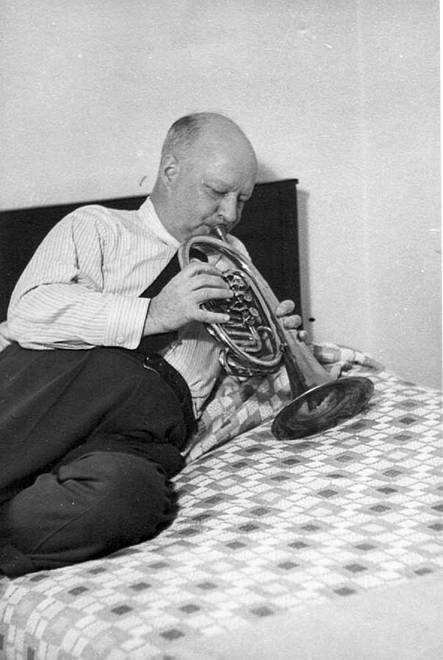
    Happy birthday to the man some historians describe as the most arcane of the movie Stooges. Somewhere between Joe Besser and Curly Joe DeRita, Paul Hindemith enjoyed a brief stint as Curly Joe Gebrauchsmusik. In this capacity, his most riotous gag was laying a flugelhorn down on Moe’s jelly sandwich. Musicians loved him, but audiences tended to find him tedious.

    Here’s Curly Joe Gebrauchsmusik playing his flugelhorn in bed. Because that’s just the kind of guy he was. Writing music even when most people would be sleeping. When asked why it was he didn’t just sleep like everyone else, he replied, “There will be plenty of time for that when I’m in the audience.”

Tag Cloud

Aaron Copland (93) Beethoven (95) Composer (114) Film Music (137) Film Score (143) Film Scores (255) Halloween (94) John Williams (195) KWAX (229) Leonard Bernstein (103) Marlboro Music Festival (125) Movie Music (152) Mozart (88) Opera (208) Philadelphia Orchestra (89) Picture Perfect (174) Princeton Symphony Orchestra (108) Radio (88) Ross Amico (244) Roy's Tie-Dye Sci-Fi Corner (290) The Classical Network (101) The Lost Chord (268) Vaughan Williams (103) WPRB (396) WWFM (881)

DON’T MISS A BEAT

Receive a weekly digest every Sunday at noon by signing up here


RECENT POSTS