Category: Daily Dispatch

  • Mahler’s Nicknames Decoding the Symphonies

    Mahler’s Nicknames Decoding the Symphonies

    What’s in a name? For Gustav Mahler, a rose by any other name would not necessarily smell as sweet.

    Mahler was not overly fond of nicknames being applied to his symphonies. In the hopes of suppressing an early program he had leaked about the content of his Symphony No. 1, he withdrew the subtitle “Titan” after the work’s third performance. He may have once famously declared (while on a walk with Sibelius), “A symphony must be like the world. It must contain everything.” But, in common with Oscar Wilde’s Lord Henry, he must also have felt that “To define is to limit.”

    Mahler renounced the associations of “symphonic poem,” and although all of his symphonies are deeply personal and necessarily autobiographical, he wanted them to be heard foremost as music, music capable of being understood and enjoyed divorced from any extra-musical programs.

    Yet the subtitle “Titan” continues to dog the First. It is still encountered with frequency on concert posters, in program notes, on package designs, and over the radio. Admittedly, it is a cool nickname!

    There’s also the Symphony No. 8, handed down as the “Symphony of a Thousand” (dubbed so by a publicity-hungry impresario), the Symphony No. 2, “Resurrection,” after the Klopstock poem sung during the work’s finale, and the Symphony No. 6, commonly recognized as the “Tragic.”

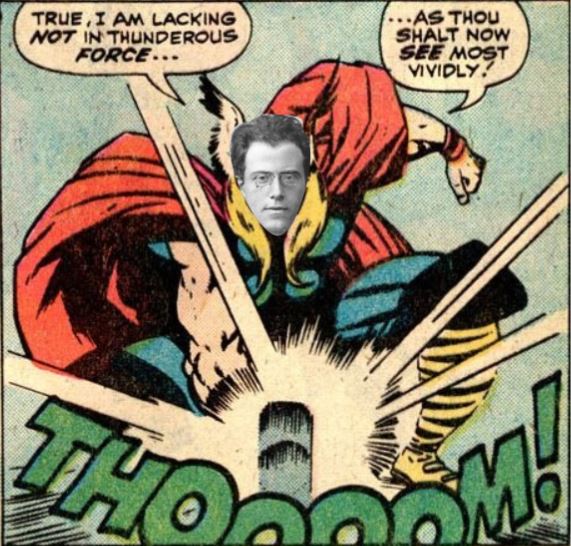
    The last movement of the Sixth notoriously contains three hammer blows. Mahler’s widow, Alma, conveyed that it was her husband’s intention that these signify three mighty blows of Fate against the work’s hero, “the third of which fells him like a tree.” These, she claimed, were tied to three tragedies in Mahler’s life: the death of their eldest daughter, Maria Anna, the diagnosis of Mahler’s heart condition (which would eventually kill him), and his forced resignation from the Vienna Opera. Inconveniently, all three of these things occurred after the work’s completion.

    When Mahler revised the symphony, he removed the last of the blows, perhaps out of superstition. What’s certain is that he was so shaken after the first performance that he omitted it from the score. Today, most performances restore the third blow.

    Any performance of the Symphony No. 6 builds tremendous anticipation in an audience, as, well into its 80-minute running time, a percussionist ponderously takes up a disproportionately large hammer, assumes a monumental position, and brings it down thunderously onto a block with not infrequently destructive force.

    Here are just a few examples:

    https://www.youtube.com/watch?v=UwljE3HsfSM&list=PLoubS-PL7KnLR4EONhdp0Ps68oTMekYS6&index=28

    https://www.youtube.com/watch?v=dXe0xbRXdZ4

    Hell, here’s the whole thing, with all three blows!

    https://www.youtube.com/watch?v=rypHeVr_X7c

    Happy birthday, Gustav Mahler. Tragedy tomorrow… comedy tonight!

  • Ennio Morricone Death A Loss for Film Lovers

    Ennio Morricone Death A Loss for Film Lovers

    A sad day for anyone who loves the movies. Ennio Morricone is dead.

    The composer of over 500 film and television scores, he was likely the most prolific film composer of all time.

    Although he has always been very popular in America, and around the world, with tributes pouring in over the decades from both pop and classical artists, acknowledgment from the Hollywood establishment came only fairly recently. He received a star on Hollywood’s Walk of Fame in 2016, the same year he won his only competitive Academy Award, for his score to Quentin Tarantino’s “The Hateful Eight.” By then, he was 87 years-old. (He was nominated five other times, the first in 1979.) Earlier, he received an honorary Oscar, for lifetime achievement, in 2007.

    Of course, Morricone never needed Hollywood to confirm his greatness. He churned out score after score from his home in Rome, and always supplied his own orchestrations – by no means standard practice in the film industry. The sheer volume of his output ensured that he left his mark on nearly every genre, but none more indelibly than the western. His collaborations in the form with director Sergio Leone – especially “A Fistful of Dollars,” “For a Few Dollars More,” “The Good, the Bad and the Ugly,” and “Once Upon a Time in the West” – made him internationally famous.

    His music for “The Mission,” “The Untouchables,” and “Cinema Paradiso” also remains popular. His melodies are much appropriated by figure skaters, television commercials, and by the movies themselves. His music has been quoted or reused in over 150 films, in which he has had absolutely no involvement. Even in instances in which the movies were absolutely atrocious, Morricone could be counted on to draw on his unfailing professionalism, infusing the ridiculous with dramatic tension and often heartbreaking lyricism.

    No word on whether or not he was able to follow through on his commitment to write music for the 2026 Olympic Games in Milano Cortina.

    Morricone was 91 years-old. One of the last of the legends is gone.


    “The Good, the Bad and the Ugly”

    “The Mission”

    https://www.youtube.com/watch?v=L41oGXgVmZg

    Morricone conducts “Cinema Paradiso”

  • Czech Neoclassicism on The Lost Chord

    Czech Neoclassicism on The Lost Chord

    Neoclassicism in music was a reaction against what was perceived as the garish effusiveness and gooey excesses of late Romanticism.

    Contemporary composers, in search of a new lucidity, turned their attention to the 18th century, revisiting its musical processes, though reinterpreting them through a distinctly 20th century prism. Stravinsky was the master, but neoclassicism swept the world.

    This Sunday night on “The Lost Chord,” we’ll have three cheery examples of Czech neoclassicism, including works by Ilja Hurnik (his “Sonata da Camera”), Iša Krejči (his “Serenade for Orchestra,” conducted by Karel Ančerl) and Bohuslav Martinu (his Concerto for Two Violins and Orchestra).

    These composers – well, Krejči and Martinu, anyway – manage to balance the clarity of the Enlightenment with an unmistakably Czech national sound

    Hurnik’s work is perhaps the purest, in terms of looking back. The term “Sonata da Camera” recalls music of the baroque and classical eras, as does the clarity of its instrumentation, involving flute, oboe, cello and harpsichord. Each movement begins as if it were ripped from the pages of history and then gradually squeezed like a lemon, leaving a tangy, contemporary aftertaste.

    All of this music is calculated to lift your spirits. I do hope you’ll join me for “Balanced Czechs,” this Sunday night at 10:00 EDT. Czech it out, on WWFM – The Classical Network and wwfm.org.


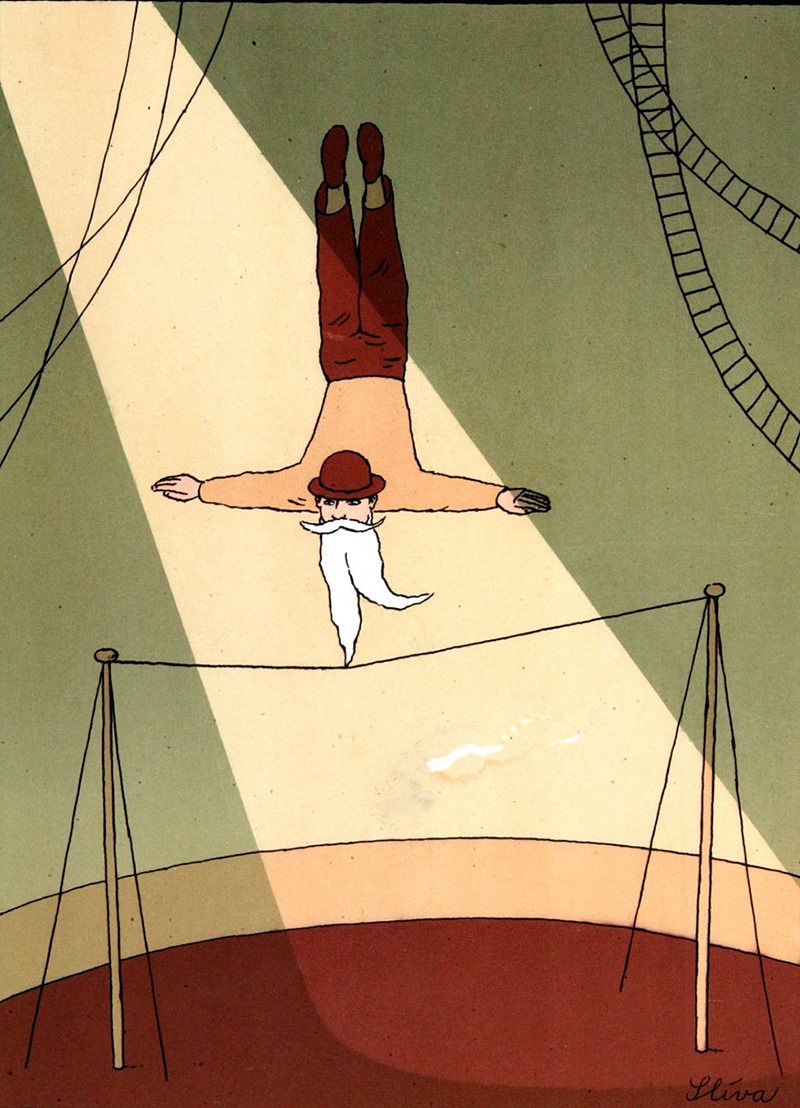
    Tightrope walker by Jiri Sliva

  • Planet of the Apes Roy’s Sci-Fi Chat

    It hardly seemed right to stomp on anyone’s Fourth with reflections on a post-apocalyptic Lady Liberty, so I’m only just getting around to sharing Roy Bjellquist’s and my Friday bull session about “Planet of the Apes.”

    “Roy’s Tie-Dye Sci-Fi Corner” live-streams on Facebook every Friday and Sunday at 7 p.m. EDT. Roy’s guest tonight will be Marc Cushman, author of a series of books, “These Are the Voyages,” about the original “Star Trek” TV series.

    https://www.facebook.com/roytiediescificorner/

    Thanks again for the yuks, Roy. Live long and prosper!

  • Picnic Crossword Challenge by Ross Amico

    Picnic Crossword Challenge by Ross Amico

    Pack a basket and a blanket. This week’s Classic Ross Amico crossword is all about picnics. I’ll be grilling you on your knowledge of al fresco classics.

    To fill out the puzzle, follow the link and select “solve online” at the bottom of the page. You’ll then be able to type directly into the squares. Once you feel you’ve exhausted the puzzle, you’ll find the solutions by clicking on “Answer Key PDF.”

    Think you can cut the mustard? You provide the answers, and I’ll provide the ants!

    https://www.armoredpenguin.com/crossword/Data/2020.07/0506/05062051.364.html

Tag Cloud

Aaron Copland (93) Beethoven (95) Composer (114) Film Music (137) Film Score (143) Film Scores (255) Halloween (94) John Williams (195) KWAX (229) Leonard Bernstein (103) Marlboro Music Festival (125) Movie Music (152) Mozart (88) Opera (208) Philadelphia Orchestra (89) Picture Perfect (174) Princeton Symphony Orchestra (108) Radio (88) Ross Amico (244) Roy's Tie-Dye Sci-Fi Corner (290) The Classical Network (101) The Lost Chord (268) Vaughan Williams (103) WPRB (396) WWFM (881)

DON’T MISS A BEAT

Receive a weekly digest every Sunday at noon by signing up here


RECENT POSTS