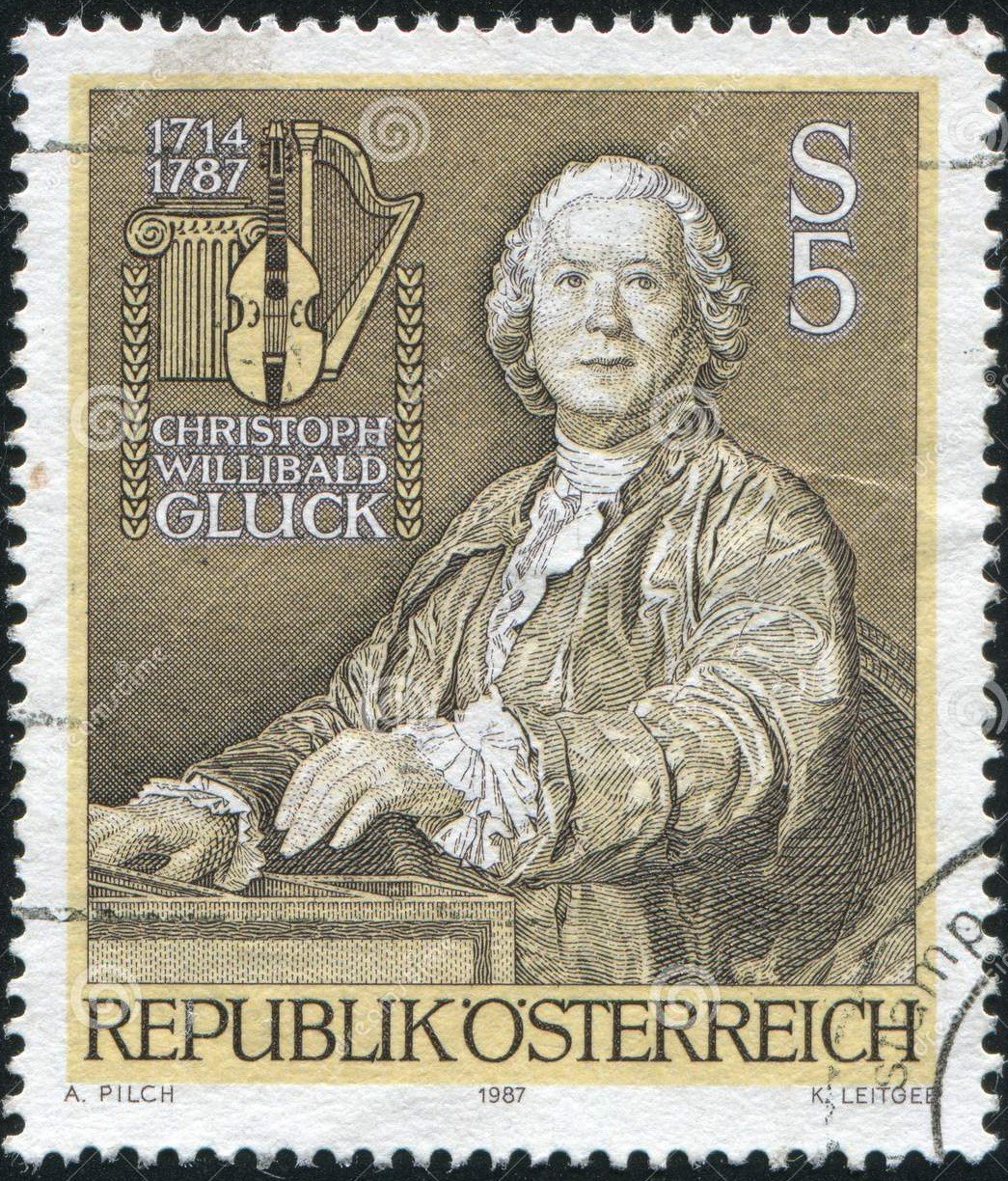
Christoph Willibald Gluck has come down to us as one the great operatic reformers. Yet, of his dozens of operas (about 35 survive), he’s pretty much remembered for but a single work, “Orfeo ed Euridice” – especially the “Dance of the Blessed Spirits.”
On the other side of the coin is his “Dance of the Furies.” I wonder if he would find the diablerie of this interpretation as intriguing as I do.
Think you don’t know the “Dance of the Blessed Spirits?” Click here!
Gluck’s own blessed spirit lives on primarily through his influence on others – Mozart, Weber, Berlioz, and Wagner. For Gluck, words and music were to bear equal weight. No more, the florid, showy arias of yore, ornamented beyond recognition by star castrati. DRAMA was to be of foremost importance.
Dame Janet Baker sings “Che farò senza Euridice?”:
Don’t be sad, Gluck. “Glück” is German for happiness!
Happy birthday, Christoph. Zum Geburtstag viel Glück!
Even in time of COVID, our dedicated listeners come through for us! With hosts interacting from separate studios and staff answering phones from home, we were able to crest $65,000 in donations, making our end-of-the-fiscal-year fundraiser a success. This is not underappreciated during such a turbulent time. We at WWFM – The Classical Network and wwfm.org thank you for your extraordinary generosity!
In common, I suppose, with just about anyone familiar his work – which would be anyone with any kind of familiarity with American popular culture since 1950 – I was saddened to learn of the passing of Carl Reiner, who died on Monday at the age of 98.
As a writer, producer, director, and actor, Reiner earned 11 Emmy Awards, including two for his work on “Your Show of Shows” and five for his own creation, “The Dick Van Dyke Show.” He acted in “It’s a Mad Mad Mad Mad World” and “The Russians Are Coming, the Russians Are Coming.” He directed “Where’s Poppa?” with Ruth Gordon and “Oh, God!” with George Burns.
In his later years, he appeared in the “Ocean’s Eleven” films, with George Clooney and Brad Pitt, had recurring roles on the sitcoms “Two and a Half Men” and “Hot in Cleveland,’ and did voice work for animated shows such as “Family Guy” and “King of the Hill.”
On top of everything else – his work in movies, television, Broadway, and print – Reiner directed four of Steve Martin’s funniest comedies: “The Jerk” (1979), “Dead Men Don’t Wear Plaid” (1982), “The Man with Two Brains” (1983), and “All of Me” (1984).
“The Jerk” gets all the love (it had the most quotable lines), but “Dead Men Don’t Wear Plaid” is a cinematic valentine for classic movie buffs. The film’s conceit – concocted over lunch by Martin, Reiner, and screenwriter George Gipe – was to construct a new story around scenes culled from movies of the 1940s, employing insert shots and trick photography so that Martin, as hardboiled detective Rigby Reardon, interacts onscreen with Barbara Stanwyck, Veronica Lake, Humphrey Bogart, and other luminaries of Hollywood’s golden age.
Gimmicky? Sure! But for 90 minutes, I’ll take it. Reiner himself turns up fairly late in the game as a Nazi fugitive operating out of Peru.
“Dead Men Don’t Wear Plaid” went to great lengths to imbue its pastiche with a sense of verisimilitude. To this end, Reiner secured legendary costume designer Edith Head, who had worked in Hollywood since the 1920s. (A number of her movies – including “The Glass Key,” “Double Indemnity,” “The Lost Weekend,” and “Sorry, Wrong Number” – were sampled for the new project). It would be Head’s final film. The production designer, John DeCuir, had also been active since the 1930s.
But the real masterstroke was the hiring of film composer Miklós Rózsa, whose career flourished during the heyday of noir, having provided scores for “Double Indemnity,” “The Lost Weekend,” and “The Killers,” scenes from which were also recreated in Reiner’s film. This was meta before meta was cool. Sadly, it would also turn out to be Rózsa’s final film. But what a way to go!
Of course, I haven’t seen the movie in years – we’re now as far away from “Dead Men Don’t Wear Plaid” as “Dead Men Don’t Wear Plaid” was from “Double Indemnity” – but I remember being mightily entertained as a 15 year-old. I’m sure I was well below the demographic that would have gotten most of the references. But then, I was a rather unusual child.
Sadly, plaid is no longer among Reiner’s wardrobe options. I’ve also been thinking a lot about Mel Brooks, Reiner’s best friend for 70 years. The two men met while working with Sid Caesar and Imogene Coca on “Your Show of Shows” in 1950, and have been inseparable companions throughout their golden years. According to Reiner, their daily routine involved having dinner, watching “Jeopardy” (taped), and then Mel falling asleep while watching a movie.
Reiner and Brooks formulated their classic “2000 Year Old-Man” routine when goofing around behind the scenes on “Your Show of Shows.” By 1960, they were recording it. Their final collaboration, “The 2000 Year-Old Man in 2000,” released in 1998, received a Grammy Award for Spoken Comedy Album.
It’s always especially sad to lose a comedian. Comedians should not age (except perhaps to 2000). They never really grow old, so there should be an exemption. Here’s hoping there’s a special place in heaven for those who make us laugh.
PHOTO: Reiner, channeling Erich von Stroheim in “Dead Men Don’t Wear Plaid”
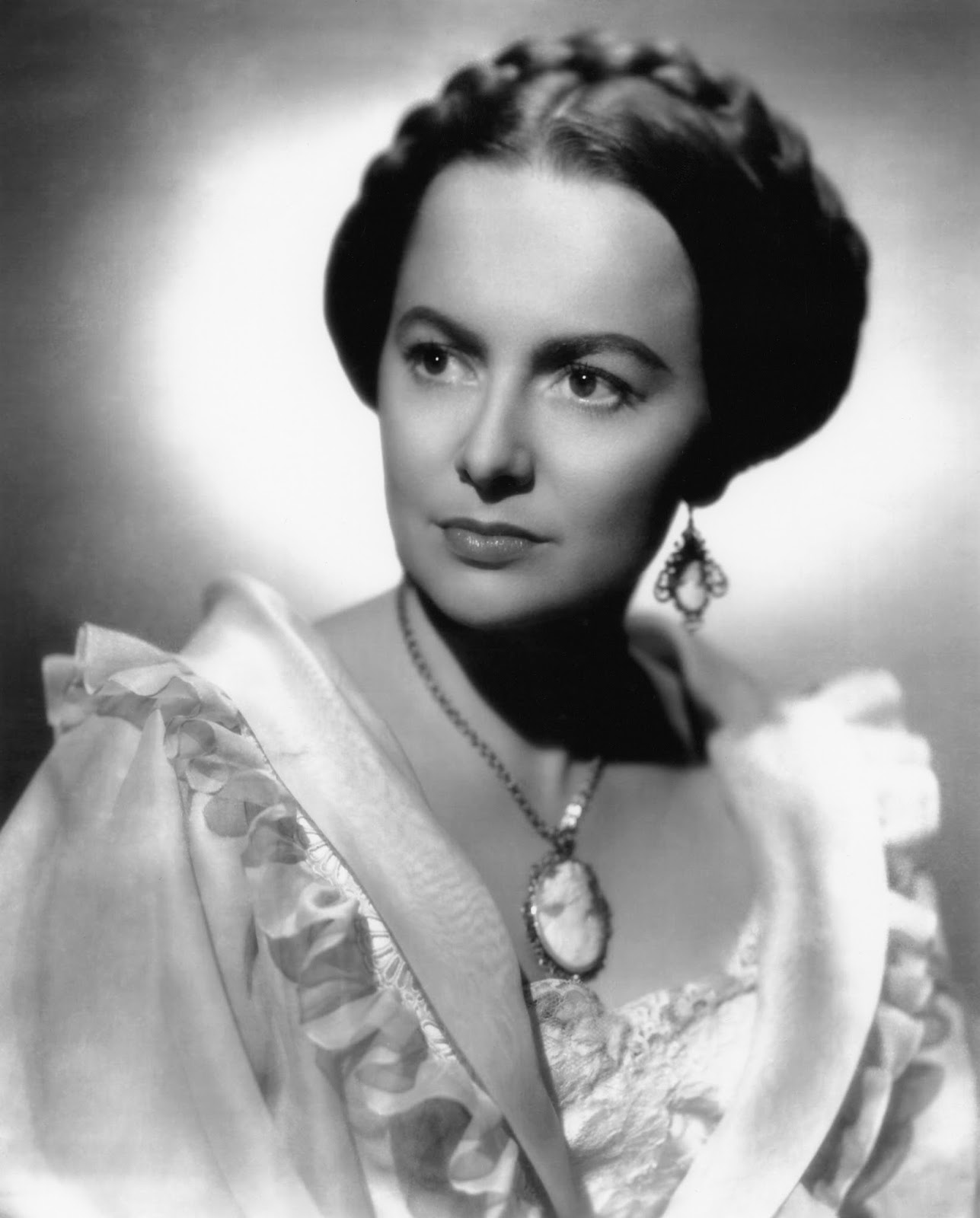
Olivia de Havilland is 104 today. In her honor, here’s a suite from Aaron Copland’s score to “The Heiress,” a film for which De Havilland won her second Academy Award in 1950. (Copland won too.) Happy birthday!
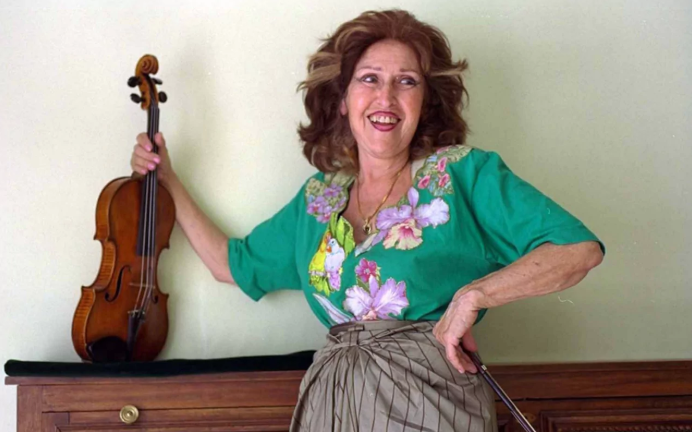
Haendel was born in Chelm, Poland, roughly a decade before the Nazi death marches and extermination camps began depleting most of its population of 18,000 Jews. It is no exaggeration to speculate that her gifts as a musician, and where they took her, saved her life and the lives of her immediate family.
To describe Haendel as a prodigy is an understatement. She won the Warsaw Conservatory’s Gold Medal and first Huberman Prize in 1933, at the age of five, for her performance of the Beethoven Violin Concerto. At seven, she was competing against David Oistrakh and Ginette Neveu, about twenty years her senior, to become a laureate of the first Henryk Wieniawski Violin Competition. Soon, she was studying in London and Paris with legendary pedagogues Carl Flesch and George Enescu.
During WWII she employed her talent to help boost the morale of British and American troops and factory workers. In 1937, she made her first appearance at the Proms. She went on to perform at the Proms no less than 68 times.
Internationally, she played with many of the great conductors, drawing particular acclaim for a recording of the Sibelius Concerto. Sibelius personally wrote her to say, “I congratulate you on the great success, but most of all I congratulate myself, that my concerto has found an interpreter of your rare standard.” In all, her recordings span some 70 years.
In 2006, she played before Pope Benedict XVI at the former concentration camp of Auschwitz-Birkenau. The organizers suggested that she play something Jewish. Instead, she chose Handel’s prayer from the “Dettingen Te Deum.” The work was arranged by her teacher, Carl Flesch.
Haendel was extremely fortunate in that her talent allowed her to escape the fate of so many of her townspeople. Her precise age at the time of her death, yesterday, in Miami, is unclear, since she had in her possession several different birth certificates, but the consensus seems to be that she was 91.
R.I.P.
Haendel plays Sibelius
Haendel plays Allan Pettersson’s Violin Concerto No. 2, a work written for and dedicated to her: