Category: Daily Dispatch

  • Othmar Schoeck’s Birthday & “Summer Night”

    Othmar Schoeck’s Birthday & “Summer Night”

    Today is the birthday of Swiss composer Othmar Schoeck (1886-1957). Schoeck is best known for his many art songs. I’m not sure, but I believe I first learned of him not from any of his music, but from a mention in one of Hermann Hesse’s novels. Schoeck and Hesse were friends and sometime collaborators, who exchanged letters for decades.

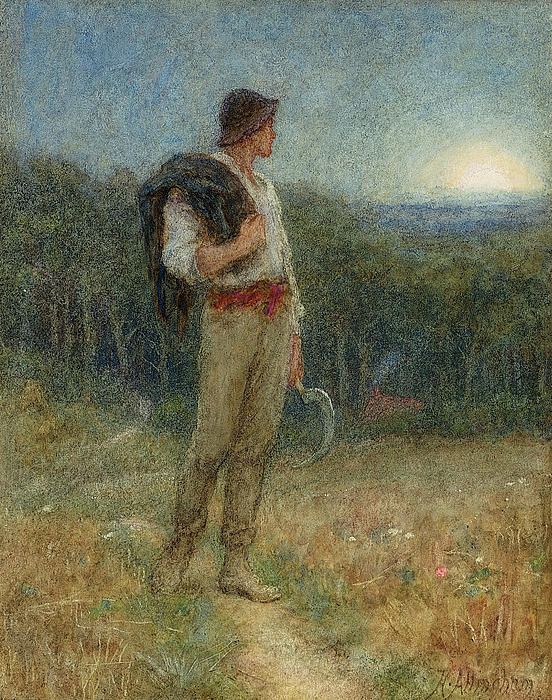
    Here’s a lovely pastoral intermezzo for strings from 1945, called “Summer Night.” The work takes its inspiration from a poem by Gottfried Keller. During a bright summer night, young peasants reap grain for a widow who has no one else to help her. The work proceeds cheerfully through the dawn, when the secret helpers slip away, to begin their own day’s labors.

    Hard to believe Schoeck was just recovering from a heart attack when he wrote this, but it was probably therapeutic in more ways than one. The choice of subject matter, a recollection of simpler times, and its romantic treatment, might be interpreted as a reaction against the hardships and horrors of World War II.

  • Itzhak Perlman at 75 A Classical Music Legend

    Itzhak Perlman at 75 A Classical Music Legend

    There are few superstars left in the world of classical music. Thankfully, Itzhak Perlman is still hale at 75. The bowing arm may not be what it used to be, but in his prime, he was one of the best. In particular, I always appreciated the warmth and commitment he brought to those composers of the so-called “second tier,” once championed by Heifetz. But I also love his Tchaikovsky concerto (particularly the first recording he made, with Alfred Wallenstein) and his Brahms sonatas (with Barenboim, even though the album with Ashkenazy seems to get all the raves). Happy birthday, Itzhak Perlman!


    Brahms’ Violin Sonata No. 1

    Perlman’s first recording of the Tchaikovsky Concerto

    Mario Castelnuovo-Tedesco’s Violin Concerto No. 2 “The Prophets”

    Erich Wolfgang Korngold’s Violin Concerto in D

  • English Pastoral Piano Music

    English Pastoral Piano Music

    According to a certain school of thought, folk music – music of the land – embodies the spirit of a nation. And no nation’s composers milked that cow quite as soulfully as the English.

    This Sunday night on “The Lost Chord,” we’ll have an hour of bucolic reflections for the keyboard of a time lost to technology and industrialization.

    We’ll begin with Gerald Finzi’s “Eclogue” for piano and string orchestra. Originally drafted in the mid-‘20s as the projected slow movement of a piano concerto, the material was later reshaped by the composer, who was content to let it stand on its own. In case you’re not familiar with the term, an eclogue is a short pastoral poem.

    If you find yourself transported by this, I think you will also really enjoy Cyril Rootham’s “Miniature Suite” of 1921. Rootham, better known for his choral music, was a friend of Ralph Vaughan Williams and Gustav Holst. His work at Cambridge University exerted a significant influence over English musical life. Like the “Eclogue,” the “Miniature Suite” is scored for piano and strings.

    In between, I’ll provide a palette cleanser in the form of E.J. Moeran’s “Summer Valley.” Moeran was one of the last composers to really thrive on English folk music. “Summer Valley,” composed for solo piano in 1925, was dedicated to Frederick Delius.

    Finally, we’ll engage in a bit of musical time travel. In addition to the whole folk song perspective, England is justifiably proud of its formal musical past. The legacy of the Tudors was a particular influence on works such as Benjamin Britten’s “Gloriana,” Gordon Jacob’s “William Byrd Suite,” and Vaughan Williams’ “Fantasia on a Theme by Thomas Tallis.”

    In the case Herbert Howells – like Rootham, a composer better recognized for his choral endeavors – he fell under the spell of the clavichord, after he was lent one by one Herbert Lambert, a photographer with a passion for building replicas of early keyboard instruments.

    The fortuitous encounter led to the composition of three suites, written in different periods of Howells’ life, which hark back to the glory days of the “Fitzwilliam Virginal Book.” All three sets are characterized by an inventive blend of Tudor and English folk influences. Each of the individual movements are dedicated to a friend or colleague of the composer. We’ll hear the first set, titled “Lambert’s Clavichord,” written in 1927, which was sanctioned for performance on the modern piano.

    I hope you’ll join me for an hour of musical escapes to the countryside and the golden musical past. That’s “Idyll Thoughts” – pastoral English works for piano – this Sunday night at 10:00 EDT, on WWFM – The Classical Network and wwfm.org.
  • Music & Laziness A Ross Amico Crossword Puzzle

    Music & Laziness A Ross Amico Crossword Puzzle

    Calling all couch potatoes: today’s Classic Ross Amico crossword is devoted to the two things I like best – music and doin’ nothin’.

    To fill out the puzzle, follow the link and select “solve online” at the bottom of the page. You’ll then be able to type directly into the squares. Once you feel you’ve exhausted the puzzle, you’ll find the solutions by clicking on “Answer Key PDF.”

    Eat, drink, and be lazy. Take a very leisurely glance by following the link here:

    https://www.armoredpenguin.com/crossword/Data/2020.08/3006/30065103.288.html

  • Picture Perfect Moves to Saturday Nights

    Picture Perfect Moves to Saturday Nights

    “Picture Perfect” is moving.

    I received word last week that something else will be taking over my regular Friday time slot. Therefore, beginning next week, and going forward, the show will air on SATURDAY AT 6 PM EDT.

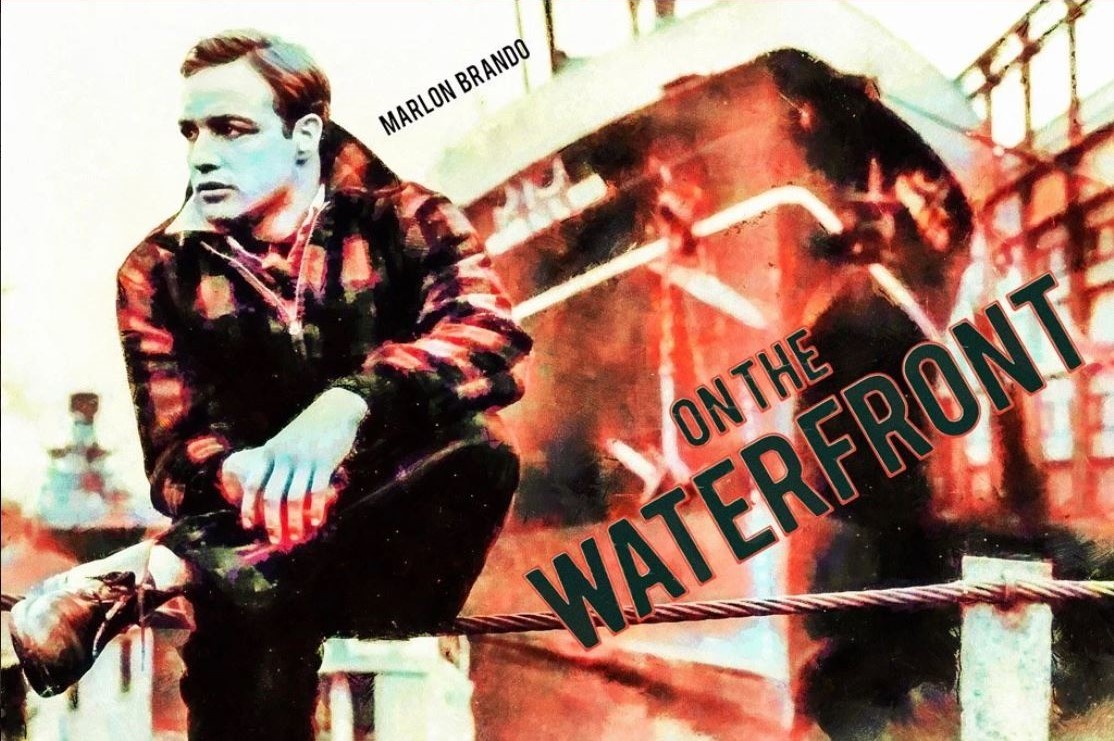
    Tune in for a program of music by New York composers in Hollywood, including Leonard Bernstein’s “On the Waterfront” (perfect for Labor Day weekend), Aaron Copland’s “The Red Pony” (after Steinbeck), Virgil Thomson’s “Louisiana Story” (the only film score ever to be awarded the Pulitzer Prize), and Elie Siegmeister’s “They Came to Cordura” (the source of “Picture Perfect”s signature music).

    The Bernstein and Copland are NOT the popular concert suites, but rather special, vintage recordings, struck from the films’ original elements.

    No use swearing like a longshoreman. Saturday night is now movie night. “Picture Perfect” moves to Saturday, starting next week at 6:00 EDT, on WWFM – The Classical Network and wwfm.org.
Tag Cloud

Aaron Copland (94) Beethoven (95) Composer (114) Film Music (152) Film Score (143) Film Scores (255) Halloween (107) John Williams (198) KWAX (233) Leonard Bernstein (105) Marlboro Music Festival (125) Movie Music (167) Mozart (91) Opera (220) Philadelphia Orchestra (91) Picture Perfect (174) Princeton Symphony Orchestra (110) Radio (90) Ross Amico (244) Roy's Tie-Dye Sci-Fi Corner (290) The Classical Network (101) The Lost Chord (269) Vaughan Williams (107) WPRB (397) WWFM (881)

DON’T MISS A BEAT

Receive a weekly digest every Sunday at noon by signing up here


RECENT POSTS