
This week on “Sweetness and Light,” I’ll do my level best to fill our heads with visions of pumpkin pie and cranberry bread and, yes, even Thanksgiving turkey.
We’ll hear works by Rick Sowash, Thomas Canning, Edvard Grieg, Howard Hanson, and Aaron Copland, and a concerto by Antonio Vivaldi that bears the nickname “The Turkey” – not because it’s a dud, mind you, but rather because of the cascading broken third passages in the solo lines of the work’s third movement, which apparently reminded someone of the ungainly bird. Gobble gobble!
Join me for an hour of hymn tunes and harvest dances and most of all music of gratitude. It’s a program of hope and thanksgiving. We’ll be reaching deep into the cornucopia on “Sweetness and Light,” this Saturday morning at 11:00 EST/8:00 PST, exclusively on KWAX, the radio station of the University of Oregon!
Stream it where you are at the link:
https://kwax.uoregon.edu/
Category: Daily Dispatch
-

Hail! Bright Cecilia
A tip of the halo to St. Cecilia on her feast day! Keep looking up with this evergreen playlist of Cecilia inspirations. All hail, music’s patron saint!
William Boyce, “Ode for St. Cecilia’s Day” (overture also published as Boyce’s Symphony No. 5)Benjamin Britten, “Hymn to St. Cecilia” (Britten was born on this date)
Ernest Chausson, “La légende de Sainte Cécile”
Norman Dello Joio, “To Saint Cecilia”
Gerald Finzi, “For St. Cecilia”
Charles Gounod, “St. Cecilia Mass”
George Frideric Handel, “Ode for St. Cecilia’s Day”
Franz Joseph Haydn, “Missa Sanctae Caecilia”
https://www.youtube.com/watch?v=QhA7LEd56ts
Herbert Howells, “A Hymn for St. Cecilia” (text by Ursula Vaughan Williams)
Franz Liszt, “Hymn to St. Cecilia”
Arvo Pärt, “Cecilia, vergine romana”
Henry Purcell, “Ode on St. Cecilia’s Day (Hail! Bright Cecilia)”
Various, “Bright Cecilia: Variations on a Theme by Henry Purcell,” a 2002 BBC commission for the Last Night of the Proms sporting contributions by Colin Matthews, Judith Wier, Poul Ruders, David Sawer, Michael Torke, Anthony Payne, and Magnus Lindberg
Joaquin Rodrigo, “El Album de Cecilia” (written for the composer’s daughter; Rodrigo was born on this date)
Alessandro Scarlatti, “St. Cecilia Mass”
———-
PAINTING: “St. Cecilia” (1647), by Frans Francken the Younger and Cornelis de Baeilleur -

Korngold is King in “Kings Row”
Anyone familiar with the main title music from “Star Wars” – and who isn’t? – will recognize a spiritual kinship with “Kings Row” (1942). This week on “Picture Perfect, we’ll hear an extensive suite from one of Erich Wolfgang Korngold’s most magnificent scores, one of John Williams’ acknowledged influences.
The settings of the two films couldn’t be more different – “Kings Row’s” struggle of decency against sinister impulses takes place in a small Midwestern town – but Korngold’s opulently orchestrated music brims with romance and heroism. Check out that opening fanfare!
Although he was one of the great musical prodigies – celebrated in Vienna in his teens and 20s, especially for his operas – Korngold’s name was kept alive for decades after his death largely because of his work on a number of classic Warner Bros. films of the 1930s and ’40s. His music for the Errol Flynn swashbucklers has been particularly well-loved.
He had already written music for “Captain Blood,” “The Prince and the Pauper,” “The Adventures of Robin Hood,” “The Private Lives of Elizabeth and Essex,” and “The Sea Hawk” by the time he was offered work on “Kings Row.” Without knowing anything more about the project than the title, he commenced writing the main theme, on the assumption that the film would be yet another historical adventure. In reality, it was a turn-of-the-century soap opera based in America’s heartland.
Korngold’s approach couldn’t have been more fortuitous, since it led him to compose one of his grandest motifs. It punctuates the action of the film as if it were a cinematic “Ein Heldenleben” – which should come as little surprise, since Korngold actually knew Richard Strauss.
“Kings Row” was based on the bestselling novel by Henry Bellamann. The book reveals a kind of dark underbelly to the civility of small-town American life. The subject matter was ahead of its time, laying the groundwork for the novel “Peyton Place,” the film “Blue Velvet,” and television series such as “Twin Peaks” and “Desperate Housewives.” Yet at its core is the fundamental decency of its protagonist, Parris Mitchell, and his circle of friends. It is Mitchell’s ambition to become a doctor, and he heads to Vienna to study a new branch of science known as psychology.
Mitchell was played in the film by Robert Cummings, his best friend Drake by Ronald Reagan, and Randy, a former tomboy from a family of railroad workers, by Ann Sheridan, who received top billing. The studio filled out the cast with a superb ensemble, including Claude Rains, Judith Anderson, Charles Coburn, Harry Davenport, and even Maria Ouspenskaya, best known as Maleva the gypsy woman from “The Wolf Man.”
It’s a grand piece of entertainment, if you can get into the spirit of it, depending on your tolerance for incest, sadism, involuntary amputation, wrongful commitment to an insane asylum and suicide. This is the film in which Reagan exclaims the immortal line, “Where’s the rest of me?”
Thanks to the Hays Code, the screen adaptation was considerably toned down from – and more upbeat than – the novel. The emphasis is on Mitchell’s idealism in the face of a cruel, and at times horrifying, world. Along the way, there are several amusing (from our perspective) explanations of that mysterious new discipline, the study of the mind.
I hope you’ll join me for an hour of music from “Kings Row,” by the King of Film Composers, Erich Wolfgang Korngold, on “Picture Perfect,” music from the movies, now in syndication on KWAX, the radio station of the University of Oregon!
——–
Clip and save the start times for all three of my recorded shows:
PICTURE PERFECT, the movie music show – Friday at 8:00 PM EST/5:00 PM PST
SWEETNESS AND LIGHT, the light music program – Saturday at 11:00 AM EST/8:00 AM PST
THE LOST CHORD, unusual and neglected rep – Saturday at 7:00 PM EST/4:00 PM PST
Stream them, wherever you are, at the link!
https://kwax.uoregon.edu/ -
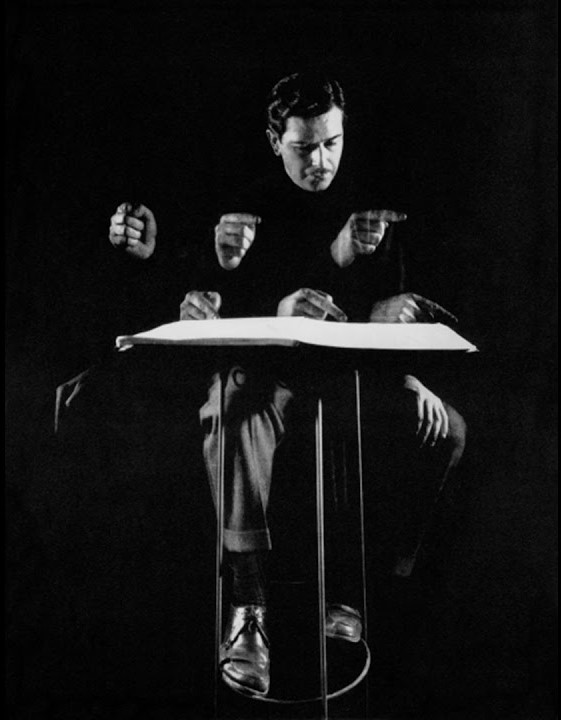
Misty for Mennin
It’s a near certainty that I won’t be able to make this concert on Saturday night, but if you’ll be in New York City and you are interested in unusual and worthwhile repertoire, it’s possible I could live vicariously through you. It’s agonizing to me to have to miss not only the Symphony No. 5 by American composer (and one-time Juilliard president) Peter Mennin, but also the lovely, late-Romantic Violin Concerto by Mieczyslaw Karlowicz. (Rachel Lee Priday will be the soloist.)
The program will open with Giacomo Puccini’s “Capriccio sinfonico.” That’s the student piece he cannibalized for “La bohème.” If you know your Puccini, you will recognize it.
The Mennin is not performed often enough and the Karlowicz is rarely-heard on these shores. You could attend concerts for decades, as I have, and never encounter either one in performance. It is, however, characteristic programming for the New York Repertory Orchestra, whose music director is David Leibowitz.
The programs are always intriguingly and intelligently put together. Sadly, I always seem to have a conflict. (I was bummed to miss their LAST concert, which included the Symphony No. 4 by Ruth Gipps.) TICKETS ARE FREE, with a suggested $15 donation.
So if you’re interested in enjoying some attractive, well-crafted music that for some inexplicable reason has never really gained a toehold in the standard repertoire, hie thee to the Church of St. Mary the Virgin, 145 West 46th St., between 6th & 7th Avenues, this Saturday at 8:00 p.m. – and taunt me with how fabulous it was to hear this concert live!
More information at the link
https://www.nyro.org/index.html
Rehearsing Mennin
https://www.facebook.com/watch/?v=3285024335012633
———
PHOTO: An eerie Octo-Mennin, courtesy of Gordon Parks -
Gorgeous Georgians
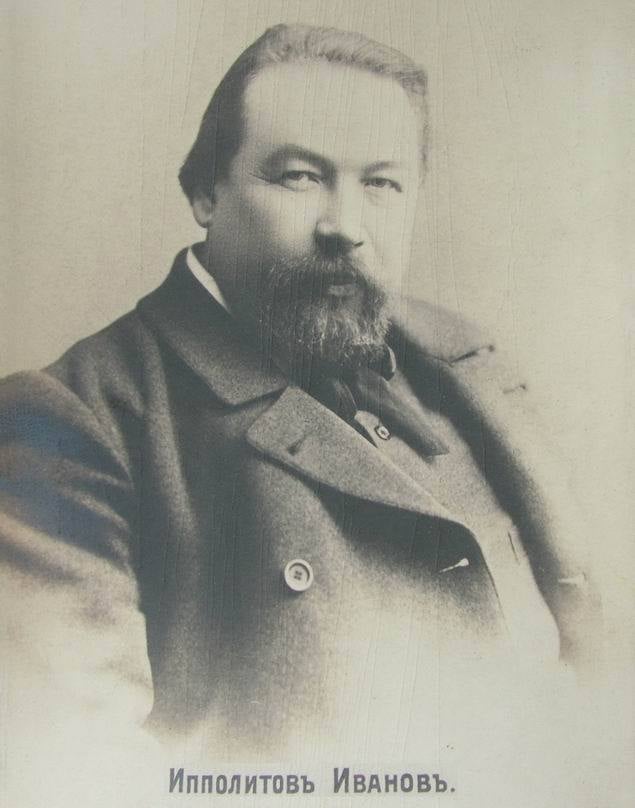
Today is the birthday of Mikhail Ippolitov-Ivanov (1859-1935), and I’ve got Georgia on my mind.
A pupil of Nikolai Rimsky-Korsakov, Ippolitov-Ivanov made his name as a musical spokesperson for the Caucasus. He spent his formative creative years in Georgia, as director of the music academy and conductor of the orchestra in Tblisi. Though he would return to Russia to become a professor at – and eventually director of – the Moscow Conservatory, as a well as a prominent conductor of the Russian Choral Society and at Bolshoi Theatre, clearly the music of Georgia had become deeply ingrained. He returned to Georgia in 1924 to reorganize the Tblisi Conservatory. His compositional output includes works on Georgian, Armenian, and Turkish themes.
Of course, his best-known piece is the “Procession of the Sardar,” from his “Caucasian Sketches.” It climaxes the Suite No. 1, which can be heard here:
https://www.youtube.com/watch?v=KiF8JPARwCc
A composer born in Georgian of whose works I am particularly fond is Zakaria Paliashvili (1871-1933). Regarded as the Father of Georgian Music, Paliashvili studied composition at the Moscow Conservatory under Sergei Taneyev (a pupil of Tchaikovsky). He then returned home to collect folk songs, co-found the Georgian Philharmonic Society, and head the Tblisi Conservatory.
I discovered Paliashvili’s music online about 20 years ago, when I stumbled across a Georgian website that was selling CD-Rs of his operas. The posted excerpts from “Abeselom and Eteri” were especially gorgeous. Apparently, Deutsche Grammophon issued a recording on LP, back in the 1970s. Alas, it’s now long out of print.
For a long time, I hedged about sharing my credit card number with an unknown merchant in Georgia, but finally a few years ago, with no Paliashvili evidently forthcoming, I figured what the hell. I ordered all the available operas and managed to get one of them on the air, back when I was filling in for Sandy Steiglitz on her Sunday Morning Opera show on Princeton’s WPRB 103.3 FM.
I also managed to get my hands on a copy of Paliashvili’s “Liturgy of St. John Chrysostom,” on the Olympia label, and played that on my syndicated radio show “The Lost Chord” a number of years ago.
A quick search on YouTube reveals a nice sampling of Paliashvili’s music, including this highlight from “Abeselom and Eteri”
https://www.youtube.com/watch?v=m2xMzNxDcPQ
By Georgia, here’s the whole thing!
https://www.youtube.com/watch?v=52FZLd7WARs
A staged performance from 2016
https://www.youtube.com/watch?v=Nu_rm0FRUV0
And a film version from 1966! No English subtitles, but there’s a synopsis in the comments.
https://www.youtube.com/watch?v=6oQMgensnVE
His opera “Daisi”
https://www.youtube.com/watch?v=MmQg9Km7cz8
“Elegy” for piano
https://www.youtube.com/watch?v=kZUHKlTIkoE
“Liturgy of St. John Chrysostom”
https://www.youtube.com/watch?v=9Y9dqrlZVCQ
Ah, internet, I knew you were good for something.
———-
PHOTO: Honorary Georgian Mikhail Ippolitov-Ivanov
Tag Cloud
Aaron Copland (94) Beethoven (95) Composer (114) Film Music (149) Film Score (143) Film Scores (255) Halloween (99) John Williams (197) KWAX (232) Leonard Bernstein (105) Marlboro Music Festival (125) Movie Music (164) Mozart (91) Opera (215) Philadelphia Orchestra (90) Picture Perfect (174) Princeton Symphony Orchestra (110) Radio (90) Ross Amico (244) Roy's Tie-Dye Sci-Fi Corner (290) The Classical Network (101) The Lost Chord (269) Vaughan Williams (107) WPRB (397) WWFM (881)