Franz Liszt (1811-1886) was quite the complex personality. A devout Catholic his entire life, he even took minor orders and lived in a monastery for a few years in middle age. However, as one of the performer-superstars of his youth, he was also frequently tempted by the pleasures of the flesh. And, as Oscar Wilde memorably observed, “The only way to get rid of temptation is to yield to it.”
In common with many artists of the Romantic era, Liszt was fascinated by the contradictions inherent in the character of Faust, the dissatisfied man of learning who sells his soul to the devil as a means to increase his knowledge through worldly experience.
Perhaps something in the Faustian character appealed to Liszt more than most. In his pursuit of loftier ideals, Liszt was certainly aware of his feet of clay. This Sunday night on “The Lost Chord,” we’ll experience the friction between striving artist and earthly pleasures in a selection of Liszt’s diabolical dances for the keyboard.
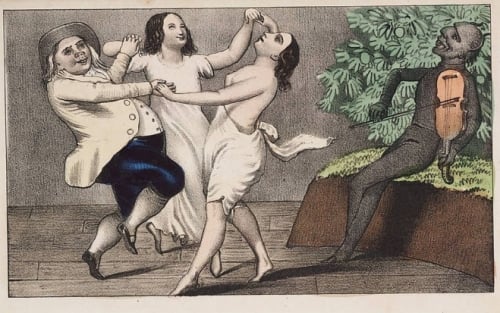
We’ll hear several of his “Mephisto Waltzes,” a “Mephisto Polka,” the “Czardas Macabre,” and two operatic paraphrases, on “Robert le Diable” (a “valse infernale”) and Gounod’s “Faust.”
Some of these are straight-ahead knuckle-busters, hair-raising feats of prestidigitation; others aim to gently unsettle with the interval of a tritone – known for centuries as “the devil in music” – or by blurring into a kind of tonal ambiguity, foreshadowing musical experiments of the 20th century.
A profound thinker and a grand provocateur, Liszt, like Faust, was always questing. That said, he seldom undersold the visceral thrill of a precipitous piano run or the simple pleasure of a good tune.
Get ready to surrender to temptation with “A Fistful of Mephistos” – an hour diabolical dances – this Sunday night at 10:00 EDT, on WWFM – The Classical Network and wwfm.org.
For Geirr Tveitt’s birthday, a literal and figurative nightmare:
Tveitt was born in Bergen, Norway, in 1908. His family originally came from the Hardanger region. Each summer, they returned to Kvam to do farm work.
Tveitt would take up permanent residence in Hardanger in 1940. In the meantime, he studied music in Leipzig and Paris (with Honegger, Villa-Lobos, and Boulanger) and gained renown throughout Europe as a concert pianist, but it was his connection to the Norwegian countryside that would color most of his mature compositional output.
In 1970, a great tragedy stuck, when fire swept through Tveitt’s home, a farmhouse in Nordheimsund, destroying most of his unpublished manuscripts – 300 pieces, stored in wooden chests – fully 4/5ths of his compositional output. By extension, and not surprisingly, it also destroyed his ability to compose. He succumbed to alcoholism and died a broken man, with little hope of being remembered, in 1981.
Sadly, Tveitt did not live to see his reputation revived. In the intervening decades, musicologists have been able to piece together a number of these “lost” works, using as reference scattered orchestral parts and live concert recordings. Performances of these reconstructions have been widely distributed on the Naxos and BIS labels. The exceptional quality of what’s now available, and speculation over what’s been lost, is cause for a listener to share Tveitt’s heartbreak.
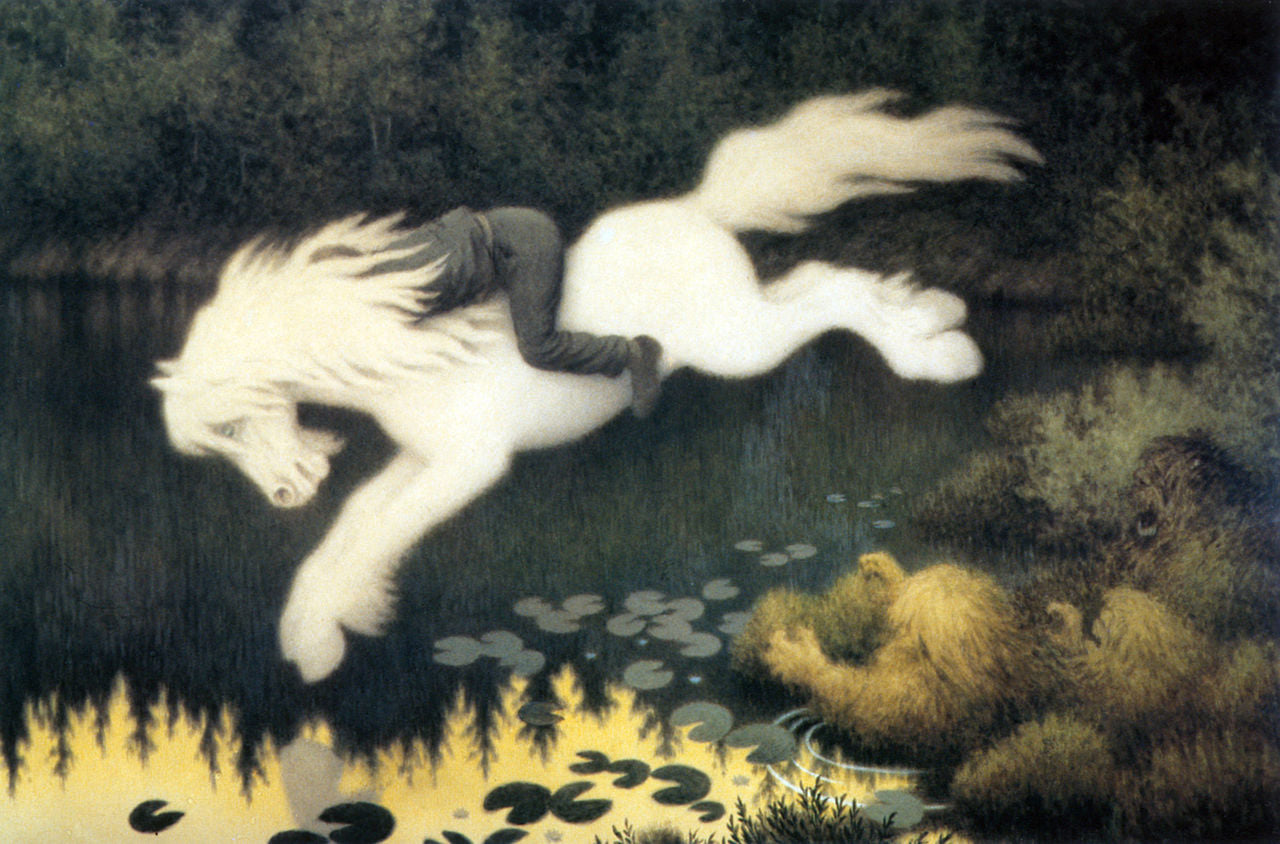
Tveitt’s symphonic poem “Nykken,” from 1956, is about a literal “night mare,” a white horse that lurks in a nocturnal wood near a silent pond. The beauty of the horse charms a hapless wanderer into attempting a ride. But the horse plunges into the depths of the pond, dragging its victim to a watery grave.
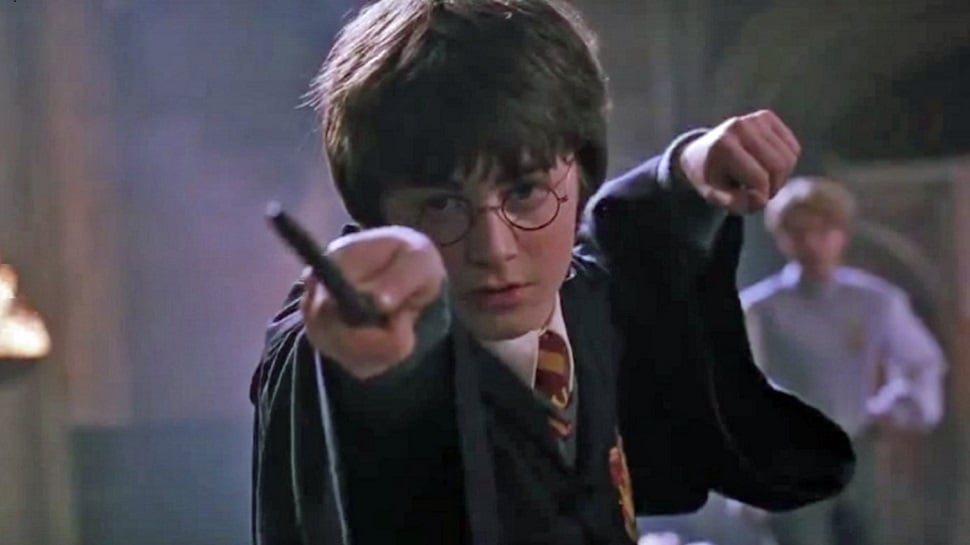
This week on “Picture Perfect,” with Halloween right around the corner, enjoy selections from John Williams’ music for “Harry Potter and the Sorcerer’s Stone,” “Harry Potter and the Chamber of Secrets,” and “Harry Potter and the Prisoner of Azkaban.”
La-La Land Records has compiled every last note as heard in the films, alternate takes, source music, trailer music and teaser ads, and a never-before-released concert suite – eight hours of music on seven CDs – remastered in a limited edition boxed set of 5000 copies.
John Williams is the last of the big screen wizards. Get ready for an hour of pure magic, this Friday evening at 6:00 EDT, on WWFM – The Classical Network and wwfm.org.