Category: Daily Dispatch

  • Indian Classical Music on The Classical Network

    Indian Classical Music on The Classical Network

    For today’s Noontime Concert on The Classical Network, you had better pack a lunch. We’ll be bypassing the deli in favor of Delhi. The Akshara Music Ensemble will perform classical Indian music-inspired works, on a program given at the Downtown Concert Series in Freehold, NJ, this past May.

    Founded in 2008, the award-winning Akshara is a pioneer in crossover music rooted in the Indian classical genre. Tune in for the distinctive sounds of the bansuri, the mridangam, and the tabla.

    The Downtown Concert Series is presented at Freehold’s historic St. Peter’s Church. This season’s opening concert, a recital by pianist Janice Carissa, will take place on Saturday at 7:30 p.m. For more information, visit downtownconcertseries.org.

    Following the noon broadcast, we’ll hear works on Indian themes, including Karl Goldmark’s “Sakuntula Overture” (after the Mahabharata), Gustav Holst’s “Choral Hymns from the Rig Veda,” and Wilhelm Stenhammar’s “Chitra,” inspired by the writings of Rabindranath Tagore.

    We’ll also explore the opulent and distinctive sound world of pianist-composer Kaikhosru Shapurji Sorabji, born in Greater London, whose father was a civil engineer from Bombay.

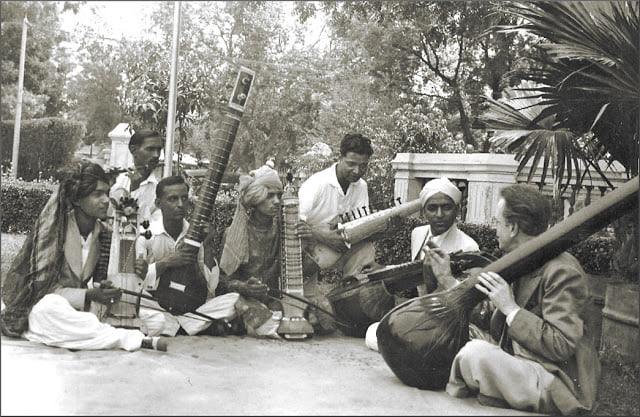
    John Foulds moved in the opposite direction, arriving India in 1935. There, he labored tirelessly to fulfill his vision of a synthesis between Eastern and Western music.

    All of these artists were sincere in their admiration. I’ll do my best to sidestep any whiff of imperialism.

    It’s an imaginary passage to Indian this afternoon, from 12 to 4 p.m. EDT, on WWFM – The Classical Network and wwfm.org.


    PHOTO: Original crossover artist John Foulds, with members of his Indo-European Orchestra
  • Faust F W Murnau’s Halloween Horror

    Faust F W Murnau’s Halloween Horror

    31 DAYS OF HALLOWEEN (DAY 14)

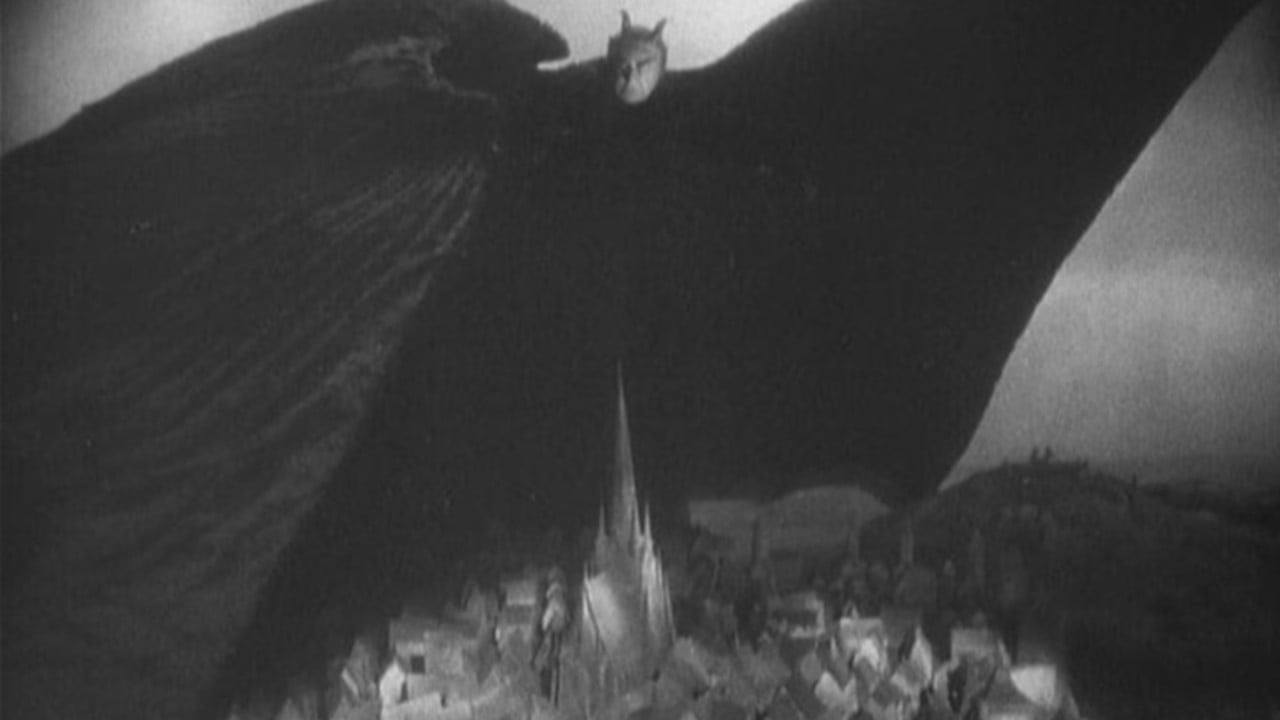
    F.W. Murnau’s “Faust.” Watched this alone one night in the back of a cavernous bookstore and the opening sequence freaked me the hell out. In a good way. Effective score by Timothy Brock.

    https://www.youtube.com/watch?v=ha3k_ltsWV4

  • Support Classical Music on The Classical Network

    Support Classical Music on The Classical Network

    The grasshoppers are about to put away their fiddles and the birds take their songs south, but you can count on The Classical Network to continue to provide a stable home for beautiful music throughout the year.

    At the touch of a button or the click of a mouse, you’ll be able to enjoy the artistry of the great composers, performers and ensembles, both of the past and of the present day, through cherished recordings and the latest releases, exclusive interviews and broadcast concerts.

    This bounty is made possible only through the generous support of loyal listeners just like you. And we never take it for granted. Thanksgiving may still be weeks away, but already we are here to express our gratitude to you, our friends, for keeping classical music available in our community for the past 37 years.

    Help us celebrate the abundance of wonderful programming we all rely on every day to enrich the quality of our lives by helping us to meet our financial goals. Our hosts will be popping up occasionally with on-air reminders, beginning today from 9 a.m. to 1 p.m. EDT. Call us now at 1-888-232-1212 or make a donation online at wwfm.org.

    Renewed memberships, first-time contributions, additional pledges, vehicle donations, and estate planning – all are gratefully received and acknowledged. Please help us to fortify ourselves against the colder months by guaranteeing the security and enjoyment of uninterrupted classical music.

    Thank you for your ongoing support, from all of us at WWFM – The Classical Network and wwfm.org!

  • Poe’s Ulalume Halloween Song

    Poe’s Ulalume Halloween Song

    31 DAYS OF HALLOWEEN (DAY 13)

    In lonesome October, with its leaves crisped and sere, Edgar Allan Poe contemplates lost love.

    Joseph Holbrooke’s “Ulalume”

    The poem:

    https://www.poetryfoundation.org/poems/44889/to-ulalume-a-ballad

  • Atreus’ Fall: Music from Greek Tragedy

    Atreus’ Fall: Music from Greek Tragedy

    For some of us living here in the Northeast, autumn brings with it the pleasures of baked goods, homemade soups, colored leaves, moody skies, carved pumpkins, black-and-white horror movies, used book shopping, sweaters, Brahms, and cozy cups of tea. But for the House of Atreus, “fall” meant something completely different.

    This Sunday night on “The Lost Chord,” we’ll hear music inspired by “The Oresteia,” a trilogy of surviving plays by Aeschylus that relates the impact of a curse on the House of Atreus. Dating from the 5th century B.C., the overall story arc reflects the shift from perpetual vengeance to the formation of a rational social justice system – the thinking being that man cannot hope to build a progressive civilization if he is engaged in unremitting bloodshed.

    However, along the way to that all-important message, the audience gets to have its cake and eat it, too, as it is treated such lurid incidentals as human sacrifice, incest, adultery, filicide, fratricide, mariticide, matricide, and cannibalism. The name of the cycle derives from Orestes, who avenges the murder of his father, Agamemnon, who in turn was killed by his wife, Clytemnestra, and her lover, Aegisthus.

    The subject was a popular one with the playwrights of antiquity – it was also treated by Sophocles and Euripides – and it continues to have resonance in the present day. It is certainly very well represented in the classical music world.

    Darius Milhaud treated all three surviving plays in the Aeschylus cycle, as “The Oresteia of Aeschylus,” which he composed over a ten year span. Combined, the cycle runs to three hours and involves over 300 singers and players. Allegedly, Milhaud considered it his greatest work.

    The second part is titled “Les Choéphores,” or “The Libation-Bearers,” referring to the women who offer up ritual sacrifices at Agamemnon’s grave. The story, the familiar one, concerns the victorious Agamemnon returning from the Trojan War, only to be murdered in his bathtub Clytemnestra and Aegisthus.

    They go on to rule a resentful populace, with Agamemnon’s daughter, Electra, consumed by her thirst for vengeance, which is delivered eventually, upon the secret return of her brother, Agamemnon’s son, Orestes. In the meantime, Clytemnestra, racked by guilt and haunted by nightmares, attempts to appease her husband’s ghost and avert her fate by sending an offering of libations to his tomb.

    Milhaud worked with poet, playwright and frequent collaborator Paul Claudel to structure Aeschylus’ play, the second of the trilogy, into seven scenes, beginning with a threnody and concluding with a plea for justice.

    We’ll round out the hour with incidental music written by Dutch composer Alphons Diepenbrock, inspired by Sophocles’ “Electra.”

    Comedy tomorrow, tragedy tonight! Join me for “Fall at the House of Atreus.” That first step’s a doozy, this Sunday night at 10:00 EDT, on WWFM – The Classical Network and wwfm.org.


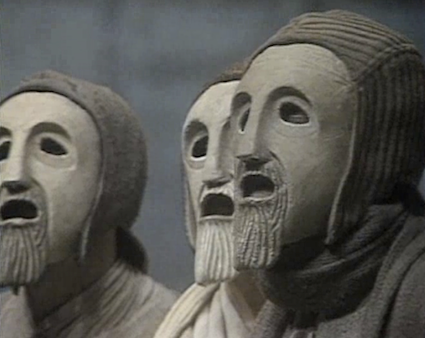
    PHOTO: The fall has seldom been so grim

Tag Cloud

Aaron Copland (93) Beethoven (95) Composer (114) Film Music (137) Film Score (143) Film Scores (255) Halloween (94) John Williams (195) KWAX (229) Leonard Bernstein (103) Marlboro Music Festival (125) Movie Music (152) Mozart (88) Opera (208) Philadelphia Orchestra (89) Picture Perfect (174) Princeton Symphony Orchestra (108) Radio (88) Ross Amico (244) Roy's Tie-Dye Sci-Fi Corner (290) The Classical Network (101) The Lost Chord (268) Vaughan Williams (103) WPRB (396) WWFM (881)

DON’T MISS A BEAT

Receive a weekly digest every Sunday at noon by signing up here


RECENT POSTS