Category: Daily Dispatch

  • Danse Macabre Halloween Serenade

    Danse Macabre Halloween Serenade

    31 DAYS OF HALLOWEEN (DAY 12)

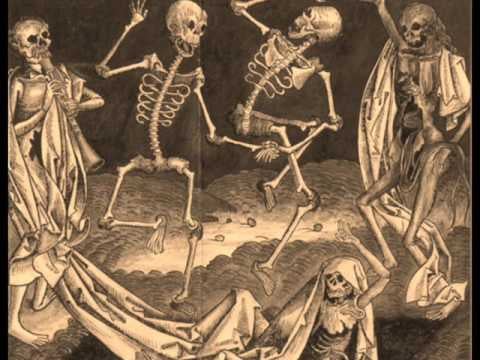
    I totally snubbed Saint-Saëns this week on his birthday, October 9th, so here’s “Danse Macabre.” “Danse Macabre” was originally conceived as a chanson for voice and piano. The composer made several other arrangements. Most famous is the more fully developed orchestral work, but he also wrote a version for voice and orchestra. Here it is performed by Nelson Eddy, of all people.

    https://www.youtube.com/watch?v=PIVdUOnNWKM

    Still, it’s better than Nelson’s commercial recording from two years earlier, which is terrifying for all the wrong reasons.

    The text is by Henri Cazalis:

    Zig, zig, zig, Death in cadence
    Striking a tomb with his heel
    Death at midnight plays a dance-tune
    Zig, zig, zag, on his violin
    The winter wind blows, and the night is dark;
    Moans are heard in the linden trees
    White skeletons pass through the gloom
    Running and leaping in their shrouds
    Zig, zig, zig, each one is frisking
    You can hear the cracking of the bones of the dancers
    A lustful couple sits on the moss
    So as to taste long lost delights
    Zig zig, zig, Death contines
    The unending scraping on his instrument
    A veil has fallen! The dancer is naked
    Her partner grasps her amorously
    The lady, it’s said, is a marchioness or baroness
    And her green gallant, a poor cartwright
    Horror! Look how she gives herself to him
    Like the rustic was a baron
    Zig, zig, zig. What a saraband!
    They all hold hands and dance in circles
    Zig, zig, zag. You can see in the crowd
    The king dancing among the peasants
    But hist! All of a sudden, they leave the dance
    They push forward, they fly; the cock has crowed
    Oh what a beautiful night for the poor world!
    Long live death and equality!

  • Vaughan Williams A Birthday & Symphony No 5

    Vaughan Williams A Birthday & Symphony No 5

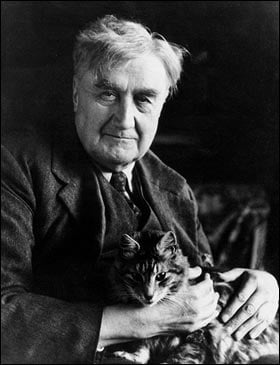
    Happy birthday, Ralph Vaughan Williams, one of my favorite composers!

    Thank you so much for the “Serenade to Music,” “The Lark Ascending,” the “Fantasia on a Theme by Thomas Tallis,” “Five Variants of Dives and Lazarus,” “The Wasps,” the “Norfolk Rhapsody No. 1,” the “English Folk Song Suite,” the “Fantasia on Christmas Carols,” “Five Mystical Songs,” the “Charterhouse Suite,” the “Concerto Grosso,” the “Old King Cole” ballet, “Household Music,” “Hugh the Drover,” “Sir John in Love,” and too many others to enumerate.

    Of your nine symphonies, I certainly have my preferences. Each of them holds its own particular delight – even the ones that are served up harsh or leave us hanging, with big questions about their, and our, ultimate destinations. Collectively, they form a surprisingly disparate body of work, belying your reputation as a pastoralist.

    That said, if I want to find solace or to be uplifted, I always gravitate to the Fifth.

    For me, the facts surrounding the Fifth’s creation make it all the more moving. It’s frequently been remarked upon that the symphony shares a certain kinship with your opera, “The Pilgrim’s Progress,” which you worked at for decades and still remained incomplete.

    At first, when you heard the symphony played by friends in its two-piano reduction, you had doubts as to its value. That’s a little ironic for a work that is so imbued with the power of faith. And by faith, I don’t mean religion. It’s well-known to most that in your maturity you embraced what you described as a “cheerful agnosticism” (downgraded from earlier assertions of atheism). When it was finally performed by an orchestra, you realized your reservations were unfounded.

    You dedicated the work to Jean Sibelius, “without permission.” However, when Sibelius heard the piece, he too was delighted. He wrote to Adrian Boult, “This symphony is a marvelous work… the dedication made me feel proud and grateful… I wonder if Dr. Williams has any idea of the pleasure he has given me?”

    The symphony was introduced in June of 1943, at the height of the blitz. German bombs rained down on London after dark, so the concert had to be held in the afternoon. We can only imagine what that must have been like – the nightly danger, the disruption of conveniences, the loss of life, the injuries, the rationing, the rubble, the noise, the fear – and then the power of this music, music of fortitude and optimism, and what affect it must have had on its first audiences. Here was assurance that everything was going to be all right. This too would pass. Beyond the bombs, beyond Hitler, England would endure, as would other things. Larger things. Immutable things.

    Who knew that you, the cheerful agnostic, would turn out to be a prophet?

    Here you are conducting, at the age of 80, your Symphony No. 5.

  • Halloween Hobgoblin Chadwick Music

    Halloween Hobgoblin Chadwick Music

    31 DAYS OF HALLOWEEN (DAY 11)

    “Hobgoblin,” from the “Symphonic Sketches” of George Whitefield Chadwick

  • RVW Birthday Dett Celebration & De Palma Scores

    RVW Birthday Dett Celebration & De Palma Scores

    Tomorrow is the birthday of Ralph Vaughan Williams. Tune in this afternoon to The Classical Network to hear selections from a new CD issued on Dutton Vocalion Records that features what is billed as the world premiere recording of RVW’s incidental music to a radio presentation of Shakespeare’s “Richard II.”

    Also, we’ll celebrate the anniversary of the birth of R. Nathaniel Dett. Dett was born in what is now Niagara Falls, Ontario. His grandfather was an escaped slave who found freedom on the Underground Railroad. Dett became an important figure in the American music of his time. Yet he is remembered today, if at all, for a lone piano suite, “In the Bottoms,” or perhaps only for its two-minute concluding dance, “Juba,” which was championed by Percy Grainger, among others.

    Clipper Erickson, piano, was the first to record all of Dett’s keyboard works. His performances have been collected on an album titled “My Cup Runneth Over,” on Navona Records, a division of PARMA Recordings.

    If you find this music attractive, you can hear more by joining Clipper, soprano Rochelle Ellis, and the Westminster Jubilee Sings, at Westminster Choir College’s Bristol Chapel, tonight at 7:30, for an R. Nathaniel Dett birthday blow-out. Get there early, at 6:45, to attend a pre-concert talk.

    Back to radio: Coming up at 6:00 this evening, it’s music from the suspense, horror, and crime thrillers of director Brian De Palma, on “Picture Perfect” – music for the movies. We’ll hear selections by Bernard Herrmann, John Williams, Pino Donaggio, and Ennio Morricone.

    The week ends strong, from 4 to 7 p.m. EDT, on WWFM – The Classical Network and wwfm.org.

  • De Palma’s Thrillers Music from Hitchcock’s Heir

    De Palma’s Thrillers Music from Hitchcock’s Heir

    Brian De Palma is an extraordinarily adept filmmaker, who has been criticized for his adherence to “genre trash.” He has always been attracted to suspense and crime thrillers, usually of an especially violent nature, many of them tinged with horror.

    This week on “Picture Perfect,” with Hallowe’en right around the corner, we’ll hear music from four of De Palma’s films.

    It’s hardly surprising that such an admirer of Alfred Hitchcock would also hire Hitch’s signature composer. Bernard Herrmann scored two films for De Palma – “Sisters,” in 1973, and “Obsession,” in 1976.

    “Obsession” is a spin on Hitchcock’s “Vertigo.” A botched rescue attempt results in the death of a businessman’s kidnapped wife. Years later, he encounters someone who could be her doppelganger. The film stars Genevieve Bujold, John Lithgow, and a very tan Cliff Robertson.

    “The Fury,” from 1978, is a supernatural thriller based on a novel by John Farris. Two teenagers, endowed with powers of telekinesis and extra-sensory perception, are targeted by researchers who plan to harness them for their own nefarious ends. For a time, Kirk Douglas has fun as a former CIA agent, and John Cassavetes is a particularly slimy villain. Cassavetes’ comeuppance makes for one of the most memorable movie endings of its era – and we’ll leave it at that!

    Critic Pauline Kael praised the music, which is by none other than John Williams – hot off his third Academy Award, for “Star Wars” – characterizing it as “as elegant and delicately varied a score as any horror film has ever had.”

    Of course, “The Fury” was not the first De Palma film to deal with telekinesis. His adaptation of Stephen King’s “Carrie,” from 1976, became one the decade’s landmark horror films. It broadened King’s popularity and propelled De Palma into the A-list of Hollywood directors. It also essentially launched the careers of Amy Irving, John Travolta, and Nancy Allen, among others. Sissy Spacek was nominated for an Academy Award for her performance in the title role, as was Piper Laurie as Carrie’s overbearing, fundamentalist mother.

    The music was by Pino Donaggio. The director had wanted to continue his collaboration with Herrmann, but the composer died before the film could be completed. Donaggio, though classically trained, made his fortune writing popular songs. His biggest hit was “You Don’t Have to Say You Love Me,” which was recorded by Dusty Springfield and treated to a well-known cover by Elvis Presley. Donnagio went on to become a regular De Palma collaborator, providing the music for seven of his films.

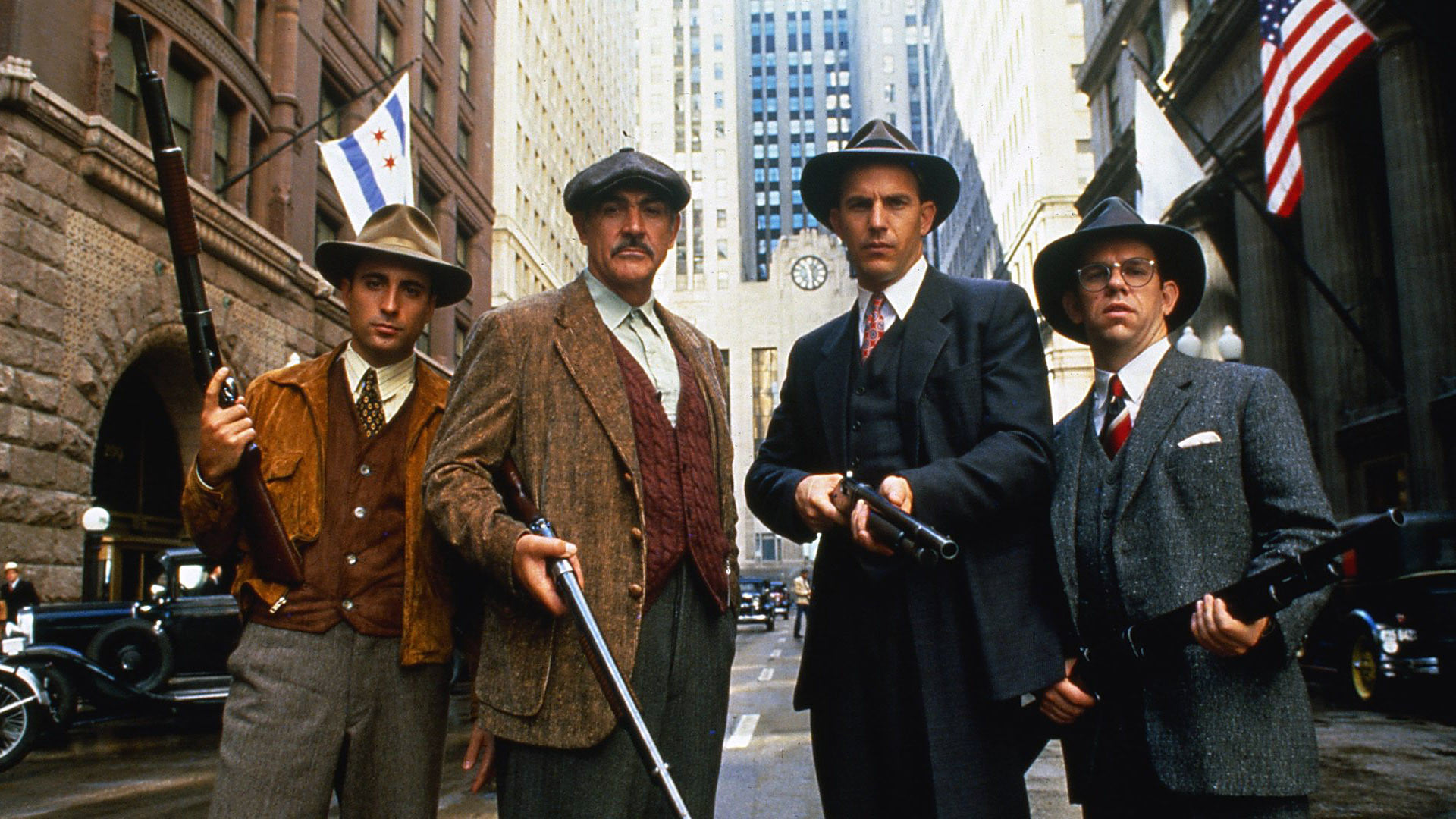
    Finally, we’ll turn our back on horror, to listen to music from a successful period crime thriller, loosely based on the real-life exploits of Eliot Ness and his fellow prohibition agents – “The Untouchables,” from 1987. Kevin Costner plays the by-the-book federal agent who is given a valuable lesson in street smarts by an Irish beat cop played by an Academy Award winning Sean Connery. (“He pulls a knife, you pull a gun. He sends one of yours to the hospital, you send one of his to the morgue. That’s the Chicago way, and that’s how you get Capone.”) Capone is played, incidentally, by a baseball bat wielding Robert De Niro.

    The score is by Ennio Morricone. Morricone, of course, was propelled to fame through his work on Sergio Leone’s spaghetti westerns. He applies some of that same mythmaking skill to this big screen adaptation, which had previously been published as a memoir and developed into a popular television series starring Robert Stack. The high point of the film must be the director’s nail-biting homage to Sergei Eisenstein, a slow motion shoot-out around a baby carriage as it teeters down the stairs of Chicago Union Station.

    Start your weekend with a step in the right direction, with music from the films of Brian De Palma, on “Picture Perfect,” this Friday evening at 6:00 EDT, on WWFM – The Classical Network and wwfm.org.
Tag Cloud

Aaron Copland (93) Beethoven (95) Composer (114) Film Music (137) Film Score (143) Film Scores (255) Halloween (94) John Williams (195) KWAX (229) Leonard Bernstein (103) Marlboro Music Festival (125) Movie Music (152) Mozart (88) Opera (208) Philadelphia Orchestra (89) Picture Perfect (174) Princeton Symphony Orchestra (108) Radio (88) Ross Amico (244) Roy's Tie-Dye Sci-Fi Corner (290) The Classical Network (101) The Lost Chord (268) Vaughan Williams (103) WPRB (396) WWFM (881)

DON’T MISS A BEAT

Receive a weekly digest every Sunday at noon by signing up here


RECENT POSTS