Category: Daily Dispatch

  • Arvo Pärt at 90 Exploring the Sound of Silence

    Arvo Pärt at 90 Exploring the Sound of Silence

    This week on “The Lost Chord,” we ring in the 90th birthday of Arvo Pärt. Pärt was born on September 11, 1935.

    His early works were touched by neo-classicism, but by the 1960s he began to experiment with serial techniques. This put him into conflict with the Soviet authorities who were displeased with an Estonian writing in a cacophonous, cosmopolitan style. His works were banned, which had the effect of driving him into creative silence.

    Finding it impossible to compose, he immersed himself in the study of early church music. He emerged from this period with a new respect for plainsong, Gregorian chant, and polyphony, eschewing complexity, and in its place embracing serenity and beauty. It was a decision that certainly resonated with listeners, and Pärt has gone on to become one of the most performed of contemporary composers.

    According to conductor Neeme Järvi, “The music of Arvo Pärt contains a message which appeals to the deepest spiritual needs of our time.”

    Järvi is the dedicatee of Pärt’s Symphony No. 3 (1971). Although a transitional work, it shows that the composer was already very much on his way to a new simplicity in music.

    In his rejection of radical ideas, Pärt became, in a sense, more radical than the radicals. His soul-searching, study, and artistic silence bore fruit in the creation of a series of works for which he is probably best known: “Fratres” (1976), “Cantus in Memoriam Benjamin Britten,” “Tabula Rasa,” and “Summa” (1977), and “Spiegel Im Spiegel” (1978).

    What makes Pärt’s works so fascinating is the tension between that apparent simplicity, the often intricate nature of his works’ underlying organization, and rests that speak as eloquently as any of the actual notes. These have the remarkable effect of manipulating one’s perception of time and drawing the listener inward.

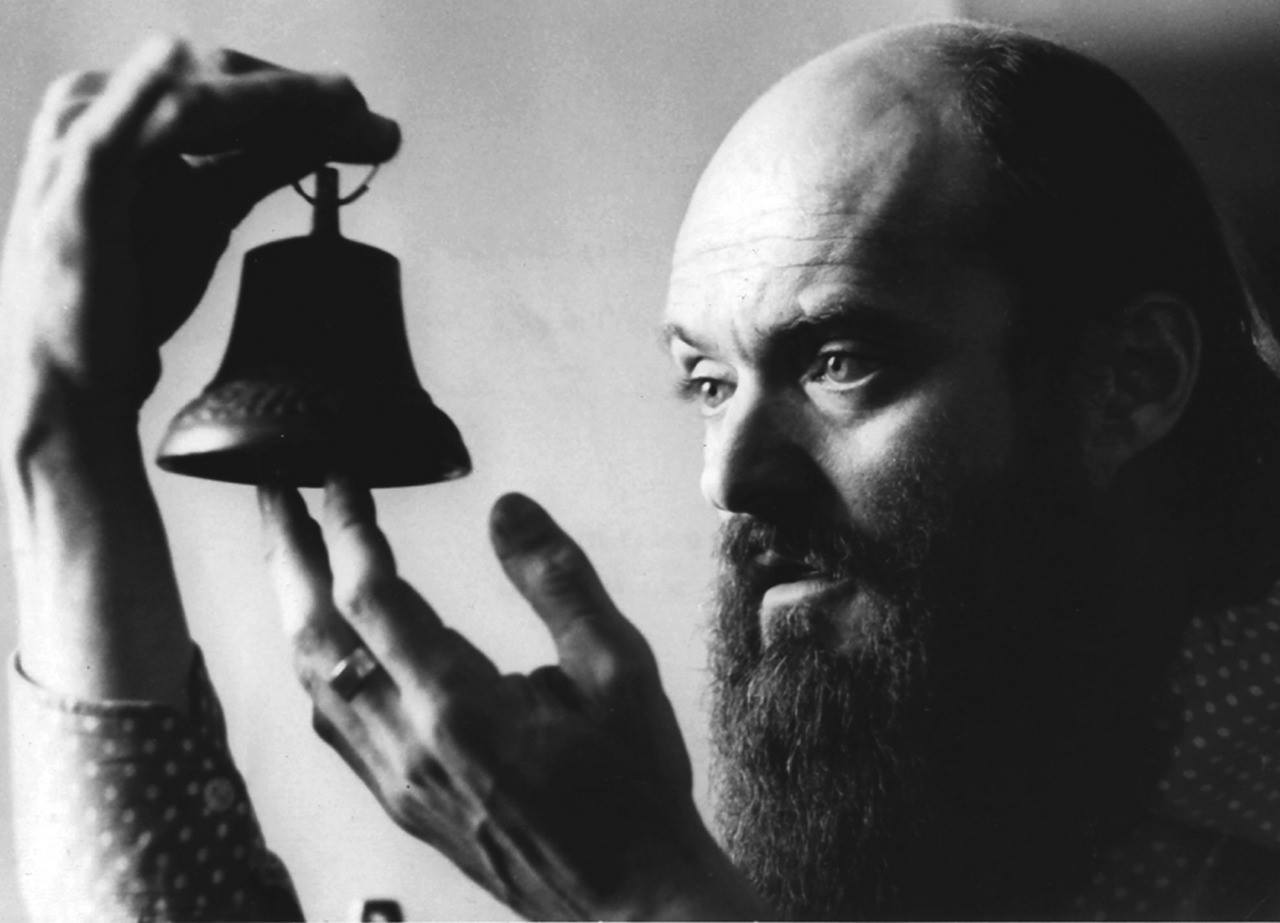
    At the core of Pärt’s mature style is a technique he calls “tintinnabuli” (from the Latin “tintinnabulum,” meaning “bell”), where voices – instrumental or otherwise – arpeggiate the tonic triad, in a bell-like manner, while other voices weave diatonic melody through the midst of it.

    Pärt described it thus: “Tintinnabulation is an area I sometimes wander into when I am searching for answers – in my life, my music, my work. In my dark hours, I have the certain feeling that everything outside this one thing has no meaning. The complex and many-faceted only confuses me, and I must search for unity. What is it, this one thing, and how do I find my way to it? Traces of this perfect thing appear in many guises – and everything that is unimportant falls away. Tintinnabulation is like this. . . . The three notes of a triad are like bells.”

    The work that definitively signaled the arrival of Pärt’s mature style – the acorn from which sprang “tintinnabuli” – was a modest piano piece, titled “Für Alina” (1976). The piece is dedicated to the 18-year-old daughter of a friend, who had gone to study in London. A brief but introspective work, silence plays an important role, and, yes, the individual notes are reminiscent of bells.

    Of course, the larger part of Pärt’s output involves actual human voices, the texts usually on sacred themes. A good example is “Litany” (1994). Set to prayers by St. John Chrysostom, one for each hour of the day or night, the saint’s asceticism seemingly imbues the work.

    I hope you’ll join me for “Wholly Pärt” – Arvo Pärt’s tintinnabular journey – on “The Lost Chord,” now in syndication on KWAX, the radio station of the University of Oregon!


    Clip and save the start times for all three of my recorded shows:

    PICTURE PERFECT, the movie music show – Friday at 8:00 PM EDT/5:00 PM PDT

    SWEETNESS AND LIGHT, the light music program – Saturday at 11:00 AM EDT/8:00 AM PDT

    THE LOST CHORD, unusual and neglected rep – Saturday at 7:00 PM EDT/4:00 PM PDT

    Stream them, wherever you are, at the link!

    https://kwax.uoregon.edu/

  • Back to School with Classical Music on KWAX

    Back to School with Classical Music on KWAX

    This week on “Sweetness and Light,” we’re headed back to school.

    We’ll have frothy music on scholastic themes. None frothier than a head of beer, conjured perhaps by Emil Waldteufel’s “Estudiantina,” or “Band of Students.” Listeners of a certain age may associate this music with a popular jingle for Rheingold Beer. Clearly its inclusion suggests a double-significance – not that I condone riotous student behavior (unless, of course, I’m invited)!

    I’ll also share one of my favorite lesser-heard works of Ralph Vaughan Williams: the “Charterhouse Suite,” a collection of light dances for strings, named for the public school the composer attended, beginning at the age of 15. Pedants will add that the work was actually arranged from an earlier “Suite of Six Short Pieces” for piano.

    Franz Joseph Haydn’s Symphony No. 55 is often referred to as the “Schoolmaster.” Passages are said to be strikingly similar to those in a lost Haydn divertimento, identified as “The Schoolmaster in Love.” In particular, it’s been suggested that the dotted rhythm of the second movement of the symphony calls to mind a schoolmaster’s wagging finger – disrupted at intervals by musical sighs as he swoons with love.

    Along the way, we’ll also enjoy music by Richard Addinsell, Gilbert & Sullivan, and Sigmund Romberg.

    Put on your school clothes, boys and girls, and learn your lessons well. You’ll get a gold star when you join me for “Sweetness and Light,” this Saturday morning at 11:00 EDT/8:00 PDT, exclusively on KWAX, the radio station of the University of Oregon!

    Stream it wherever you are at the link:

    https://kwax.uoregon.edu/

  • Back to School Movie Music Scores on KWAX

    Back to School Movie Music Scores on KWAX

    It’s back to school time!

    Time to take notes, as we get all pedantic about music from movies with academic settings, including selections from “Goodbye, Mr. Chips” (Richard Addinsell), “Dead Poets Society” (Maurice Jarre), “Back to School” (Danny Elfman), “Mr. Holland’s Opus” (Michael Kamen), and “Tom Brown’s School Days” (again, Richard Addinsell).

    Minds will be sharpened and buttons will be pushed, on “Picture Perfect,” music for the movies, now in syndication on KWAX, the radio station of the University of Oregon!


    Clip and save the start times for all three of my recorded shows:

    PICTURE PERFECT, the movie music show – Friday at 8:00 PM EDT/5:00 PM PDT

    SWEETNESS AND LIGHT, the light music program – Saturday at 11:00 AM EDT/8:00 AM PDT

    THE LOST CHORD, unusual and neglected rep – Saturday at 7:00 PM EDT/4:00 PM PDT

    Stream them, wherever you are, at the link!

    https://kwax.uoregon.edu/

  • Bruckner Milhaud Same Birthday Opposites

    Bruckner Milhaud Same Birthday Opposites

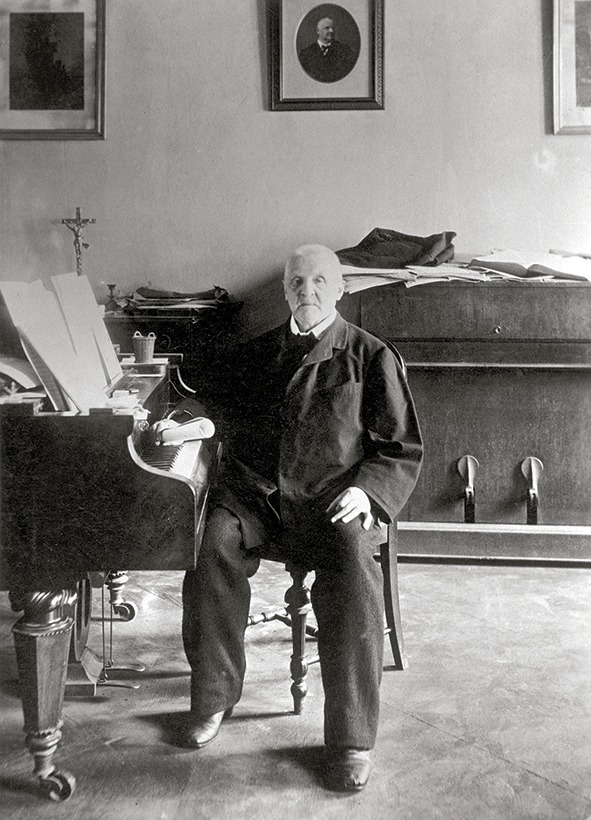
    I never had much truck with astrology. Otherwise, how do you explain Anton Bruckner and Darius Milhaud being born on the same date?

    Bruckner (b. 1824), socially awkward and profoundly devout, always aspiring to the sublime in his music, mostly through grand forms such as the symphony and the mass; and Milhaud (b. 1892), bon vivant, a member of Les Six, churning out hundreds of pieces, against the better judgment of classical greybeards embracing a wide variety of often “lowly” influences (café music, jazz, folk song).

    These are generalizations, of course – Bruckner dabbled in piano quadrilles and Milhaud wrote some pieces inspired by the Jewish liturgy – but by the most casual assessment, the men and artists were opposites. And thank goodness for it. The world of music would be a colorless place, if it were all church pews or boeufs-sur-les-toits.

    Artistic temperament, dear Brutus, is not in our stars, but in ourselves.

    Happy birthday, Anton Bruckner and Darius Milhaud.


    Barenboim’s brassy Bruckner in Chicago

    Buoyant, bearded Bernstein conducts “Le boeuf sur le toit”

  • Magnard Sohy: Music, War, and Remembrance

    Magnard Sohy: Music, War, and Remembrance

    To say that French composer Albéric Magnard had a fiery disposition runs the risk of skirting bad taste.

    It was on this date in 1914 that Magnard went out in a blaze of glory, when, at the age of 59, and as a civilian, he refused to surrender his property to invading German forces. After ushering his wife and two daughters out the back door, he opened fire on some trespassing soldiers, instantly killing one of them. In retaliation, the Germans set fire to his house. Magnard is assumed to have perished in conflagration. However, his body was never found.

    A couple of weeks ago, I was streaming KWAX (as all good folks should), and for the first time encountered a symphony by Charlotte Sohy, written in 1917, that may have been composed in memory of Magnard. Sohy and her husband, Marcel Labey, were friends of the composer, and Sohy’s symphony shares the same key, the uncommon C-sharp minor, as Magnard’s Symphony No. 4.

    Her symphony is subtitled “Grand Guerre,” or “Great War.” Marcel would survive the conflict, having served in the French army. He died in 1968. Sohy, who studied composition with Vincent d’Indy and was a cousin of Louis Durey (of “Les Six” fame), died in 1955.

    Her symphony was never performed in her lifetime. It was heard for the first time in France only in 2019!

    In this age of wonders, now you can enjoy it here:

    Also, Magnard’s Symphony No. 4:


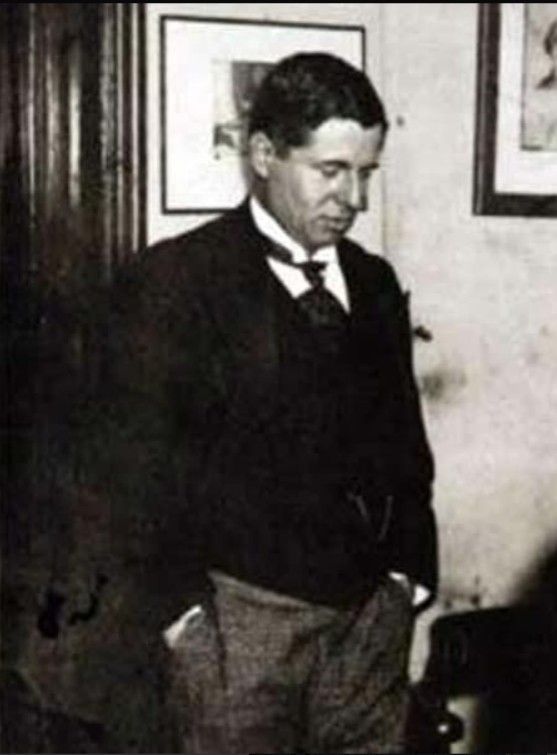
    PHOTOS: Albéric Magnard and Charlotte Sohy

Tag Cloud

Aaron Copland (94) Beethoven (95) Composer (114) Film Music (149) Film Score (143) Film Scores (255) Halloween (99) John Williams (197) KWAX (233) Leonard Bernstein (105) Marlboro Music Festival (125) Movie Music (164) Mozart (91) Opera (215) Philadelphia Orchestra (90) Picture Perfect (174) Princeton Symphony Orchestra (110) Radio (90) Ross Amico (244) Roy's Tie-Dye Sci-Fi Corner (290) The Classical Network (101) The Lost Chord (269) Vaughan Williams (107) WPRB (397) WWFM (881)

DON’T MISS A BEAT

Receive a weekly digest every Sunday at noon by signing up here


RECENT POSTS