Since last March, when Covid broke across New Jersey, the only Barber I’ve visited is Samuel Barber. The composer of the ubiquitous “Adagio for Strings” was born in West Chester, Pa., on this date in 1910.
My favorite Barber pieces? The Violin Concerto. The Symphony No. 1. The Second Essay for Orchestra. “Souvenirs” (in the version for piano four hands). Okay, and the Adagio.
If its passionate, elegiac character seems out of step with such a lovely day, here’s something with a lighter, carefree disposition, from his set of piano pieces titled “Excursions.”
Also, one of his most charming songs, “The Monk and His Cat.”
Here’s a real gem: an interview with Barber in his NYC apartment, to celebrate his 67th birthday. Barber plays the piano, displays his conversational wit, and shares his recording of “Dover Beach,” on which he appears as baritone. Stay tuned for the birthday cake at the end!
His music may do nothing for the length of my beard, but it keeps my soul limber.
Happy birthday, Sam.
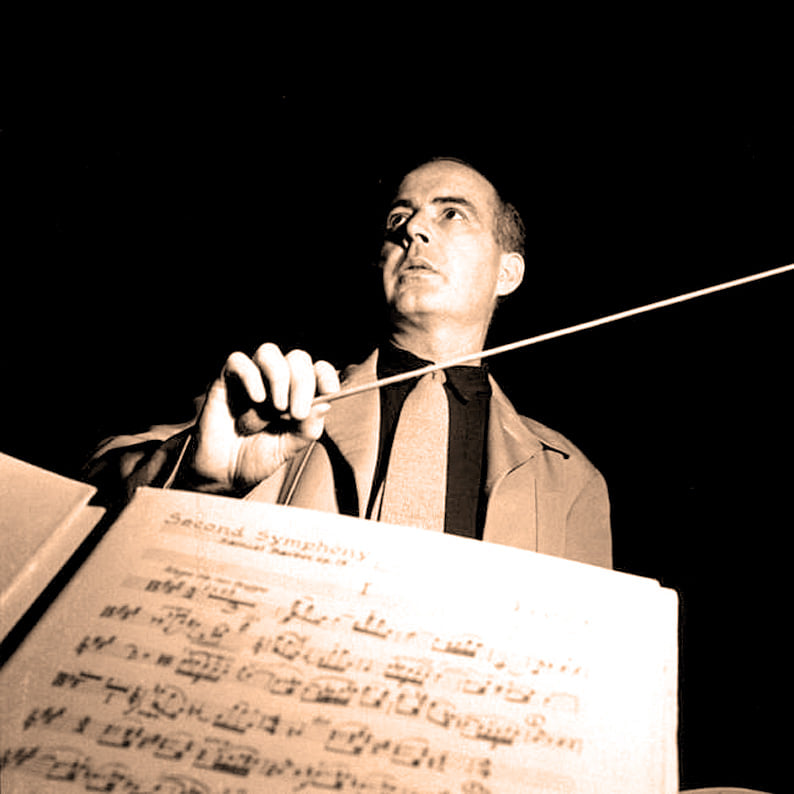
PHOTO: Barber, dressed like Sky Masterson, conducting his Second Symphony. Ironically, Barber disliked the work. He disliked it so much, he tried to destroy it. In 1984, three years after his death, the symphony was revived when a set of parts turned up in an English warehouse.
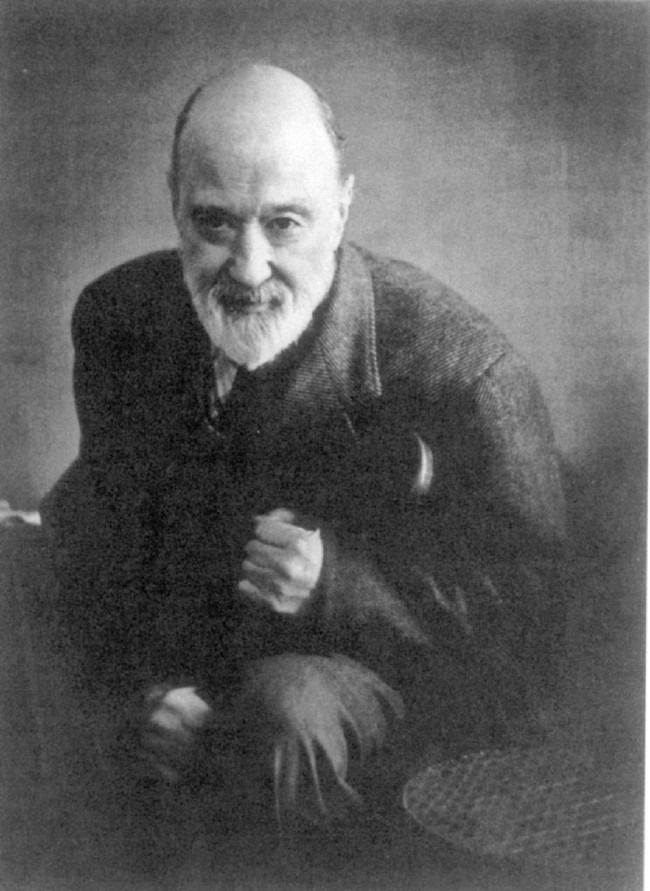
“Are my ears on wrong?” once remarked Charles Ives, marveling at how out of step with musical convention his own compositions could be. Yet he soldiered on, writing works of all stripes, tonalities, and quasi-tonalities, even atonality, navigating with remarkable certainty for some 30 years, with very few performances to affirm his chosen course.
I’m not saying anything new in stating that Ives was an American original. He wrote the kind of music he wanted to write, stitching together hymns and fiddle tunes of his youth into a brilliant crazy quilt of the American experience.
His father had been something of an original himself, a bandmaster during the Civil War. He taught Ives to sing in one key while he played in another. This likely contributed to his son’s unique appreciation of a formative experience: while standing on a street corner during a parade, the boy Ives giddily perceived the natural dissonances and rhythmic complexities resulting from a clash of marching bands as they wrapped around the block.
Thankfully, his quirky musical predilections were tempered by a practical streak. Ives pursued a career in the insurance business, and he became very successful at it. (His work in the field helped lay the groundwork for modern practices in estate planning.) While this would occupy much of his time, it also allowed him the financial security to follow his idiosyncratic muse. Ives composed in the evenings, on weekends, and during holidays. For a few years, in the 1890s, he was also organist and choirmaster at a couple of New York churches.
Ives retired in 1930, which permitted him to devote himself wholeheartedly to music. Ironically, by then, he found he was no longer able to compose. His wife recalled a day in 1927 when he came downstairs with tears in his eyes and confessed that everything sounded wrong to him. After that, he labored mostly at revision and publication.
By the time his works finally began to gain recognition, it had already been 20 years since he stopped writing. At the time of his death, in 1954, he was still widely misunderstood and much of his music remained unperformed. Nevertheless, he had some important champions. He was a recipient of the Pulitzer Prize for Music in 1947, for his Symphony No. 3, subtitled “The Camp Meeting,” a work he composed in 1904. The symphony was given its belated premiere, under Lou Harrison’s direction, in 1946.
Arnold Schoenberg regarded Ives as a paragon of artistic integrity. After Schoenberg’s death, his widow found the following note, scrawled, among his papers: “There is a great Man living in this Country – a composer. He has solved the problem of how to preserve one’s self-esteem and to learn. He responds to negligence by contempt. He is not forced to accept praise or blame. His name is Ives.”
Here is Ives, in all his patriotic, profane glory, singing “They Are There,” from 1943. Originally written in 1917, for the Great War, the song employs an updated text.
Ives draws on his memory of the wrap-around marching bands of his youth, in Danbury, Connecticut, for “The Fourth of July.” Note the climactic rocket explosion, fading away into sparks!
Finally, the work that won him the Pulitzer, the Symphony No. 3, “The Camp Meeting”:
Ives’ characteristically gruff reaction: “Prizes are for boys. I’m grown up.” In private, though, he proudly hung the certificate on his wall.
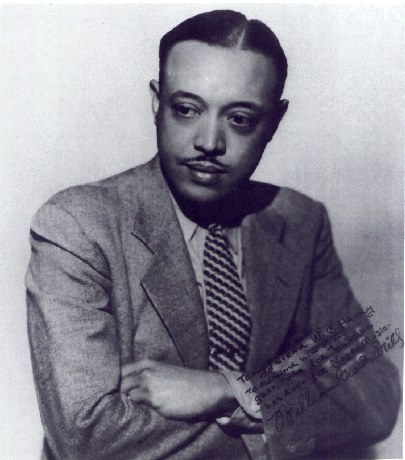
Today is the birthday of William Grant Still, the so-called “Dean of Afro-American composers.”
Still, who lived from 1895 to 1978, emerged from unlikely circumstances – born in Woodville, Mississippi, and raised in Little Rock, Arkansas – to become a major force in American music. Having abandoned a career in medicine for studies at the Oberlin Conservatory of Music and the New England Conservatory in Boston, Still was a “first” in many regards.
His Symphony No. 1, the “Afro-American Symphony,” was the first written by a black composer to be performed by a major orchestra (the New York Philharmonic). He was the first to have been allowed the opportunity to conduct a major orchestra (the Los Angeles Philharmonic, at the Hollywood Bowl). His opera, “Troubled Island,” became the first to be produced by a major company (the New York City Opera). Another of his operas, “A Bayou Legend,” was the first to be performed on national television (as recently as 1981). His works were performed internationally by the Berlin Philharmonic, the London Symphony Orchestra, the BBC Symphony, and the Tokyo Philharmonic.
Perhaps the least likely pupil of Edgard Varèse, Still incorporated jazz and blues elements into his concert music. He cut his teeth writing arrangements for Paul Whiteman, W.C. Handy, and Artie Shaw. According to Eubie Blake, one of Still’s improvisations in the pit band during Blake’s revue “Shuffle Along” became the basis for Gershwin’s hit tune “I Got Rhythm.” Still didn’t appear to be bitter about the appropriation (which Blake conceded was probably inadvertent). In fact, Still and Gershwin remained on amicable terms and made it a point to attend performances of one another’s music.
I’m sure Gershwin would have been only too happy to have composed the second movement of Still’s Symphony No. 2, “Song of a New Race”:
Still’s Symphony No. 1 (the first of five) – better known as the “Afro-American Symphony” – is a personal favorite, as fresh and difficult to resist as Dvořák’s “American” String Quartet. For me, the first recording, with Karl Krueger conducting, is still the best.
Here’s a shout-out to all my peeps in the Lehigh Valley.
Today is the 280th birthday of Moravian composer John Antes.
Antes, born in Frederick, Montgomery County, PA, in 1740, is credited with being one the first American composers to write chamber music. He was also the creator of the earliest surviving bowed string instrument made in America by someone actually born in the colonies. Antes’ violin, made in 1759, is housed in the Museum of the Moravian Historical Society in Nazareth, PA. A viola, made by Antes in 1764 (again believed to be the earliest surviving of American origin), is housed in the Lititz Moravian Congregation Collection in Lancaster County. Antes created at least seven such instruments.
In 1752, Antes attended school in Bethlehem, PA. In 1760, he was admitted into the Single Brethren’s choir there. From Bethlehem, he travelled to Herrnhut, Germany, the international center of the Moravians, to prepare for a career as a missionary. In the meantime, he also took up watchmaking. He was ordained a minister in 1769, and then set out for Egypt. There, he served as a missionary to the Coptic Church in Grand Cairo. After a largely uneventful decade, he was captured and bastinadoed by followers of Osman Bey.
During his convalescence, he occupied himself with the composition of three string trios. He also sent a copy of six quartets to Benjamin Franklin, who he had known in America. The quartets are now lost (nice job, Ben), but the trios survive.
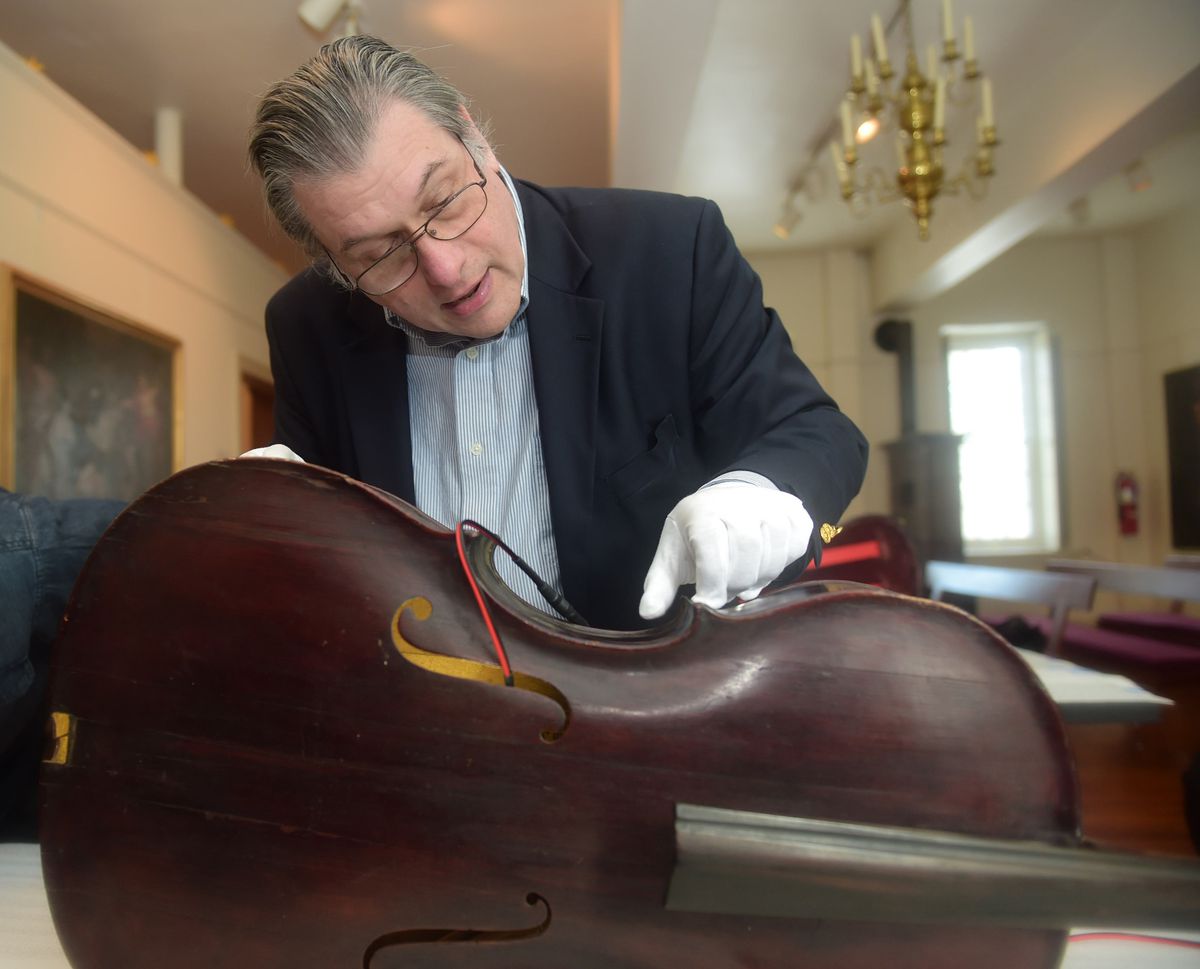
Apparently, Antes also delved into making keyboard instruments (he completed a few for friends), but then the church elders reined him in. An Antes cello was discovered in somebody’s attic in 2018.