Happy birthday, Franz Liszt (1811-1866).
Someone put together a compendium of the use of the “Hungarian Rhapsody No. 2” in cartoons. I’m a little under the weather today, so enjoy.
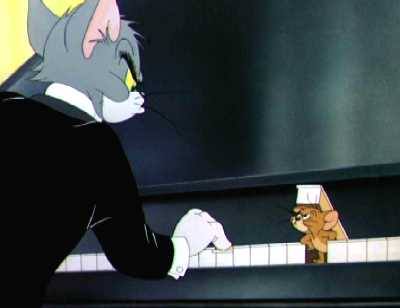
Happy birthday, Franz Liszt (1811-1866).
Someone put together a compendium of the use of the “Hungarian Rhapsody No. 2” in cartoons. I’m a little under the weather today, so enjoy.
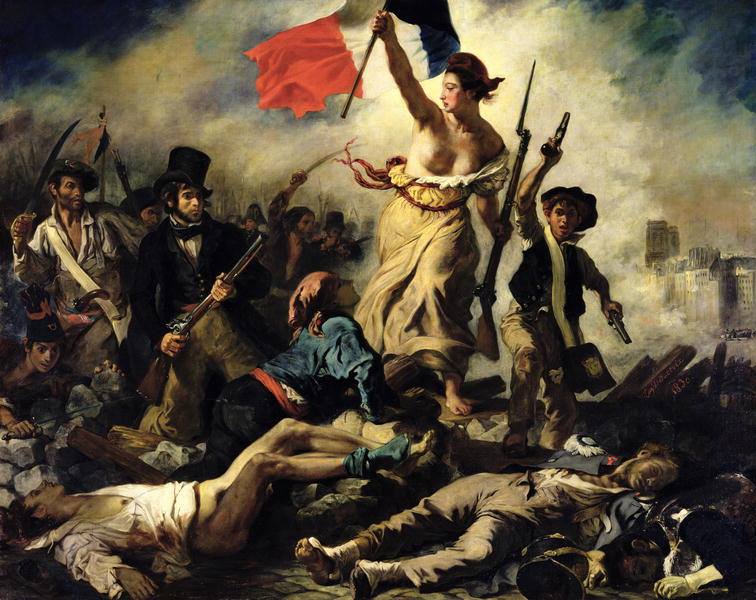
How many revolutions has France had, anyway? 1789, of course; then 1830; the “Les Miserables” revolution of 1832; another big one in 1848; a failed one in 1871… You might say, all throughout the 19th century, the French were a rather revolting people.
This morning on WPRB, we’ll hear musical responses to revolutionary France, including many by native composers, including Darius Milhaud’s martial Symphony No. 4, written to mark the centenary of the February Revolution of 1848.
We’ll also have Hector Berlioz’s “Symphonie funèbre et triomphale,” composed to honor those who died during the July Revolution of 1830. Of course, that was the heyday of the gunslinger-pianist, and Paris was teeming with foreign keyboard artists like Frederic Chopin and Franz Liszt. The conflict of 1830 inspired Liszt to write a symphonic poem, “Héroïde funèbre.”
But Bastille Day is really all about 1789, so we’ll also include music by Luigi Cherubini and Étienne Nicolas Méhul, both important figures during what is commonly known as THE French Revolution.
Otherwise, there will be abundant apolitical celebrations of France in general and Paris in particular, including the surrealist ballet “Les mariés de la tour Eiffel” (“The Wedding Party on the Eiffel Tower”), a collaborative work by members of Les Six, and plenty of musical joie de vivre courtesy of composers like Jacques Ibert and Jean Françaix.
We’ll slather everything with French dressing this morning, from 6 to 11 EDT, on WPRB 103.3 FM and at wprb.com. Je suis le grand fromage, on Classic Ross Amico.
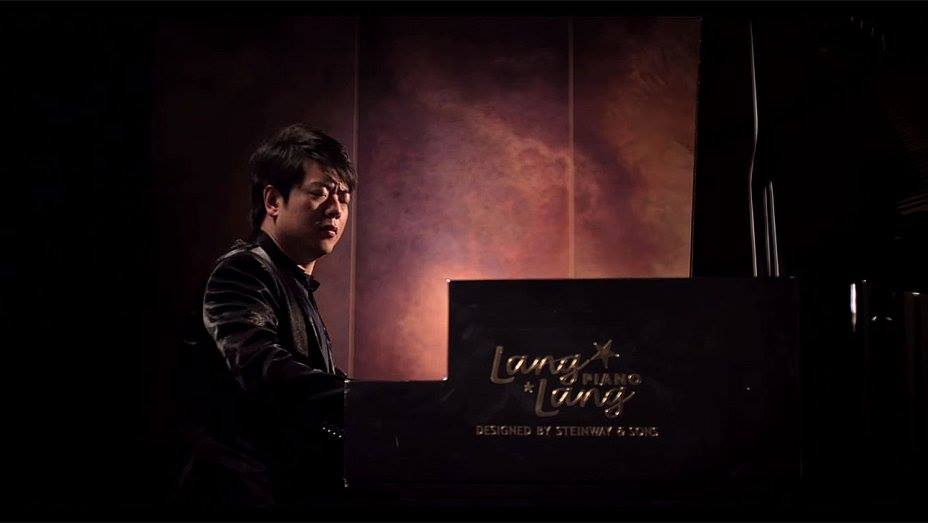
I’m telling you, the zeitgeist positively screams “Morricone!”
Lang Lang gives “The Hateful Eight” the Franz Liszt treatment:
https://www.youtube.com/watch?v=O8ic-gCiCN4
If Morricone doesn’t get his Oscar next Sunday, I’ll eat a great big bowl of spaghetti (as in western).
Here’s the original, by way of comparison:
PHOTO: No confusing whose piano that is
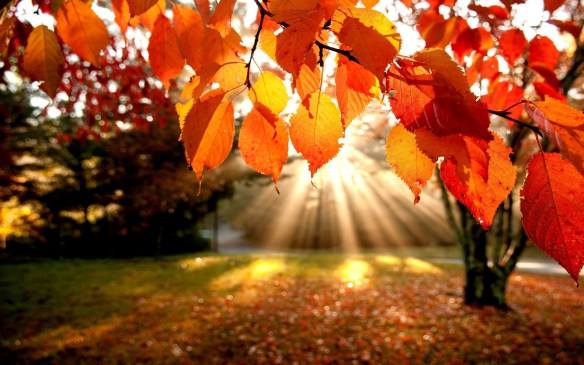
This is a textbook example of grasping for low-hanging fruit – or perhaps radiant leaves would be more appropriate. Be that as it may, who doesn’t love autumn? The combination of crisp, Jack Frost exhilaration and pie-induced coziness is hard to beat.
I hope you’ll join me this Thursday morning on WPRB as we celebrate the glorious season of autumn. I know, we’re already a month into it, but autumn doesn’t become truly autumn until October is ripe on the vine.
We’ll enjoy seasonal works by Cécile Chaminade, Vernon Duke, Gerald Finzi, Billy Mayerl, Einojuhani Rautavaara, Ottorino Respighi, Tomáš Svoboda, Virgil Thomson, Peter Warlock, and many, many others, as well as non-seasonal works that for some reason hold for me seasonal associations. Also, I would be remiss not to toss in a piece or two by Franz Liszt, one of the great musical minds of the 19th century – and a great person to boot – on the occasion of his 204th birthday anniversary.
I had an eager listener phone in on September 23, the Autumnal Equinox, to request music to celebrate the season. I was sorry to have to say, “Too soon!” Now that the pledge drive is over, we can all drink deep, like Dionysus at Keats’ “cyder press.” Let the rustic dances begin!
Sincere thanks to all of you who did your part last week to support independent radio. (Kenneth Hutchins, you are now the Patron Saint of Classic Ross Amico.) For those of you who weren’t listening or were unable to pledge, remember, you may do so at any time, at wprb.com. You’ll be doing me a personal kindness if you send along a line or two to let them know how much you enjoy the show.
We’ll be offering up a tray full of apples and Spiced Wafers tomorrow morning, from 6 to 11 ET, at WPRB 103.3 FM, or online at wprb.com. It will be more fun than a five-hour leaf fight on Classic Ross Amico.
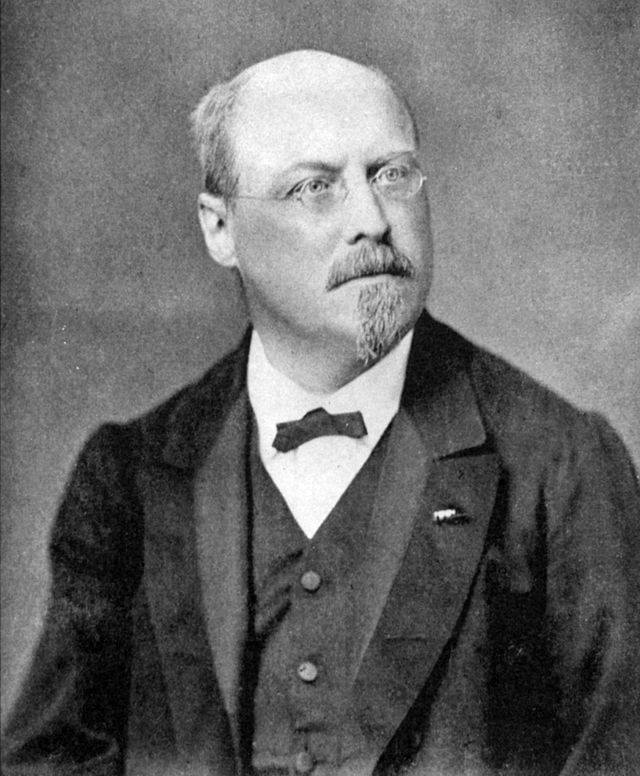
There’s one story about the German-Swiss composer Joachim Raff that I find so endearing. When Raff learned that Franz Liszt would be playing in Basel, he traveled by foot from Zurich (a distance of nearly 50 miles), through a driving rain, only to discover upon reaching the venue that the concert had sold out.
Word reached Liszt of the young man’s predicament, and the great pianist, in yet another of his legendary acts of generosity, had a chair put up on the stage so that Raff would be able to enjoy the recital – which he did, sitting there, grinning like an idiot, amidst a widening pool of water.
Raff became Liszt’s assistant at Weimar, where he orchestrated a number of the elder composer’s works, until Liszt gained the technique and confidence himself; after which time, Liszt went back and revised many of the earlier pieces. In turn, Liszt staged the premiere of Raff’s opera “King Alfred” (though, because of an illness in the family, he had to hand over the conducting duties to Raff himself).
Raff must have been a singularly likable figure. His was the rare instance of a composer who was accepted in both camps, on either side of the seemingly unbridgeable divide that separated the “absolute” music of Mendelssohn and Schumann and the “program” music – the so-called “Music of the Future” – of Liszt and Wagner.
In 1878, Raff became the first director of the Hoch Conservatory in Frankfurt, where he hired Clara Schumann, among the eminent faculty, and initiated a class for female composers.
During his lifetime, Raff was one of the best-known German composers. It’s unfortunate that so little of his music endures in the public memory (beyond, perhaps, the “Cavatina” for violin and piano), but the symphonies, in particular, have not aged well.
Raff’s practice was to choose a promising program – for instance, in the Symphony No. 5, the “Lenore” Symphony, he selected an overheated ballad by Gottfried August Bürger, about a maiden who is swept away amidst jeering specters by the phantom of her former lover – and then he would negate all the drama by rendering the symphony in classical form. In other words, the story would be straightjacketed in order to suit the requirements of form, rather than the other way around – which would be easier to forgive if the symphony weren’t nearly an hour long.
However, he did leave behind some very impressive music. You just really have to look for it. I hope you enjoy these “diamonds in the Raff”:
Piano Concerto in C minor:
“Ode to Spring”:
Happy birthday, Joachim Raff (1822-1882).
Aaron Copland (94) Beethoven (95) Composer (114) Film Music (149) Film Score (143) Film Scores (255) Halloween (97) John Williams (197) KWAX (232) Leonard Bernstein (105) Marlboro Music Festival (125) Movie Music (164) Mozart (91) Opera (215) Philadelphia Orchestra (90) Picture Perfect (174) Princeton Symphony Orchestra (110) Radio (90) Ross Amico (244) Roy's Tie-Dye Sci-Fi Corner (290) The Classical Network (101) The Lost Chord (269) Vaughan Williams (107) WPRB (397) WWFM (881)