Tag: Franz Liszt

  • Beyond the 20 Carols Christmas Music Rediscovered

    Beyond the 20 Carols Christmas Music Rediscovered

    A thousand years of Christmas music, and every year it’s just about reduced to the same old 20 carols.

    If, like me, you are frustrated by the countless regurgitations of “Hark! The Herald Angels Sing” for every conceivable vocal and instrumental combination, plugged in perfunctorily to a well-worn playlist, between Mozart and Dvořák, join me tomorrow morning on WPRB, when we’ll go completely anti-commercial, anti-ADD, and completely balls-out Christmas.

    Our featured work will be Franz Liszt’s “Christus,” three hours of hardcore Jesus music, of which only the first 70 minutes or so deal with the Christmas story. In fact, Part III contains a 40-minute setting of the “Stabat Mater dolorosa.” You won’t hear that at the shopping mall.

    Okay, so maybe it’s not for everyone, but the music does have its rewards. Forget “Jingle Bell Rock.” Brew yourself something strong, send your regrets to the office “holiday party,” if you can, and seclude your wittily antlered self in a quiet place with no distractions to marvel at this massive oratorio-cum-symphonic poem.

    Due to the length of this extraordinary work (almost exactly three hours, played uninterrupted), it will begin in the 7:00 hour. That will insure that the piece will have run its course by the time Will Constantine Jr. rolls in at 11:00 for “Blues, Bop and Beyond.”

    If you want jolly, call up Rankin-Bass. For the rest of you, join me tomorrow morning from 6 to 11 EST, on WPRB 103.3 FM and at wprb.com. Santa’s not the only one who’s got a little Liszt, on Classic Ross Amico.

  • Franz Liszt’s Merry Liszt-mas on WPRB

    Franz Liszt’s Merry Liszt-mas on WPRB

    Merry Liszt-mas!

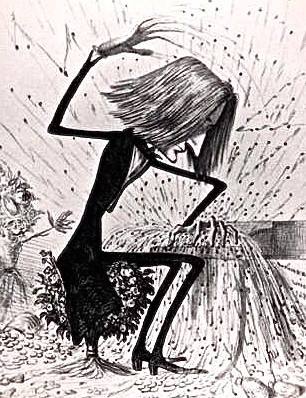
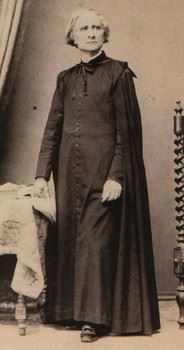
    When you tune in to WPRB this morning, don’t be surprised to find the bulk of the programming devoted to the music of Franz Liszt. Liszt, who had a diabolical reputation both as a pianist and as a ladies’ man, was also quite devout. In fact, he eventually took minor orders and lived in a monastic cell in Rome, where he was known as the Abbé Liszt.

    We’ll be listening to his three-hour oratorio/symphonic poem, “Christus,” celebrating the life and legacy of Christ. However, Liszt being Liszt, there are times when he wholly dispenses with the frankincense and myrrh and piles on the tragic heroism. The “March of the Three Holy Kings” which concludes Part I sounds like it could have been lifted by Richard Wagner (and it may have been) for use in his “Ring” cycle. The music was written contemporaneously with Wagner’s “Das Rheingold.”

    As time allows, we’ll also enjoy Liszt’s “Christmas Tree Suite.” Liszt dedicated the work to his granddaughter, Daniela von Bülow, the daughter of Cosima Liszt and conductor Hans von Bülow. Some of the early movements are reflections on familiar carols, but as the suite progresses, the movements become dreamier and more introspective. The work was first performed on Christmas Day in 1881, the day Daniela’s birthday was always observed, though she was actually born on Christmas Eve.

    “Christus” begins at 7:00 EST. With luck, the “Christmas Tree Suite” will begin at 10:25. Join me at 6:00 for a bit of musical tailgating and some more selections for Christmas.

    Liszt-en all morning, in fact, from 6 to 11:00 on WPRB 103.3 FM and at wprb.com. They call me the Abbé Normal, on Classic Ross Amico.

  • All Saints’ Day Mozart & Musical Saints

    All Saints’ Day Mozart & Musical Saints

    It’s November 1. All Saints’ Day.

    While Mozart may have been no saint, he certainly did write some divine music. I hope you’ll join me for today’s Noontime Concert, as we enjoy his Serenade No. 10 in B-flat for 13 wind instruments, the so-called “Gran Partita.” The performance, by the period instrument ensemble Grand Harmonie, took place at Harvard Memorial Chapel in Cambridge, MA, on October 17, 2015. Grand Harmonie’s next concert, an all-Mozart program, will be held on Friday at 7:30 p.m. at St. Ignatius of Antioch, 552 West End Ave., in New York City. For more information, look online at grandharmonie.org.

    Following the noon concert, we will continue with the afternoon’s programming, which will be devoted to some musical saints. Featured will be Franz Liszt’s “St. Francis of Assisi’s Sermon to the Birds,” Johann Sebastian Bach’s “St. Anne” Prelude and Fugue, Sir Arnold Bax’s “St. Patrick’s Breastplate,” Norman Dello Joio’s “The Triumph of Saint Joan,” and Ottorino’s “Church Windows” (which includes panels devoted to St. Michael the Archangel, St. Clare, and St. Gregory the Great), as well as music by St. Hildegard von Bingen.

    I hope you’ll join me between 12 and 4 p.m. EDT for some heavenly music, on WWFM – The Classical Network and at wwfm.org.

  • Liszt’s Birthday & Hungarian Rhapsody Cartoons

    Liszt’s Birthday & Hungarian Rhapsody Cartoons

    Happy birthday, Franz Liszt (1811-1866).

    Someone put together a compendium of the use of the “Hungarian Rhapsody No. 2” in cartoons. I’m a little under the weather today, so enjoy.

  • French Revolutions in Music

    French Revolutions in Music

    How many revolutions has France had, anyway? 1789, of course; then 1830; the “Les Miserables” revolution of 1832; another big one in 1848; a failed one in 1871… You might say, all throughout the 19th century, the French were a rather revolting people.

    This morning on WPRB, we’ll hear musical responses to revolutionary France, including many by native composers, including Darius Milhaud’s martial Symphony No. 4, written to mark the centenary of the February Revolution of 1848.

    We’ll also have Hector Berlioz’s “Symphonie funèbre et triomphale,” composed to honor those who died during the July Revolution of 1830. Of course, that was the heyday of the gunslinger-pianist, and Paris was teeming with foreign keyboard artists like Frederic Chopin and Franz Liszt. The conflict of 1830 inspired Liszt to write a symphonic poem, “Héroïde funèbre.”

    But Bastille Day is really all about 1789, so we’ll also include music by Luigi Cherubini and Étienne Nicolas Méhul, both important figures during what is commonly known as THE French Revolution.

    Otherwise, there will be abundant apolitical celebrations of France in general and Paris in particular, including the surrealist ballet “Les mariés de la tour Eiffel” (“The Wedding Party on the Eiffel Tower”), a collaborative work by members of Les Six, and plenty of musical joie de vivre courtesy of composers like Jacques Ibert and Jean Françaix.

    We’ll slather everything with French dressing this morning, from 6 to 11 EDT, on WPRB 103.3 FM and at wprb.com. Je suis le grand fromage, on Classic Ross Amico.

Tag Cloud

Aaron Copland (92) Beethoven (95) Composer (114) Film Music (123) Film Score (143) Film Scores (255) Halloween (94) John Williams (187) KWAX (229) Leonard Bernstein (101) Marlboro Music Festival (125) Movie Music (138) Opera (202) Philadelphia Orchestra (89) Picture Perfect (174) Princeton Symphony Orchestra (106) Radio (87) Ralph Vaughan Williams (85) Ross Amico (244) Roy's Tie-Dye Sci-Fi Corner (290) The Classical Network (101) The Lost Chord (268) Vaughan Williams (103) WPRB (396) WWFM (881)

DON’T MISS A BEAT

Receive a weekly digest every Sunday at noon by signing up here


RECENT POSTS