Today is the Feast Day of Saint Francis of Assisi. This is a saint who was never too busy to chat with the birds or to befriend a wolf. He introduced the crèche to Christmas, complete with livestock. He even lobbied for a special law so that people would provide for the birds and the beasts.
Regardless of one’s creed, no one, I should think, would take umbrage at the idea of love and respect for the natural world. Take a moment today to be kind to the animals. Hug your pet. Water the birds. Let a cricket out of the house. Then join me at 4:00 on The Classical Network for music inspired by Saint Francis and friends.
We’ll hear Franz Liszt’s “Saint Francis of Assisi’s Sermon to the Birds,” Kenneth Fuchs’ horn concerto “Canticle to the Sun,” and Paul Hindemith’s Saint Francis ballet “Nobilissima Visione.”
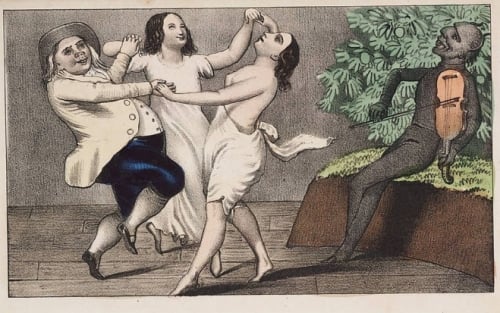
Cats will waltz. Grasshoppers will dance. Dogs will eat pancakes. And sheep may safely graze.
At 6:00, you’ll have a chance to expand your affection to the cryptozoological realm, with music from movies about dragons, on “Picture Perfect.”
What’s not to love? The music will have legs – four of them! – from 4 to 7 p.m. EDT, on WWFM – The Classical Network and wwfm.org.
It was on this date in 1770 that the Mozarts, father and son, attended a Holy Week service in Rome. Young Wolfgang, then only 14, was intrigued by what he heard.
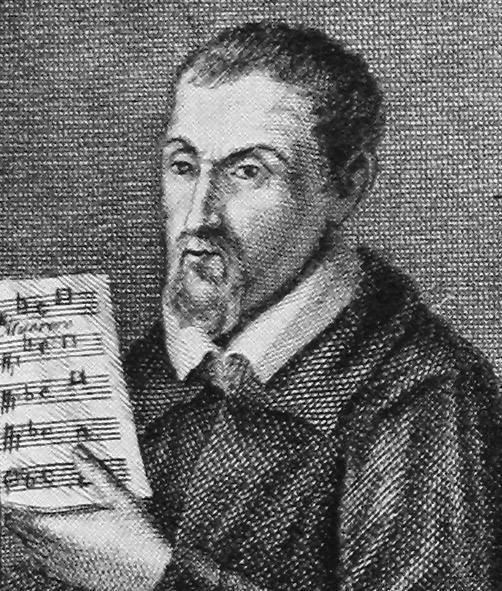
Gregorio Allegri composed his “Miserere mei, Deus” – or “Miserere,” for short, a setting of Psalm 51 – in the 1630s. The piece was designed for exclusive performance in the Sistine Chapel, as part of the Tenebrae service of Holy Wednesday and Good Friday.
Allegri’s conception was a striking one, for two choirs, one intoning a simple chant, and the other, spatially separated, providing ornamentation. The pièce de résistance was the inclusion of a stratospheric top C, which has the effect of making the “Miserere” one of the most haunting works in the choral literature of the late Renaissance.
The Vatican, realizing it had a good thing, forbade performance of the piece outside its walls or copies of the score to leave the premises, under threat of excommunication. But Mozart couldn’t help himself. A couple of hours later, he copied the work down from memory. Not long after, he handed it off to author and music historian Charles Burney, who published it without delay.
Mozart was summoned before the Pope, but rather than being excommunicated, he was showered with praise for his feat of musical genius, and the ban on the “Miserere” was lifted.
But did Mozart ever actually hear that famous “top C?”
In 1831, Mendelssohn made his own transcription of the “Miserere,” but, for whatever the reason, the performance he heard was sung a fourth higher than intended.
Leap ahead half a century to the first edition of “Grove’s Dictionary of Music and Musicians,” published in 1881. An editorial error resulted in a passage from Mendelssohn’s transcription being incorporated into a musical example used to illustrate one of the entries. The article was widely reproduced, until Grove’s error came to be established as the preferred version of the “Miserere.”
A good thing, too! I wouldn’t trade that top C for the world.
Here is Allegri’s “Miserere,” performed by the ensemble Tenebrae:
Franz Liszt also made an arrangement, which is most frequently encountered on the organ – sometimes the piano – but apparently he also orchestrated it. His version cleverly juxtaposes the “Miserere” with Mozart’s own “Ave verum corpus.”
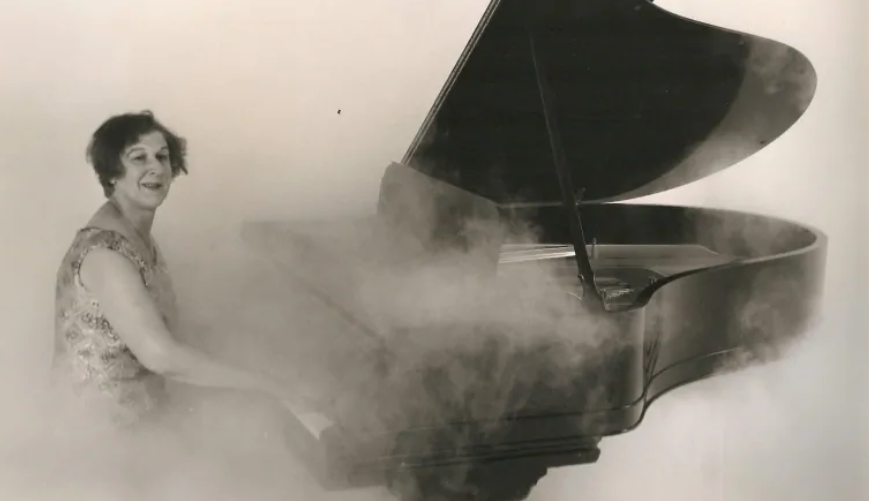
Does anyone remember Rosemary Brown? Brown was the English spiritualist who claimed that the great composers were still very much active and dictating posthumous works to her.
At the age of 7 (circa 1923), Brown claimed to have been confronted by a curious specter with long white hair and a flowing cassock. The specter prognosticated that one day he would make her famous. It was ten years before she stumbled across an old photograph and realized that what she had encountered was no less than the shade of Franz Liszt.
Brown was born into a family of alleged psychics. Both her parents and grandparents claimed extrasensory powers. Brown took up the piano at the age of 15. Her period of study is unclear, as she seems to have changed her story over the decades, but she would have us believe she was basically a dilettante with little formal training.
Then, in 1964, the ghost of Liszt reappeared and she began “transcribing” new works by the great composers – Bach, Mozart, Beethoven, Schubert, Schumann, Chopin, Brahms, Grieg, Debussy, Rachmaninoff, and Stravinsky. And Liszt, of course. These included two symphonies she attributed to Beethoven, a new “Fantaisie-Impromptu” by Chopin, and a 40-page sonata by Schubert.
She claimed that some of the composers directed her hands on the keyboard (Chopin and Liszt); others sang (Schubert) or dictated notes (Bach and Beethoven). All of them communicated in English.
Skeptics abounded. A number of critics and musicologists dismissed the new compositions as substandard pastiches, claiming that the great composers tended to reinvent themselves and push boundaries, while these freshly “dictated” works offered nothing of the sort.
Some psychologists attributed the phenomena to extraordinary activity on the part of Brown’s subconscious, with the medium essentially reworking and synthesizing all the music she had been exposed to as a child.
Still, they had to admit it was impressive. Over the course of her life, Brown produced hundreds of such pieces. One expert described it as “the most convincing case of unconscious composition on a large scale.”
Respected concert pianists Howard Shelley, Peter Katin, Cristina Ortiz, and John Lill have all included these perhaps spurious works on their programs.
Brown died in 2001. Whether or not she herself is now dictating is anyone’s guess.
A regular WWFM listener shared this with the station during this afternoon’s celebration of the birthday of Franz Liszt. I thought you might enjoy it.
Don’t forget, we’re looking for you to share your personal observations on what makes us unique. Can you “Hear the Difference?”
As we move toward our Fall Membership Campaign, we’re asking you, our listeners, to take a moment to tell us exactly what it is that you love about WWFM, and what it is that makes us stand apart.
You can send us your thoughts by heading over to the station website at wwfm.org and clicking on the “Hear the Difference” box, at the upper right corner of the screen. Type your comments into the box, then hit submit. We’ll share them later this week, as we encourage others to step up and join you in support of the great – and unique – classical music programming we provide every day.
If your membership is up for renewal, please take a moment to continue your commitment by clicking on “donate.”
You don’t have to sell your soul for great music. Your financial support is all we require. Thank you for doing your part to sustain the music we all love, on WWFM – The Classical Network.
He is one of history’s most influential and undersold composers.
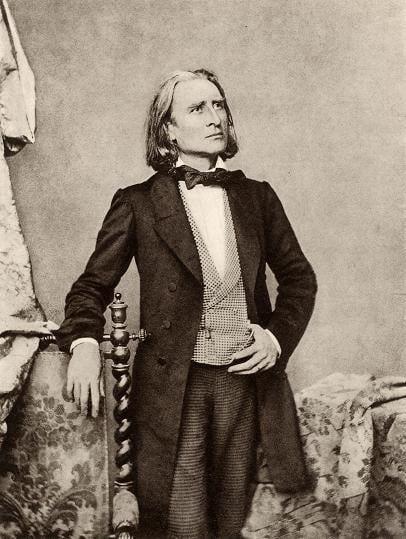
A champion of program music (music intended to express extramusical ideas), the inventor of the symphonic poem, a pioneer of structural innovation, and an explorer of strange new harmonies, Franz Liszt seldom gets the credit he deserves. By contrast, a composer like Richard Wagner (Liszt’s son-in-law) is revered for the “Tristan chord,” a kind of shot-heard-‘round-the-world that is said to have changed music. It’s seldom noted that it was but one of the ideas Wagner “borrowed” from Liszt.
As a conductor, Liszt’s energetic promotion of composers like Hector Berlioz and Wagner – then a political fugitive – marred with scandal and intrigues his tenure at the Weimar court. For his pains, he was frequently attacked by critics, derided by his peers, and undercut by his own showmanship.
No one seems to contest that he was one of the most remarkable pianists who ever lived, but the assessment is often tempered by charges of vulgarity, of crass pandering to sensation and to the mob.
Liszt played benefit concerts for victims of flood and fire, as well as for political refugees, spearheaded the creation of a monument to and festival for Beethoven in Bonn, never charged a fee for his lessons to his many pupils, and selflessly promoted the works of others, including (beside Berlioz and Wagner) Grieg, Smetana, Debussy, Saint-Saëns, Fauré, and Borodin.
This is the thanks he gets?
At the very least, I think he deserves three hours of airplay on his birthday. I hope you’ll join me this afternoon for a mix of piano and orchestral works, choral music and lieder, and transcriptions and fantasies of famous works by other composers.
It will be an all-Liszt playlist, from 4 to 7 p.m. EDT, on WWFM – The Classical Network and wwfm.org.