Tag: Franz Liszt

  • Alexandre Dumas Music on The Lost Chord

    Alexandre Dumas Music on The Lost Chord

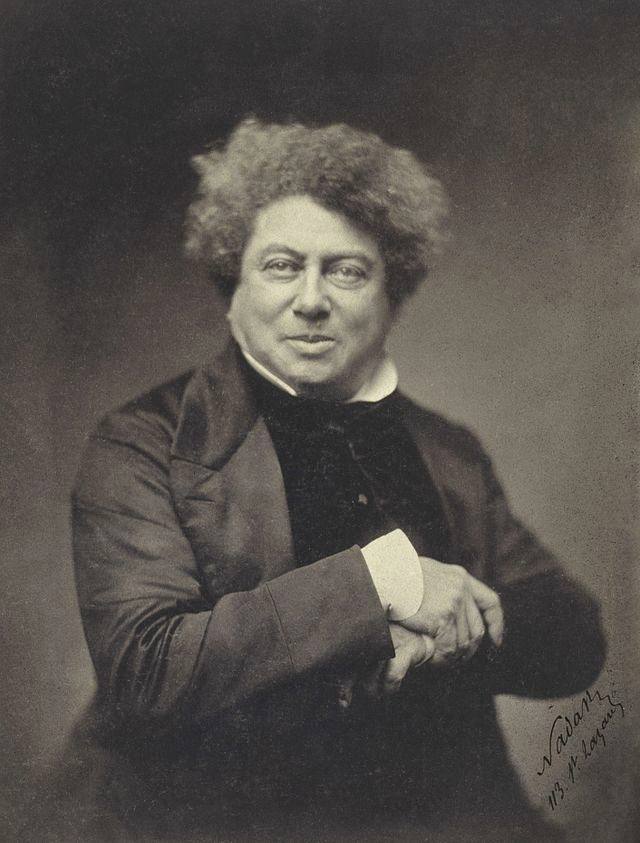
    He is best known as the author of “The Three Musketeers” and “The Count of Monte Cristo.” However, Alexandre Dumas churned out historically-inspired prose on all manner of subjects, and he did so by the yard.

    This Sunday night on “The Lost Chord,” we present an hour of music inspired by his writings, including rarely-heard incidental music composed for a revival of his play “Caligula,” by Gabriel Fauré; ballet music from an opera, “Ascanio,” taken from a novel featuring Benvenuto Cellini, by Camille Saint-Saëns; and a poetic monologue, “Joan of Arc at the Stake,” by Franz Liszt. We’ll also hear the suite for symphonic band “The Three Musketeers,” by George Wiliam Hespe.

    It’s all for one, and one for all! I hope you’ll join me for “The Lost Sword,” this Sunday night at 10:00 EDT, on WWFM – The Classical Network and wwfm.org.

  • Carl Tausig: Liszt’s Mischievous Genius

    Carl Tausig: Liszt’s Mischievous Genius

    Carl Tausig was the supremely talented, though impish protégé of Franz Liszt. Some say that he was Liszt’s greatest pupil.

    Tausig joined Liszt in Weimar at the age of 14. Energetic to a fault, he got up to all sorts of mischief, including sawing the ends off piano keys in order to make the instrument more challenging to play. He also hocked the original, unpublished manuscript of Liszt’s “A Faust Symphony,” an entire year’s labor, for a mere pittance. (Fortunately, Liszt was able to retrieve it.)

    Tausig then joined Richard Wagner in his political exile in Switzerland, where the boy’s boisterous behavior caused the operatic master his own share of distress. There must have been something exceptionally endearing in his personality, since he was always quickly forgiven.

    At a birthday celebration for the young pianist, Liszt predicted, with a twinkle in his eye, that Tausig would become either a great blockhead or a great master.

    Regrettably, his career was cut short. He died of typhoid fever, aged only 29 years.

    I’ll celebrate this mercurial pianist, born on this date in 1841, with recordings of some of his original music and transcriptions, this afternoon between 4 and 7 p.m. EST, on WWFM – The Classical Network and wwfm.org.


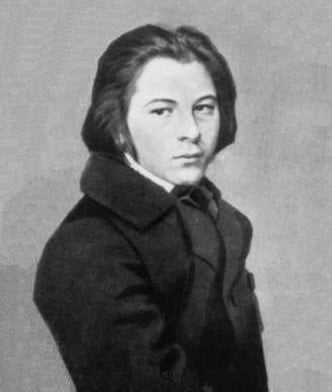
    Tausig, the merry prankster (left), and Wagner, looking vexed

  • Franz Liszt Superstar Sinner Saint

    Franz Liszt Superstar Sinner Saint

    Charlatan. Visionary. Sinner. Saint. Showman. Superstar.

    Franz Liszt’s prowess at the keyboard is still spoken of in tones of awe. This inventor of the modern piano recital lent spectacle and showmanship to Orphean musicality and transcendental technique. He tore through pianos as if they were made out of paper and reduced the ladies of Europe to skirmishes over his cigar butts or the calculated neglect of a glove.

    He loved the attention. He loved the applause. He loved the women.

    Then all at once he stopped. Liszt retired from the concert stage at the age of 35, returning thereafter only for charitable causes – for the relief of victims of fire and flood, in support of political refugees, and to raise money for a Beethoven monument in Bonn.

    He may have been a man who savored all the privileges of his celebrity, but he was also an intellectual and an artist of the spirit. He was devoutly religious for his entire life – even taking minor orders and living in a cell in Rome for a few years at middle age – and he was unfailingly generous to others. He never took payment from any of his pupils, and selflessly promoted the work of Grieg, Smetana, Debussy, Saint-Saëns, Fauré, Borodin and many more.

    Throughout his career, he was lambasted by critics for pandering to the mob. He was ridiculed as a charlatan and a hypocrite. He was shunned for his long-term relationships with two women who fled troubled marriages, and intrigued against by jealous rivals at the Weimar court for championing the works of Berlioz and Wagner.

    He helped the latter, a political fugitive for his role in the 1849 Dresden uprising, to flee the country, and even endorsed Wagner’s marriage to Liszt’s (already married) daughter. Wagner’s “Tristan chord” would send shockwaves throughout Europe, changing music forever, but in actuality it was only one of the many innovations he borrowed from his father-in-law. Wagner may have been the greater composer, but Liszt was the idea man. He was the soil that allowed Wagner’s genius to flower.

    Liszt was one of the most original musical thinkers of the 19th century. His influence rippled down the generations to color the thinking also of Ravel, Scriabin, and Schoenberg. “My sole ambition as composer,” he once pronounced, “is to hurl my lance into the infinite space of the future.”

    The future is now, as we celebrate this wildly influential, yet still sorely underrated composer on his birthday with an afternoon of his music, including the epic and seasonally appropriate “A Faust Symphony.”

    First, on today’s Noontime Concert, Mimi Stillman and Charles Abramovic will enchant in a program presented as part of Penn State Flute Day (January 13, 2019). They’ll share works by Philippe Gaubert, Daniel Dorff, Heidi Jacob (a world premiere), Francis Poulenc, Antonin Dvorak, and Vittorio Monti. Monti’s “Czardas” will act as a bridge to an afternoon of music by one of Hungary’s greatest masters.

    We’ll provide an assist for Liszt, prefaced by a recital by stylish Stillman. Join me for music both notable and noble, from 12 to 4 p.m. EDT, on WWFM – The Classical Network and wwfm.org.


    Learn more about Stillman and Abramovic’s upcoming concert of Bach masterworks, with the Dolce Suono Ensemble, at Philadelphia’s Old Pine Street Presbyterian Church, this Sunday at 3 p.m.:

    DSE Presents: Bach Masterworks

  • Liszt’s Haunted Gondola A Halloween Music Tale

    Liszt’s Haunted Gondola A Halloween Music Tale

    31 DAYS OF HALLOWEEN (DAY 22)

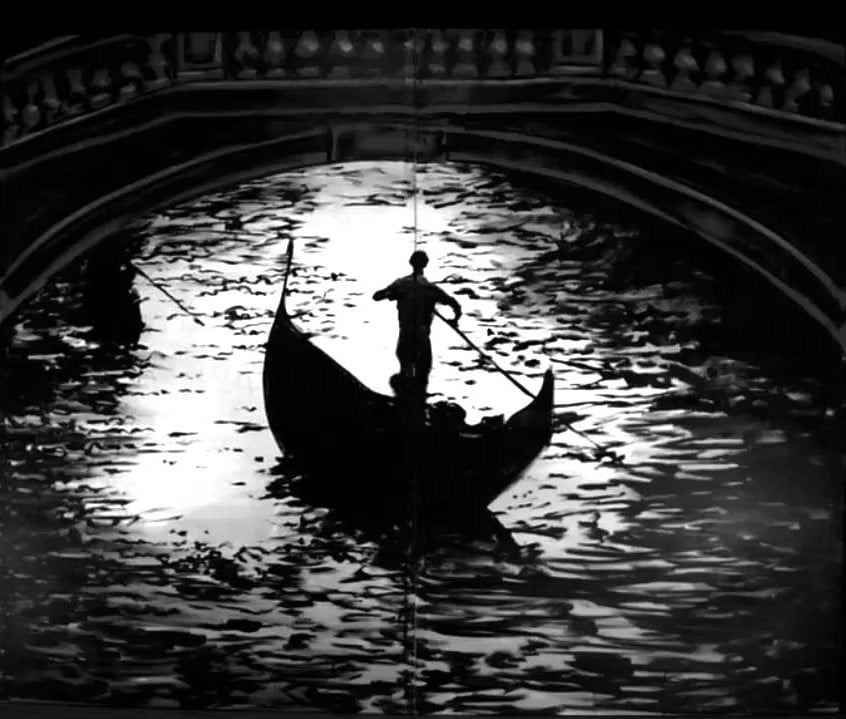
    When visiting his son-in-law, Richard Wagner, at the Palazzo Vendramin on the Grand Canal of Venice, Franz Liszt had a premonition of Wagner’s death and of his coffin being borne away in a funeral gondola. Liszt composed the first version of “La lugubre gondola” in December of 1882. A second version followed in January. In February, Liszt’s vision was fulfilled: Wagner was dead, being borne down the canal in a coffin. Don’t mess with Franz Liszt.

    Here are both versions of Liszt’s haunted barcarolle:

    John Adams orchestrated the second of these and called it “The Black Gondola:”

  • Liszt’s Diabolical Dances Temptation and Genius

    Liszt’s Diabolical Dances Temptation and Genius

    Franz Liszt (1811-1886) was quite the complex personality. A devout Catholic his entire life, he even took minor orders and lived in a monastery for a few years in middle age. However, as one of the performer-superstars of his youth, he was also frequently tempted by the pleasures of the flesh. And, as Oscar Wilde memorably observed, “The only way to get rid of temptation is to yield to it.”

    In common with many artists of the Romantic era, Liszt was fascinated by the contradictions inherent in the character of Faust, the dissatisfied man of learning who sells his soul to the devil as a means to increase his knowledge through worldly experience.

    Perhaps something in the Faustian character appealed to Liszt more than most. In his pursuit of loftier ideals, Liszt was certainly aware of his feet of clay. This Sunday night on “The Lost Chord,” we’ll experience the friction between striving artist and earthly pleasures in a selection of Liszt’s diabolical dances for the keyboard.

    We’ll hear several of his “Mephisto Waltzes,” a “Mephisto Polka,” the “Czardas Macabre,” and two operatic paraphrases, on “Robert le Diable” (a “valse infernale”) and Gounod’s “Faust.”

    Some of these are straight-ahead knuckle-busters, hair-raising feats of prestidigitation; others aim to gently unsettle with the interval of a tritone – known for centuries as “the devil in music” – or by blurring into a kind of tonal ambiguity, foreshadowing musical experiments of the 20th century.

    A profound thinker and a grand provocateur, Liszt, like Faust, was always questing. That said, he seldom undersold the visceral thrill of a precipitous piano run or the simple pleasure of a good tune.

    Get ready to surrender to temptation with “A Fistful of Mephistos” – an hour diabolical dances – this Sunday night at 10:00 EDT, on WWFM – The Classical Network and wwfm.org.

Tag Cloud

Aaron Copland (92) Beethoven (95) Composer (114) Film Music (123) Film Score (143) Film Scores (255) Halloween (94) John Williams (187) KWAX (229) Leonard Bernstein (101) Marlboro Music Festival (125) Movie Music (138) Opera (202) Philadelphia Orchestra (89) Picture Perfect (174) Princeton Symphony Orchestra (106) Radio (87) Ralph Vaughan Williams (85) Ross Amico (244) Roy's Tie-Dye Sci-Fi Corner (290) The Classical Network (101) The Lost Chord (268) Vaughan Williams (103) WPRB (396) WWFM (881)

DON’T MISS A BEAT

Receive a weekly digest every Sunday at noon by signing up here


RECENT POSTS