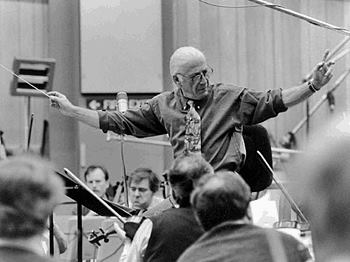
Tag: Jerry Goldsmith

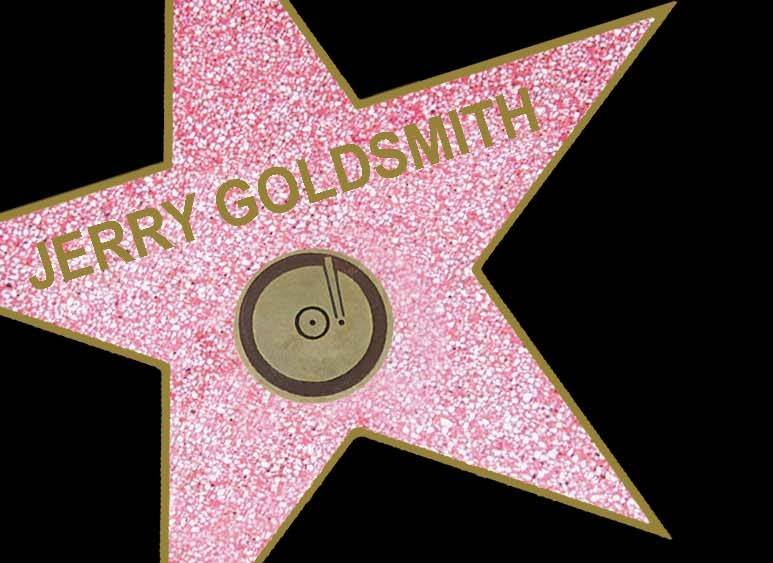
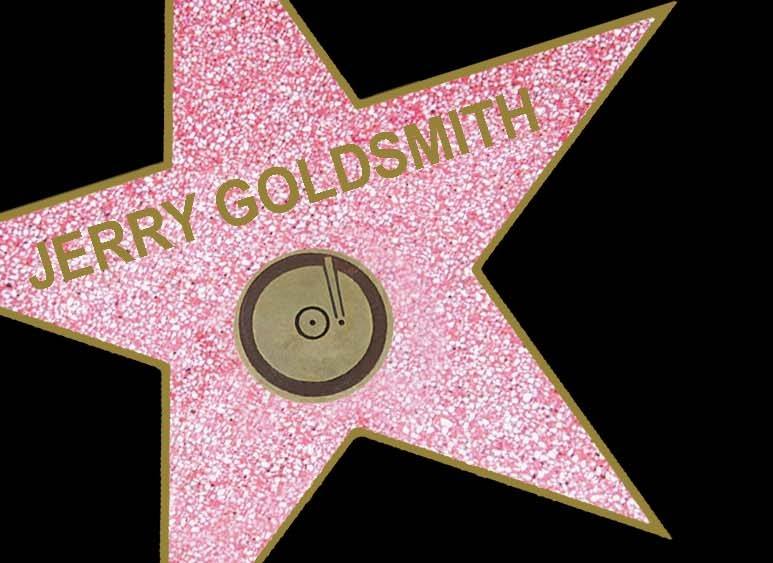
  • Jerry Goldsmith Hollywood Star Is Long Overdue

    Jerry Goldsmith Hollywood Star Is Long Overdue

    Film composer Jerry Goldsmith finally receives a star on the Hollywood Walk of Fame.

    http://variety.com/2017/music/spotlight/jerry-goldsmith-star-walk-of-fame-1202421229/

    I only wish we still had film composers this good. Then again, I wish we still had movies like “Planet of the Apes” (1968), “Patton,” “Chinatown,” and “The Wind and the Lion.”

  • Trains in Movies Music from Hitchcock and More

    Trains in Movies Music from Hitchcock and More

    Traditionally, trains have been very good for drama. They are symbols of departures and arrivals. They are conveyors of prisoners and vehicles of escape. They are objects of romance and objects to “hobo around” on. They are the harbingers of civilization, and they are transports be robbed. You can fight on top of them. You can make out with Eva Marie Saint, or you can protect Marie Windsor so that she can testify against the mob. You can shuffle off to Buffalo.

    For decades, trains have provided good escapist fun at the movies. This week on “Picture Perfect,” we’ve got an hour of music from four memorable films in which trains play an important role.

    In “Strangers on a Train” (1951), arguably Alfred Hitchcock’s most underrated film of the 1950s, Farley Granger plays a tennis pro who unwittingly becomes involved in a double-murder plot through a chance encounter on a passenger train with a psychopath named Bruno (probably Robert Walker’s finest performance). The music is by Dimitri Tiomkin, who scored four films for Hitch – including “Shadow of a Doubt,” “I Confess,” and “Dial M for Murder.”

    Burt Lancaster stars in a film titled, simply, “The Train” (1964), as a reluctant railroad inspector who is persuaded to join the French Underground’s efforts to delay the transport of masterpieces looted from the museums of Paris by the Nazis, since Allied liberation of France is imminent. Paul Scofield plays the art-loving German officer determined to move the art at all costs. Real trains were destroyed in the making of the film, real dynamite was used, and Lancaster, as was often the case, did all his own stunts. The score is by Maurice Jarre.

    “Murder on the Orient Express” (1974) is based on one of the best-known Agatha Christie vehicles conceived for her recurring character, the celebrated detective Hercule Poirot. Albert Finney plays Poirot most memorably in this, the first and best of the all-star Christie thrillers, set on a long-distance passenger train connecting Paris to Istanbul. He’s joined by Lauren Bacall, Martin Balsam, Ingrid Bergman, Sean Connery, John Gielgud, Anthony Perkins, Richard Widmark, and Michael York. The unforgettable score is by Richard Rodney Bennett.

    Finally, we turn to the lighthearted caper film “The Great Train Robbery” (1979), starring Sean Connery, Donald Sutherland, and Leslie-Anne Down. Michael Crichton wrote the screenplay, after his own novel, which in turn was based on an actual historical incident – an 1855 heist, in which an unbelievable amount of gold disappeared from a moving train. Crichton also directed the film. The music is by Jerry Goldsmith.

    We’ll be taking the train today, on “Picture Perfect,” this Friday evening at 6:00 EST, on WWFM – The Classical Network.


    Since today happens to be Jerry Goldsmith’s birthday, join me a little early, as I’ll be cueing up a medley of some of his greatest film themes, to help get you in the mood, starting around 5:30.
  • Big Cats & Movie Music Picture Perfect

    Big Cats & Movie Music Picture Perfect

    Any excuse to get “The Wind and the Lion” and “The Leopard” in the same show…

    This week on “Picture Perfect,” the focus will be on metaphorical big cats.

    Simone Simon’s barely repressed desires are made manifest in Val Lewton’s “Cat People” (1942). Lewton was a master of suggestion, with a majority of the horrors in his films imagined, rather than seen. Part of the approach was practical, the result of shoestring budgets imposed by RKO. Whatever the case, the insinuating weirdness undeniably produced psychological chills. In fact, it was only as a concession to the studio that a literal big cat was included at all. The music was by RKO workhorse Roy Webb.

    Sean Connery plays a Berber chieftain who faces off against Teddy Roosevelt in “The Wind and the Lion” (1975). In a letter to Roosevelt (played in the film by Brian Keith), Connery’s character writes, “I, like the lion, must stay in my place, while you, like the wind, will never know yours.” Jerry Goldsmith provided one of his best scores for the Moroccan adventure. In fact, he was fairly confident he finally had a lock on the Oscar. He experienced a harsh reality check when he went to see “Jaws.” (Goldsmith would win his only Academy Award the following year for his music to “The Omen.”)

    Luchino Visconti’s epic telling of Giuseppe Tomasi di Lampedusa’s “The Leopard” (1963) is a melancholy exploration of the fading Sicilian aristocracy. A bewhiskered Burt Lancaster plays Prince Fabrizio, who feels himself slipping into obsolescence. Nino Rota gives the film a full-blooded, operatic soundtrack, full of lyricism and pathos.

    Finally, Lyn Murray provides the breezy accompaniment for Alfred Hitchcock’s “To Catch a Thief” (1955), with Cary Grant a reformed burglar, known as The Cat, who attempts to clear himself of some “copycat” crimes while romancing Grace Kelly on the French Riviera. It was Murray who introduced Hitchcock to Bernard Herrmann, when the director was looking for a composer for “The Trouble with Harry.” He described the meeting as love at first sight. Herrmann and Hitch would work together on seven more films.

    The cat’s out of the bag this week, on “Picture Perfect” – music for the movies – this Friday evening at 6 EDT, on WWFM – The Classical Network and at wwfm.org.

  • WWII Film Scores for Memorial Day

    WWII Film Scores for Memorial Day

    While you’re sitting in traffic heading into your three-day weekend, take a moment to consider that you’ve got it easy compared to what Allied soldiers went through in Europe, the Pacific and North Africa to keep the world free from tyranny.

    This week on “Picture Perfect,” we’ll have music from two films of the World War II era that exemplify Hollywood’s morale-boosting approach. “Sahara” (1943) pits Humphrey Bogart as a tank commander who defends a watering hole against a superior force of parched Nazis. “Objective: Burma!” (1945) drops Errol Flynn behind enemy lines to take out a Japanese radar station.

    Neither film shuns the reality that war is hell (with some particularly suggestive gruesomeness in the latter), yet the filmmakers rose above the kind of nihilistic edge that underscores so many movies made today. When all was said and done, war movies in the 1940s sold America on hope and sacrifice and the promise of final victory.

    The conflict cast a long shadow, and in the 1950s and ‘60s Hollywood continued to churn out WWII films at an impressive rate, selling tickets to the generation that had “been there.” “The Guns of Navarone” (1961) features Gregory Peck (exempt from service during the actual war because Martha Graham injured his back), David Niven (Lieutenant Colonel in the British Commandos at Normandy) and Anthony Quinn (born in Mexico and not naturalized until 1947) as a special unit of Allied military specialists on a mission to blow up some big Nazi guns trained over the Aegean Sea.

    Efforts to get “Patton” (1970) off the ground had been in motion since 1953! The filmmakers wanted access to Patton’s diaries, but displayed horrible timing in approaching the late general’s family the day after the death of his widow. Not surprisingly, the family was completely turned off and withheld its cooperation. In the end Franklin J. Schaffner directed from a script by Francis Ford Coppola and Edmund H. North. Patton’s colleague, Omar Bradley, served as an advisor on the film. (He’s played on screen by Karl Malden.)

    “Patton” likely would have been a knockout on any level (Rod Steiger turned down the lead, much to his later regret), but it is really George C. Scott that pushes it over the top. And how much more over the top can it get than that opening monologue, assembled from Patton’s speech to the Third Army, delivered in front of an enormous American flag? Only a larger-than-life actor such as Scott could have done it justice and not been dwarfed by both the subject and the iconography. Scott won a much-deserved Academy Award for his performance – which he famously refused to accept.

    I hope you can join me for equally outsized music by Miklós Rózsa (“Sahara”), Franz Waxman (“Objective: Burma!”), Dimitri Tiomkin (“The Guns of Navarone”) and Jerry Goldsmith (“Patton”), as we look forward to Memorial Day with classic films set during World War II, this Friday evening at 6 EDT, with a repeat Saturday morning at 6; or that you’ll listen to it later as a webcast at wwfm.org.

  • Remembering Jerry Goldsmith Film Music Legend

    Remembering Jerry Goldsmith Film Music Legend

    Poor Jerry Goldsmith. He wrote some of the great film scores of his time, including those for “The Sand Pebbles” (1966), “The Blue Max” (1966), “The Flim-Flam Man” (1967), “Planet of the Apes” (1968), “Patton” (1970), “Papillon” (1973), “Chinatown” (1974), “The Wind and the Lion” (1975), “MacArthur” (1977), “The Boys from Brazil” (1978), “The Great Train Robbery” (1979), “Alien” (1979, butchered in the sound editing), and “Star Trek: The Motion Picture” (1979).

    For television, he wrote for “Dr. Kildare,” “The Twilight Zone,” “Gunsmoke,” “The Man from U.N.C.L.E.” and “The Waltons.”

    By the 1980s, the films began to get weaker. It seemed like Goldsmith was always getting tossed the projects John Williams passed on, or cheap knockoffs of Williams’ successes. By his final decade, he was stuck writing for such garbage as “The Mummy” (1999), “The Haunting” (1999), and “Looney Tunes: Back in Action” (2003). A notable exception was “L.A. Confidential” (1997), but rarely were his later projects up to his talent.

    Goldsmith had a reputation for being able to compose at white heat, so he was frequently called upon to write replacement scores for films like “The River Wild” (1994), “Air Force One” (1997) and “The 13th Warrior” (1999). He composed and recorded the score to “Chinatown,” one of the best of the 1970s, in only ten days.

    Incredibly, he was honored with only a single Academy Award, for his influential score to “The Omen” (1976). Goldsmith died in 2004, at the age of 75. If he were to come back today, he would mop the joint with all the Hans Zimmer clones of the world.

    Happy birthday, Jerry Goldsmith. I sure does miss you.

    #JerryGoldsmith


    The Man from U.N.C.L.E.:

    Planet of the Apes:

    Patton:

    https://www.youtube.com/watch?v=vdEy4GneZfw

    Chinatown:

    The Wind and the Lion:

    The Omen (perfect for Lent):

    Star Trek: The Motion Picture:

Tag Cloud

Aaron Copland (92) Beethoven (95) Composer (114) Film Music (123) Film Score (143) Film Scores (255) Halloween (94) John Williams (187) KWAX (229) Leonard Bernstein (101) Marlboro Music Festival (125) Movie Music (138) Opera (202) Philadelphia Orchestra (89) Picture Perfect (174) Princeton Symphony Orchestra (106) Radio (87) Ralph Vaughan Williams (85) Ross Amico (244) Roy's Tie-Dye Sci-Fi Corner (290) The Classical Network (101) The Lost Chord (268) Vaughan Williams (103) WPRB (396) WWFM (881)

DON’T MISS A BEAT

Receive a weekly digest every Sunday at noon by signing up here


RECENT POSTS