Tag: Jerry Goldsmith

  • Jerry Goldsmith A Shadowed Genius

    Jerry Goldsmith A Shadowed Genius

    He may have been the older composer (by three years), but if we’re to go by dates on a wall calendar, Jerry Goldsmith was born two days after John Williams. And despite being one of the greatest film composers of his age, he never could wholly escape Williams’ shadow.

    Blame it on the blockbusters.

    By the late ‘70s, once the studios got their heads around the unprecedented box office of “Jaws” and “Star Wars,” Goldsmith started to get tossed either projects Williams passed on, or cheap knockoffs of Williams’ successes.

    Williams got “Star Wars;” Goldsmith got “Star Trek: The Motion Picture.” Williams got “Superman;” Goldsmith (first choice, but he had to turn it down) got “Supergirl.” Williams got “Raiders of the Lost Ark;” Goldsmith got “King Solomon’s Mines” (the Richard Chamberlain version). Williams got “E.T. The Extra-Terrestrial;” Goldsmith got “Baby: The Secret of the Lost Legend.”

    Don’t get me wrong: Goldsmith was an amazing composer, and his talents were matched to plenty of enduring classics: “The Sand Pebbles” (1966), “The Blue Max” (1966), “The Flim-Flam Man” (1967), “Planet of the Apes” (1968), “Patton” (1970), “Papillon” (1973), “Chinatown” (1974), “The Wind and the Lion” (1975), “MacArthur” (1977), “The Boys from Brazil” (1978), “The Great Train Robbery” (1979), “Alien” (1979, butchered in the sound editing), and numerous incarnations of “Star Trek” (beginning in 1979).

    He could also write like the wind. He had just ten days to compose and record a replacement score for “Chinatown” (after Phillip Lambro’s original was rejected). The result is one of the most effective scores of the 1970s.

    Sadly, the movies got weaker. In 1997, he stepped in for Randy Newman on “Air Force One.” Does anyone even care?

    By his final decade, he was stuck writing music for garbage like “The Mummy” (1999), “The Haunting” (1999), and “Looney Tunes: Back in Action” (2003). A notable exception was “L.A. Confidential” (1997), but rarely were his later projects up to his talent.

    Goldsmith himself expressed frustration at his music being drowned out by ever more-elaborate sound effects, which is why his scores became more streamlined – and less memorable – in the ‘90s. He would have lost his mind in these days of laptop editing, when films can be trimmed and shuffled within an inch of their lives, right up until the day of distribution.

    But he was one of the last of the greats, and he lived through a great era, so we certainly have enough to cherish.

    For television, he wrote music for “Dr. Kildare,” “The Twilight Zone,” “Gunsmoke,” “The Man from U.N.C.L.E.,” “The Waltons,” and “Barnaby Jones.” He was the recipient of five Emmy Awards.

    Incredibly, despite EIGHTEEN nominations, he was honored with but a single Oscar, for his influential score to “The Omen” (1976). Goldsmith died in 2004, at the age of 75. If he were to come back today, he would mop the joint with all the Hans Zimmers of the world.

    Happy birthday, Jerry Goldsmith. I sure does miss you.


    The Man from U.N.C.L.E.:

    Planet of the Apes:

    Patton:

    Chinatown:

    The Wind and the Lion:

    The Omen:

    Star Trek: The Motion Picture:
  • Film Composers on TV Picture Perfect

    Film Composers on TV Picture Perfect

    The music is big… it’s the PICTURES that got small.

    This week on “Picture Perfect,” it’s an hour of music from television scores by composers better known for their work in film.

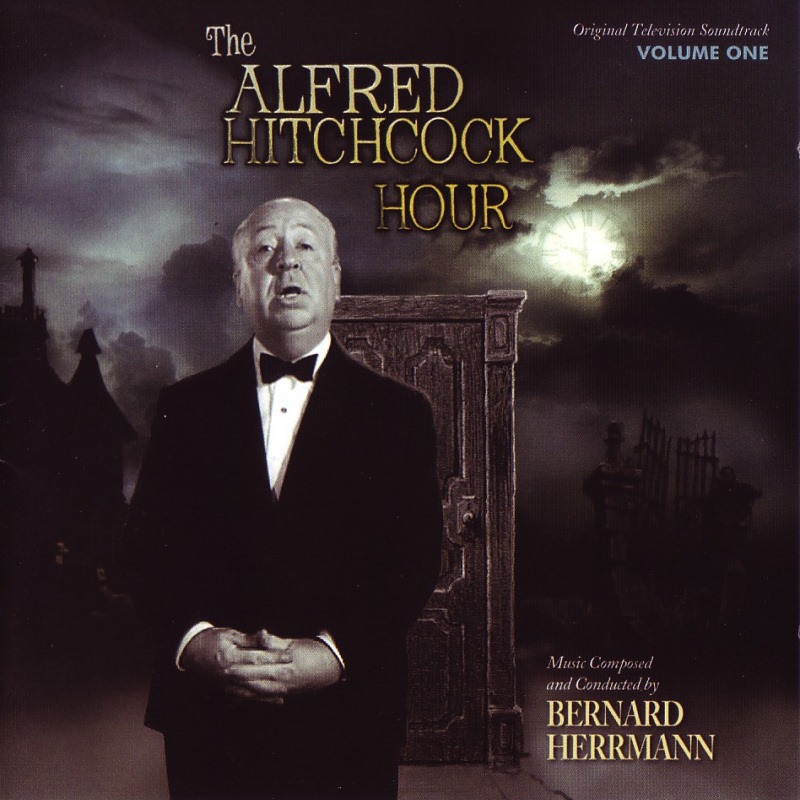
    Bernard Herrmann began his film career right at the top, with “Citizen Kane” in 1941. He is perhaps best recognized for his scores for the films of Alfred Hitchcock, many of which have gone on to become classics, including those for “Vertigo,” “North by Northwest,” and especially “Psycho.”

    Less well known is his work on the television series “The Alfred Hitchcock Hour,” which ran from 1963 to 1965. Herrmann composed music for 17 of the episodes. He was also responsible for suggesting Hitchcock’s signature tune, Charles Gounod’s “Funeral March of a Marionette,” which appears throughout the series in Herrmann’s own arrangement.

    Jerome Moross, Herrmann’s friend since childhood, had also enjoyed his share of success on the silver screen. Moross is best-remembered for having written the score for “The Big Country.” Nobody wrote western music quite like Moross. So it’s hardly surprising he would be asked to contribute to twelve episodes of “Wagon Train.”

    When someone noticed that the “Wagon Train” theme bore a striking resemblance to some of Moross’ music written for the film “The Jayhawkers,” two competing studios were kind enough to look the other way.

    Unlike Moross and Herrmann, who were both well-known by the time they ventured into television, John Williams was still very much on his way up. Williams, then billed as “Johnny,” was active in the movies throughout the 1960s, but his film projects at the beginning were mostly undistinguished, with titles like “Daddy-O,” “Gidget Goes to Rome,” and “John Goldfarb, Please Come Home.”

    Of course, he worked as a musician on more reputable projects, appearing as pianist on the soundtracks of “The Big Country,” “To Kill a Mockingbird” and “Charade.” He also worked as an orchestrator on “The Guns of Navarone.”

    But what provided much of Williams’ bread-and-butter throughout the ‘60s was his work on television series like “Checkmate,” “Gilligan’s Island,” and – for our purposes this week – “Lost in Space.” Happily, that “Williams sound,” so beloved by fans of “Stars Wars,” “Raiders of the Lost Ark,” and “E.T.,” was already in place.

    Finally, Jerry Goldsmith may have been a little bit ahead of Williams in the ‘60s, in terms of being offered more substantial films, but he too worked in television, providing scores for “Have Gun, Will Travel,” “The Twilight Zone,” and “Dr. Kildare.” We’ll conclude the hour with a medley of familiar Goldsmith television themes, with the composer conducting the London Symphony Orchestra.

    You’re invited to think inside the box, as film composers write for television this week, on “Picture Perfect,” this Saturday evening at 6:00 EST, on WWFM – The Classical Network and wwfm.org.

  • Sean Connery A Life Beyond Bond and Moreau Preview

    Here’s last night’s tribute to Sean Connery, in which we offer up such fascinating details as the fact that Connery’s ponytail in “Medicine Man” was a tribute to composer Jerry Goldsmith, and that before he broke into acting one of his occupations was “coffin polisher.” As a young man, he also punched out Lana Turner’s boyfriend, a hotheaded mobster who had exercised the bad judgment to pull a gun on him. From competing for the title of Mr. Universe to singing in the chorus of “South Pacific” to his Oscar-winning turn in “The Untouchables,” and beyond, Connery’s career is well-covered.

    We’ll be taking a break on Sunday, but we’ll be back next Friday at 7:00 EST to tackle the 1977 version of H.G. Wells’ “The Island of Dr. Moreau.”

    As may well be deduced from the thumbnail, I have developed a great deal of sympathy for the Beast Folk.

  • Piano Madness Movie Music on WWFM

    Piano Madness Movie Music on WWFM

    If the definition of insanity is doing the same thing over and over and expecting a different result, then surely Hanon etudes are a ticket to the madhouse.

    This week on “Picture Perfect,” get keyed-up with music from movies about madness and the piano.

    Whenever he hears a loud, discordant sound, unhinged pianist-composer Laird Cregar is compelled to commit murder, in the 1945 film “Hangover Square.” Bernard Herrmann wrote the moody, romantic score, which includes a piano concerto, played by Cregar’s character during the film’s conflagration finale.

    Peter Lorre is an unstable musicologist who is haunted by the disembodied hand of a murdered pianist with a penchant for Brahms’ arrangement of Bach’s Chaconne, in “The Beast with Five Fingers,” from 1946. Max Steiner was the composer. The piano is played on the film’s soundtrack by Victor Aller, the brother-in-law of Felix Slatkin – also Leonard Slatkin’s uncle.

    Alan Alda plays a frustrated pianist who falls in with a ring of Satanists, in “The Mephisto Waltz” from 1971. This time, Jerry Goldsmith blends Franz Liszt with amplified instruments and electronics to memorably eerie effect. Five years later, Goldsmith would win his only Academy Award for his music to “The Omen.”

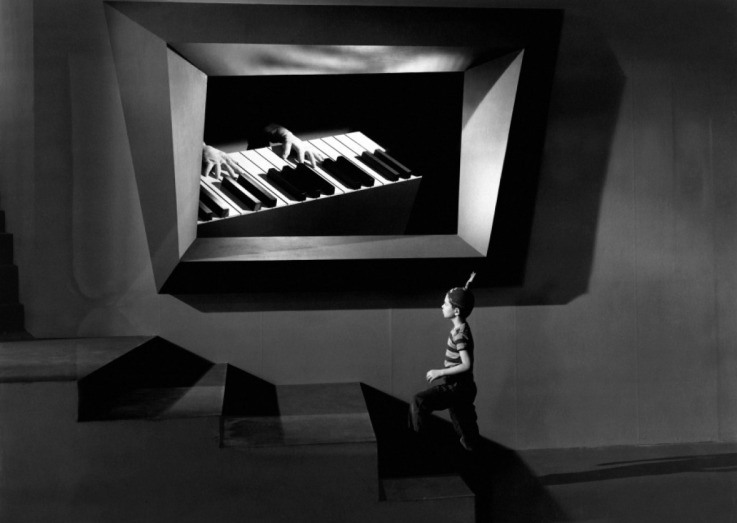
    Finally, Hans Conried plays a dictatorial pedagogue in “The 5000 Fingers of Dr. T,” released in 1953. “5000 Fingers” holds the distinction of being the only feature ever written by Dr. Seuss. The film sports an outrageous production design (including a gargantuan keyboard for 500 enslaved boys) and whimsical songs.

    The composer was Frederick Hollander. Born in London, Hollander attained fame in Germany as Friedrich Hollander. His best-known international success was “The Blue Angel,” starring Marlene Dietrich, who introduced his song, “Falling in Love Again.” With the rise of the Nazis, Hollander fled to the United States, where he worked on over 100 films.

    That’s music from movies about madness and the piano this week, on “Picture Perfect.” Practice makes psychotic, THIS SATURDAY EVENING AT 6:00 EDT, on WWFM – The Classical Network and wwfm.org.

  • Planet of the Apes & Patriotic Film Scores Tonight!

    Planet of the Apes & Patriotic Film Scores Tonight!

    Get ready to chimp-out with another Classic Ross Amico double-feature.

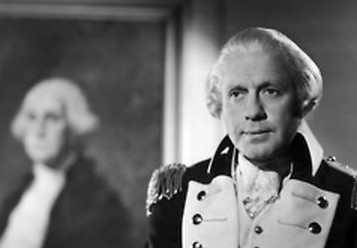
    First, at 6:00 EDT, I’ll be your host, as we assert our independence, with selections from “The Patriot” (John Williams), “George Washington Slept Here” (Adolph Deutsch), “Revolution” (John Corigliano), and “Williamsburg: The Story of a Patriot” (Bernard Herrmann), on the tenth anniversary of “Picture Perfect,” on WWFM – The Classical Network and wwfm.org.

    Then, at 7:00 EDT, some apes may be more equal than others, but “Planet of the Apes” is far and away the best of the original film series. Join Roy Bjellquist and me as we hash over this nihilistic classic that begins with the tiniest of American flags and concludes with – well, you probably already know. So much for Liberty. “Planet of the Apes” will be the focus of the Facebook live-stream “Roy’s Tie-Dye Sci-Fi Corner.”

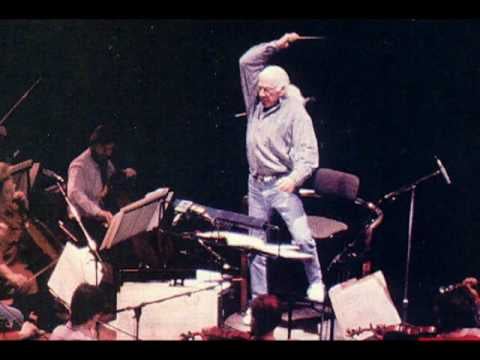
    As usual, I’ll be pouring on the love for composer Jerry Goldsmith (pictured, below, in an unusually light mood). We’ll also discuss the film’s evolution, its themes and social commentary, its accolades and influence, along with a banana boat full of behind-the-scenes trivia.

    Better pour yourself a stiff one. Everything will be revolting – from Jack Benny to Jack Lord, to a bare-chested Heston and our scintillating simian conversation.

    Happy Friday, and God bless America!

    https://www.facebook.com/roytiediescificorner/


    PHOTOS: Benny & Jerry

Tag Cloud

Aaron Copland (94) Beethoven (95) Composer (114) Film Music (149) Film Score (143) Film Scores (255) Halloween (97) John Williams (197) KWAX (232) Leonard Bernstein (105) Marlboro Music Festival (125) Movie Music (164) Mozart (91) Opera (215) Philadelphia Orchestra (90) Picture Perfect (174) Princeton Symphony Orchestra (110) Radio (90) Ross Amico (244) Roy's Tie-Dye Sci-Fi Corner (290) The Classical Network (101) The Lost Chord (269) Vaughan Williams (107) WPRB (397) WWFM (881)

DON’T MISS A BEAT

Receive a weekly digest every Sunday at noon by signing up here


RECENT POSTS