Tag: Jerry Goldsmith

  • Star Trek’s Epic Music Galaxy

    Star Trek’s Epic Music Galaxy

    Space… the final frontier. This week, on “Picture Perfect,” beam aboard for some of the best “Star Trek” music in the galaxy. We’ll hear enterprising selections from the beloved media franchise.

    In retrospect, it’s hard to conceive of “Star Trek,” the original series (1966-69), staggering toward cancellation after a mere three seasons on NBC, so much a part our shared cultural consciousness it has become. The show’s popularity expanded through syndication. Still, prior to the blockbuster success of “Star Wars,” the only other “Trek” would be an animated series that aired on Saturday morning television from 1973 to 1974 (to be discussed tomorrow evening on Roy’s Tie-Dye Sci-Fi Corner).

    In 1977, the one-two box office punch of “Star Wars” and “Close Encounters of the Third Kind” revealed a latent hunger for science fiction that gave “Star Trek” the final boost it needed to reach the silver screen.

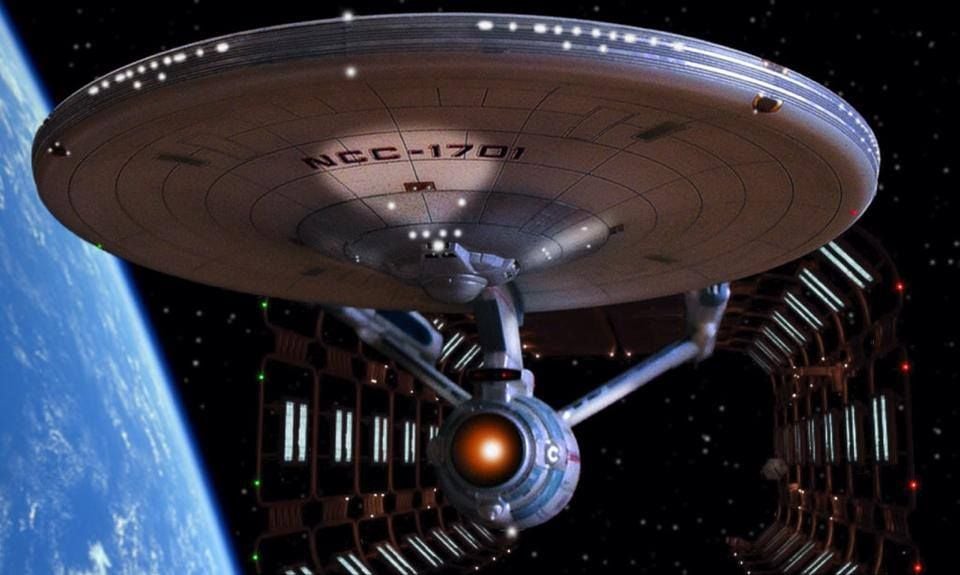
    “Star Trek: The Motion Picture” (1979), long-awaited, was ambitious to a fault. Its approach seemed especially ponderous next to the souped-up dog fights of a galaxy far, far away. However, there was undeniably a nostalgic satisfaction in seeing the original crew reassembled on the deck of a refurbished Enterprise, and the production values were nothing less than first-rate.

    Robert Wise directed. Wise was involved in the production of any number of classic films, dating back to the 1930s, including “The Day the Earth Stood Still,” “West Side Story,” “The Haunting,” and “The Sound of Music.” He also edited “Citizen Kane.”

    “Star Trek: The Motion Picture” sported state-of-the-art special effects (by Douglas Trumbull no less), and a knock-out music score by Jerry Goldsmith. I remember leaving the theater on the film’s opening night and remarking that the movie was all right, but the music was fantastic.

    There’s a six-minute, music-and-special effects showpiece of a shuttle flying around the drydocked Enterprise that’s a perfect marriage of music and film. It’s like nothing you’re ever likely to encounter in movies today – and more’s the pity.

    The “ST: TMP” theme has always been a fan favorite, but its resurrection, beginning with the launch of the television series “Star Trek: The Next Generation,” cemented its broader familiarity.

    “Star Trek” had always positioned itself as thoughtful science fiction, and in the case of the first film perhaps it tried a mite too hard. “ST: TMP” strove for stately, but what it wound up achieving was stasis. Although a box office success, the film received mixed reviews and performed below industry expectations. However, it still made enough money to justify a sequel.

    “Star Trek II: The Wrath of Khan” (1982) was a belated continuation of an episode from the original series, “Space Seed,” in which a genetically engineered superman is revived from suspended animation and attempts to take over the Enterprise. Khan, of course, was played by Ricardo Montalban, now with gleaming chest and silver mullet – worlds away from his contemporaneous characterization as Mr. Roarke on TV’s “Fantasy Island.”

    The tone of the film proved a refreshing change of pace, playing up the character relationships that made the original series so enjoyable and providing enough action to satisfy audiences attuned to post-“Star Wars” spectacle. Moreover, it cleverly draws on nautical iconography – while “Star Wars” had its dogfights, “Wrath of Khan” deals more in broadsides – and that nautical flavor extends to the film’s brilliant score, by James Horner. The project proved an important stepping stone to Horner’s acceptance as an A-list composer.

    Another memorable episode of the original series dealt with the usually unflappable Spock losing his cool, as he teeters into pon farr, a period of madness that strikes every seven years during which a Vulcan must mate or die.

    “Amok Time” (1967) opened the show’s second season. It featured alien-world papier-mâché boulders, oversized Q-tip like weapons, and what is now widely recognized as the “Star Trek fight music.” This music was reused in several subsequent episodes and has since been widely parodied.

    The composer was Gerald Fried, who wrote the music for Stanley Kubrick’s first four films. He also provided most of the score for the landmark television mini-series “Roots.”

    Following the disappointing box office of “Star Trek: Nemesis” in 2002, the film franchise was put on hiatus for the next six-and-a-half years, possibly the result of “Star Trek” fatigue – too many movies and too many television series.

    J.J. Abrams was hired in the hopes of revitalizing “Trek” with a fresh makeover. Abrams’ approach might best be summed up as “Damn the social issues! Damn the philosophical underpinnings! Damn the continuity! Full speed ahead!” The result is undoubtedly entertaining, though very much of our time, with a lot of action at the expense of the ideas and humanity that made earlier incarnations more resonant.

    The “reboot” scored a hit with critics and general audiences, though it remains controversial with fans of the original series. Even the title suggests a new beginning, as the film was titled, simply, “Star Trek” (2009). The story employs an alternative timeline, so that the filmmakers are no longer beholden to more than 40 years’ worth of accrued “Star Trek” lore. It’s the kind of thing that is done all the time in comic books. Whether or not the result is for the best, I leave to you.

    Neither is the music quite as rich as that for some of the earlier installments, though it does generate a fair amount of excitement within the context of the film. The composer is Michael Giacchino.

    I hope you’ll join me for these selections from “Star Trek,” on “Picture Perfect,” music for the movies. The music won’t be the only thing that’s transporting. Set phasers for “fun,” this Saturday evening at 6:00 EST, on WWFM – The Classical Network and wwfm.org.
  • Flight & Aviation Film Scores Picture Perfect

    Flight & Aviation Film Scores Picture Perfect

    This week on “Picture Perfect,” rise above your earthly concerns and keep looking up, with an hour of music about flight and aviation.

    We’ll begin with selections from “The High and the Mighty” (1954). John Wayne, Claire Trevor, Laraine Day, and Robert Stack star in this high-altitude drama about a harrowing flight from Honolulu to San Francisco. Dimitri Tiomkin supplied the Academy Award-winning music for William Wellman’s thriller, a forerunner to the airborne disaster craze of the 1970s.

    James Stewart may have been a little long-in-the-tooth for “The Spirit of St. Louis” (1957). Stewart was 22 years older than his subject, Charles Lindbergh, at the time of his historic flight across the Atlantic. But Billy Wilder’s film was a passion project for the actor, who, as a USAAF pilot during World War II, attained the rank of Brigadier General. Franz Waxman composed the ageless score.

    “Airport” (1970), after the best-selling novel of Arthur Hailey, kicked-off the most enduring of all-star disaster franchises. Burt Lancaster heads the cast, and Helen Hayes won her second Oscar as a spirited stowaway. It also marked the first appearance in the series by George Kennedy, who rose through the ranks during all the subsequent “Airport” films. The score was the last by Alfred Newman, rounding off an illustrious career. Newman supplied original music for over 200 films – on TOP of his duties as music director at 20th Century Fox, a position he held for 20 years. In all, Newman earned seven Academy Awards.

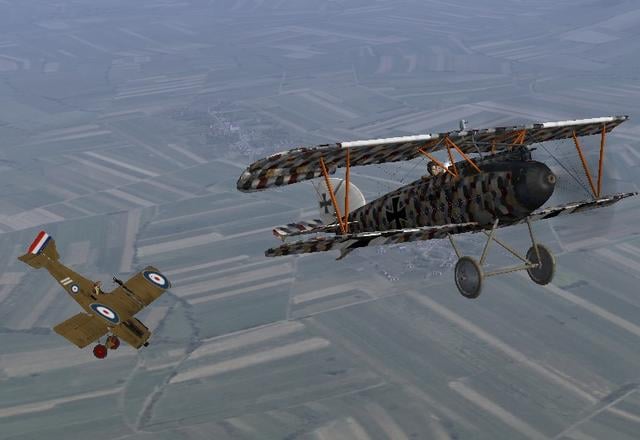
    Finally, we’ll turn to “The Blue Max” (1966). George Peppard, James Mason, and Ursula Andress star in this movie about a German pilot’s quest for glory, as he strives for the titular reward – a decoration for valor – during the First World War. In order to attain it, he must shoot down 20 aircraft. Obviously, in a film heavy with dogfighting, there is much aerial photography and stunt piloting. The score, a comparatively early one for Jerry Goldsmith, has always been a fan favorite.

    Get a bird’s-eye view of flight and aviation, this week, on “Picture Perfect,” music for the movies. Classic film music is the wind beneath our wings, this Saturday evening at 6:00 EST, on WWFM – The Classical Network and wwfm.org.
  • Jerry Goldsmith A Shadowed Genius

    Jerry Goldsmith A Shadowed Genius

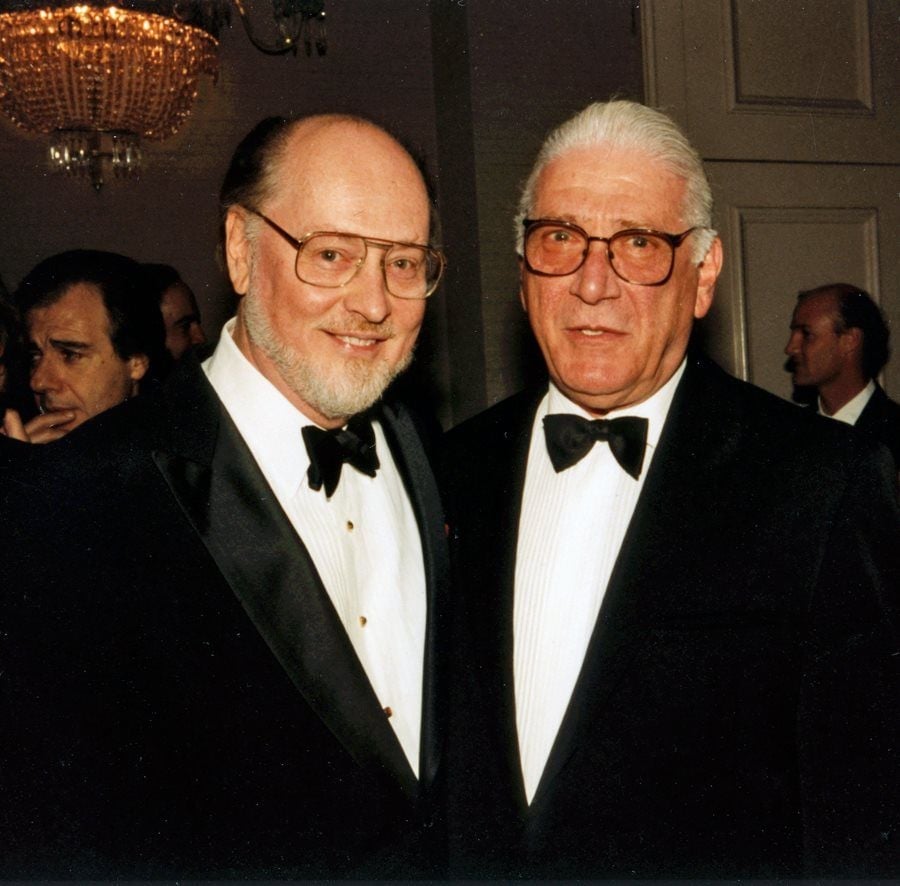
    He may have been the older composer (by three years), but if we’re to go by dates on a wall calendar, Jerry Goldsmith was born two days after John Williams. And despite being one of the greatest film composers of his age, he never could wholly escape Williams’ shadow.

    Blame it on the blockbusters.

    By the late ‘70s, once the studios got their heads around the unprecedented box office of “Jaws” and “Star Wars,” Goldsmith started to get tossed either projects Williams passed on, or cheap knockoffs of Williams’ successes.

    Williams got “Star Wars;” Goldsmith got “Star Trek: The Motion Picture.” Williams got “Superman;” Goldsmith (first choice, but he had to turn it down) got “Supergirl.” Williams got “Raiders of the Lost Ark;” Goldsmith got “King Solomon’s Mines” (the Richard Chamberlain version). Williams got “E.T. The Extra-Terrestrial;” Goldsmith got “Baby: The Secret of the Lost Legend.”

    Don’t get me wrong: Goldsmith was an amazing composer, and his talents were matched to plenty of enduring classics: “The Sand Pebbles” (1966), “The Blue Max” (1966), “The Flim-Flam Man” (1967), “Planet of the Apes” (1968), “Patton” (1970), “Papillon” (1973), “Chinatown” (1974), “The Wind and the Lion” (1975), “MacArthur” (1977), “The Boys from Brazil” (1978), “The Great Train Robbery” (1979), “Alien” (1979, butchered in the sound editing), and numerous incarnations of “Star Trek” (beginning in 1979).

    He could also write like the wind. He had just ten days to compose and record a replacement score for “Chinatown” (after Phillip Lambro’s original was rejected). The result is one of the most effective scores of the 1970s.

    Sadly, the movies got weaker. In 1997, he stepped in for Randy Newman on “Air Force One.” Does anyone even care?

    By his final decade, he was stuck writing music for garbage like “The Mummy” (1999), “The Haunting” (1999), and “Looney Tunes: Back in Action” (2003). A notable exception was “L.A. Confidential” (1997), but rarely were his later projects up to his talent.

    Goldsmith himself expressed frustration at his music being drowned out by ever more-elaborate sound effects, which is why his scores became more streamlined – and less memorable – in the ‘90s. He would have lost his mind in these days of laptop editing, when films can be trimmed and shuffled within an inch of their lives, right up until the day of distribution.

    But he was one of the last of the greats, and he lived through a great era, so we certainly have enough to cherish.

    For television, he wrote music for “Dr. Kildare,” “The Twilight Zone,” “Gunsmoke,” “The Man from U.N.C.L.E.,” “The Waltons,” and “Barnaby Jones.” He was the recipient of five Emmy Awards.

    Incredibly, despite EIGHTEEN nominations, he was honored with but a single Oscar, for his influential score to “The Omen” (1976). Goldsmith died in 2004, at the age of 75. If he were to come back today, he would mop the joint with all the Hans Zimmers of the world.

    Happy birthday, Jerry Goldsmith. I sure does miss you.


    The Man from U.N.C.L.E.:

    Planet of the Apes:

    Patton:

    Chinatown:

    The Wind and the Lion:

    The Omen:

    Star Trek: The Motion Picture:

  • Film Composers on TV Picture Perfect

    Film Composers on TV Picture Perfect

    The music is big… it’s the PICTURES that got small.

    This week on “Picture Perfect,” it’s an hour of music from television scores by composers better known for their work in film.

    Bernard Herrmann began his film career right at the top, with “Citizen Kane” in 1941. He is perhaps best recognized for his scores for the films of Alfred Hitchcock, many of which have gone on to become classics, including those for “Vertigo,” “North by Northwest,” and especially “Psycho.”

    Less well known is his work on the television series “The Alfred Hitchcock Hour,” which ran from 1963 to 1965. Herrmann composed music for 17 of the episodes. He was also responsible for suggesting Hitchcock’s signature tune, Charles Gounod’s “Funeral March of a Marionette,” which appears throughout the series in Herrmann’s own arrangement.

    Jerome Moross, Herrmann’s friend since childhood, had also enjoyed his share of success on the silver screen. Moross is best-remembered for having written the score for “The Big Country.” Nobody wrote western music quite like Moross. So it’s hardly surprising he would be asked to contribute to twelve episodes of “Wagon Train.”

    When someone noticed that the “Wagon Train” theme bore a striking resemblance to some of Moross’ music written for the film “The Jayhawkers,” two competing studios were kind enough to look the other way.

    Unlike Moross and Herrmann, who were both well-known by the time they ventured into television, John Williams was still very much on his way up. Williams, then billed as “Johnny,” was active in the movies throughout the 1960s, but his film projects at the beginning were mostly undistinguished, with titles like “Daddy-O,” “Gidget Goes to Rome,” and “John Goldfarb, Please Come Home.”

    Of course, he worked as a musician on more reputable projects, appearing as pianist on the soundtracks of “The Big Country,” “To Kill a Mockingbird” and “Charade.” He also worked as an orchestrator on “The Guns of Navarone.”

    But what provided much of Williams’ bread-and-butter throughout the ‘60s was his work on television series like “Checkmate,” “Gilligan’s Island,” and – for our purposes this week – “Lost in Space.” Happily, that “Williams sound,” so beloved by fans of “Stars Wars,” “Raiders of the Lost Ark,” and “E.T.,” was already in place.

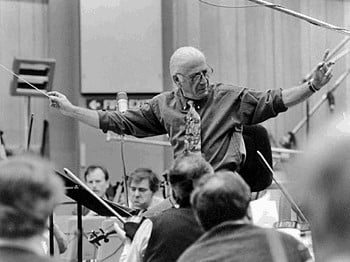
    Finally, Jerry Goldsmith may have been a little bit ahead of Williams in the ‘60s, in terms of being offered more substantial films, but he too worked in television, providing scores for “Have Gun, Will Travel,” “The Twilight Zone,” and “Dr. Kildare.” We’ll conclude the hour with a medley of familiar Goldsmith television themes, with the composer conducting the London Symphony Orchestra.

    You’re invited to think inside the box, as film composers write for television this week, on “Picture Perfect,” this Saturday evening at 6:00 EST, on WWFM – The Classical Network and wwfm.org.
  • Sean Connery A Life Beyond Bond and Moreau Preview

    Here’s last night’s tribute to Sean Connery, in which we offer up such fascinating details as the fact that Connery’s ponytail in “Medicine Man” was a tribute to composer Jerry Goldsmith, and that before he broke into acting one of his occupations was “coffin polisher.” As a young man, he also punched out Lana Turner’s boyfriend, a hotheaded mobster who had exercised the bad judgment to pull a gun on him. From competing for the title of Mr. Universe to singing in the chorus of “South Pacific” to his Oscar-winning turn in “The Untouchables,” and beyond, Connery’s career is well-covered.

    We’ll be taking a break on Sunday, but we’ll be back next Friday at 7:00 EST to tackle the 1977 version of H.G. Wells’ “The Island of Dr. Moreau.”

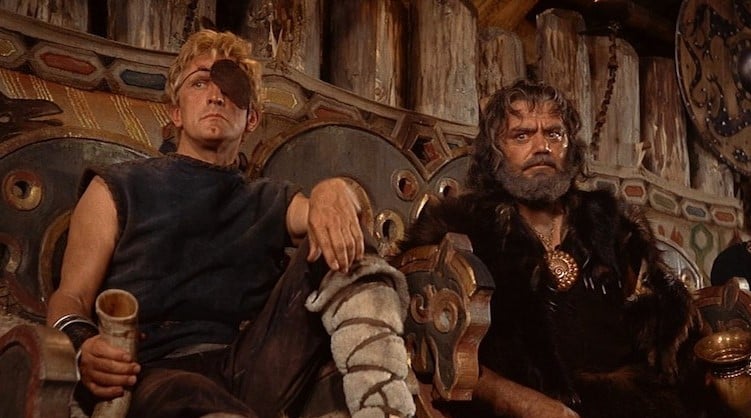
    As may well be deduced from the thumbnail, I have developed a great deal of sympathy for the Beast Folk.

Tag Cloud

Aaron Copland (92) Beethoven (95) Composer (114) Film Music (123) Film Score (143) Film Scores (255) Halloween (94) John Williams (187) KWAX (229) Leonard Bernstein (101) Marlboro Music Festival (125) Movie Music (138) Opera (202) Philadelphia Orchestra (89) Picture Perfect (174) Princeton Symphony Orchestra (106) Radio (87) Ralph Vaughan Williams (85) Ross Amico (244) Roy's Tie-Dye Sci-Fi Corner (290) The Classical Network (101) The Lost Chord (268) Vaughan Williams (103) WPRB (396) WWFM (881)

DON’T MISS A BEAT

Receive a weekly digest every Sunday at noon by signing up here


RECENT POSTS