This week on “Picture Perfect,” with the New Year only days away, we’ll greet the future with music from movies inspired by Jules Verne’s novels of science, progress, and adventure.
We’ll hear selections from “20,000 Leagues Under the Sea,” composed by Paul J. Smith; “In Search of the Castaways,” by William Alwyn; “Journey to the Center of the Earth,” by Bernard Herrmann; and “Around the World in 80 Days,” by Victor Young.
Of course, science and technology are all well and good for what they are, but there are times when the best solution is an expertly-wielded harpoon!
Your grit and resourcefulness are always welcome on “Picture Perfect,” music for the movies, now in syndication on KWAX, the radio station of the University of Oregon!
Remember, KWAX is on the West Coast, so there’s a three-hour difference for those of you listening in the East. Here are the respective air-times for all three of my recorded shows (with East Coast conversions in parentheses):
PICTURE PERFECT, the movie music show – Friday on KWAX at 5:00 PM PACIFIC TIME (8:00 PM EST)
SWEETNESS AND LIGHT, the light music program – ALL NEW! – Saturday on KWAX at 8:00 AM PACIFIC TIME (11:00 AM EST)
THE LOST CHORD, unusual and neglected rep – Saturday on KWAX at 4:00 PM PACIFIC TIME (7:00 PM EST)
Stream all three, at the times indicated, by following the link!
The composer Heinrich von Herzogenberg (1843-1900), born in Graz, studied in Vienna, where he became a lifelong friend of Johannes Brahms. Of course, being friends with Brahms was a complicated matter. In particular, the older composer was not very diplomatic in his assessment of Herzogenberg’s music. However, toward the end of his life, he grudgingly offered, “Herzogenberg is able to do more than any of the others.”
This week on “The Lost Chord,” we’ll have music by Brahms’ faintly-praised confidant.
In 1874, Herzogenberg co-founded the Leipzig Bach-Verein, which dedicated itself to the revival of all the Bach cantatas. He served as its music director for ten years. Following the death of his wife in 1892, he turned increasingly to the writing of sacred music. In particular, he composed music for services of a Lutheran church in Strasbourg, though he himself remained a Roman Catholic. His models for these pieces were, naturally, the oratorios and passions of Bach.
Three large-scale works of the period call for members of the congregation to participate in the singing of the chorales.
“Die Geburt Christi,” or “The Birth of Christ,” written in 1894, betrays the influence of composers admired by Herzogenberg. However, the work is not always as “Brahmsian” as one might expect. A prominent role is given to church hymns, with the inclusion of folk material and some familiar Christmas melodies.
We’ll hear selections from Parts One and Two – “The Promise” and “The Fulfillment” – and then, after a break, the whole of Part Three, “The Adoration.”
I hope you’ll join me for “German Shepherds,” Herzogenberg’s musical telling of the Nativity story, on “The Lost Chord,” now in syndication on KWAX, the radio station of the University of Oregon!
Remember, KWAX is on the West Coast, so there’s a three-hour difference for those of you listening in the East. Here are the respective air-times for all three of my recorded shows (with East Coast conversions in parentheses):
PICTURE PERFECT, the movie music show – Friday on KWAX at 5:00 PM PACIFIC TIME (8:00 PM EST)
SWEETNESS AND LIGHT, the light music program – ALL NEW, DEBUTING TODAY!! – Saturday on KWAX at 8:00 AM PACIFIC TIME (11:00 AM EST)
THE LOST CHORD, unusual and neglected rep – Saturday on KWAX at 4:00 PM PACIFIC TIME (7:00 PM EST)
Stream all three, at the times indicated, by following the link!
Don’t miss the world premiere broadcast of my new show, “Sweetness and Light,” this morning on KWAX!
Going forward, I’ll be adding a third show to my syndicated output, offering a weekly playlist of British Light Music, ballet, operetta, waltzes, marches, parlor music, and piano miniatures of a kind once familiar from Grandma’s piano bench – in short, undemanding fare calculated to charm and to cheer and to help you forget your worldly woes.
It’s all holiday-oriented this week, so why not give it a whirl. And then be sure to drop back later in the day, when I share selections from Heinrich von Herzogenberg’s oratorio “Die Geburt Christi” (“The Birth of Christ”) on “The Lost Chord.”
I’m dreaming of a light Christmas. Happy holidays to you!
Remember, KWAX is on the West Coast (the radio station of the University of Oregon), so there’s a three-hour difference for those of you listening in the East. Here are the respective air-times for all three recorded shows (with East Coast conversions in parentheses):
PICTURE PERFECT, the movie music show – Friday on KWAX at 5:00 PM PACIFIC TIME (8:00 PM EST)
SWEETNESS AND LIGHT, the light music program – Saturday on KWAX at 8:00 AM PACIFIC TIME (11:00 AM EST)
THE LOST CHORD, unusual and neglected rep – Saturday on KWAX at 4:00 PM PACIFIC TIME (7:00 PM EST)
Stream all three, at the times indicated, at the link!
It is with great excitement that I announce the impending launch of a brand-new show, to be broadcast weekly from my current home-away-from-home, KWAX, the radio station of the University of Oregon.
As you may know, I’ve always had a soft spot for the confectionary genre known as British Light Music. This is a kind of music that was once widely enjoyed in theaters, at seaside resorts, on popular radio programs, and even as background to enhance the shopping experience. It was certainly a fertile field for anyone looking to pluck a memorable signature tune. (For a prominent example in the U.S., one need look no further than Captain Kangaroo, who poached Edward White’s “Puffin’ Billy.”) British Light Music will be well-represented, alongside light music from other sources, on “Sweetness and Light.”
Depending on the week, we’ll also hear selections from ballet, highlights from operetta, dollops of film music, waltzes, marches, parlor music, and piano miniatures of a kind once familiar from Grandma’s piano bench. I suppose now GREAT-Grandma’s piano bench. In short, undemanding fare, calculated to charm and to cheer and to help you forget your worldly woes.
With Christmas only days away, this week’s playlist will include several works evocative of wintry scenes (including the original version of “Jingle Bells,” published in 1857, and rendered as a hilarious parlor song), incidental music from a now-forgotten Christmas pageant (spearheaded by Reginald Owen, who went on to play Ebenezer Scrooge in a 1938 film version of “A Christmas Carol”), ingratiating selections by two composers associated with the movies (Erich Wolfgang Korngold and Henry Mancini), and some steaming bowls of keyboard wassail (courtesy of Billy Mayerl and Percy Grainger).
This is the first show produced entirely in my home studio. Now that I’ve got it down, we can also expect fresh installments of “Picture Perfect” and “The Lost Chord” in the coming year.
“Sweetness and Light,” my third syndicated show, will take its inaugural bow this Saturday, December 23, at 8 a.m. PST. (That’s 11 a.m. here on the East Coast.) Sweeten your morning and lighten your spirit by listening at the link.
For much of the time I worked at a certain radio station (for nearly three decades, in fact), it was the rule, for some reason, not to program any Christmas music until after December 16 – Beethoven’s birthday. Beethoven was the demarcation for classical music Advent to commence. Sure, you don’t want to hammer listeners with a month of brass arrangements of the usual ho ho ho; but for those of us with a little more imagination, who would really like to relax into the repertoire, nine days isn’t a heck of a lot of time.
Most of the grand and contemplative Christmas works (Franz Liszt’s “Christus,” Berlioz’s “L’enfance du Christ,” Vaughan Williams’ “Hodie,” Saint-Saëns’ “Christmas Oratorio,” Casals’ “El Pessebre,” Charpentier’s “Messe de Minuit,” Respighi’s “Laud to the Nativity,” Schütz’s “Christmas Story”) – basically, those that aren’t “Messiah” – are slipping away, as playlists pander to an increasingly A.D.D. society.
Over the years it’s been suggested to me that people “don’t like singing.” Or that they might find the religious content exclusionary or off-putting. (Somehow it’s never a consideration when we play Bach.) The squeaky wheel gets the grease, and the wider listenership has been trained to expect little more than consumer-friendly arrangements of the less-demanding carols. This sets a frustrating precedent, but at a time when even Beethoven symphonies are broadcast less and less frequently in their entirety (except perhaps for the shorter ones), what are you going to do?
Brass renditions of “Rudolph” and “Frosty” are sweetmeats that can give you a lift between meals, but on their own they offer very little sustenance. They are great palate-cleansers, for sure, and they are perfect for a parade or a public tree-lighting or as background for a holiday party, but you don’t necessarily want to down box after box of them.
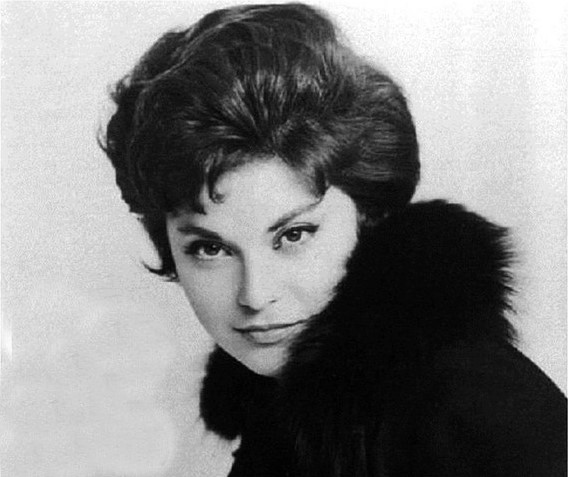
I muse on this every year, but especially so around the birthday of soprano Rita Streich (1920-1987), whose crystalline voice I have always admired. If you’re going to do traditional carols, Streich is a paragon of how they really should be done. She sang them most enchantingly. Whenever I programmed one of her carol medleys on December 18, for the duration of the performance, it really felt like Christmas.
Streich is also the soprano soloist in a recording that has become dearer and dearer to me over the years of Josef Rheinberger’s “The Star of Bethlehem.” Rheinberger (1839-1901), everyone’s favorite composer from Liechtenstein, is likely remembered, if at all, primarily for his organ works. But he was also a distinguished teacher and left an uplifting piano concerto that really should be much better known. How I would love to hear it in concert!
I used to encounter “The Star of Bethlehem” on the radio every year. Of course, as one of the last of my kind, I myself picked up the standard and bore it proudly, working it into my programs when I still had a regular air shift. Streich’s recording originally appeared on vinyl, on the EMI label. It was reissued on compact disc on Carus. Good luck finding the CD for a reasonable price now that it’s out-of-print and in the talons of the secondhand market. (You’ll have better luck if you own a turntable and aren’t too finicky about condition.) Dietrich Fischer-Dieskau is the baritone and Robert Heger conducts.
A thousand years of Christmas music, and how much of it is ever played? It all seems to have disappeared so quickly.
As far as the radio is concerned, you’re likely to find more satisfyingly rounded programming at the link below, especially when Peter van de Graaff or Rocky Lamanna are on the air. Keep in mind, KWAX is a West Coast station, so all times are PST.