Tag: Miklos Rozsa

  • Harryhausen on Herrmann Rózsa & Rejected Barry

    Harryhausen on Herrmann Rózsa & Rejected Barry

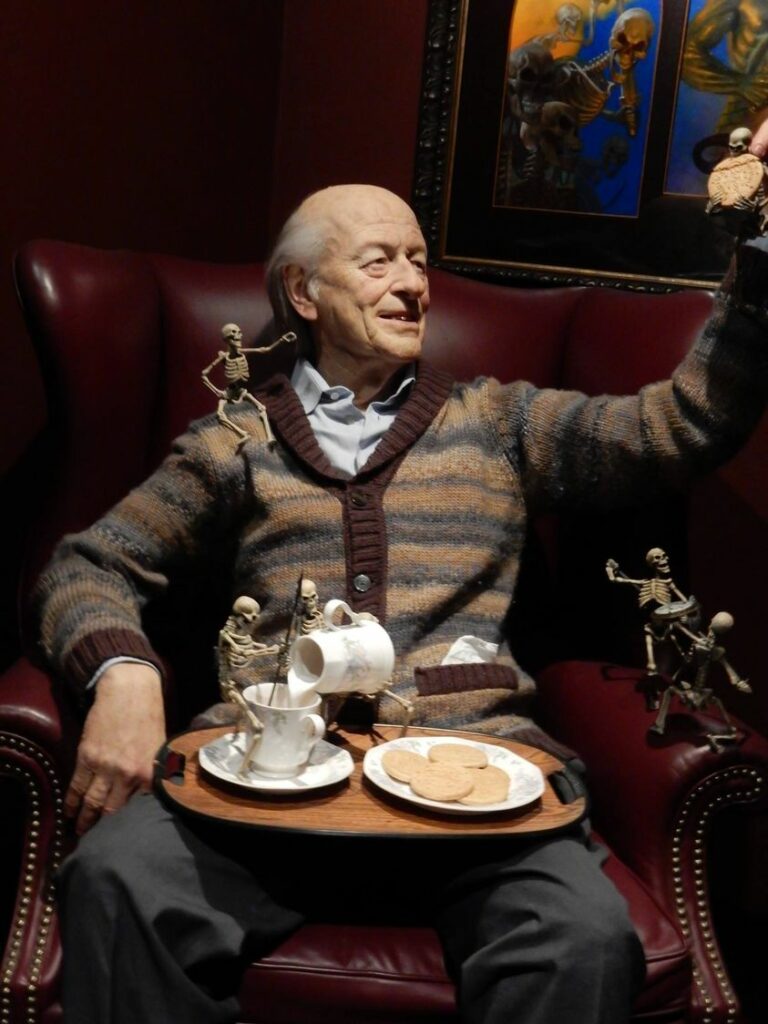
    This was shared yesterday on the Bernard Herrmann Society page. At the link, you’ll find a couple of letters written by special effects legend Ray Harryhausen, in which he comments on the various composers he had the privilege to work with. He has especially high praise for Herrmann and Miklós Rózsa.

    Ray Harryhausen On Miklos Rozsa … Bernard Herrmann … And Max Steiner

    Interestingly, on his last film, “Clash of the Titans,” Harryhausen apparently rejected a score-in-progress by Academy Award winning composer John Barry (composer of “Born Free,” “Out of Africa,” “Dances with Wolves,” and the James Bond franchise). In a later interview, Barry, who had been hired because Harryhausen was impressed by his score for “The Lion in Winter,” claimed not to remember much about the experience, beyond the fact that he had provided a few demos.

    Some of the music can actually be heard in this installment of the Ray Harryhausen Podcast.

    The composer’s fragmentary contributions begin at the following times:

    • 6:48, “Heroic 1”

    • 1:27:10, “Andromeda”

    • 1:28:43, “Persius Growing Up”

    • 1:30:49, “Scorpion”

    Barry was replaced by Laurence Rosenthal (composer of “A Raisin in the Sun,” “The Miracle Worker,” “Becket,” “The Return of a Man Called Horse,” “The Island of Dr. Moreau,” and “The Young Indiana Jones Chronicles”).

    But don’t shed any tears for Barry. He wound up doing just fine.

  • Miklós Rózsa: Golden Age Film Music

    Miklós Rózsa: Golden Age Film Music

    Happy birthday, Miklós Rózsa (1907-1995)!

    Can you spare ten minutes to soak up some Golden Age greatness? Check out this wonderful medley of some of his classic film scores.

    I had a blast picking out the films without looking at the images. I own recordings of all of them, of course.

    One of my personal favorites, not in the medley, is “Lust for Life” (1956), in which Kirk Douglas plays Vincent Van Gogh. The composer softens up the edges of his brawny Hungarian sound by dipping into the hazy palette of the French Impressionists.

    In a similar mold is this concert work, “The Vintner’s Daughter,” twelve variations inspired by a poem by Juste Olivier, in which a maiden drifts off to sleep in the sun at harvest time and dreams of the arrival of three Hungarian knights. Originally composed for piano in 1953, it was orchestrated two years later at the request of Eugene Ormandy.

    The original piano version

    For orchestra

    Rózsa conducts the Pittsburgh Symphony in his most celebrated music, for “Ben-Hur” (1959)

    Jascha Heifetz plays the Violin Concerto (1953; subsequently adapted for use in the 1970 film “The Private Life of Sherlock Holmes”)

    They just don’t make ‘em like Miklós anymore.


    PHOTOS: Rózsa and (top to bottom) “Ben-Hur,” “Lust for Life,” and preparing the Violin Concerto with Jascha Heifetz and Walter Hendl

  • Miklós Rózsa: Late Career Gems

    Miklós Rózsa: Late Career Gems

    Three-time Academy Award winner Miklós Rózsa left his stamp on dozens of classic films, including “The Thief of Bagdad” (1940), “The Jungle Book” (1942), “Double Indemnity” (1944), “The Lost Weekend” (1945), “Spellbound” (1945), “Quo Vadis?” (1951), “Lust for Life” (1956), “Ben-Hur” (1959), “King of Kings” (1961), and “El Cid” (1961).

    Less well-known is his later work. This week on “Picture Perfect,” we’ll sample selections from five of the composer’s last seven projects, including “Providence” (1977), “Fedora” (1978), “Last Embrace” (1979), “Eye of the Needle” (1981), and “Dead Men Don’t Wear Plaid” (1982).

    Born in Budapest in 1907, Rózsa studied in Leipzig. He cut his teeth in Paris, where one his friends and associates was Arthur Honegger. Following a concert that had featured works by both composers, Rózsa asked Honegger how it was that he was able to make ends meet. Honegger confided that he supplemented his income by writing for film. Rózsa went to see “Les Misérables,” which Honegger had scored, and became enthralled by the possibilities.

    It was following his move to London that he became associated with the Korda brothers and had his first opportunity to write for motion pictures. Rózsa immediately demonstrated what he could do in films like “Knight Without Armor” (1937) and “The Four Feathers” (1939). It was his involvement in the Kordas’ “The Thief of Bagdad” that brought him to Hollywood, since the project had to be moved mid-production as a result of the war. From there, the composer went on to work with many of the great directors, including Billy Wilder, Alfred Hitchcock, and William Wyler.

    In a career that encompassed nearly 100 scores, Rózsa was recognized with Academy Awards for his contributions to Hitchcock’s “Spellbound,” the George Cukor thriller “A Double Life” (1947, starring Ronald Colman as an unhinged Shakespearean actor), and of course “Ben-Hur” – all the while keeping one foot in the world of concert music. He wrote important works for Jascha Heiftez, Gregor Piatigorsky, János Starker, Leonard Pennario and Pinchas Zukerman. His “Theme, Variations and Finale” featured in Leonard Bernstein’s legendary debut with the New York Philharmonic.

    Rózsa was a towering figure of Hollywood’s golden age, but he lived through some pretty lean times, as emphasis in the industry began to shift away from a classic orchestral sound to what was perceived as a more lucrative, youth-oriented approach, reliant on popular trends. Fortunately, with the extraordinary success of John Williams, in films like “Jaws,” “Star Wars,” and “Close Encounters of the Third Kind,” old school composers like Rózsa were given a new lease on life, and he was able to round out his career with a series of beautiful, wholly characteristic scores.

    I hope you’ll join me in examining “Late-Career Rózsa,” on “Picture Perfect,” music for the movies, this Saturday evening at 6:00 EST, on WWFM – The Classical Network and wwfm.org.


    Rózsa talks film music (and Bernard Herrmann) with André Previn and John Williams

    From the same broadcast (“Previn and the Pittsburgh: The Music That Made the Movies,” PBS, 1978), Rózsa conducts “Ben-Hur”


    PHOTO: Rózsa (right), with whippersnappers Williams and Previn

  • WWFM Christmas Schedule Ben-Hur Music

    WWFM Christmas Schedule Ben-Hur Music

    “Picture Perfect” will be preempted this evening as WWFM – The Classical Network continues with its roster of special Christmas-oriented programs. To my knowledge, PP will return next Saturday with more film music at its regular slot of 6 p.m. EST.

    “The Lost Chord” will be heard tomorrow night, as always. However, it will be broadcast ONE HOUR LATER THAN USUAL, Christmas Day at 11 p.m. EST.

    For a complete schedule of this weekend’s programs, visit http://www.wwfm.org.

    In the meantime, here’s a film music tidbit to tide you over, in the form of a piano transcription of the Christmas segment that serves as a prologue to “Ben-Hur” (1959), still one of my favorite movies, with a knockout score by Miklós Rózsa.

    Hats off to Brett Mitchell, and Merry Christmas!

  • Film Noir Classics on WWFM This Week

    Film Noir Classics on WWFM This Week

    This week on “Picture Perfect,” as the shadows lengthen, we revisit the world of film noir, a genre notoriously slippery to define, but easy to know when you see it – with its long shadows and moral ambiguities; cock-eyed camera angles and snappy repartee; isolation and innuendo. It’s a genre wherein a pair of gams is an invitation to the gallows; wherein a man’s best friend – and sometimes his worst enemy – is his Colt .38, wherein only cigarettes and bourbon can ease the pain.

    The labyrinthine mystery at the heart of “The Big Sleep” (1946) is so disorienting, even the book’s author, Raymond Chandler, couldn’t tell whodunit. Who cares? Humphrey Bogart and Lauren Bacall get some more steamy dialogue to satisfy fans of “To Have and Have Not,” and there’s plenty of Bogie pounding the pavement and tossing off tart one-liners in pursuit of the truth. But my favorite scene involves Dorothy Malone, who runs the hottest bookstore in town.

    Whenever there are gallows to be built or gangsters to be beaten, Warner Bros. could be counted on to assign Max Steiner.

    “Touch of Evil” (1958) is often considered to be the last of the classic noirs. Yet another brilliant feature by Orson Welles, it was taken out of the master’s hands and re-edited by the studio. The film was restored only in 1998, to bring it closer to Welles’ original design.

    If you can get past Charlton Heston as a Mexican, “Touch of Evil” is one of the director’s best films. Welles himself is unforgettable as corrupt police captain Hank Quinlan. He’s joined by Janet Leigh, Joseph Calleia, Akim Tamiroff, and Marlene Dietrich, against a rogues’ gallery of memorable hoodlums and lowlifes.

    The film is celebrated, for, among things, a sustained and fluidly-executed tracking shot, which spans over three minutes – an eternity in film – documenting two threads of overlapping action. The score, by Henry Mancini, is equally arresting, as it often seems as if it’s diegetic – whatever music happens to be playing on a radio or in a nightclub – lending its own counterpoint to the seedy drama.

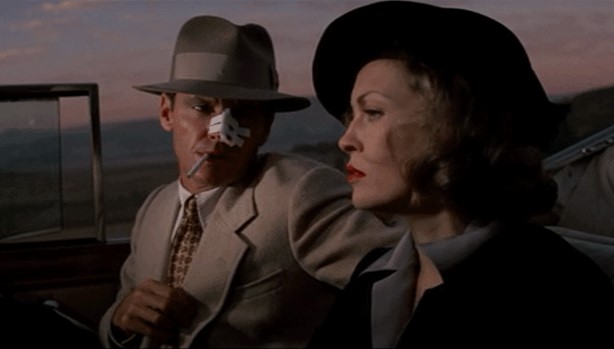
    “Chinatown” (1974) is one of the best of the neo-noirs of the 1970s. Jack Nicholson plays private dick J.J. Gittes, who takes on a seemingly routine case that begins to spiral out of control. When producer Robert Evans rejected Philip Lambro’s original score, Jerry Goldsmith stepped in as a last-minute replacement. The composer was hired with the understanding that he had only ten days to write and record new music. For his effort, Goldsmith received an Academy Award nomination.

    Finally, we’ll have music by the king of noir composers, Miklós Rózsa. Before he came to be stereotyped for his work on epic films like “Ben-Hur,” “King of Kings” and “El Cid,” Rózsa provided scores for genre classics such as “The Strange Love of Martha Ivers,” “The Killers, “Brute Force,” and “The Naked City.”

    We’ll hear an extended suite from “Double Indemnity” (1944). Sultry Barbara Stanwyck ensnares insurance salesman Fred MacMurray in a plot to bump off her husband for the insurance money, sparking an investigation by MacMurray’s boss, Edward G. Robinson. Director Billy Wilder shows how it should be done, in one of the high-water marks of the genre.

    Put on your rumpled linen suit, draw the Venetian blinds, and play the sap for nobody. We’ve got a nose for noir this week, on “Picture Perfect,” music for the movies, this Saturday evening at 6:00 EDT, on WWFM – The Classical Network and wwfm.org.


    If you enjoy either of my weekly shows (or both!), or any of the other music you hear on The Classical Network, please consider making a contribution today. We’re celebrating our 40th anniversary on the air and online. If you’re in a position to do so, why not make a donation right now at wwfm.org. Thank you in advance for your generosity and for your continued support of WWFM The Classical Network!

    https://wwwfm.secureallegiance.com/wwfm/WebModule/Donate.aspx?P=DEFAULT&PAGETYPE=PLG&CHECK=vOU2bz5JCWmgCDbf53nm9ezWDeZ%2beA1M

Tag Cloud

Aaron Copland (92) Beethoven (95) Composer (114) Film Music (123) Film Score (143) Film Scores (255) Halloween (94) John Williams (187) KWAX (229) Leonard Bernstein (101) Marlboro Music Festival (125) Movie Music (138) Opera (202) Philadelphia Orchestra (89) Picture Perfect (174) Princeton Symphony Orchestra (106) Radio (87) Ralph Vaughan Williams (85) Ross Amico (244) Roy's Tie-Dye Sci-Fi Corner (290) The Classical Network (101) The Lost Chord (268) Vaughan Williams (103) WPRB (396) WWFM (881)

DON’T MISS A BEAT

Receive a weekly digest every Sunday at noon by signing up here


RECENT POSTS