Tag: Miklos Rozsa

  • Film Noir Shadows & Moral Ambiguity

    Film Noir Shadows & Moral Ambiguity

    This week on “Picture Perfect,” as the shadows lengthen, we revisit the world of film noir, a genre notoriously slippery to define, but easy to know when you see it – with its long shadows and moral ambiguities; cock-eyed camera angles and snappy repartee; isolation and innuendo. It’s a genre where a pair of gams is an invitation to the gallows; where a man’s best friend – and sometimes his worst enemy – is his Colt .38; where only cigarettes and bourbon can ease the pain.

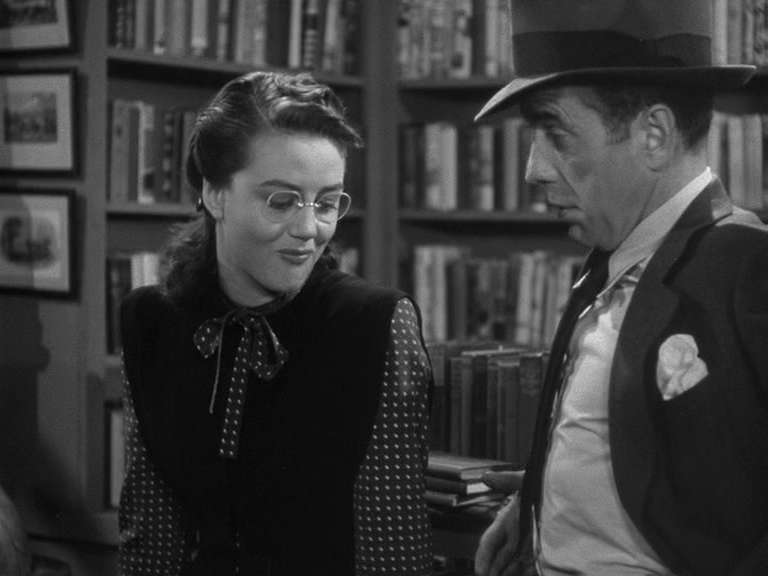
    The labyrinthine mystery at the heart of “The Big Sleep” (1946) is so disorienting, even the book’s author, Raymond Chandler, couldn’t tell whodunit. Who cares? Humphrey Bogart and Lauren Bacall get some more steamy dialogue to satisfy fans of “To Have and Have Not,” and there’s plenty of Bogey pounding the pavement and tossing off tart one-liners in pursuit of the truth. But my favorite scene involves Dorothy Malone, who runs the hottest bookstore in town.

    Whenever there are gallows to be built or gangsters to be beaten, Warner Brothers could be counted on to assign Max Steiner.

    “Chinatown” (1974) is one of the best of the neo-noirs of the 1970s. This time, Jack Nicholson plays private dick J.J. Gittes, who takes on a seemingly routine case that begins to spiral out of control. When producer Robert Evans rejected Philip Lambro’s original score, Jerry Goldsmith stepped in as a last-minute replacement. The composer was hired with the understanding that he had only ten days to write and record new music. For his effort, Goldsmith received an Academy Award nomination.

    The Coen Brothers clearly love noir, from their first feature, “Blood Simple,” to their Academy Award winners, “Fargo” and “No Country for Old Men,” to their absurdly entertaining reimagining of “The Big Sleep,” “The Big Lebowski.” “Miller’s Crossing” (1990) was one of the more underappreciated of these. The film follows the well-worn device of an anti-hero playing two sides off of one another, until he is the last one standing – shades of Dashiell Hammett’s “Red Harvest,” with a healthy dose of “The Glass Key” thrown in, for good measure. The Irish-inflected score is by Coen regular Carter Burwell.

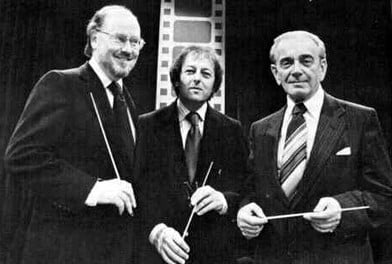
    Before he became stereotyped as a composer for epic films like “Ben-Hur,” “King of Kings” and “El Cid,” Miklós Rózsa was the king of noir, providing scores for genre classics such as “Double Indemnity” and “The Strange Love of Martha Ivers.” We’ll hear a suite assembled from three such projects: “Brute Force” (1947), a hard-hitting prison drama, starring Burt Lancaster as a desperate inmate and a contemptible Hume Cronyn as a sadistic guard; “The Killers” (1946), also starring Lancaster as a marked boxer; and “The Naked City” (1948), with Barry Fitzgerald leading a police investigation into the murder of a young model. The suite is titled “Background to Violence.”

    Put on your rumpled linen suit, draw the Venetian blinds, and play the sap for nobody this week. It’s film noir in the gritty city, on “Picture Perfect,” music for the movies, this Saturday evening at 6:00 EST, on WWFM – The Classical Network and at wwfm.org.


    The theatrical trailer for “Brute Force”:

    PHOTO: Bogart and Malone talk literature

  • Hungarian Night Music & Bela Lugosi

    Hungarian Night Music & Bela Lugosi

    “Children of the night – what beautiful music they make!” So says Hungarian superstar Bela Lugosi in his signature role of Dracula. The observation (spoken in response to the howling of wolves) might equally be applied, under less chilling circumstances, to three of Lugosi’s composer-compatriots, whose nocturnal meditations we’ll enjoy this Sunday night on “The Lost Chord.”

    Miklós Rózsa, himself a figure with cinematic associations, wrote nearly 100 film scores and won three Academy Awards – for “Spellbound” (1945), “A Double Life” (1947), and “Ben-Hur” (1959). He was also an active concert composer, writing concertos for Jascha Heifetz, Leonard Pennario, Gregor Piatigorsky, and Pinchas Zukerman.

    In the summer of 1962, Rózsa composed “Hungarian Nocturne” on a commission from Edward B. Benjamin, a New Orleans millionaire with a fondness for quiet music. However, in order to maintain interest, the composer realized, there was no way he could remain quiet for the entire span of the piece. So the nocturne eventually builds to a climax before returning to the serene mood of its opening. His patron wasn’t entirely pleased, though he did draw enjoyment from the quieter parts. The piece was an attempt by the composer to recapture the rare beauty of nights on his estate in rural Hungary.

    Though Antal Doráti would ultimately become world famous as a conductor, he studied composition at the Franz Liszt Academy under Zoltán Kodály and Leó Weiner. He also studied piano with Béla Bartók. A fine Bartok interpreter, Doráti would later conduct the world premiere of his teacher’s Viola Concerto.

    Doráti’s own music has always been regarded as something of a sidelight. His “Night Music,” from 1970, is a collection of evocative miniatures for flute and orchestra. We’ll hear it performed by Alison Young, now a host for Minnesota Public Radio.

    Unlike Rózsa and Doráti, who were both natives of Budapest, Zoltán Kodály was born in a small town in Southern Hungary. He claimed that his first exposure to folk music was through the singing of servant girls in his own home. He went on to become one of the most important figures in Hungarian musical life, as composer, ethnomusicologist, and educator.

    Kodály will be represented by his orchestral idyll, “Summer Evening,” music originally composed in 1906, then revised in 1929, to fulfill a commission from Arturo Toscanini. Kodály himself will conduct, on a gorgeous recording with the Budapest Philharmonic.

    That’s “Children of the Night” – Hungarian composers take wing – this Sunday night at 10:00 EDT, on WWFM – The Classical Network and wwfm.org.


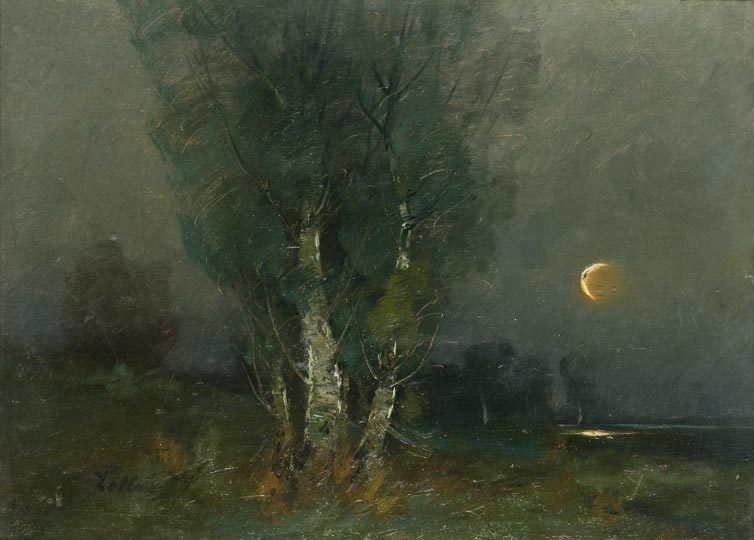
    IMAGE: “New Moon,” by Mihály Zeller

  • Arabian Nights Cinematic Delights

    Arabian Nights Cinematic Delights

    Open sesame! It’s an Aladdin’s Cave of cinematic delights.

    This week on “Picture Perfect,” the focus is on tales from “The Arabian Nights.”

    These traditional folk stories from the Orient have come down to us filtered through the sensibilities of Western translators. Further translation was required to get the stories from page to screen; so it’s hardly surprising to find Sinbad, for instance, fighting a giant walrus at the North Pole.

    The film versions are often showcases for the work of production designers and special effects artists, but composers have certainly gotten in on the act with suitably imaginative scores.

    Bernard Herrmann lent plenty of color and wit to the skeleton duel in “The Seventh Voyage of Sinbad” (1958) by employing a battery of castanets, xylophone, and brass. Stop motion artist Ray Harryhausen was responsible for the memorable effects. “Sinbad” proved to be a dry run for the climax of “Jason and the Argonauts,” in which Harryhausen outdid himself by animating not one, but seven skeletons, and again, Herrmann supplied the music.

    Harryhausen animated two further Sinbad adventures – “The Golden Voyage of Sinbad” (1974) and “Sinbad and the Eye of the Tiger” (1977). Over the course of the three “Sinbad” films, audiences were treated to fantastic encounters with, in addition to the skeleton, a Cyclops, a roc, a dragon, a statue of the goddess Kali, a centaur, a giant walrus, and a saber-tooth tiger, among others.

    “Sinbad and the Eye of the Tiger” was scored by Roy Budd. Budd’s reputation was largely that of a jazz musician and composer. He wrote scores for over 50 films, including “Get Carter” and “The Wild Geese,” before his early death of a brain hemorrhage, at the age of 46, in 1993.

    Walt Disney created a modern classic in “Aladdin” (1992). The music was by Alan Menken, with lyrics by Howard Ashman and Tim Rice. “Aladdin” won Academy Awards for Best Original Score and Best Original Song (“A Whole New World”). Menken has a whole shelf full of Oscars for his work for Disney. Need I say, Robin Williams was the voice of the manic, freewheeling Genie?

    Rex Ingram’s Genie steals the show in “The Thief of Bagdad” (1940). Ingram emerges from his magic lamp and looms over a cowering Sabu, whom he addresses as “Little Master of the Universe.” The beach resounds with his maniacal laughter. There was an earlier, justly celebrated, silent version of “Thief,” with Douglas Fairbanks. The remake splits the thief and the prince into two separate characters. Sabu plays the incorrigible Abu (the thief), and Conrad Veidt is his nemesis, the treacherous vizier Jaffar.

    The score is by three-time Academy Award winner Miklós Rózsa. Rózsa was in London, in the employ of Alexander Korda, when the lavish Technicolor production was moved to Hollywood on account of the Blitz. Rózsa would go on to become one of Hollywood’s greatest composers. His music for “Ben-Hur” alone has earned him a place in the film music pantheon. He never wrote a more charming score, however, than he did for this.

    I hope you’ll join me for an hour of cinematic enchantments. That’s “A Thousand and One Nights at the Movies,” on “Picture Perfect,” this Friday evening at 6:00 EDT, on WWFM – The Classical Network and wwfm.org.

  • South American Film Scores Rózsa & Morricone

    South American Film Scores Rózsa & Morricone

    If you are a Miklós Rózsa fan, you’ll want to join me for this week’s “Picture Perfect,” as I dig deep into the archive for two contrasting scores to movies set in South America.

    Rózsa, who is probably best remembered for his work on Biblical and historical epics (he won his third Academy Award for “Ben Hur” in 1959) provides a lush symphonic tapestry for “Green Fire” (1954), starring Stewart Granger and Grace Kelly. Rózsa piles on the MGM gloss, for a conflict between love and lust for emeralds in the jungles of Colombia.

    Then we’ll hear perhaps Rózsa’s most unusual venture, “Crisis” (1950). “Crisis” stars Cary Grant and Jose Ferrer in the story of a brain surgeon who must weigh ethical considerations when faced with saving the life of a dictator who oppresses the people of an unnamed banana republic. Unusual for a composer who likes to swing for the fences, Rózsa set himself the limitations of writing for solo guitar.

    MGM must have felt it had scored a major coup when securing famed Brazilian composer Heitor Villa-Lobos to supply music for “Green Mansions” (1959). The big screen adaptation of W.H. Hudson’s novel, set in the rainforests of southeastern Venezuela, stars Audrey Hepburn as Rima the Bird Girl. Unfortunately, the studio deemed what Villa-Lobos produced unusable, since the composer had begun writing based on his impressions of the novel, rather than wait for the completed film. MGM house composer Bronislau Kaper was brought in to salvage what he could.

    Finally, we’ll turn to one of Ennio Morricone’s best-loved scores – that for “The Mission” (1986). “The Mission” stars Jeremy Irons, as a Jesuit priest who penetrates the South American jungle to convert the native Guarani to Christianity, and Robert DeNiro, as a reformed slave hunter. The lovely and moving “Gabriel’s Oboe” became a recognizable hit, thanks in particular to its use by figure skaters and Aer Lingus.

    This is the score for which Morricone believed he should have won the Oscar.

    I hope you’ll join me for these South American adventures this week, on “Picture Perfect” – music for the movies – this Friday evening at 6:00 EDT, on WWFM – The Classical Network and wwfm.org.

  • Miklós Rózsa A Golden Age Film Score Genius

    Miklós Rózsa A Golden Age Film Score Genius

    Happy birthday, Miklós Rózsa (1907-1995)!

    Can you spare ten minutes to soak up some Golden Age greatness? Check out this wonderful medley of some of his classic film scores.

    I had a blast picking out the films without looking at the images. I own recordings of all of them, of course. (What? No “Lust for Life???”)

    Rózsa conducts the Pittsburgh Symphony in a suite from “Ben-Hur”:

    Jascha Heifetz plays the Violin Concerto (subsequently adapted for use in “The Private Life of Sherlock Holmes”):

    They don’t make ‘em like Miklós anymore.

Tag Cloud

Aaron Copland (92) Beethoven (95) Composer (114) Film Music (123) Film Score (143) Film Scores (255) Halloween (94) John Williams (187) KWAX (229) Leonard Bernstein (101) Marlboro Music Festival (125) Movie Music (138) Opera (202) Philadelphia Orchestra (89) Picture Perfect (174) Princeton Symphony Orchestra (106) Radio (87) Ralph Vaughan Williams (85) Ross Amico (244) Roy's Tie-Dye Sci-Fi Corner (290) The Classical Network (101) The Lost Chord (268) Vaughan Williams (103) WPRB (396) WWFM (881)

DON’T MISS A BEAT

Receive a weekly digest every Sunday at noon by signing up here


RECENT POSTS