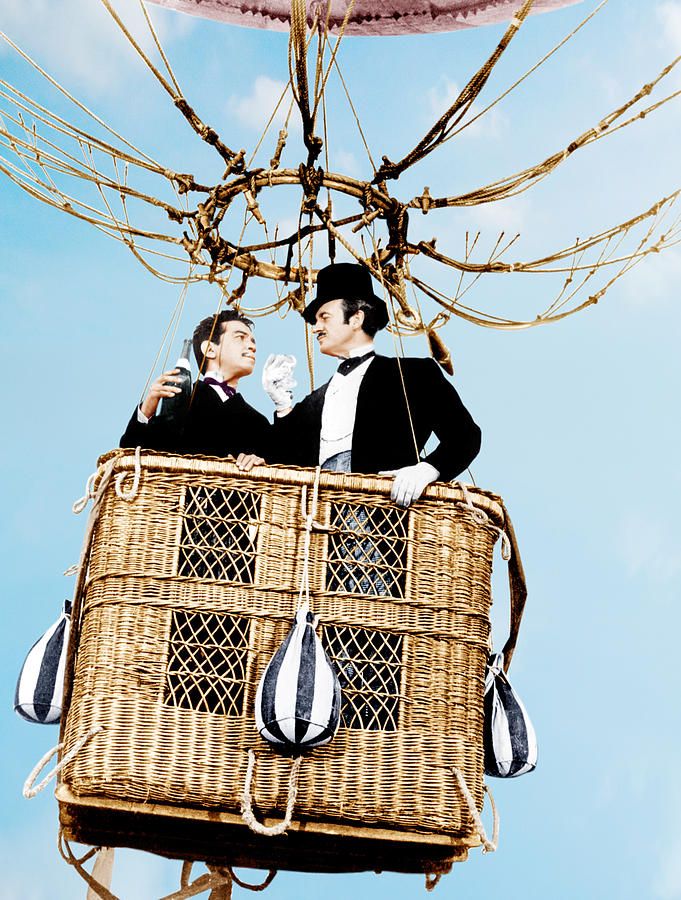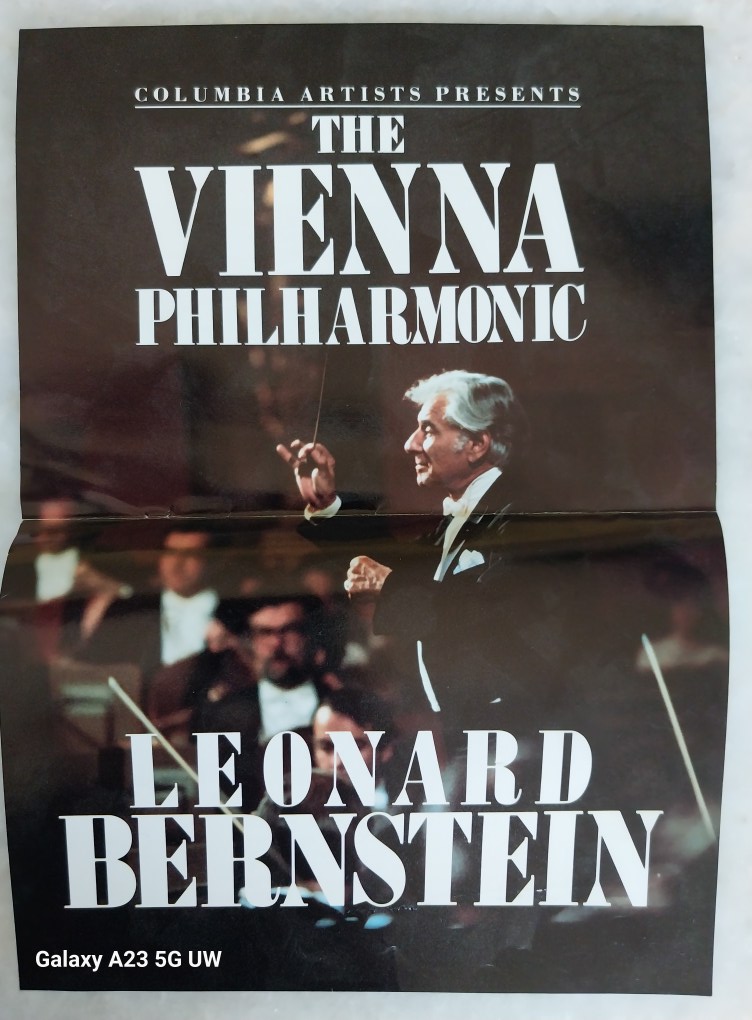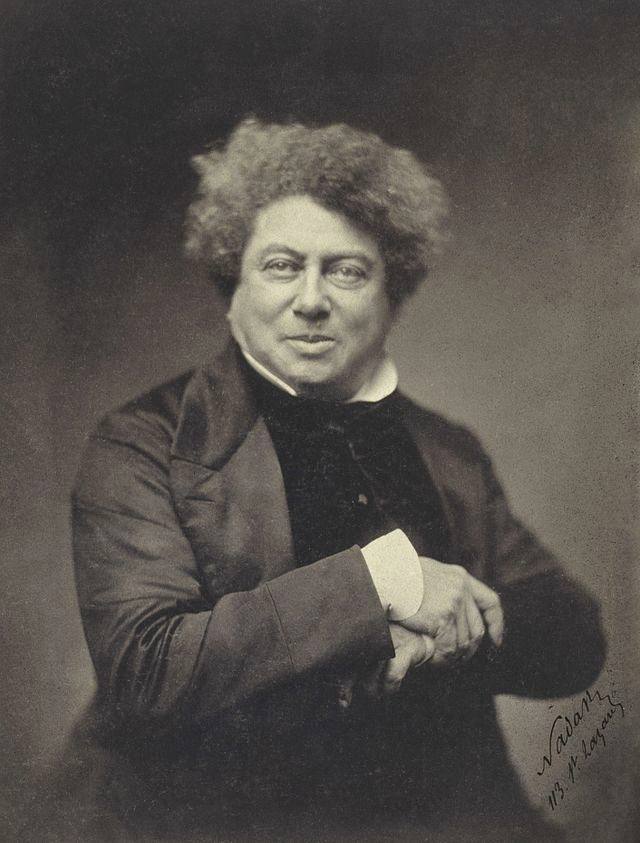
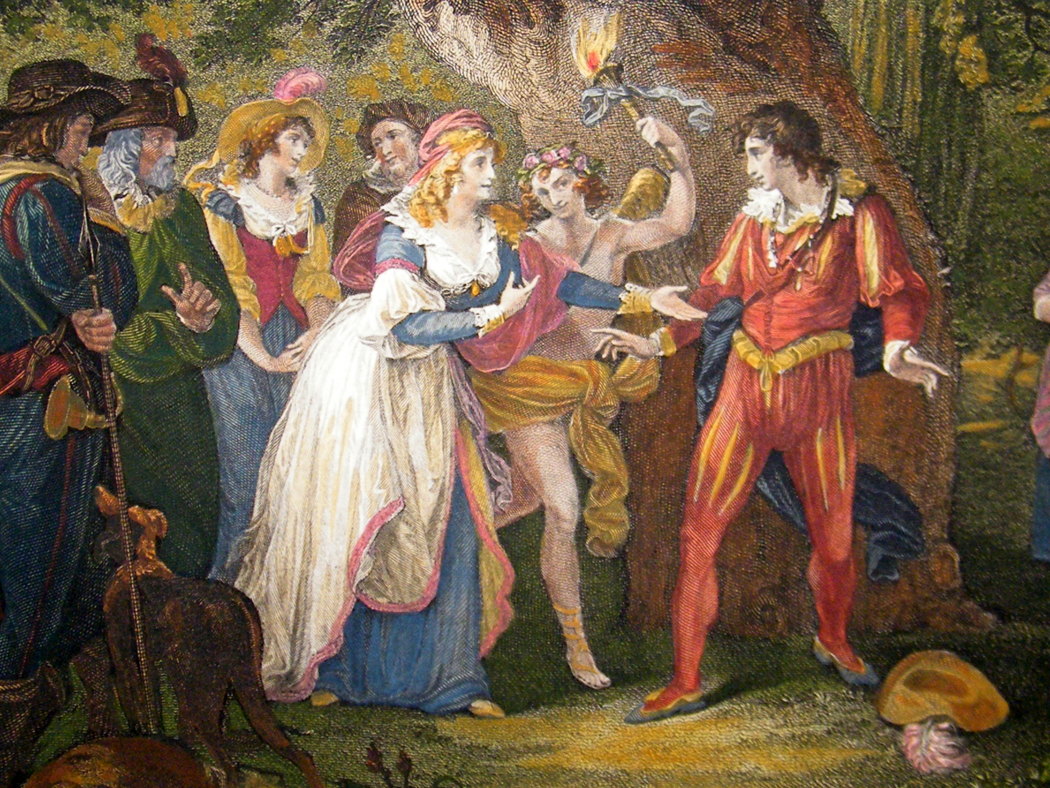
If there’s an illustration that more perfectly embodies my feelings about the New Year, I don’t know it. May we all share the profound satisfaction. Best of luck in 2025.
Category: Daily Dispatch
-

Mystery Gifts A Thank You Note
It happens every year. I receive one or two gifts without any indication as to who the sender might be. If any of you kind folks sent me a bag of coffee or Gottfried von Einem’s “Philadelphia Symphony,” please message me. And please don’t mistake my silence for a lack of gratitude. Thank you. I just don’t know who you are!
-

Jimmy Carter’s White House Music Scene
Jimmy Carter was a good friend of Willie Nelson. I remember watching an interview once in which he suggested Nelson smoked weed on the roof of the White House. But Carter liked all kinds of music and invited musicians of all stripes to visit, shake hands, receive medals, and perform.
One of these was Leontyne Price, who made several noteworthy appearances at the White House and Camp David. Price, who had received the Presidential Medal of Freedom from Lyndon B. Johnson in 1964 and opened the Metropolitan Opera House at its current location at New York City’s Lincoln Center in 1966 (with Samuel Barber’s “Antony and Cleopatra”), was enlisted to perform, on March 26, 1979, at the banquet that celebrated the Camp David Accords, before President Anwar Sadat of Egypt and Prime Minister Menachem Begin of Israel. On October 6, 1979, she was asked to welcome Pope John Paul II on his first papal visit to the White House, singing to an audience of 6,000 on the South Lawn that included the Pope, the president, the nine justices of the Supreme Court, the assembled House and Senate, state governors, and others. “She’s by far the most accomplished singer we ever had,” Carter noted in his diary.
While a great fan of country music, jazz, blues, folk, sacred music, and rock (among others), he understood the broader cultural significance and civilizing influence of classical music. He and Rosalynn both received a sound music education in high school and were instilled with a working knowledge of the classics, the way it used to be. In turn, their daughter Amy was given violin lessons, often with Rosalynn at the piano. During the Carter presidency, classical music played in the Oval Office for eight to ten hours a day.
You can learn more about the President’s varied musical tastes and his interactions with famous musicians here:
https://www.whitehousehistory.org/music-at-jimmy-carters-white-house
PHOTO: The Carters and Price at the White House in 1978
-

Laptop Died First Post From My Phone
I’m sorry to report that my laptop, which has been giving me a lot of issues recently, has finally breathed its last. It’s on the kitchen table of a good friend right now, in several pieces, as he performs emergency surgery. Hopefully we’ll be able to retrieve all the files.
In any case, this is the first post I ever typed on my phone, and I definitely do not want to make a habit of it. Writing on a phone is excruciating and not at all conducive to the kind of thoughtful, clever, and/or polished writing that I strive for. I ask that you please indulge me if, in posting anything in the next day or two, I opt to keep it short. It’s likely I won’t be responding to many comments until I’m back on a laptop. Don’t think that just because I’m curt or even silent that I don’t love you.
-

Epic Finnish Music Kalevala’s Lost Chord
Hang on to your stoicism. We’re headed for an epic “Finnish.” This week on “The Lost Chord,” we’ll conclude 2024 with a program of music inspired by movers and shakers of the “Kalevala.”
The “Kalevala,” a disparate collection of long narrative poems culled from the oral tradition, is frequently referred to as the Finnish national epic. Its fantastic and heroic tales informed the work of Finland’s greatest artists at a time when the country began to surge toward independence after 700 years of Swedish rule and an additional century as a duchy of the Russian Empire.
In a nod to Finnish endeavor, we’ll hear “Aino” by Robert Kajanus. Kajanus was Sibelius’ first great champion, who conducted first performances of many of the composer’s major works and led the Helsinki Philharmonic for 50 years. He also wrote over 200 pieces himself. “Aino” was composed in 1885 for the Kalevala Society, to mark the 50th anniversary of the poem’s publication.
The subject is the wizard Väinämöinen, one of the poems’ heroes, who always seems to be plagued by ill luck. In this particular tale, he wins a singing contest, plunging his rival, Joukahainen, into a swamp. When the latter promises the wizard his sister’s hand in marriage if Väinämöinen will save him from drowning, the sister, Aino, drowns herself rather than submit to this seemingly unbearable fate. She later returns to taunt the grieving Väinämöinen in the form of a salmon.
One of the most important Finnish composers after Sibelius was Uuno Klami. Klami brought a degree of French polish back from his studies in Paris, where he fell under the irreverent sway of Les Six. This led to the composition of an unusually anti-heroic take on the Kalevala legends, “Lemminkäinen’s Island Adventures.” However, in spite of his occasionally Gallic disposition, Klami grew into one of Finland’s most respected composers. Sibelius recognized his talent and even lobbied for a small lifetime income for Klami from the Finnish government.
Klami’s most ambitious Kalevala inspiration is his “Kalevala Suite,” of 1933, which he extensively revised ten years later, when this former “enfant terrible” recognized the importance of his role as an artist in a country at war. Unlike Sibelius’ better-known “Four Legends from the Kalevala,” Klami’s suite scrupulously sidesteps the heroes’ actual adventures. He opts instead to paint on a much broader canvas, with movements titled “The Creation of the Earth,” “The Sprout of Spring,” “Terhenniemi” (replete with the sounds of nature and the sunny bliss of a summer’s day), “Cradle Song for Lemminkäinen” (Lemminkäinen’s mother’s song, sung over his dead body, soon to be resurrected), and “The Forging of the Sampo” (a kind of talisman everyone seems to want).
Of course, no composer had more success drawing on the Kalevala legends than Jean Sibelius. We’ll conclude the hour with a Sibelius rarity, “A Song for Lemminkäinen,” from 1896. This follows on the heels of the composer’s “Lemminkäinen Suite” (also known as “Four Legends from the Kalevala”), written earlier in the decade.
I hope you’ll join me for this “Epic Finnish,” on The Lost Chord, now in syndication on KWAX, the radio station of the University of Oregon!
Clip and save the start times for all three of my recorded shows:
PICTURE PERFECT, the movie music show – Friday at 8:00 PM EST/5:00 PM PST
SWEETNESS AND LIGHT, the light music program – ALL NEW! – Saturday at 11:00 AM EST/8:00 AM PST
THE LOST CHORD, unusual and neglected rep – Saturday at 7:00 PM EST/4:00 PM PST
Stream them, wherever you are, at the link!
Tag Cloud
Aaron Copland (93) Beethoven (95) Composer (114) Film Music (124) Film Score (143) Film Scores (255) Halloween (94) John Williams (188) KWAX (229) Leonard Bernstein (101) Marlboro Music Festival (125) Movie Music (139) Opera (202) Philadelphia Orchestra (89) Picture Perfect (174) Princeton Symphony Orchestra (106) Radio (87) Ralph Vaughan Williams (85) Ross Amico (244) Roy's Tie-Dye Sci-Fi Corner (290) The Classical Network (101) The Lost Chord (268) Vaughan Williams (103) WPRB (396) WWFM (881)